
Giants of the Skies: The Five Largest Military Aircraft That Defined World War II Aviation
Breaking airline news and aviation industry updates for 2026.

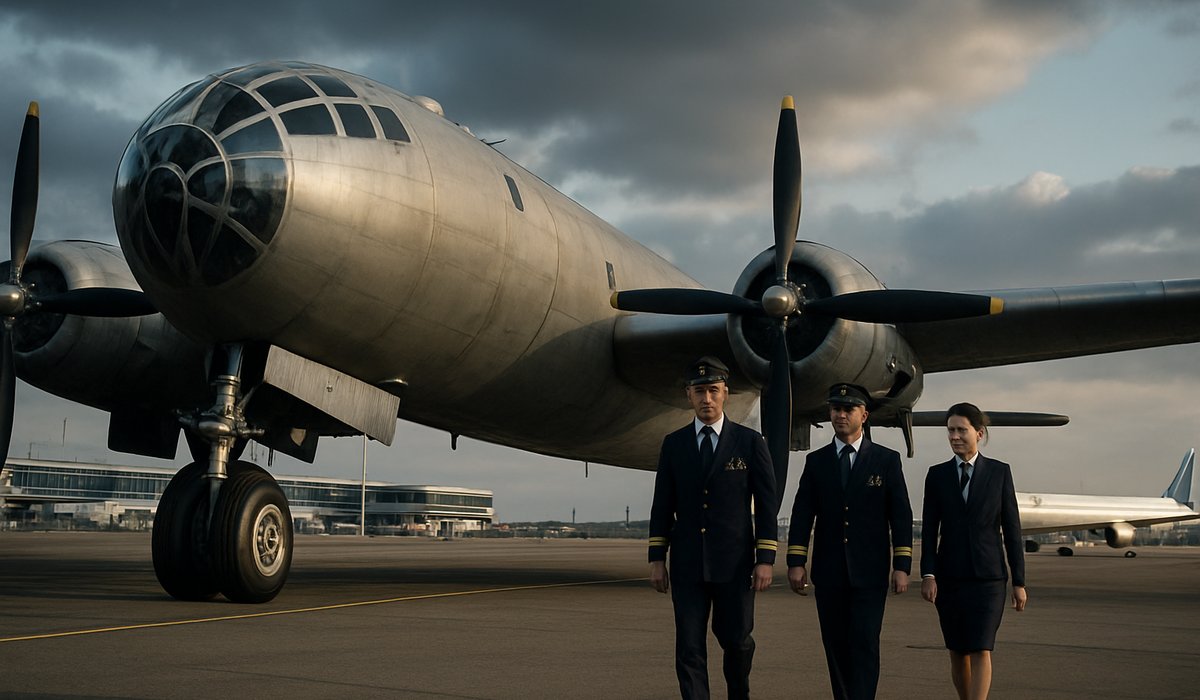
Image generated by AI
Giants of the Skies: The Five Largest Military Aircraft That Defined World War II Aviation
How the war's heaviest planes reshaped modern aircraft design and logistics
The Aerial Arsenals That Won the War
The Second World War fundamentally transformed military aviation, accelerating technological breakthroughs at an unprecedented pace. Among the most significant developments was the emergence of massive transport and bomber aircraft—engineering marvels designed to deliver devastating firepower and sustain global operations across multiple theaters of conflict. These behemoths represented the cutting edge of 1940s aerospace capability and established design principles that continue to influence modern aviation today.
Allied Air Superiority Through Scale and Production
The United States and United Kingdom achieved decisive advantages not merely through innovation, but through sheer industrial output. Allied manufacturing capacity dwarfed Axis production, particularly Germany's increasingly strained aircraft factories. American and British facilities churned out heavy bombers and transport planes at rates that overwhelmed Axis defenses, enabling the Allies to maintain sustained air campaigns across Europe, the Pacific, and North Africa simultaneously.
This production advantage proved decisive. While Germany struggled to replace aircraft losses, Allied nations manufactured successive waves of increasingly sophisticated heavy aircraft, each iteration incorporating lessons learned from combat operations. The result was a technological and numerical dominance that eventually rendered Axis air forces unable to contest Allied operations.
The Largest Military Aircraft of the Era
Five aircraft stand out as engineering achievements that pushed the boundaries of aviation science during the conflict. These massive machines—whether engineered for strategic bombing, personnel transport, or cargo operations—combined unprecedented size with mechanical complexity. Each represented years of development and embodied the desperate innovation of total war.
These giants were not merely larger versions of earlier designs; they required entirely new approaches to aerodynamics, structural engineering, and crew management. Many incorporated pressurized cabins, advanced navigation systems, and defensive armament that made them formidable platforms. Their development consumed enormous material and financial resources, yet military planners considered them essential to victory.
Legacy for Modern Aviation
The technological innovations embedded in these wartime behemoths directly influenced post-war civilian and military aircraft development. Heavy airlifters, long-range bombers, and wide-body transports owe direct lineage to WWII-era design philosophies. Modern heavy-lift aircraft like the Lockheed C-5 Galaxy and Airbus A380 represent evolutionary descendants of these wartime pioneers.
The Second World War proved that aviation could serve as a decisive strategic weapon. The aircraft produced during this period—particularly the largest examples—demonstrated that size, range, and payload capacity could project power across continents. This lesson remains relevant to contemporary military and commercial aviation operations.
FAQ: Understanding WWII Military Aircraft History
What made World War II aircraft so large compared to earlier planes? Total war demanded unprecedented range, payload capacity, and crew size. Strategic bombing campaigns required bombers capable of reaching distant targets, while global operations necessitated transport aircraft to move personnel and supplies across continents.
How did Allied manufacturing output exceed Axis production? American industrial capacity, protected by two oceans, operated at full peacetime civilian capacity alongside military production. German factories faced Allied bombing campaigns that disrupted supply chains and manufacturing efficiency.
Which nations produced the largest WWII military aircraft? The United States and Germany dominated heavy aircraft production, though Britain and the Soviet Union also developed significant large aircraft programs.
How did WWII aircraft influence modern aviation design? Pressurization systems, large-scale fuselage construction, intercontinental range capabilities, and sophisticated avionics all trace direct development lineage to wartime aircraft engineering.
Are any WWII-era large military aircraft still flying today? A small number of restored examples exist in museums and private collections, primarily in North America and Europe, serving as historical testaments to wartime engineering.
Related Travel Guides
Flight Delay Compensation Guide 2026
Understanding Airline Route Changes
Airport Security Process Updated (2026)
External Resources
Disclaimer
This article is for informational and educational purposes only. It does not constitute legal, financial, or professional advice. While we strive to provide accurate and up-to-date information, travel policies, regulations, and conditions change rapidly. Always verify information with official sources before making travel decisions. Nomad Lawyer makes no representations about the accuracy, reliability, completeness, or suitability of the information provided. Readers should consult qualified professionals for advice specific to their circumstances. The views expressed in this article are those of the author and do not necessarily reflect the views of Nomad Lawyer.
Kunal K Choudhary
Co-Founder & Contributor
A passionate traveller and tech enthusiast. Kunal contributes to the vision and growth of Nomad Lawyer, bringing fresh perspectives and driving the community forward.
Learn more about our team →