
Malaysia Moves With Japan and Other Asian Markets in the SAF Push as Greener Flying Raises New Questions for Travellers
Malaysia Moves With Japan and Other Asian Markets in the SAF Push as Greener Flying Raises New Questions for Travellers

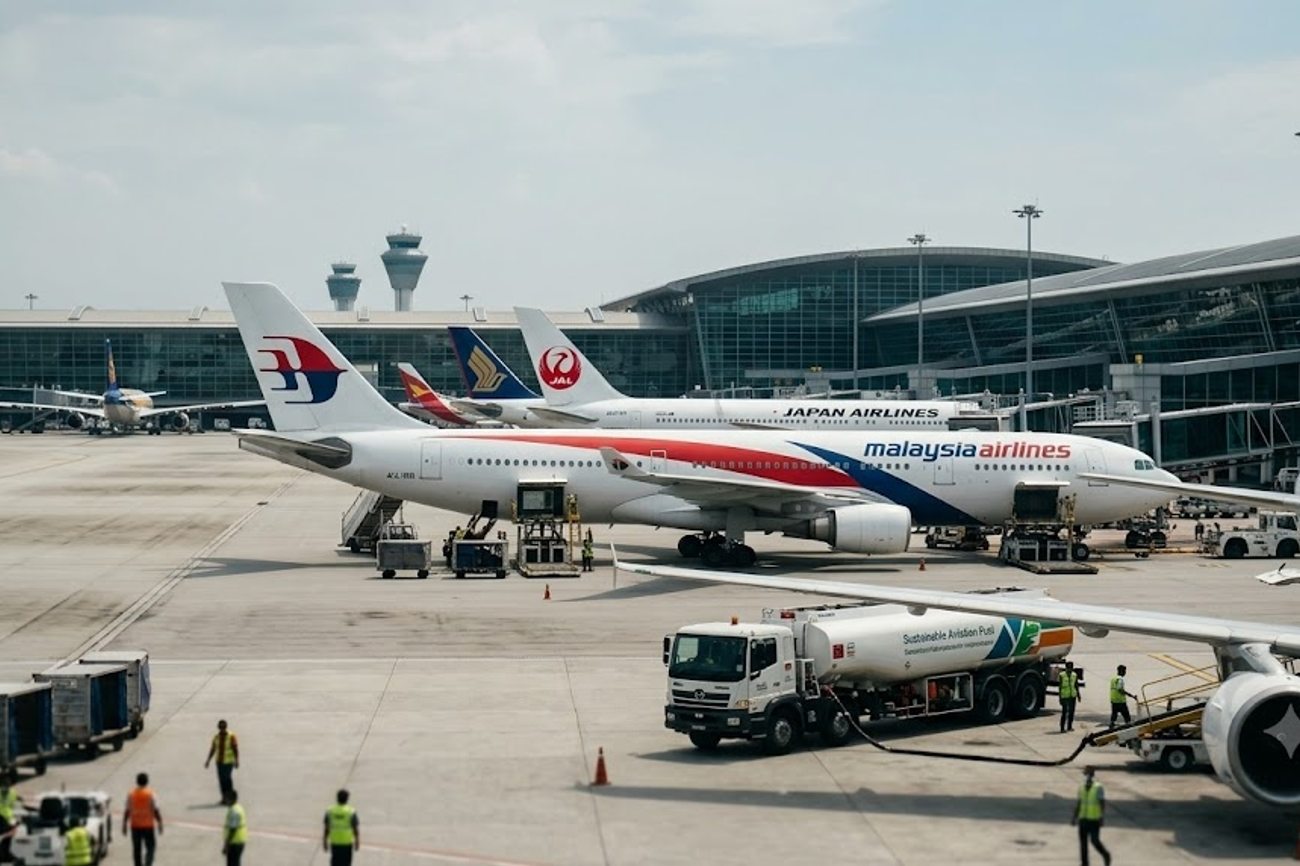
Image generated by AI
[Singapore, October 2024] — Five major Asian economies are aggressively restructuring their aviation sectors to integrate Sustainable Aviation Fuel (SAF), moving from voluntary goals to mandatory blending requirements and direct passenger levies.
Japan, South Korea, Singapore, China, and Malaysia are deploying a mix of regulatory mandates and industrial investments to decarbonize regional travel. While these nations are coordinating to secure future fuel supplies, the International Air Transport Association (IATA) warns of a severe supply-demand gap, projecting that global SAF production will reach only 2.4 million tonnes by 2026—representing a mere 0.8% of total global aviation fuel consumption.
The Catalyst for Regional Transition
The shift is driven by a need to reconcile rapid tourism growth in Asia with international climate commitments. Because aviation is one of the hardest sectors to decarbonize, these governments are shifting the financial burden of cleaner fuels through three primary mechanisms: direct passenger taxes, mandatory blending quotas for airlines, and state-funded industrial scaling.
The economic stakes are high. IATA estimates the industry's SAF-related fuel costs will hit US$4.3 billion this year alone. To prevent these costs from grounding fleets or spiking ticket prices uncontrollably, Asian regulators are attempting to create a predictable "demand signal" that encourages refiners to build more production plants.
National SAF Implementation Strategies
The approach to decarbonization varies significantly by country, reflecting different industrial strengths—ranging from Singapore's focus on procurement funds to South Korea's reliance on its massive refining sector.
Comparative National Frameworks
| Country | Primary Mechanism | Key Target/Deadline | Primary Focus |
|---|---|---|---|
| Singapore | Passenger Levy | Jan 1, 2027 | Funding procurement via SAF Fund |
| Japan | Domestic Substitution | 10% by 2030 | Domestic supply chain & certification |
| South Korea | Blending Mandate | 1% by 2027 | Refining industry integration |
| China | Capacity Expansion | Ongoing | Industrial production scaling |
| Malaysia | Decarbonization Roadmap | Long-term | Sector-wide transition strategy |
Who Is Affected
The transition will impact passengers and operators differently based on their route and ticket class.
- Singapore Departures: Every passenger on eligible flights departing from January 1, 2027, will pay a mandatory levy. Tickets sold from October 1, 2026, must list this as a separate line item.
- Japanese Carriers: Airlines operating within Japan must shift 10% of their fuel consumption to SAF by 2030, though this does not guarantee a 10% blend on every individual flight.
- South Korean International Flights: All international departures from South Korea will face a mandatory 1% SAF blend starting in 2027.
- Regional Hubs: Airports in China and Malaysia are currently upgrading infrastructure to handle the blending and delivery of SAF to aircraft.
What This Means for Travelers
For the average passenger, these policies translate into higher ticket prices and a change in how fares are displayed.
1. Direct Cost Increases (The "Singapore Model") Unlike voluntary "carbon offsets," the Singapore levy is a government-mandated charge. The cost scales by distance and cabin class. For example, an economy passenger flying to New York will pay S$10.40, while a first-class passenger on the same route will pay S$41.60.
2. Ticket Transparency Travelers will see "SAF Levy" or similar terminology as a distinct item in fare breakdowns. This ensures the cost is transparent rather than hidden in the base fare.
3. "Book and Claim" vs. Physical Fuel Passengers should note that paying a levy or flying on a "sustainable" route does not always mean the physical aircraft is burning SAF. Through "environmental attributes" and the Civil Aviation Authority of Singapore (CAAS), funds are used to purchase SAF for the system as a whole, reducing overall emissions even if the specific fuel loaded into a plane is conventional.
The Roadmap to 2035
The most aggressive timelines are currently emerging from South Korea, which has established a binding sliding scale for fuel blending to provide certainty to the market.
South Korean Blending Milestones
- 2027: 1% mandatory blend for all international departures.
- 2030: Target range of 3–5%.
- 2035: Target range of 7–10%.
The European Union Aviation Safety Agency (EASA) and other global bodies are watching these Asian targets closely, as the region's ability to scale production will determine if global aviation can realistically meet net-zero goals. The primary hurdle remains the "feedstock" problem—finding enough sustainable raw materials to produce millions of tonnes of fuel without competing with food supplies.
FAQ: Asia SAF Transition 2024-2035
Will my ticket price go up because of SAF? Yes. In Singapore, a mandatory levy starts in 2027. In other regions, airlines may pass the higher cost of SAF (which is significantly more expensive than kerosene) onto passengers through fuel surcharges.
Does a "SAF Levy" mean my flight is carbon-neutral? No. The levy contributes to a fund that increases the total amount of SAF used in the aviation system. It reduces the collective carbon footprint but does not make an individual flight "zero-emission."
Which Asian countries are leading the transition? Singapore is leading in funding mechanisms (levies), while Japan and South Korea are leading in mandatory blending targets and industrial production goals.
When do these changes start affecting my bookings? For Singapore, the impact begins with tickets sold starting October 1, 2026. South Korean mandates begin in 2027. Other regional impacts will emerge gradually through 2030.
Asia is moving from climate promises to payroll deductions, turning the cost of green flight into a permanent line item on the boarding pass.
#SAF2027 #SingaporeAviation #CAAS #IATA #JapanAviation2030 #SouthKoreaBlending
Related Travel Guides
- Nigeria’s Owerri Airport Set for 25-Day Closure Before Christmas as Authorities Prepare Major Runway Overhaul
- American Airlines A321XLR Elevates US Travel With Lie-Flat Business Class Suites And Premium Onboard Service
- China Expands Travel Capacity Between Beijing And Minsk As Air China Adds More Flights To Belarus
Disclaimer
This article is for informational and educational purposes only. It does not constitute legal, financial, or professional advice. While we strive to provide accurate and up-to-date information, travel policies, regulations, and conditions change rapidly. Always verify information with official sources before making travel decisions. Nomad Lawyer makes no representations about the accuracy, reliability, completeness, or suitability of the information provided. Readers should consult qualified professionals for advice specific to their circumstances. The views expressed in this article are those of the author and do not necessarily reflect the views of Nomad Lawyer.
Naina Thakur
Contributor & Travel Specialist
Travel enthusiast and legal writer covering visa regulations, responsible tourism, and cultural journeys across global destinations.
Learn more about our team →