Thailand Luxury Travel Shines as Four Seasons Bangkok Retains Prestigious Two Michelin Keys Award

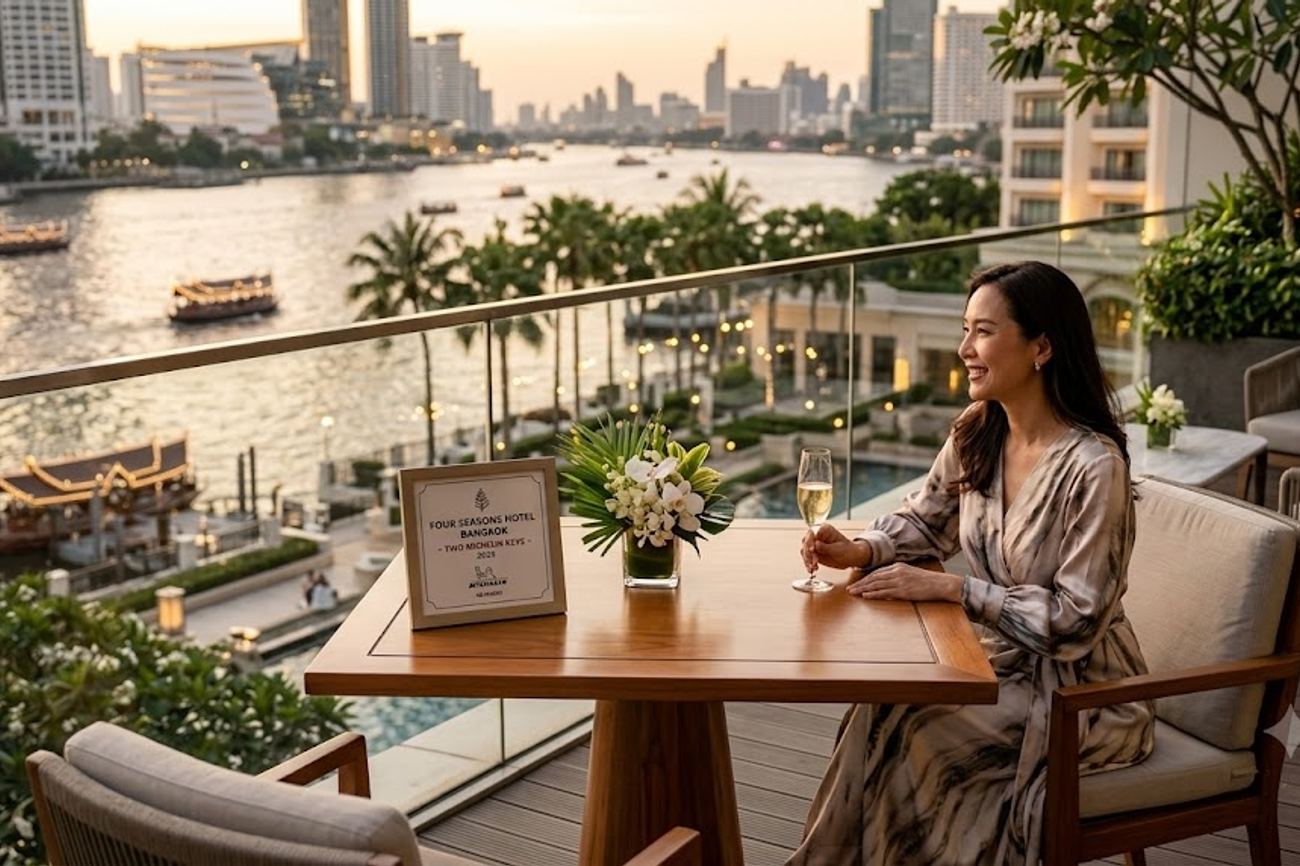
Image generated by AI
title: "The Michelin Effect: Analyzing the Institutionalization of Thai Luxury Hospitality" date: 2025-05-20 category: Industry Analysis author: "Naina Thakur" The transition of the Michelin Key program from a novelty to a benchmark has seen Four Seasons Hotel Bangkok maintain a Two Key rating for three consecutive years, signaling a shift toward standardized luxury auditing in Southeast Asia. This stability is a critical data point when compared to the volatile nature of luxury ratings in emerging markets, where properties often spike in prestige upon opening only to decline as the "newness" fades. The retention of this status through 2026 indicates that the Bangkok riverfront market has moved past a phase of rapid expansion into a phase of operational maturity.
The Michelin Key Metrics: Quantifying Prestige in Bangkok
The 2026 Michelin Guide results for Four Seasons Hotel Bangkok are not merely awards but indicators of specific operational KPIs. The Michelin Key system evaluates properties based on four primary pillars: design excellence, service quality, distinctive identity, and the overall guest experience. For a property to retain Two Keys for three straight years, it must demonstrate a consistent year-over-year (YoY) adherence to these benchmarks despite the increasing competition in the Chao Phraya River corridor.
The data shows a strategic diversification of the guest profile. While the hotel has traditionally targeted the high-net-worth individual (HNWI) adult demographic, the introduction of "Bangkok Unlocked"—a dedicated program for teenage guests—suggests a data-driven pivot toward the multi-generational luxury family segment. This shift is a response to a broader trend identified by the World Travel & Tourism Council (WTTC), which notes a rise in high-spend family travel across Asia-Pacific.
Furthermore, the hotel's expansion into the wellness sector, specifically the planned longevity clinic and enhanced spa experiences, aligns with the global "wellness tourism" surge. According to Statista, the global wellness tourism market has seen a compound annual growth rate (CAGR) that far outpaces traditional leisure travel, forcing luxury hotels to evolve from "places to stay" into "lifestyle health hubs."
Comparative Analysis: The Four Seasons Thailand Portfolio
When analyzing the Four Seasons footprint in Thailand, the distribution of Michelin Keys reveals a clear hierarchy of luxury positioning. The brand has successfully tiered its offerings to capture different segments of the luxury market: the ultra-exclusive retreat, the urban luxury hub, and the coastal escape.
The following table breaks down the current Michelin Key standing across the Three Four Seasons properties in Thailand for the 2026 cycle:
| Property | Location | 2026 Michelin Key Rating | Market Segment | Primary Value Driver |
|---|---|---|---|---|
| Four Seasons Resort Chiang Mai | Northern Highlands | 3 Keys | Ultra-Luxury / Secluded | Cultural Immersion & Privacy |
| Four Seasons Hotel Bangkok | Chao Phraya River | 2 Keys | Urban Luxury / Business | Design & City Connectivity |
| Four Seasons Resort Koh Samui | Gulf of Thailand | 2 Keys | Coastal Luxury / Leisure | Scenic Aesthetics & Wellness |
This distribution shows a strategic "halo effect." The Three Key rating of the Chiang Mai property elevates the brand's overall prestige in the region, while the Two Key ratings in Bangkok and Koh Samui ensure a consistent, high-floor experience for travelers moving between the city and the coast. This consistency is vital for maintaining market share against emerging competitors like Aman and Rosewood, who are aggressively expanding their Thai portfolios.
Practical Traveler Advisory and Strategic Insights
For the individual traveler, the institutionalization of these ratings means that "luxury" is becoming more predictable and audited. If you are planning a trip to Bangkok in 2026, these data points suggest several actionable booking strategies:
- Booking Lead Times: With the 2026 Michelin Guide reinforcing the status of riverfront properties, demand for "Key-rated" hotels will peak during the high season (November to February). To secure preferred river-view suites at properties like Four Seasons Bangkok, a booking window of 12-16 weeks is now recommended to avoid the premium surge pricing that typically follows these announcements.
- Family Planning: The "Bangkok Unlocked" initiative means that luxury riverfront hotels are now viable for families with teenagers. Travelers no longer need to compromise on luxury to find age-appropriate engagement for teens, making the Chao Phraya riverfront a more competitive choice compared to traditional beachfront resorts.
- Wellness Integration: The shift toward longevity clinics suggests that travelers can now integrate medical-grade wellness into their leisure itineraries. If your goal is health-optimization, scheduling appointments at these specialized clinics should be done concurrently with room reservations, as these services often operate on a limited-capacity, appointment-only basis.
Forward Projection: The Evolution of the "Lifestyle Hub"
The trajectory of the Four Seasons Hotel Bangkok suggests that the next 24 months will see a transition from "Hospitality" to "Integrated Wellness." The planned longevity clinic is the most telling data point. It indicates that luxury hotels are moving toward a model where they act as the primary healthcare and wellness coordinators for the traveler.
We can expect a regional trend where other riverfront properties in Bangkok will be forced to mirror this "longevity" model to maintain their competitive edge. The competition is no longer about the thread count of the linens or the quality of the concierge, but about the measurable biological impact of the stay. As the International Air Transport Association (IATA) reports shifts in long-haul travel patterns, we anticipate an increase in "wellness-centric" stopovers in Bangkok, where travelers stay for 3-5 days specifically for clinic treatments before continuing to other destinations.
The data suggests that the "Two Key" status is the new baseline for the Bangkok riverfront. The next battleground for these properties will be the pursuit of the Third Key, which will likely require a deeper integration of hyper-personalized, AI-driven guest services and more aggressive expansions into the medical-wellness space.
FAQ: Thailand Luxury Trends 2026
Will room rates increase following the 2026 Michelin Guide? Yes. Historically, properties that retain or upgrade their Michelin Key status see a corresponding increase in Average Daily Rate (ADR). Travelers should expect a 5-10% premium on "Key-rated" properties during peak demand windows.
Is the Bangkok riverfront still the best area for luxury stays? The data indicates yes. The concentration of Two and Three Key properties along the Chao Phraya River suggests this remains the epicenter of high-end hospitality, offering a blend of cultural access and architectural prestige.
Which properties are leading the luxury market in Thailand? Four Seasons currently holds a dominant position with a diversified portfolio across Chiang Mai (3 Keys), Bangkok (2 Keys), and Koh Samui (2 Keys), creating a comprehensive luxury circuit for high-spend travelers.
When is the best time to book a Michelin-rated hotel in Bangkok? For the 2026 season, booking 3-4 months in advance for Q4 and Q1 stays is essential to avoid peak pricing and ensure availability of specialized wellness services.
The era of the hotel as a mere sleeping quarters is dead; the era of the hotel as a longevity clinic has begun.
Related Travel Guides
- Konkan Coast Travel Gets a New Coastal Escape With Lotus Eco Beach Resort’s Beachfront Retreat in Dapoli
- Monkey Bar’s Flavour Riot Returns With A Special Sindhi Brunch Celebrating Traditional Home Cooking
- Japan Aligns With China and More Countries to Drive a Sustainable Food Tourism Boom, Transforming Farm-to-Table Travel Across Asia
This article is for informational purposes. Flight routes, passenger regulations, visa rules, and transit advisories are subject to change by airlines and aviation authorities. Readers are advised to verify schedules and travel documentation with relevant carriers and border agencies before departure.
Related Stories

Marriott Unveils 2026 Holiday and New Year Programmes Across 11 Luxury Resorts in the Americas

EU Probes Booking.com Under Digital Services Act Over Fake Hotel Listings, Hijacked Reservations, and Search Ranking Transparency