
Taphophilia Travel: Exploring Europe’s Grandest Historic Cemeteries and Open-Air Necropolises for Autumn 2026
Autumn travel across Europe is embracing taphophilia—the respectful exploration of historic cemeteries. Discover the architecture, notable burials, and conservation protocols of Highgate, Père Lachaise, Old Jewish Cemetery, and Cimitero Monumentale.

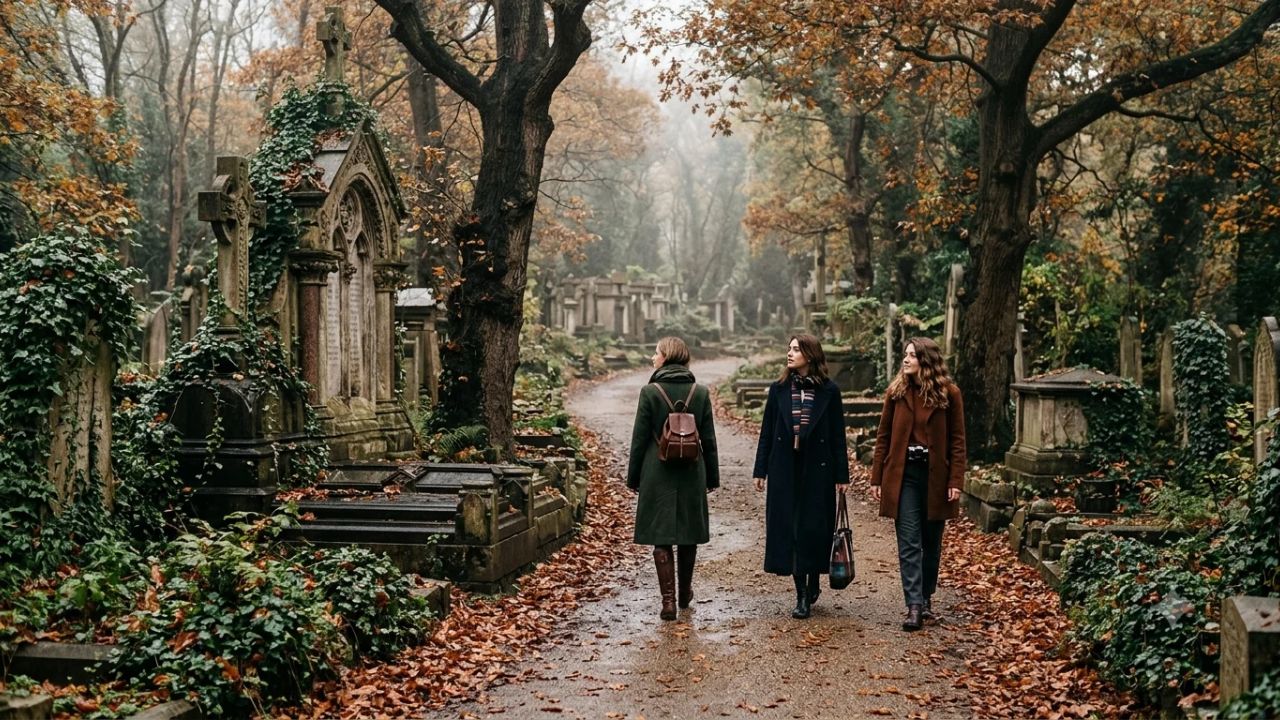
Autumn travel across Europe is undergoing an intellectual shift, as travellers move away from manufactured Halloween spectacles toward taphophilia—the respectful exploration of historic cemeteries and open-air necropolises celebrated as open-air museums of sculpture, architectural grandeur, and ecological refuge.
Derived from the Greek words taphos (tomb) and philia (affinity or love), taphophilia represents a thoughtful dimension of cultural heritage travel. Far from sensationalist dark tourism or morbid fascination, cemetery tourism treats historic burial grounds as living archives. These sites chronicle evolving religious attitudes, public health revolutions, social structures, and master craftsmanship across centuries.
Formally recognized by the Council of Europe through the European Cemeteries Route—developed in partnership with the Association of Significant Cemeteries in Europe (ASCE)—these preserved landscapes showcase monumental artistic movements spanning medieval Jewish vertical interments, Victorian garden planning, Gothic Revival masonry, Neoclassical pantheons, and Art Nouveau bronzes. October’s thinning tree canopies and morning mists provide an evocative backdrop to explore these solemn outdoor sanctuaries with care and reverence.
            EUROPE'S HISTORIC FUNERARY HERITAGE NETWORK
            ===========================================

       [ HIGHGATE CEMETERY (LONDON, UK) ]
       • Established 1839 (Magnificent Seven)
       • Victorian Gothic Revival, Egyptian Avenue & Catacombs
       • Karl Marx Bronze Bust & George Eliot Memorial
                           │
                           ▼
       [ PÈRE LACHAISE (PARIS, FRANCE) ]
       • Founded 1804 by Napoleon I (110 Acres / 44 Hectares)
       • Pioneer of the English Romantic Garden Necropolis
       • Oscar Wilde, Jim Morrison, Frédéric Chopin & Édith Piaf
                           │
                           ▼
       [ OLD JEWISH CEMETERY (PRAGUE, CZECH REPUBLIC) ]
       • 15th Century to 1787 (Josefov Historical Quarter)
       • Layered Burial History: Up to 12 Tiers Deep (12,000 Headstones)
       • Tomb of Rabbi Judah Loew ben Bezalel (The Maharal)
                           │
                           ▼
       [ CIMITERO MONUMENTALE (MILAN, ITALY) ]
       • Opened 1866 (Architect Carlo Maciachini)
       • Open-Air Marble Sculpture Museum & Civico Famedio
       • Campari Family Bronze Tomb (The Last Supper)
The Evolution of Taphophilia: From Gothic Romanticism to Cultural Preservation
The practice of visiting cemeteries as contemplative destinations gained prominent momentum in the early 19th century. During the Industrial Revolution, inner-city churchyards across major European capitals became overwhelmed by rapid urbanization and cholera outbreaks, forcing municipalities to establish expansive, landscaped garden necropolises outside city limits.
These suburban burial grounds were deliberately engineered as public parks before municipal public gardens existed. Urban residents visited not only to mourn family members, but to walk along shaded avenues, admire classical marble monuments, and escape urban soot.
Today, the Association of Significant Cemeteries in Europe (ASCE) works alongside UNESCO and municipal governments to safeguard these necropolises. Beyond their cultural and historical significance, historic cemeteries serve as critical urban biodiversity reserves. Their undisturbed soil, mature cedar and oak canopies, and weathered stone structures support rare mosses, nesting songbirds, urban foxes, and pollinator colonies, creating green lungs within high-density metropolitan centres.
Comparative Guide: Europe’s Premier Heritage Necropolises
Each of Europe's major historic cemeteries reflects the artistic aesthetics, religious customs, and civic ambitions of its era:
| Necropolis & Location | Founding Era & Heritage Status | Signature Architectural & Sculptural Style | Notable Burials & Landmark Monuments | Practical Ticketing & Access Protocols |
|---|---|---|---|---|
| Highgate Cemetery London, United Kingdom |
Established 1839 Grade I Historic Park & Garden |
Victorian Gothic Revival, Egyptian Avenue, circular catacombs | Karl Marx, George Eliot, Douglas Adams, Michael Faraday | East: Paid walk-in admission West: Advance-booked guided tours mandatory |
| Père Lachaise Paris, France |
Founded 1804 Protected Historic Monument |
English romantic garden style, Neoclassical chapels, Art Nouveau | Oscar Wilde, Jim Morrison, Frédéric Chopin, Édith Piaf, Marcel Proust | Free general admission Enter via Gambetta Métro to walk downhill |
| Old Jewish Cemetery Prague, Czech Republic |
Early 15th Century to 1787 National Cultural Monument |
Layered Gothic and Renaissance stone slabs, Hebrew epitaphs | Rabbi Judah Loew ben Bezalel, Mordecai Maisel, David Gans | Comprehensive Jewish Museum ticket required Strictly closed on Saturdays |
| Cimitero Monumentale Milan, Italy |
Opened 1866 Civic Open-Air Museum |
Italian Eclectic, Neoclassical realism, Art Nouveau (Stile Liberty) | Alessandro Manzoni, Campari Family Last Supper, Pirelli Family | Free admission Closed on Mondays; architectural maps available |
Highgate Cemetery: London’s Victorian Gothic Masterpiece
Situated on a steep hillside overlooking north London, Highgate Cemetery was established in 1839 as one of the capital's "Magnificent Seven"—a ring of commercial garden cemeteries authorized by Parliament to relieve overcrowded inner-city church crypts. Encompassing 37 acres of mature woodland, Highgate is listed at Grade I on the Register of Parks and Gardens of Special Historic Interest.
Highgate is divided into two distinct sections separated by Swain's Lane, each offering a contrasting visitor experience:
The West Cemetery: Subterranean Wonder and Romantic Decay
The West Cemetery is an extraordinary showcase of Victorian funerary engineering and 19th-century Egyptomania, built following Britain's fascination with Nile archaeology:
- Egyptian Avenue: A sunken carriage avenue entered through a massive stone gateway flanked by fluted obelisks and lotus capitals. The avenue is lined with sixteen private family vaults cut directly into the hillside.
- The Circle of Lebanon: Rising above the Egyptian Avenue, this circular ring of 36 vaulted family tombs was constructed around an ancient Cedar of Lebanon tree that pre-dated the cemetery by more than a century.
- The Terrace Catacombs: An imposing brick-and-ashlar subterranean gallery featuring 825 individual coffin recesses (loculi), illuminated by overhead skylights.
- Conservation Access: Due to sensitive ecological conditions, shifting ground, and delicate stonework, the West Cemetery is accessible primarily through official guided heritage tours. Visitors planning autumn visits must reserve tickets at least two weeks in advance.
The East Cemetery: Philosophical Memorials and Natural Woodland
Opened in 1854 as an extension to accommodate rising demand, the East Cemetery allows visitors to explore at their own pace for a modest conservation entry fee.
Its most visited monument is the monumental bronze bust of Karl Marx, sculpted by Laurence Bradshaw and erected in 1956 over the philosopher’s tomb. Nearby lie the graves of Victorian novelist George Eliot (Mary Ann Evans), philosopher Herbert Spencer, pop icon George Michael, and Hitchhiker’s Guide to the Galaxy author Douglas Adams (traditionally decorated by fans with ballpoint pens).
Visitor Logistics: Take the London Underground Northern Line to Archway Station, followed by a picturesque but steep uphill walk through Waterlow Park. Sturdy footwear is essential on uneven, moss-covered gravel paths.
Père Lachaise: Paris’s Romantic Garden Pantheon
Welcoming more than three million visitors annually, Père Lachaise Cemetery (Cimetière du Père-Lachaise) in Paris’s 20th arrondissement is the most visited burial ground on Earth. Founded by Napoleon I in 1804 and designed by architect Alexandre-Théodore Brongniart, it was the first municipal cemetery in the world conceived as an English-style romantic landscape park.
Encompassing 110 acres (44 hectares) and more than 70,000 burial plots, Père Lachaise was initially considered too distant from central Paris by the French bourgeoisie. To boost its appeal, Napoleon’s administrators orchestrated the transfer of the remains of French playwright Molière and fabulist Jean de La Fontaine to the cemetery in 1804. The public relations strategy succeeded, establishing Père Lachaise as the premier resting place for European luminaries.
Notable Memorials and Gravesites
- Oscar Wilde (Division 89): The Irish playwright's tomb features a striking modernist flying sphinx carved from a 20-ton block of Derbyshire stone by sculptor Jacob Epstein. For decades, admirers kissed the monument, leaving thousands of lipstick marks that damaged the porous stone. In 2011, the Irish and French governments restored the monument and installed a high protective glass barrier around it.
- Jim Morrison (Division 6): The front-man of The Doors was buried here following his death in Paris in 1971. His simple stone marker, bearing the Greek inscription Kata Ton Daimona Eaytoy ("True to his own spirit"), remains an active site of pilgrimage, protected by perimeter crowd barriers.
- Classical Arts and Literature: The grounds shelter the exquisite tomb of Polish composer Frédéric Chopin, sculpted by Auguste Clésinger and topped with a marble statue of Euterpe, the muse of music; the modest family grave of chanteuse Édith Piaf; the resting place of author Marcel Proust; and the monument of Italian composer Gioachino Rossini.
- Memorials to the Deported: Along the eastern perimeter, solemn modern sculptures pay tribute to French citizens murdered in Nazi concentration camps during the Second World War.
Visitor Logistics: Rather than entering via the main boulevard gates at the Père Lachaise Métro station, enter via the uphill Gambetta Métro Station (Line 3). This allows a gentle downhill descent through the cobblestone alleys. Download an offline PDF map from the City of Paris portal beforehand, as mobile phone signals drop among the massive granite mausoleums.
The Old Jewish Cemetery: Prague’s Compressed Centuries
Tucked inside Prague’s historic Josefov quarter, the Old Jewish Cemetery is one of the most significant and emotionally arresting Jewish heritage sites in Europe. Established in the early 15th century, with its oldest confirmed tombstone dating to 1439 (the poet Avigdor Kara), the cemetery operated continuously until 1787.
The cemetery's crowded appearance is the direct consequence of medieval anti-Semitic civic decrees. Medieval authorities prohibited Prague’s Jewish community from buying additional land outside the fortified ghetto walls. Adhering to Jewish religious law, which strictly forbids the exhumation or disturbance of existing graves, the community was forced to add layers of fresh topsoil over older interments.
Over three centuries, graves were layered vertically up to twelve tiers deep. As ground settled over time, older gravestones were brought to the surface, creating an extraordinary landscape where more than 12,000 lichen-crusted, leaning stone slabs are tightly packed across irregular earthen mounds.
                  PRAGUE'S VERTICAL BURIAL TOPOGRAPHY
                  ===================================

    SURFACE GROUND LEVEL ───────► Over 12,000 Exposed Headstones
                                  Leaning at Dramatic Angles
                                  Lichen-Covered Sandstone & Marble
                                         │
        Tier 1 to Tier 3         ────────┼── Upper 18th-Century Interments
                                         │
        Tier 4 to Tier 7         ────────┼── 17th-Century Renaissance Burials
                                         │
        Tier 8 to Tier 12        ────────┴── 15th-Century Medieval Foundation
                                             Deepest Sub-Surface Sanctified Layers
The Tomb of Rabbi Judah Loew ben Bezalel
The cemetery's primary pilgrimage site is the Renaissance tomb of Rabbi Judah Loew ben Bezalel (known as the Maharal of Prague, d. 1609). A revered philosopher, mathematician, and chief rabbi, he is immortalized in central European folklore as the creator of the Golem of Prague—a clay automaton brought to life through mystical Hebrew incantations to defend the Jewish community from persecution.
Visitors from across the globe continue the Jewish tradition of placing small stones, alongside handwritten prayer petitions (kvittel), onto the top of his stone sarcophagus.
Visitor Logistics: The Old Jewish Cemetery cannot be entered independently; it is accessed exclusively via the comprehensive ticket issued by the Jewish Museum in Prague, which also includes admission to the nearby Pinkas, Klausen, and Spanish Synagogues. The site is strictly closed on Saturdays and Jewish holidays. Arrive at opening time (9:00 AM) to navigate the narrow elevated wooden boardwalks before morning tour groups arrive.
Cimitero Monumentale: Milan’s Open-Air Marble Gallery
Opened in 1866 and designed by master architect Carlo Maciachini, Milan’s Cimitero Monumentale was conceived from its foundation not merely as a burial ground, but as an open-air museum celebrating the industrial power, wealth, and artistic sophistication of unified northern Italy.
Covering more than 60 acres, the necropolis displays the artistic progression of Italian sculpture over a century, moving from 19th-century academic realism and dramatic neoclassical allegories to exuberant Art Nouveau (Stile Liberty) and modernist abstraction.
Architectural Landmarks and Dynasty Mausoleums
- The Civico Famedio (Hall of Fame): Anchoring the main entrance, this massive neo-medieval, blue-domed structure constructed in alternating bands of white and grey marble functions as the pantheon for Milan’s most illustrious citizens. It houses the sarcophagus of celebrated Italian novelist and patriot Alessandro Manzoni, alongside civic leaders and scientists.
- The Campari Family Tomb: Among hundreds of private family chapels, the Campari beverage dynasty tomb stands out. Sculpted in bronze by Giannino Castiglioni in 1935, the monument features an astonishing life-sized, high-relief interpretation of Leonardo da Vinci’s The Last Supper.
- Industrial Dynasty Pavilions: Towering stone obelisks, bronze angels, and sculptural tableaux commemorate Milan’s manufacturing giants, including the Pirelli, Falck, Bocconi, and Bernocchi families.
- The Crematorium Temple: Completed in 1876, this Doric-style temple was one of the earliest purpose-built cremation facilities in the Western world, reflecting Milan’s progressive 19th-century public health initiatives.
Visitor Logistics: Admission to Cimitero Monumentale is free of charge, but the cemetery is closed on Mondays. Wide, unshaded paved avenues run between the tombs; pick up a detailed architectural walking guide from the information desk inside the main entrance court. The cemetery is easily accessible via the Monumentale Station on Milan Métro Line M5.
Responsible Taphophilia: Funerary Heritage Etiquette
Because historic necropolises are active resting places, open-air museums, and delicate ecological sanctuaries, visitors must adhere to strict codes of conduct:
- Stay Strictly on Established Pathways: Wandering between tightly grouped headstones compacts soil, destroys vulnerable mosses, and damages tree root networks. At sites like Highgate and Prague, walking off-trail risks destabilizing centuries-old stone markers.
- Observe Solemn Decorum: Historic cemeteries are places of remembrance. Speak in hushed tones, silence mobile devices, and never sit on, climb over, or lean against headstones, sarcophagi, or decorative iron railings.
- Photography Ethics: Non-commercial photography of monuments and landscape architecture is generally permitted. However, avoid photographing mourners attending active funerals, and never pose disrespectfully with statues or grave markers for social media.
- Support Conservation Trusts: Many heritage cemeteries operate without direct state funding, relying on ticket revenue and non-profit trusts to pay for stonemasons, structural engineers, and arborists. Booking official guided tours directly funds the stabilization of leaning mausoleums and crumbling crypts.
Curated European Taphophilia Travel Circuit
For travellers designing a focused cultural journey across Europe's historic necropolises, this multi-city rail itinerary links all four major sites efficiently:
| Stage | Base City | Featured Necropolis | Recommended Travel Window | Transit & Route Details |
|---|---|---|---|---|
| Leg 1 | London, UK | Highgate Cemetery (West & East) | 1–2 Days (Late October) | Northern Line to Archway; guided West Cemetery tour |
| Leg 2 | Paris, France | Père Lachaise Cemetery | 2 Days (Late October) | Eurostar rail from London St Pancras to Paris Gare du Nord (2 hrs 20 mins) |
| Leg 3 | Milan, Italy | Cimitero Monumentale | 1–2 Days (Early November) | High-speed TGV rail from Paris Gare de Lyon to Milan Centrale (approx. 7 hrs) |
| Leg 4 | Prague, Czech Republic | Old Jewish Cemetery | 2 Days (Early November) | European flight connection or overnight sleeper rail from Milan |
Frequently Asked Questions
What does taphophilia mean in the context of travel?
Taphophilia refers to the respectful interest in and study of historic cemeteries, funerary architecture, epitaphs, and gravesites. In modern tourism, it represents a recognized cultural heritage pursuit focusing on art history, open-air sculpture, and local biography.
Do visitors need tickets to visit Père Lachaise in Paris?
No. General admission to Père Lachaise Cemetery is free for all visitors. However, downloading an official offline map before visiting is strongly advised, as cellular coverage is limited within the dense stone grounds.
Why is an advance booking required for Highgate Cemetery's West side?
The West Cemetery contains delicate Victorian catacombs, the Egyptian Avenue, and sensitive woodland ecosystems prone to erosion. To preserve the Grade I listed historic landscape, access is restricted to official guided heritage tours, which sell out weeks in advance.
Can visitors buy standalone tickets for Prague’s Old Jewish Cemetery?
No. The Old Jewish Cemetery can only be visited with a comprehensive admission ticket from the Jewish Museum in Prague, which covers adjacent historic synagogues and heritage exhibitions. The site is strictly closed on Saturdays and Jewish holidays.
Related Travel Guides
- Stratford, Ontario Unveils Its Quiet Season: How November Reinvents Cultural Tourism with Riverside Trails, Heritage Museums, and Culinary Adventures
- Thompson, Manitoba Reimagines Northern Shoulder-Season Travel: Grassroots Hockey, Youth Events, and Community Tourism Anchor November 2026
- Edmonton Reinvents Canada’s Winter Tourism: Glowing Christmas Markets, River Valley Ice Escapes, and Indigenous Cultural Celebrations Anchor the 2026 Season
Disclaimer
This article is for informational and educational purposes only. It does not constitute legal, financial, or professional advice. While we strive to provide accurate and up-to-date information, travel policies, regulations, and conditions change rapidly. Always verify information with official sources before making travel decisions. Nomad Lawyer makes no representations about the accuracy, reliability, completeness, or suitability of the information provided. Readers should consult qualified professionals for advice specific to their circumstances. The views expressed in this article are those of the author and do not necessarily reflect the views of Nomad Lawyer.
Preeti Gunjan
Contributor & Community Manager
A passionate traveller and community builder. Preeti helps grow the Nomad Lawyer community, fostering engagement and bringing the reader experience to life.
Learn more about our team →