
Inside Czechia’s Ghost Church: 32 Plaster Phantoms Anchor Halloween 2026 Travel in Western Bohemia
The 14th-century Church of St. George in Luková, Czechia, featuring 32 hooded plaster ghosts, anchors western Bohemia's Halloween 2026 cultural tourism.

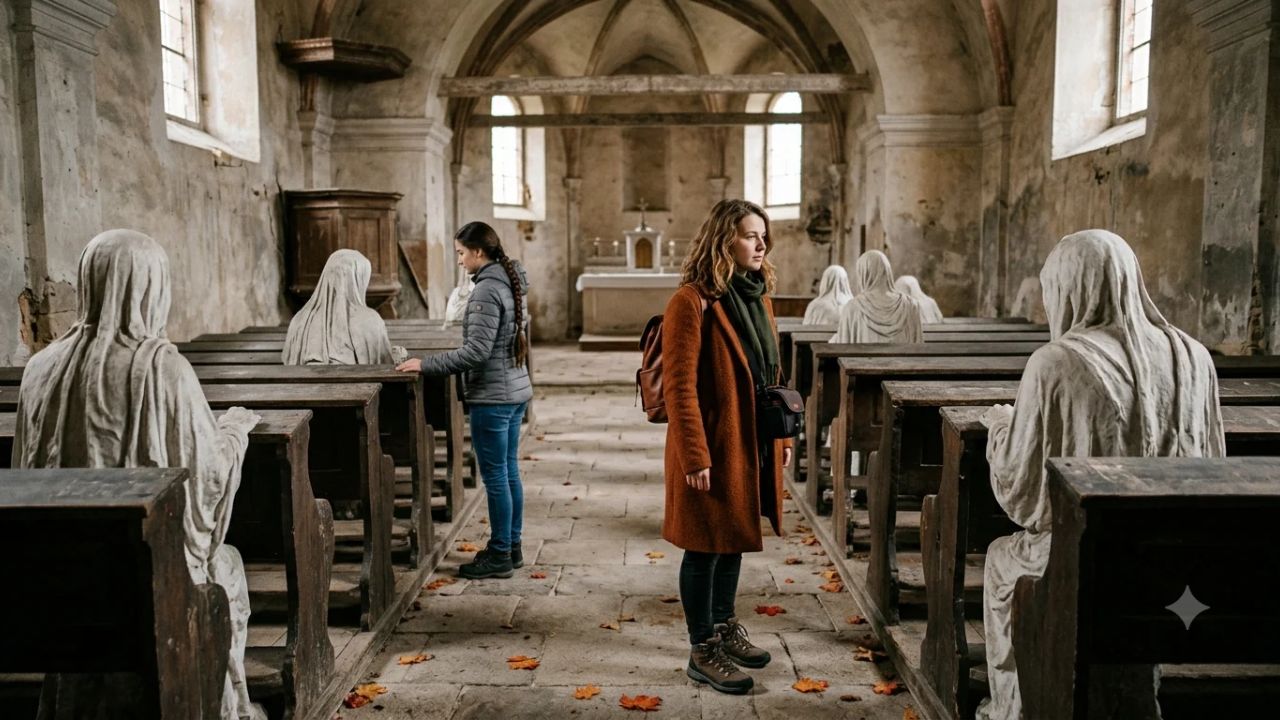
[LUKOVÁ, Oct 22, 2026] — In the tranquil rural hills of western Bohemia, an abandoned fourteenth-century sanctuary has emerged as Central Europe’s most compelling alternative destination for Halloween 2026, drawing international travelers to the silent congregation of the Church of St. George. Situated in the tiny hamlet of Luková near Plzeň, the historic temple—officially documented as Kostel svatého Jiří—houses an acclaimed permanent art installation of 32 hooded, lifelike plaster phantoms seated quietly among decomposing wooden pews. Promoted by CzechTourism as a profound counterweight to commercialized seasonal haunted houses, the monument pairs an unsettling gothic atmosphere with poignant historical remembrance, functioning as a solemn memorial to the region's displaced post-war Sudeten German community while funding grassroots structural preservation.
[!NOTE] Executive Summary: Key Architectural, Historical & Visiting Benchmarks
- Monument Identification: Church of St. George (Kostel svatého Jiří), located in Luková, Manětín municipality, Plzeň Region, Czechia.
- Historical Provenance: Founded in the fourteenth century (1352); rebuilt in neo-Gothic and Romanesque styles following nineteenth-century fires.
- The Collapse & Abandonment: During a funeral service in 1968, the interior plaster ceiling collapsed; local parishioners interpreted the structural failure as an evil omen and abandoned the building to decades of decay.
- The 32 Phantom Sculptures: Created in 2012 by art student Jakub Hadrava, who draped plaster-soaked canvas over living models to evoke the spirits of former Sudeten German residents.
- Seasonal Access Window: The official visiting season runs from May through 31 October 2026 (closing promptly after Halloween).
- Published Operating Hours: Standard visiting access is restricted to 13:00 to 16:00 (1:00 PM to 4:00 PM); no authorized midnight or late-night Halloween access is scheduled at the church.
- Accessibility Limitations: Listed by the National Heritage Institute (Národní památkový ústav - NPÚ) as not wheelchair accessible due to uneven stone steps and unpaved terrain.
- Regional Cultural Pairing: Located 7 kilometers from Manětín Château (Státní zámek Manětín), which hosts a ticketed Halloween program on 31 October 2026 featuring daytime tours (10:00–16:00) and an evening lantern event (17:00–21:00).
LUKOVÁ GHOST CHURCH: HISTORICAL & OPERATIONAL TIMELINE
| Column 1 |
|---|
| 1352: FOUNDATION & MEDIEVAL SANCTUARY |
| * Fourteenth-century gothic parish established in the Kingdom of Bohemia |
| * Rebuilt and modified with neo-Gothic elements following multiple nineteenth-century fires |
| v |
| 1968: THE ROOF COLLAPSE & SUPERSTITIOUS EXODUS |
| * Ceiling caves in during a funeral; parishioners interpret collapse as an omen |
| * Church abandoned; decades of looting, vandalism, and environmental decay |
| v |
| 2012: JAKUB HADRAVA'S 32 PLASTER PHANTOMS |
| * University thesis installation created using plaster-soaked fabric on living models |
| * Memorializes displaced post-WWII Sudeten German inhabitants |
| v |
| HALLOWEEN 2026 TRAVEL PROTOCOLS (Saturday, 31 October 2026) |
| =========================================================== |
| * Admission: Voluntary Donation for Structural Roof Restoration |
| * Nearby Pairing: Manětín Château Evening Event (17:00 to 21:00, Reservations Req.) |
Origins of an Eerie Legend: From Medieval Parish to Ruined Sanctuary
The Church of St. George sits atop a gentle knoll overlooking the rural village of Luková, roughly 45 kilometers north of Plzeň. Records maintained by the National Heritage Institute (Národní památkový ústav) trace the church’s founding to the mid-fourteenth century, with its earliest confirmed historical mention documented in 1352. Over the centuries, the sanctuary endured the turbulence of the Hussite Wars, the Thirty Years' War, and devastating structure fires in 1796 and the mid-nineteenth century, each followed by gradual reconstructions that introduced neo-Gothic and Romanesque architectural accents to its medieval nave.
CHURCH OF ST. GEORGE STRUCTURAL & HISTORICAL ASSET SHEET
| Column 1 |
|---|
| Historical / Operational Asset Recorded Heritage Details |
| ------------------------------ ------------------------- |
| Official Czech Name Kostel svatého Jiří v Lukové |
| Administrative Location Luková, Manětín Municipality, Plzeň-North District |
| Earliest Documented Mention 1352 (Fourteenth Century) |
| Architectural Evolution Medieval Gothic core with 19th-century reconstructions |
| The Turning-Point Catastrophe 1968 ceiling collapse during a funeral ceremony |
| Heritage Protection Status Listed on the Central Registry of Cultural Monuments |
| Installation Artist Jakub Hadrava (Faculty of Design and Art, UWB) |
| Year of Artistic Installation 2012 (Bachelor Thesis Project) |
| Total Count of Sculptures 32 Plaster-Cast Ghost Figures |
The pivotal event that cemented the sanctuary’s ghostly reputation occurred in 1968. During a local funeral service, a massive section of the ceiling plaster and roof support caved in, sending debris crashing into the pews below. Miraculously, no mourners were killed, but local residents interpreted the sudden collapse during a burial rite as a divine curse.
Fearing supernatural misfortune, the congregation refused to enter the building again. Regular religious services were permanently relocated outside to open-air settings, and the interior was left exposed to rain, winter frost, and vandalism. Over the following four decades, pews warped, stained-glass windows were smashed, metal furnishings were looted, and the church became an abandoned shell on the verge of total collapse.
Thirty-Two Silent Worshippers: The 2012 Artistic Transformation
By 2012, the Church of St. George was slated for demolition due to dangerous structural instability. Lacking public municipal funds for rural historic preservation, local caretaker Petr Koukl sought creative ways to raise awareness and financing to save the fourteenth-century monument.
Enter Jakub Hadrava, an art student at the Ladislav Sutnar Faculty of Design and Art at the University of West Bohemia in Plzeň. Tasked with producing a graduation bachelor thesis, Hadrava conceived a conceptual installation titled "My Mind" (Má mysl). Rather than crafting traditional decorative statues, Hadrava enlisted fellow university students as living models, wrapping them in plastic sheets and draping them in fabric soaked with liquid plaster.
ANATOMY OF HADRAVA'S 32 PHANTOM INSTALLATION
| Column 1 |
|---|
| Sculptural Element Artistic Technique & Symbolic Resonance |
| ------------------ --------------------------------------- |
| Figure Count 32 Discrete Lifelike Statues |
| Fabrication Medium Coarse canvas fabric soaked in molding plaster |
| Sculptural Casting Technique Direct draping around living student human models |
| Spatial Distribution Pew seating, aisle standing, and altar prayer stances |
| Faceless Contours Hollow, downward-tilted hoods evoking silence |
| Symbolic Dedication Memorial to former Sudeten German village residents |
| Phosphorescent Elements Subtle luminescence under specialized ultraviolet light |
Once the plaster hardened, Hadrava extracted the living models, leaving behind hollow, lightweight shells that retained the natural posture, slumped shoulders, and draped folds of living humans. A total of 32 figures were installed throughout the abandoned nave. Some sit slumped together in decaying wooden pews, heads bowed in silent prayer; others stand alone along the side aisles or hover near the altar.
Strikingly, the figures possess no sculpted faces. Beneath deep, shadowed hoods, visitors encounter only empty black voids. To heighten the visual impact, Hadrava treated portions of the plaster with phosphorus pigments, allowing the sculptures to emit a faint, ghostly glow when illuminated by specialized lighting.
A Memorial to Sudeten German Memory
While viral social media posts often characterize the installation as an eerie haunted-house novelty, Hadrava designed the figures with serious historical intent. Before World War II, Luková—then known by its German name Lukowa—was an agricultural village populated predominantly by ethnic German Bohemians (Sudeten Germans). Following the conclusion of the war and the implementation of the Beneš decrees in 1945–1946, the German-speaking population was expelled from western Bohemia, severing centuries of cultural and religious continuity.
The 32 statues represent the ghosts of those former German parishioners who built the church, celebrated baptisms within its walls, and were buried in its surrounding churchyard. They sit as eternal worshippers frozen in time, quietly holding vigil over a home they were forced to abandon. This layer of historical mourning transforms a spooky Halloween stop into a moving encounter with European memory.
Visitor Logistics for Halloween 2026: Essential Rules and Opening Hours
For travelers planning a Halloween getaway on Saturday, 31 October 2026, visiting the Church of St. George requires precise operational scheduling. Because the site is managed by a small volunteer heritage committee rather than a full-time state tourism staff, visiting access is strictly circumscribed.
LUKOVÁ GHOST CHURCH HALLOWEEN 2026 VISITING PROTOCOLS
| Column 1 |
|---|
| Visiting Parameter Official Operational Directive |
| ------------------ ------------------------------ |
| Target Travel Date Saturday, 31 October 2026 (Halloween Day) |
| Operational Season May 1 through October 31, 2026 |
| Seasonal Closure Milestone 31 October 2026 marks the FINAL open day of 2026 |
| Published Visiting Hours 13:00 to 16:00 (1:00 PM to 4:00 PM) ONLY |
| Halloween Evening Entry STRICTLY PROHIBITED (No night tours at the church) |
| Admission Fee Standard Voluntary donation box (funds structural roof repair) |
| Advance Digital Ticketing Not available; on-site cash donation preferred |
| Physical Accessibility NOT wheelchair accessible (uneven stone terrain) |
| Visitor Conduct Strictly no touching, sitting on, or moving figures |
The October 31 Seasonal Cut-Off
October 31 is the official final day of the church’s annual visiting season. Following Halloween afternoon, the sanctuary closes its heavy timber doors for the winter, remaining shuttered from November through April to protect the fragile plaster figures from freezing temperatures and interior dampness.
Daytime Only: No Midnight Access
Contrary to common misconceptions circulating online, the Church of St. George does not operate an evening, midnight, or overnight Halloween program. Official opening hours on 31 October 2026 are strictly 13:00 to 16:00 (1:00 PM to 4:00 PM). The church is locked promptly at 16:00. Trespassing on the grounds after dark is illegal, monitored by local security cameras, and strictly enforced by regional police patrols.
Admission and Physical Accessibility
There is no formal commercial ticket counter or electronic turnstile. Visitors contribute voluntary cash donations into a dedicated preservation box at the entrance. Every euro or Czech Koruna (CZK) deposited by travelers directly funds ongoing roof stabilization, masonry repairs, and security upgrades overseen by the volunteer preservation association.
The National Heritage Institute officially classifies the property as unsuitable for wheelchair users or travelers with restricted mobility. Accessing the church requires ascending an unpaved grass incline and navigating cracked, uneven nineteenth-century flagstones and narrow wooden doorways.
Regional Itinerary: Pairing Luková with Baroque Manětín Château
Because visiting the Church of St. George requires only 45 to 60 minutes, travelers are advised to combine Luková with regional architectural gems in western Bohemia to create a full-day Halloween itinerary.
WESTERN BOHEMIA HALLOWEEN DAY TRIP ITINERARY (OCT 31)
| Time Window Location & Facility Activity & Travel Instructions |
|---|
| ----------- ------------------- ------------------------------ |
| 09:00 – 10:30 Prague to Plzeň / Manětín Morning transit via D5 motorway |
| 10:30 – 12:30 Manětín Historic Town & Lunch Explore the "Baroque Pearl" square |
| 13:00 – 14:15 Luková Church of St. George Daytime visit to the 32 ghosts |
| 14:30 – 16:30 Manětín Château Daytime Tour Státní zámek Manětín interiors |
| 17:00 – 21:00 Manětín Château Halloween Evening Official lantern & costume program |
| (Advance Booking Required) (Pre-booked event at château) |
The natural counterpart to Luková is the historic town of Manětín, located just 7 kilometers to the east. Renowned throughout Central Europe as the "Baroque Pearl of Western Bohemia," Manětín boasts a collection of high-baroque sandstone statues, terraced gardens, and the aristocratic Manětín Château (Státní zámek Manětín).
LUKOVÁ VS. MANĚTÍN CHÂTEAU: HALLOWEEN 2026 MATRIX
| Column 1 |
|---|
| Feature / Parameter Luková Ghost Church Manětín State Château |
| ------------------- ------------------- --------------------- |
| Atmospheric Style Eerie, decaying, minimalist Opulent, baroque, aristocratic |
| Daytime Hours (Oct 31) 13:00 – 16:00 10:00 – 16:00 |
| Evening Program (Oct 31) NONE (Locked at 16:00) 17:00 – 21:00 Evening Event |
| Ticketing Requirement Voluntary on-site donation Advance reservations needed |
| Accessibility Rough unpaved terrain Standard heritage access |
| Distance Between Sites — 7 km (10-minute drive) |
While Luková closes at 16:00, Manětín Château hosts a dedicated Halloween Evening Event on Saturday, 31 October 2026, from 17:00 to 21:00. The château program features costumed night tours through dimly lit state apartments, historical storytelling, and illuminated baroque courtyards. Travelers must note that while Luková requires no reservations, Manětín’s evening program requires advance reservations through the National Heritage Institute portal due to limited entry capacity.
Transit Guide: Reaching Luková from Prague and Plzeň
Luková is an isolated rural village without direct rail connectivity, making private transport or coordinated bus transit necessary for international visitors.
TRANSIT OPTIONS TO LUKOVÁ (WESTERN BOHEMIA)
| Column 1 |
|---|
| Transit Mode Origin City Route Corridor Estimated Travel Time |
| ------------ ----------- -------------- --------------------- |
| Rental Car Prague D5 Motorway to Plzeň, 1 Hour 45 Minutes (~115 km) |
| (Main Airport)Route 20 north to Manětín |
| Rental Car Plzeň Route 20 north via 45 Minutes (~45 km) |
| (City Center) Všeruby toward Bezverov |
| Public Transit Prague ČD Train to Plzeň hl.n., 2 Hours 45 Minutes |
| (Train + Bus) Regional Bus to Manětín, (Requires 3 km taxi/walk |
| Local shuttle toward Lukovafrom Manětín square) |
DRIVING DISTANCE COMPARISON TO LUKOVÁ
| Column 1 |
|---|
| PLZEŇ (PILSEN) [ 45 km ] =============== |
| KARLOVY VARY [ 55 km ] ================== |
| PRAGUE (PRAHA) [ 115 km ] ====================================== |
Self-Drive Route (Recommended)
Renting a car from Prague Airport (PRG) or central Prague is the most reliable approach:
- Take the D5 Motorway southwest toward Plzeň.
- Bypass Plzeň city center by exiting onto Route 20 (E49) heading north toward Karlovy Vary.
- Near Úněšov, turn onto Route 201 toward Manětín, following local rural signposts pointing toward Luková.
- The church stands on a small hill behind the village houses; free roadside parking is available along the unpaved approach road.
Public Transit Route
Independent travelers without a vehicle can take a high-speed České dráhy (ČD) train from Prague Main Station (Praha hlavní nádraží) to Plzeň Central Station (Plzeň hl.n.), a journey of approximately 1 hour and 15 minutes. From Plzeň Central Bus Station (CAN), regional buses operated by Arriva or IDPK run north toward Manětín. From Manětín’s central square, travelers must arrange a local taxi or embark on a scenic 7-kilometer rural walk along marked hiking trails to reach Luková.
Photography Ethics and Preservation Etiquette
The global popularity of the Church of St. George has generated immense visibility on visual platforms, but increased tourist traffic also poses preservation challenges for a delicate rural structure.
VISITOR PRESERVATION & PHOTOGRAPHY ETHICS
| Column 1 |
|---|
| Operational Domain Permitted Behavior Prohibited Damaging Action |
| ------------------ ------------------ -------------------------- |
| Sculptural Proximity Visual appreciation from DO NOT touch, lean on, or sit |
| aisles and perimeter pews next to the plaster figures |
| Camera Equipment Handheld photography, Tripods and light stands must |
| wide-aperture low-light lensnot block narrow church aisles |
| Atmospheric Decorum Silent, respectful viewing; Speak in quiet tones; no loud |
| treat building as a monumentmusic, shouting, or rowdy groups |
| Preservation Support Deposit cash donations into Avoid bypassing donation boxes; |
| the on-site restoration box funds pay for the church roof |
Because the figures are constructed from plaster-soaked canvas, they are remarkably fragile. Brushing against them, attempting to lift their hoods, or sitting alongside them for novelty selfies can fracture the hollow casts. In addition, the wooden pews date back to the nineteenth century and are susceptible to splintering under sudden weight.
Travelers are urged to observe three preservation rules:
- Maintain Physical Distance: Photograph the statues from the central aisle or open nave areas without touching the plaster surfaces.
- Dress for Autumn Weather: The abandoned sanctuary has no heating, electricity, or glass in several upper windows. Interior temperatures in late October frequently drop to 5°C (41°F), so warm, layered outdoor clothing and sturdy footwear are essential.
- Contribute Generously to the Restoration Box: The tourist donations gathered during the October visiting window pay for the winter tarpaulins, beam reinforcements, and masonry mortar that keep the fourteenth-century walls from collapsing.
Why This Matters: The Rise of Contemplative Dark Tourism
The enduring appeal of the Luková Ghost Church reflects a broader evolution in how modern travelers celebrate Halloween in Europe. For decades, seasonal autumn travel was divided between commercial horror amusement parks and traditional municipal costume parades.
MODERN HALLOWEEN TRAVEL SHIFT MATRIX
| Column 1 |
|---|
| Tourism Dimension Commercial Halloween Attractions Luková Ghost Church Experience |
| ----------------- -------------------------------- ------------------------------ |
| Atmospheric Source Artificial actors, jump scares Authentic history, ruined stone |
| Cultural Intent Transient entertainment Memorialization of Sudeten past |
| Economic Benefit Commercial theme park operators Grassroots rural preservation |
| Visitor Engagement High sensory noise & adrenaline Silent, reflective contemplation |
Today, culturally engaged travelers are seeking out "contemplative dark tourism"—destinations that explore mortality, historical trauma, and artistic resilience within authentic heritage settings. In Luková, there are no jump scares, animatronics, or synthetic fog machines. The emotional impact stems entirely from the stillness of 32 silent figures sitting in the pale autumn light of a forgotten Bohemian church.
By visiting the Church of St. George on 31 October 2026, travelers not only witness one of the most haunting art installations in the world, but they also contribute directly to preserving a fourteenth-century sanctuary that was once left for dead.
Frequently Asked Questions (PAA)
Where is the Ghost Church located, and what is its official name?
The Ghost Church is officially named the Church of St. George (Kostel svatého Jiří). It is located in the small village of Luková, within the municipality of Manětín in the Plzeň Region of western Bohemia, Czechia.
What are the 32 ghostly figures inside the church made of?
The 32 figures were created in 2012 by Czech art student Jakub Hadrava using canvas fabric soaked in liquid plaster, which was draped directly over living models (his university peers). Once dried, the hollow, faceless casts were installed in the pews and aisles, with phosphorus added to select figures to create a subtle glow.
What are the visiting hours for the Ghost Church on Halloween 2026?
On Saturday, 31 October 2026, the Church of St. George is open strictly during its standard afternoon visiting hours from 13:00 to 16:00 (1:00 PM to 4:00 PM). October 31 marks the final day of the regular visiting season before the church closes for the winter. There are no evening or midnight tours at the church.
Can visitors attend a Halloween evening event nearby?
Yes. While the Luková Ghost Church closes at 16:00, nearby Manětín Château (Státní zámek Manětín), located just 7 kilometers away, hosts an official Halloween evening program on 31 October 2026 from 17:00 to 21:00. Advance reservations are required for the château's evening event.
Why was the Church of St. George abandoned in 1968?
In 1968, a section of the church's plaster ceiling collapsed during a funeral service. Local residents viewed the sudden collapse during a burial as an ominous sign, stopped using the sanctuary for worship, and abandoned the building, leaving it to deteriorate until Jakub Hadrava's 2012 art installation brought international attention and restoration funds.
Related Travel Guides
Disclaimer
This article is for informational and educational purposes only. It does not constitute legal, financial, or professional advice. While we strive to provide accurate and up-to-date information, travel policies, regulations, and conditions change rapidly. Always verify information with official sources before making travel decisions. Nomad Lawyer makes no representations about the accuracy, reliability, completeness, or suitability of the information provided. Readers should consult qualified professionals for advice specific to their circumstances. The views expressed in this article are those of the author and do not necessarily reflect the views of Nomad Lawyer.
Raushan Kumar
Founder & Lead Developer
Full-stack developer with 11+ years of experience and a passionate traveller. Raushan built Nomad Lawyer from the ground up with a vision to create the best travel and law experience on the web.
Learn more about our team →