
Storms staffing snarls ground thousands across Europe in April 2026
Severe weather and stretched airport resources combined to ground thousands of European travelers on April 8, 2026, triggering 154 cancellations and 1,691 delays across major hubs from London to Amsterdam.

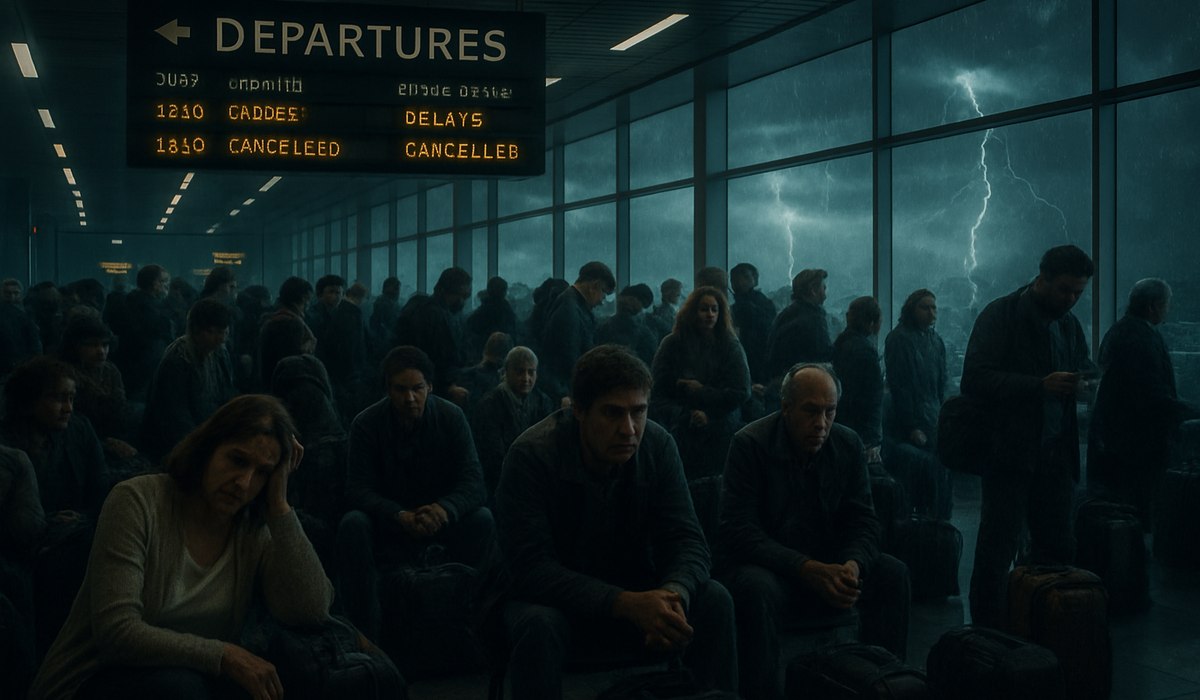
Image generated by AI
European Travel Disruption: Thousands Grounded by Storm Systems and Staffing Shortages
Severe weather patterns and chronic airport congestion have created a perfect storm for European air travelers, with over 1,600 flight delays and 154 cancellations reported across major hubs on April 8, 2026. The disruption spans critical gateways including London Heathrow, Paris Charles de Gaulle, Amsterdam Schiphol, and Nordic airports, affecting carriers from British Airways to KLM. Passengers face extended waits, missed connections, and forced overnight stays as storms staffing snarls continue to ripple through European aviation networks.
Storm Systems Amplify Chronic Congestion Across European Hubs
The latest wave of disruption reflects a recurring pattern in European aviation: severe weather meets already-strained airport infrastructure. Recent storm systems sweeping across northern and western Europe have forced repeated runway closures, traffic-management restrictions, and tighter spacing between aircraft movements. This compounds an existing capacity crisis at peak travel times.
Major airports operating near maximum capacity struggle to absorb weather delays. When wind and rain strike multiple hubs simultaneously, the cascading effect multiplies cancellations and delays across entire route networks. London-area airports, Paris CDG, Frankfurt, Amsterdam Schiphol, and Copenhagen have all reported widespread knock-on delays as traffic backs up through interconnected European airspace.
According to recent operational data from flight-monitoring platforms, single-day disruptions can easily exceed 1,000 delays when adverse weather impacts multiple major hubs. The current situation demonstrates how storms staffing snarls interact with chronically congested systems to create traveler chaos. Airlines prioritize long-haul operations when capacity tightens, cutting short- and medium-haul frequencies first—routes that feed major European connection points.
Cascading Delays Hit Short and Medium-Haul Routes First
When runway capacity shrinks due to weather, airlines face difficult triage decisions. Short-haul services connecting regional cities to major hubs absorb the first cuts, as these routes offer greater scheduling flexibility than expensive long-haul flights. This strategy protects revenue on transatlantic and intercontinental services but leaves European regional travelers stranded.
The cascading effect proves particularly damaging for passengers with onward connections. A delayed morning departure from London or Amsterdam triggers missed time slots throughout the day. Crew duty-time regulations compound the problem: crew members cannot legally exceed flight-hour limits, forcing cancellations of subsequent flights when initial delays consume their available work time.
Hotels near major European airports reported surge demand for emergency accommodations on April 8. Rebooking centers and airline call lines faced extreme wait times as thousands of disrupted passengers sought alternative routings. Many discovered that alternative flights were already full during peak spring travel season, leaving some travelers stranded for 24 hours or longer.
Major Carriers Affected: British Airways, Swiss, Virgin Atlantic and KLM
British Airways operates massive networks through London Heathrow and Gatwick, making it particularly exposed to European weather and congestion events. On high-impact days in April 2026, BA reported dozens of cancellations and delays at both London hubs, with cascading effects on domestic and European services.
KLM faces similar vulnerability through its dense short-haul operation at Amsterdam Schiphol. The Dutch carrier's extensive codeshare network amplifies disruption: delays in Amsterdam ripple throughout European partner operations and affect long-haul connections to Asia and North America. Dozens of KLM flights appeared in disruption statistics for April 8.
Swiss International Air Lines reported elevated delay levels across its Swiss bases and services into major EU capitals. Despite smaller network scale compared to BA and KLM, Swiss's hub-dependent model means weather disruptions at Zurich significantly impact connections across central Europe.
Virgin Atlantic, though primarily a long-haul carrier, operates European feeder flights connecting regional cities to London Gatwick. These routes serve as crucial gateways for passengers heading to North American destinations, making weather-driven delays at London particularly damaging to Virgin Atlantic's operations.
The combination of aircraft and crew rotations across these networks means single disruptions spawn multiple secondary cancellations. A delayed morning London departure affects crew availability for afternoon and evening flights, potentially grounding aircraft that should operate multiple daily rotations.
What Passengers Should Know: Navigation Tips and Rights
Travelers experiencing disruptions on April 8 and beyond have specific legal protections under EU Regulation 261/2004. Flights delayed over three hours qualify for compensation up to €600, even when weather causes the disruption—unless the airline proves extraordinary circumstances made the delay unavoidable.
Keep comprehensive documentation: boarding passes, cancellation notices, hotel and meal receipts. These materials support compensation claims. Contact your airline immediately for rebooking, but also check alternative carriers independently; airlines sometimes overlook budget-carrier options that could reroute you faster.
If stranded overnight, airlines must provide accommodation and meal vouchers. Request written confirmation of these costs for reimbursement claims. Check flight-tracking apps like FlightRadar24 or your airline's website for real-time updates rather than relying solely on airport announcements.
Consider purchasing comprehensive travel insurance for future European trips, including weather-delay coverage. While storms staffing snarls remain unpredictable, insurance provides financial protection against forced overnight stays and missed onward connections.
Key Data: April 2026 European Disruption Snapshot
| Metric | Value |
|---|---|
| Total Canceled Flights | 154 |
| Total Delayed Flights | 1,691 |
| Primary Cause | Storm systems + airport congestion |
| Most Affected Region | Northern and western Europe |
| Major Hubs Impacted | London, Paris CDG, Amsterdam, Frankfurt, Copenhagen, Oslo |
| Peak Impact Time | Morning and afternoon departure windows |
| Typical Delay Duration | 2-6 hours |
| Airlines Most Affected | British Airways, KLM, Swiss, Virgin Atlantic |
| Passenger Impact | Thousands experiencing overnight stays and missed connections |
| Compensation Threshold | 3+ hour delays qualify under EU 261/2004 |
What This Means for Travelers: Actionable Steps
1. Monitor forecasts actively: Check weather maps for your departure region 48-72 hours before travel. Storm warnings suggest higher disruption probability.
2. Build connection buffers: Allow minimum 3-4 hours between European connections during spring and autumn. This provides cushion if your inbound flight delays.
3. Request written communication: If delayed or canceled, obtain written confirmation of the airline's reason and disruption details. This documentation proves essential for compensation claims.
4. Leverage alternative options: Check low-cost carriers and regional airlines operating the same routes. Budget carriers sometimes maintain separate operations unaffected by major-carrier delays.
5. Document all expenses: Save receipts for hotels, meals, and transportation. Airlines must reimburse documented extraordinary-circumstance costs under EU regulations.
6. Contact your airline's customer service: Rather than relying on airport rebooking desks with massive queues, call or use the airline's app for faster rebooking on available flights.
Frequently Asked Questions
What qualifies for compensation under EU 261/2004? Flights delayed over three hours at final destination qualify for €250-€600 compensation, depending on flight distance. Weather events can exempt airlines from paying if they prove the circumstance was extraordinary and unavoidable despite reasonable precautions.
Will my airline automatically pay for my hotel? Airlines must provide accommodation and meal vouchers for passengers delayed overnight due to airline responsibility. Request written confirmation immediately. Weather-caused delays sometimes fall under "extraordinary circumstances" exempting reimbursement—push back if your airline refuses.
How do I file a compensation claim? Gather your boarding pass, cancellation notice, and supporting expenses. Submit claims to your airline
Disclaimer
This article is for informational and educational purposes only. It does not constitute legal, financial, or professional advice. While we strive to provide accurate and up-to-date information, travel policies, regulations, and conditions change rapidly. Always verify information with official sources before making travel decisions. Nomad Lawyer makes no representations about the accuracy, reliability, completeness, or suitability of the information provided. Readers should consult qualified professionals for advice specific to their circumstances. The views expressed in this article are those of the author and do not necessarily reflect the views of Nomad Lawyer.
Raushan Kumar
Founder & Lead Developer
Full-stack developer with 11+ years of experience and a passionate traveller. Raushan built Nomad Lawyer from the ground up with a vision to create the best travel and law experience on the web.
Learn more about our team →