
Storms cause major flight chaos across Europe in April 2026
Atlantic Storm Dave triggers unprecedented spring flight chaos across Europe with hundreds of cancellations at major hubs from Iceland to Germany in early April 2026, affecting thousands of travelers.

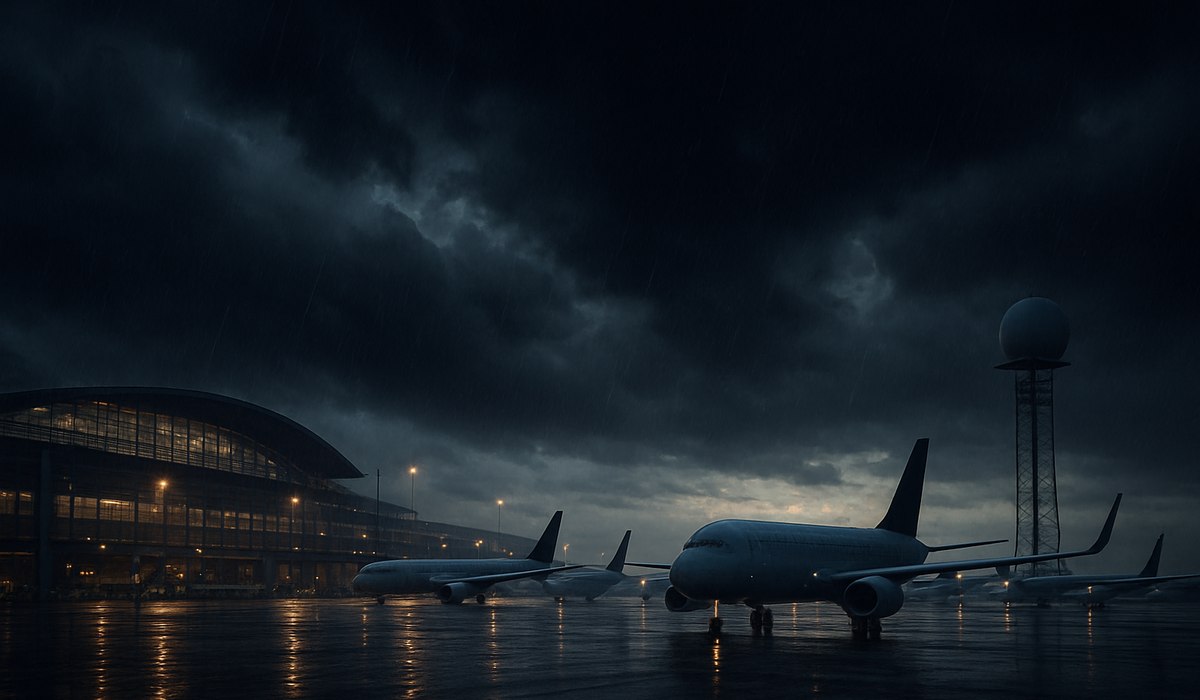
Image generated by AI
Severe Atlantic Storm Dave Triggers Widespread European Flight Disruptions
Atlantic Storm Dave is battering Northern and Western European airports, causing unprecedented spring disruption across major hubs from Iceland to Germany. Beginning April 7, 2026, the powerful Atlantic low-pressure system has generated hundreds of flight cancellations and thousands of delays as high winds, heavy rain, and turbulent conditions grounded aircraft and overwhelmed airport operations. Key affected cities include Reykjavik (Keflavik), Stockholm, Dublin, London, and Frankfurt, where regional and low-cost carriers face the steepest operational cuts. This represents one of the largest coordinated disruption events in spring 2026, with aviation authorities warning that conditions may persist through mid-April as the storm system moves across Scandinavia and Central Europe.
Storm Dave Batters Northern and Western European Routes
Storm Dave emerged as a dominant weather driver across the North Atlantic corridor this week. The system's core has moved systematically eastward, bringing extreme crosswinds and visibility restrictions that constrain runway capacity at multiple major hubs simultaneously.
Keflavik International Airport in Iceland reported over 40 cancellations on April 7 alone, with departures to mainland Europe delayed an average of 3–4 hours. Stockholm Arlanda and Dublin Airport both suspended operations on secondary runways due to dangerous wind conditions, reducing hourly landing rates by approximately 30 percent. The UK's major airports, including London Gatwick and London Stansted, implemented ground stops and rolling delays affecting over 200 flights daily. Frankfurt am Main, Germany's busiest hub, consolidated short-haul services and prioritized long-haul departures to manage bottlenecks.
Aviation meteorologists note that Storm Dave's track coincides with peak Easter holiday travel, amplifying passenger impact. Wind direction shifts throughout the day create unpredictable operational windows, forcing airlines to cancel services rather than hold aircraft on costly ground delays. For real-time disruption tracking, consult FlightAware and your airline's official website regularly.
Airport Capacity Constraints and Operational Bottlenecks
Spring storms compress available runway configurations, creating cascading delays throughout the European network. At major hubs, crosswind limits trigger runway closures or single-runway operations, reducing landing and departure rates by 40–50 percent during peak storm periods.
When aircraft cannot land as scheduled, crew duty limitations prevent rerouting flexibility. A flight delayed 4+ hours may exceed crew rest regulations, forcing cancellation rather than continuation. This domino effect ripples backward through the network: morning cancellations stranded crews and aircraft prevent afternoon and evening services from operating as planned.
Dublin Airport implemented a ground stop from 10 a.m. to 2 p.m. local time on April 7, effectively suspending all departures during the storm's most severe phase. Similar restrictions were imposed at regional airports including Cork and Shannon, forcing airline rebooking onto already-saturated routes through larger hubs.
Fuel surcharges and operational costs mounted as airlines held aircraft on tarmacs awaiting weather windows, further pressuring airline economics and passenger compensation budgets.
Crew Rostering and Aircraft Positioning Challenges
Storms cause major operational disruptions beyond raw weather impacts. Stranded crews become displaced from scheduled assignments, triggering cascading cancellations.
A crew assigned to a 6 a.m. Frankfurt–Dublin flight that was cancelled at 4:45 a.m. cannot legally operate a 10 a.m. return service without violating EU flight-time regulations. Airlines must source replacement crews from standby pools or cancel the later flight. With thousands of passengers competing for rebooking, airline crew coordinators face impossible scheduling puzzles.
Aircraft positioning compounds crew challenges. A Boeing 737 scheduled for a 7 a.m. Reykjavik–London flight, cancelled due to storm-driven delays, sits idle in Iceland when maintenance and revenue schedules expect it in London. Repositioning the aircraft to correct location requires an additional flight, consuming crew duty time and fuel.
Low-cost carriers, which operate razor-thin scheduling margins, faced the steepest recovery challenges. Ryanair, easyJet, and Wizz Air reported fleet utilization drops of 20–25 percent on April 7–8, requiring network-wide schedule adjustments extending into mid-April.
Which Airlines and Routes Are Most Affected
Carriers with high exposure to Northern and Western European short-haul networks bore the greatest disruption burden:
Ryanair cancelled approximately 150 flights across its Irish, UK, and Scandinavian bases. The airline's reliance on point-to-point regional routes meant individual weather-driven cancellations rippled through multiple subsequent rotations.
Lufthansa Group (Lufthansa, Eurowings, Swiss) reported over 200 combined cancellations from Frankfurt, Munich, and Zurich hubs. Long-haul connections were prioritized, while regional services to Germany, Austria, and Eastern Europe faced the steepest cuts.
SAS (Scandinavian Airlines) suspended Stockholm–London and Copenhagen–Dublin services, impacting approximately 80 flights across April 7–8. The carrier activated communication protocols requiring seat rebooking for affected passengers.
KLM and Air France managed Paris and Amsterdam operations with extended delays (average 2.5 hours) but avoided major cancellation clusters by accepting increased airspace congestion through Southern corridors.
British Airways and IAG operated with reduced London Heathrow and Gatwick frequencies, with particular pressure on Dublin and Paris short-haul services.
Routes most severely affected:
- Iceland–UK/Ireland (40–60% cancellation rate)
- Scandinavia–Continental Europe (35–45% disruption)
- Ireland–UK (25–35% delays exceeding 3 hours)
- Frankfurt regional spokes (20–30% cancellation frequency)
Mediterranean routes benefited from geographic separation from Storm Dave, though Heraklion (Crete) experienced earlier disruptions from Cyclone Erminio–driven Saharan dust storms on April 1–2.
Live Tracking and Real-Time Disruption Updates
Travelers can monitor Storm Dave's impact through authoritative aviation tracking platforms. FlightAware provides real-time flight status, expected delay durations, and airport-specific ground stop alerts updated every 5–10 minutes.
EUROCONTROL publishes official European airspace flow management advisories via their public dashboard, indicating which flight corridors face capacity restrictions. Check EUROCONTROL's website for air traffic management delay estimates before departing for airports.
Individual airline websites and mobile applications provide flight-specific status updates, rebooking options, and disruption compensation eligibility information. Most major carriers activated dedicated disruption response teams on April 7, with extended customer service hours extending into April 8–9.
Social media channels monitored by aviation journalists and passenger advocacy groups provide crowd-sourced updates on airport conditions, queue lengths, and rebooking difficulty levels. Airport authority Twitter accounts (e.g., @DublinAirport, @FrankfurtAirport) release operational updates every 30–60 minutes during active disruption events.
Passenger Rights and Compensation Eligibility
EU Regulation 261/2004 entitles passengers to compensation for flight cancellations and significant delays, regardless of weather causation. However, "extraordinary circumstances" provisions require airlines to demonstrate that reasonable care could not prevent disruption.
Airlines may invoke force majeure exemptions for weather events, potentially limiting compensation obligations. However, passengers retain rights to:
- Rebooking on the next available flight at no additional cost
- Hotel and meal vouchers for overnight disruptions
- Reimbursement of ticket cost if passenger declines rebooking
- Assistance expenses (phone calls, transportation to accommodation)
The [
Disclaimer
This article is for informational and educational purposes only. It does not constitute legal, financial, or professional advice. While we strive to provide accurate and up-to-date information, travel policies, regulations, and conditions change rapidly. Always verify information with official sources before making travel decisions. Nomad Lawyer makes no representations about the accuracy, reliability, completeness, or suitability of the information provided. Readers should consult qualified professionals for advice specific to their circumstances. The views expressed in this article are those of the author and do not necessarily reflect the views of Nomad Lawyer.
Raushan Kumar
Founder & Lead Developer
Full-stack developer with 11+ years of experience and a passionate traveller. Raushan built Nomad Lawyer from the ground up with a vision to create the best travel and law experience on the web.
Learn more about our team →