
Storms Runway Work Snarl April Flights at Minneapolis–St Paul Hub
Spring storms and runway maintenance create cascading delays at Minneapolis–St Paul International Airport, Delta's busiest Midwest hub, affecting thousands of travelers in April 2026.

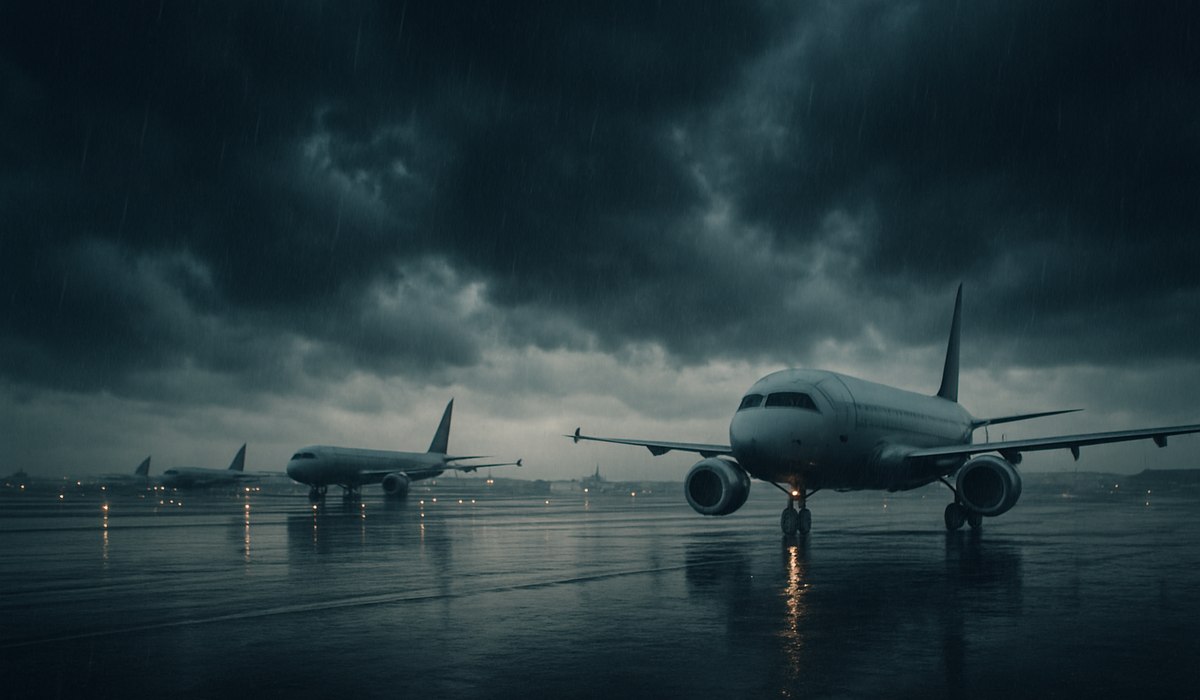
Image generated by AI
Spring Storms and Runway Work Collide at MSP
Minneapolis–St Paul International Airport (MSP) is experiencing a perfect storm of operational challenges as spring weather patterns and critical runway maintenance converge during peak travel season in April 2026. Delta Air Lines, which operates MSP as a major connectivity hub, faces mounting pressure as thunderstorms, reduced visibility, and construction projects simultaneously constrain airport capacity. Travelers connecting through the Upper Midwest are reporting widespread delays, missed connections, and cascading disruptions affecting thousands of passengers daily.
April Weather Pattern Adds Pressure to Busy Spring Schedules
Minnesota's unsettled spring weather is creating ideal conditions for operational disruption at MSP. Early April meteorological forecasts predicted transitional weather patterns bringing clouds, rain, and thunderstorm activity across the Upper Midwest exactly when spring break and business travel volumes remained elevated. Low ceilings, reduced visibility, and gusty winds have forced air traffic control to implement spacing restrictions between arrivals and departures—a common protocol that automatically reduces the number of aircraft the airport can handle per hour.
While Minneapolis has avoided the most severe weather impacts seen at other major hubs, the combination of passing fronts and rapidly changing atmospheric conditions has required airlines and ground personnel to continuously adjust departure schedules. On April 3 alone, storms swept across the Midwest triggering more than 800 cancellations and 6,000 delays nationwide; MSP accounted for dozens of cancellations and hundreds of delayed flights that single day. Even modest weather disruptions ripple quickly through hub operations because flights are tightly scheduled to support connections across the Great Lakes and Upper Midwest regions. Recovery windows compress, and one delayed arrival cascade into multiple downstream delays.
Check real-time conditions on FlightAware before departing for the airport.
Runway Maintenance Compounds Operational Strain
Beyond weather challenges, federally mandated runway rehabilitation projects are temporarily reducing MSP's departure and arrival capacity during this critical travel window. Federal Aviation Administration construction records show multi-phase work affecting Runway 12R/30L and Runway 4/22, including safety area regrading and pavement rehabilitation work scheduled through the 2026 operating year.
Previous closure phases in 2025 required full shutdown of one primary runway, forcing airlines to concentrate all traffic on remaining facilities. While 2026 scheduling details are still being finalized, the multi-year nature of this infrastructure program suggests partial runway restrictions remain likely throughout spring. Even temporary constraints—such as reduced runway use during weather events or maintenance windows—force airlines to adjust departure banks and lengthen taxi times.
MSP's tarmac delay contingency plans, filed with federal regulators, explicitly address how runway availability directly impacts the airport's ability to absorb weather disruptions. When a primary runway operates under restrictions and storms simultaneously reduce visibility, ground crews have minimal flexibility to manage extended gate holds and limited ramp space. The structural combination of construction constraints plus volatile spring weather eliminates the operational buffer that typically allows major hubs to absorb minor disruptions.
National Disruption Ripples Through MSP Hub
The April 2026 slowdown at Minneapolis–St Paul is amplified by nationwide aviation strain. Travel industry data shows that on April 8, severe thunderstorms and FAA flow restrictions disrupted more than 3,500 flights across 27 major U.S. airports. Though MSP avoided direct hits from the worst single-day turmoil, the airport remained within the broader storm corridor—meaning aircraft and crews scheduled to connect through Minnesota arrived already delayed.
By April 11, nationwide tracking systems recorded nearly 80 cancellations and more than 1,700 delays across U.S. carriers by midday. This cascading effect means that even passengers originating from regions unaffected by storms may experience delays simply because their aircraft or crew is positioned at MSP and cannot reach their next scheduled departure. Connecting traffic—the lifeblood of hub operations—becomes especially vulnerable when upstream disruptions combine with local capacity constraints.
The FAA maintains current operational status updates at www.faa.gov, where travelers can monitor flow restrictions and ground stops in real time.
What Travelers Should Expect
Passengers traveling through or originating from MSP in mid-April 2026 should prepare for:
-
Frequent schedule changes: Airlines may swap aircraft, adjust departure times, or modify connections without 24-hour notice.
-
Extended ground delays: Aircraft may experience taxi delays of 30–90 minutes, with longer waits during afternoon peak periods.
-
Tighter connection windows: Layovers that normally provide comfortable buffer time may become tight, increasing missed-connection risk.
-
Gate congestion: Ramp space limitations may force airlines to hold aircraft at gates longer than usual.
-
Potential cancellations: If weather intensifies or maintenance extends, airlines will cancel flights rather than accept excessive delays.
-
Crew rest violations: Flight crew may reach federally mandated rest limits, triggering same-day cancellations or next-day rebooking.
Travelers should monitor their airline's app or website continuously, arrive at the airport earlier than usual, and contact their airline immediately if delays exceed two hours to discuss rebooking or compensation options.
Operational Impact Summary
| Factor | Impact Level | Duration | Affected Runways | Typical Delay |
|---|---|---|---|---|
| Spring thunderstorms | High | April 8–15, 2026 | All runways | 45–120 minutes |
| Runway 12R/30L maintenance | Moderate | Ongoing through April | Primary runway | 20–60 minutes |
| Reduced visibility (ceilings <1,000 ft) | High | Intermittent | All runways | 60–180 minutes |
| Crew rest constraints | Moderate | Peak afternoon hours | Not runway-specific | 30–90 minutes |
| Tarmac hold procedures | Moderate | Extended gate holds | Not runway-specific | 20–45 minutes |
| National flow restrictions | High | April 3–11, 2026 | Arrival banks | 30–75 minutes |
Traveler Action Checklist
-
Check your flight status 48 hours before departure using your airline's official website or app, not third-party sites alone.
-
Subscribe to SMS alerts from your airline for real-time updates on delays, cancellations, or gate changes.
-
Review your airline's weather waiver policy to see if you can rebook on earlier flights without change fees if storms occur.
-
Arrive at MSP 90 minutes early for domestic connections (up from the standard 60 minutes) and 3 hours for international flights.
-
Pack essentials in carry-on luggage in case checked bags are delayed or misconnected.
-
Understand your passenger rights under U.S. Department of Transportation regulations, which guarantee rebooking and certain expenses for carrier-caused delays exceeding 3 hours.
-
Contact your airline immediately if you experience a 2+ hour delay to inquire about meal vouchers, hotel accommodations (for overnight delays), or rebooking options.
-
Document all delays with photos or screenshots of gate displays and airline notifications—these records support compensation claims.
-
File a complaint with the DOT if your airline refuses compensation you are entitled to under federal air passenger protection rules.
-
Consider travel insurance or flexible booking for future spring trips to MSP to protect against financial loss from weather-related cancellations.
Frequently Asked Questions
Q: Will my Delta flight be cancelled if I'm traveling through MSP in April 2026?
Cancellations depend on weather severity and runway availability that day. Most delays resolve within 2–3 hours, but severe thunderstorms can
Disclaimer
This article is for informational and educational purposes only. It does not constitute legal, financial, or professional advice. While we strive to provide accurate and up-to-date information, travel policies, regulations, and conditions change rapidly. Always verify information with official sources before making travel decisions. Nomad Lawyer makes no representations about the accuracy, reliability, completeness, or suitability of the information provided. Readers should consult qualified professionals for advice specific to their circumstances. The views expressed in this article are those of the author and do not necessarily reflect the views of Nomad Lawyer.
Raushan Kumar
Founder & Lead Developer
Full-stack developer with 11+ years of experience and a passionate traveller. Raushan built Nomad Lawyer from the ground up with a vision to create the best travel and law experience on the web.
Learn more about our team →