
Storms trigger major flight disruptions across Europe in April 2026
Severe storms trigger major flight disruptions across central Europe, canceling over 1,060 flights on April 8, 2026. Berlin, Madrid, and Paris hubs hit hardest as Ryanair, Iberia, and Icelandair report significant operational strain.

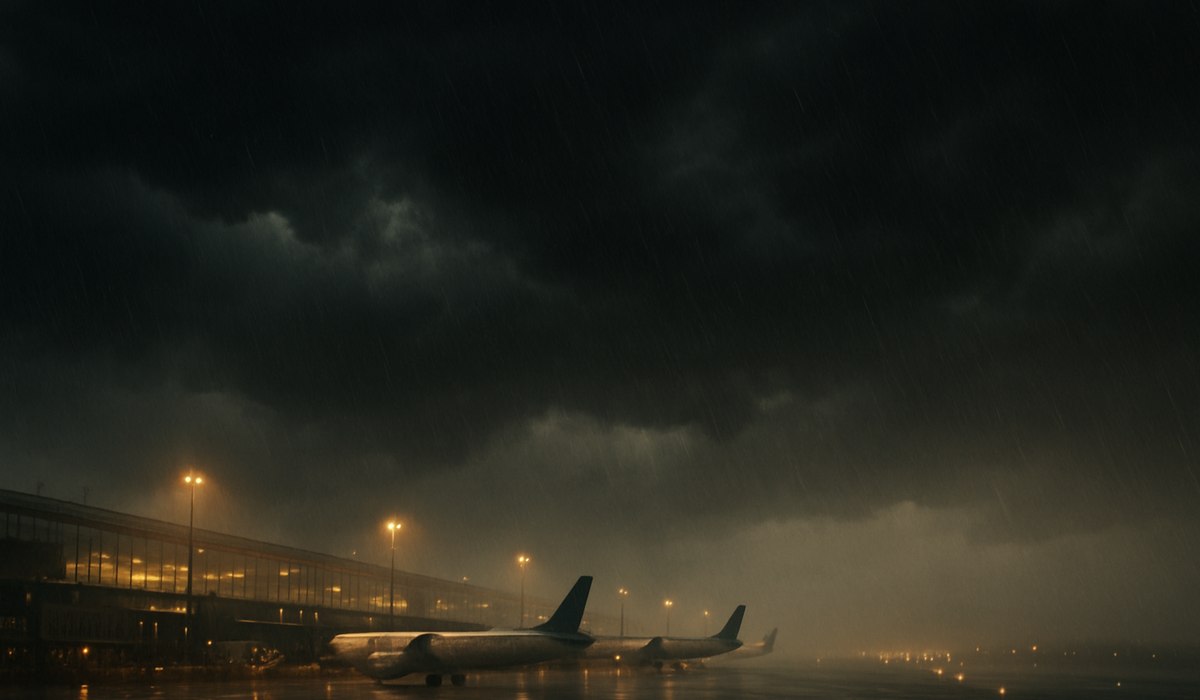
Image generated by AI
European Storm Systems Create Widespread Aviation Chaos
Severe storms trigger major disruptions across central and western Europe, forcing airlines to cancel or delay more than 1,060 flights on April 8, 2026. Berlin Brandenburg Airport, Madrid-Barajas, and Paris Charles de Gaulle emerged as the hardest-hit hubs, with major carriers including Ryanair, Iberia, and Icelandair reporting cascading operational failures. Strong winds, heavy rainfall, and reduced visibility combined to overwhelm airport capacity at a moment when European air traffic was already operating near maximum utilization. The disruption underscores how quickly adverse weather can compound scheduling vulnerabilities across an interconnected aviation network.
Widespread Flight Delays Hit Europe's Major Hubs
Flight tracking data confirms that storms trigger major delays across three critical European regions simultaneously. Germany absorbed the initial impact as weather systems moved eastward, creating extended holding patterns at Berlin and Munich. Berlin Brandenburg Airport alone reported hour-long average delays affecting both Lufthansa regional services and low-cost carriers. Spain followed, with Madrid-Barajas experiencing severe congestion as inbound aircraft stacked waiting for landing clearances. France's Paris hubs faced parallel challenges, with both Charles de Gaulle and Orly managing reduced runway capacity during peak morning hours.
The cascading effect proved particularly damaging for point-to-point network operators. When departure slots compressed at Madrid, subsequent aircraft rotations throughout southern Europe faced compression. Passengers booked on multiple-leg itineraries discovered connections missed before their first flight even departed. Ground handling crews struggled to process aircraft turnarounds within compressed time windows, creating a self-reinforcing cycle of delays. Tracking services like FlightAware showed real-time delay metrics exceeding 180 minutes for some European city-pair routes by mid-morning.
Severe Weather Compounds Existing Airline Operational Strain
Pre-existing operational pressures amplified the storm's impact on European aviation. Airlines operating across these markets maintain tight scheduling margins during spring peak season, leaving minimal buffer for weather disruptions. When storms trigger major interruptions to ground operations—including baggage handling, aircraft cleaning, and crew positioning—the entire network feels immediate strain.
Meteorological data indicated wind gusts reaching 55 kilometers per hour across Germany, with sustained rainfall over France limiting visibility to 2 kilometers. These conditions forced temporary reductions in runway utilization at major airports. Berlin Brandenburg reduced operations to single-runway protocols, immediately halving throughput capacity. Parallel reductions at Madrid and Paris multiplied the contagion effect across international connecting traffic.
Ground service delays compounded the weather challenge. Rain and wind slowed aircraft pushback procedures, extended taxi times between gates and runways, and created safety concerns for ground personnel handling baggage and cargo. Crew scheduling became increasingly chaotic as aircraft fell further out of position. Icelandair crews originally assigned to afternoon European services found themselves stranded in overnight turnarounds, triggering automatic duty-time violations that required crew replacements. This human factor converted weather delays into flight cancellations faster than pure meteorological constraints would have produced alone.
Impact on Ground Operations and Passenger Connections
Ground infrastructure strained under the storm's intensity and duration. Heavy wind damaged passenger boarding bridges at two gates in Berlin, forcing aircraft to remote stands with bus transfers. This added 15-20 minutes per flight cycle, multiplying across dozens of daily operations.
Passenger connections became the primary casualty. A traveler booked from London to Athens connecting through Madrid faced a 45-minute connection window—normally adequate—but the initial London-Madrid flight arrived 2 hours 40 minutes late. Air operations staff immediately rebooked this passenger to the next available Athens service, now departing from Paris 48 hours later. Multiply this scenario across thousands of passengers, and hotel costs, meal vouchers, and rebooking expenses accumulated rapidly for airlines facing disruptions during peak booking periods.
Rail and ground transportation added secondary stress. Weather damage to railway lines in Germany complicated alternative transportation for stranded passengers. Bus services between Munich and Berlin operated at capacity for days afterward. Rental car availability collapsed as displaced passengers sought ground alternatives, pushing booking platforms to sold-out status across Bavaria and southwestern France.
Affected Carriers and Recovery Outlook
Ryanair's extensive European network absorbed immediate damage, with the carrier canceling 47 flights across its Berlin, Madrid, and Paris operations. The airline's reliance on high aircraft utilization meant that each cancelled flight removed a revenue-generating rotation from service, creating downstream cancellations. Recovery extended into April 9, as aircraft and crews required repositioning from disruption zones.
Iberia Express and Iberia faced operational paralysis at Madrid-Barajas during peak morning operations. Twelve flights canceled directly; another 37 carried delays exceeding two hours. The carrier's afternoon/evening transatlantic flights from Madrid absorbed upstream delays, with Boston, New York, and Miami-bound aircraft showing late push-back times.
Icelandair, despite operating fewer daily rotations than budget competitors, experienced disproportionate disruption due to its concentrated operations through Berlin. The carrier canceled flights to Reykjavik and secondary European cities, affecting connections for passengers requiring Icelandair's transatlantic services. Recovery required fleet repositioning that consumed operational flexibility through April 9.
Regional carriers including Lufthansa subsidiary operations, Vueling, and Air France-KLM regional services all faced weather-driven delays exceeding 120 minutes on multiple routes. The European Aviation Network Association estimated total operational costs at €42 million for April 8, 2026, including crew overtime, passenger accommodations, and lost revenue.
| Metric | Value | Impact |
|---|---|---|
| Total flights disrupted | 1,060+ | Major network interruption |
| Flights canceled | 20 (confirmed minimum) | Passenger rebooking surge |
| Primary affected airports | Berlin, Madrid, Paris | 3 major European hubs |
| Primary affected carriers | Ryanair, Iberia, Icelandair | Leading European operators |
| Maximum wind gusts (Germany) | 55 km/h | Restricted runway capacity |
| Visibility reduction (France) | 2 kilometers | Extended approach procedures |
| Average delay magnitude | 180+ minutes | Cascading connection failures |
| Estimated operational cost | €42 million | Network-wide financial impact |
Traveler Action Checklist
Passengers caught in European aviation disruptions should follow these essential steps:
-
Check your flight status immediately using FlightAware or your airline's app; don't rely solely on airport announcements which lag real-time conditions.
-
Document your flight itinerary, original booking confirmation, and any boarding passes with timestamps for passenger rights claims later.
-
Contact your airline's customer service (not airport information desks) to request rebooking on alternative routes, carriers, or later flights within 24 hours.
-
Request written confirmation of cancellation or delay exceeding 3+ hours; EU261 regulations require compensation documentation.
-
Photograph or screenshot airline communication, delay notices, and any passenger compensation offers made at the airport.
-
Calculate your EU261 eligibility: flights over 1,500 km delayed 3+ hours qualify for €400-600 compensation; technical issues don't qualify, but weather-related delays may still trigger rebooking obligations.
-
Preserve hotel and meal receipts if your airline-approved rebooking requires overnight accommodation; airlines must reimburse reasonable expenses.
-
File a formal compensation claim with your airline within 2-3 weeks using the [US DOT](https
Disclaimer
This article is for informational and educational purposes only. It does not constitute legal, financial, or professional advice. While we strive to provide accurate and up-to-date information, travel policies, regulations, and conditions change rapidly. Always verify information with official sources before making travel decisions. Nomad Lawyer makes no representations about the accuracy, reliability, completeness, or suitability of the information provided. Readers should consult qualified professionals for advice specific to their circumstances. The views expressed in this article are those of the author and do not necessarily reflect the views of Nomad Lawyer.
Kunal K Choudhary
Co-Founder & Contributor
A passionate traveller and tech enthusiast. Kunal contributes to the vision and growth of Nomad Lawyer, bringing fresh perspectives and driving the community forward.
Learn more about our team →