
STB Blocks UP-NS Merger Approval: Competition Questions Dominate Rail Review
The Surface Transportation Board accepted but paused Union Pacific and Norfolk Southern's merger application, demanding deeper answers on competition, shipper access, and public benefits by July 27, 2026.

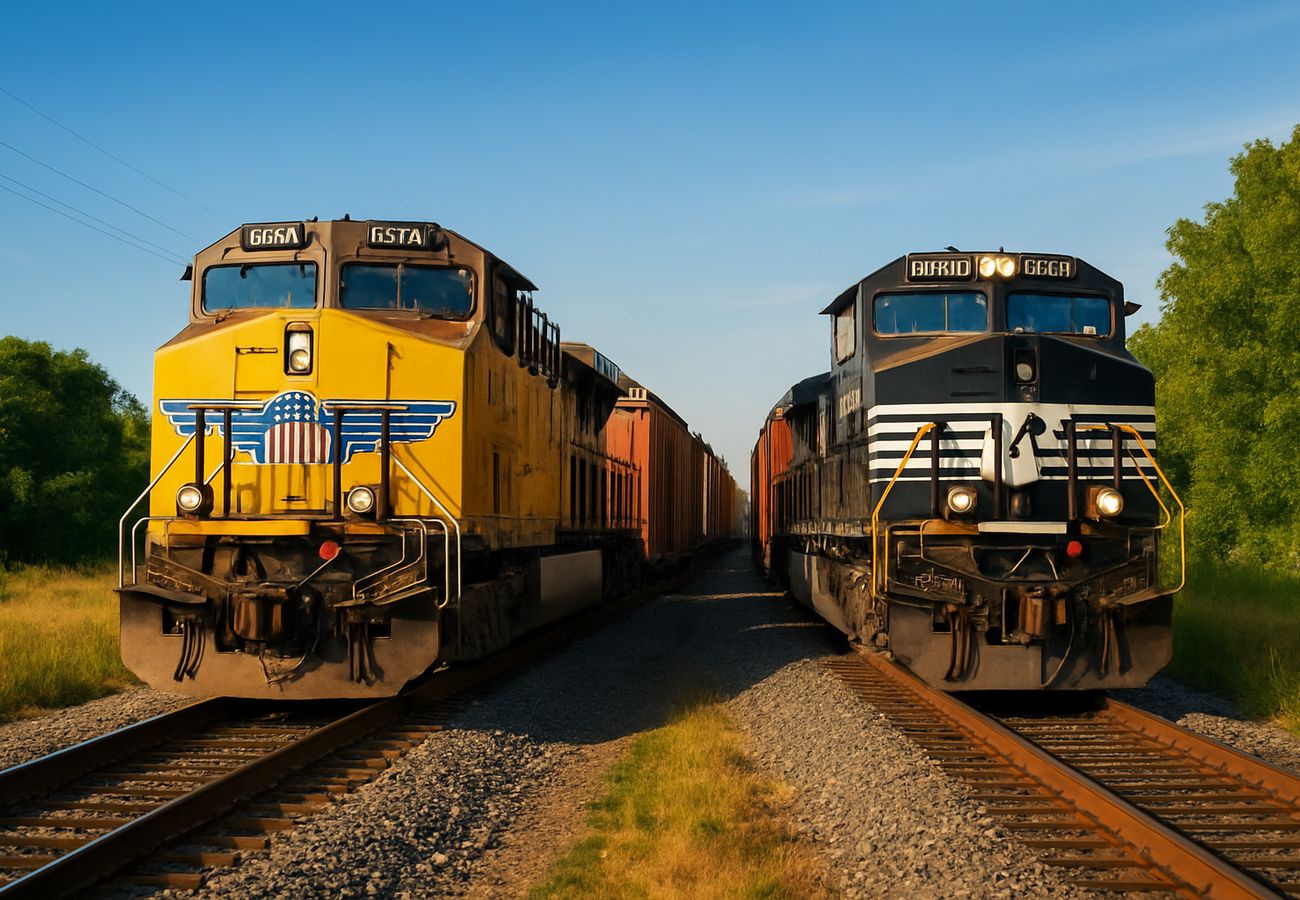
Image generated by AI
The Surface Transportation Board just threw a critical wrench into one of freight rail's biggest proposed deals. While the regulator accepted Union Pacific and Norfolk Southern's revised merger application on May 28, 2026, don't mistake acceptance for approval. The STB has paused the entire proceeding and demanded both companies submit detailed answers to sweeping questions about competition, shipper access, and public benefits by July 27, 2026.
This is not a routine corporate transaction being rubber-stamped. This is a national rail restructuring proposal facing intense regulatory scrutiny—and the questions the STB is asking reveal why.
The Merger Gets a Conditional Green Light—But Only Procedural
When Union Pacific and Norfolk Southern refiled their revised application on April 30, 2026, after the STB rejected an earlier submission as incomplete in January, they hoped for smoother sailing. The May acceptance proved they'd fixed the obvious documentation gaps.
But acceptance for consideration is miles away from approval.
The STB's decision to place the proceeding in abeyance—regulatory speak for "pause"—sends a forceful message. The regulator will not move to the merits phase until both companies answer deeper, more demanding questions. The companies had failed to include detailed market share projections matching their own growth claims in their first filing. This time, the Board wants rock-solid evidence across multiple fronts.
Reddit: "This is just the beginning. The STB historically takes years on major mergers and asks brutal questions." — r/logistics
What a Coast-to-Coast Rail Giant Would Actually Look Like
The proposed merger would create something unprecedented in modern freight rail: a single operator controlling both the western and eastern halves of the continental United States.
Union Pacific operates roughly 32,880 miles of railroad across 23 states, primarily in the West and Southwest. Norfolk Southern controls approximately 19,200 route miles in 22 eastern states and the District of Columbia. Combined, these two Class I railroads would form a coast-to-coast network touching about 100 ports and connecting major metropolitan hubs from Los Angeles to Atlanta.
The companies argue this would reduce handoffs between separate railroads, improve single-line service, and create stronger competition against long-haul trucking. They claim it could divert roughly 2.1 million truckloads annually to rail and generate around USD 3.5 billion in annual shipper savings.
Those numbers are precisely why the STB isn't moving fast.
The Competition Problem: What Happens to Shipper Choice?
Here's where the STB's real concerns emerge. A merged Union Pacific-Norfolk Southern would create what regulators call "2-to-1" and "3-to-2" situations at countless shipper facilities. That's regulatory code for: some businesses would lose direct rail carrier options.
A facility that currently connects to two Class I railroads could drop to one. Another with three options might fall to two. The STB has demanded the companies identify every facility this affects and explain how pre-merger competition would be protected.
The companies proposed something called Committed Gateway Pricing (CGP)—a programme offering guaranteed rates for qualifying cross-country shipments using both networks through major gateways like Chicago, St. Louis, Memphis, or New Orleans. It sounds good on paper.
The STB wants the specifics. Which traffic qualifies? Which is excluded? Why those exclusions? Would a longer-term or permanent commitment provide greater public benefits? Could shippers actually use this as a real competitive option during service disruptions?
These aren't rhetorical questions. The STB's merger review process has killed or fundamentally restructured major rail deals before when competition concerns weren't adequately addressed.
The 2.1 Million Truck-to-Rail Conversion Claim Needs Proof
Union Pacific and Norfolk Southern are making bold claims about truck diversions and shipper savings. But bold claims require bulletproof evidence.
The STB wants more detailed information on how those 2.1 million annual truckload diversions would actually materialize. The regulator is asking for clarity on which routes would see the highest diversion potential and how recent rail industry transactions might affect those assumptions.
This matters because shipper savings and rail growth are only public benefits if they're real, measurable, and enforceable. The STB has zero tolerance for projections that don't hold up under scrutiny.
Passenger Rail Can't Be an Afterthought
Although this is fundamentally a freight merger, passenger rail is getting serious regulatory attention.
The STB identified specific concerns with the Heartland Flyer and the Lehigh Line—corridors where Amtrak operates on company-controlled tracks. The regulator's point is straightforward: maximum daily track capacity doesn't tell you how freight and passenger trains actually coexist.
Passenger trains follow rigid schedules. Freight trains require flexibility. Add significantly more freight traffic to lines hosting passenger services, and you risk cascading delays, dispatching conflicts, and service reliability problems that affect both modes.
The companies must now explain exactly how their projected freight increases would maintain current passenger service levels. The STB wants dispatching plans, train modeling data, and detailed analysis of how new freight schedules interact with existing passenger operations.
Amtrak's network already faces capacity constraints on key corridors. Adding freight pressure without clear solutions doesn't serve the public interest.
Environmental Review: The Longer Road Ahead
The STB has already determined this merger requires a full Environmental Impact Statement. Projected traffic changes exceed thresholds that trigger comprehensive environmental review.
That review will examine effects on safety, blocked grade crossings, historic properties, rail traffic patterns, and community impacts. Public participation will be mandatory. The environmental process alone could stretch the timeline significantly.
This isn't bureaucratic theater. Traffic projections of this magnitude—the companies are claiming substantial truck-to-rail diversions—require legitimate environmental analysis. The public has a right to understand and respond to those impacts.
Why This Moment Matters for American Rail
This merger represents a fundamental restructuring of how freight moves across the United States. The STB's decision to slow down and demand more evidence shows the regulator understands the stakes.
A merged railroad could deliver efficiency gains and shipper savings. It could also reduce competition at hundreds of facilities and create dependencies that hurt shippers if service problems emerge. The regulator's job is determining whether the promised benefits outweigh the competitive risks.
The July 27 deadline puts both companies on notice: incomplete or evasive answers will trigger rejection. The STB has already shown it's willing to send applicants back to the drawing board when documentation falls short.
Union Pacific and Norfolk Southern now face the most scrutinized merger review in modern freight rail history. What they submit in the next eight weeks will determine whether this deal survives.
The real test of a merger isn't whether companies want it—it's whether regulators believe the public actually benefits.
Related Railway News
Airbus A220 North America Becoming Most Profitable Narrowbody
Disclaimer
This article is for informational and educational purposes only. It does not constitute legal, financial, or professional advice. While we strive to provide accurate and up-to-date information, travel policies, regulations, and conditions change rapidly. Always verify information with official sources before making travel decisions. Nomad Lawyer makes no representations about the accuracy, reliability, completeness, or suitability of the information provided. Readers should consult qualified professionals for advice specific to their circumstances. The views expressed in this article are those of the author and do not necessarily reflect the views of Nomad Lawyer.
Preeti Gunjan
Contributor & Community Manager
A passionate traveller and community builder. Preeti helps grow the Nomad Lawyer community, fostering engagement and bringing the reader experience to life.
Learn more about our team →