
Airbus A220 North America Becoming Most Profitable Narrowbody
The Airbus A220 has evolved from a regional experiment into North America's most profitable narrowbody aircraft in 2026, transforming carrier economics and route planning across the continent.

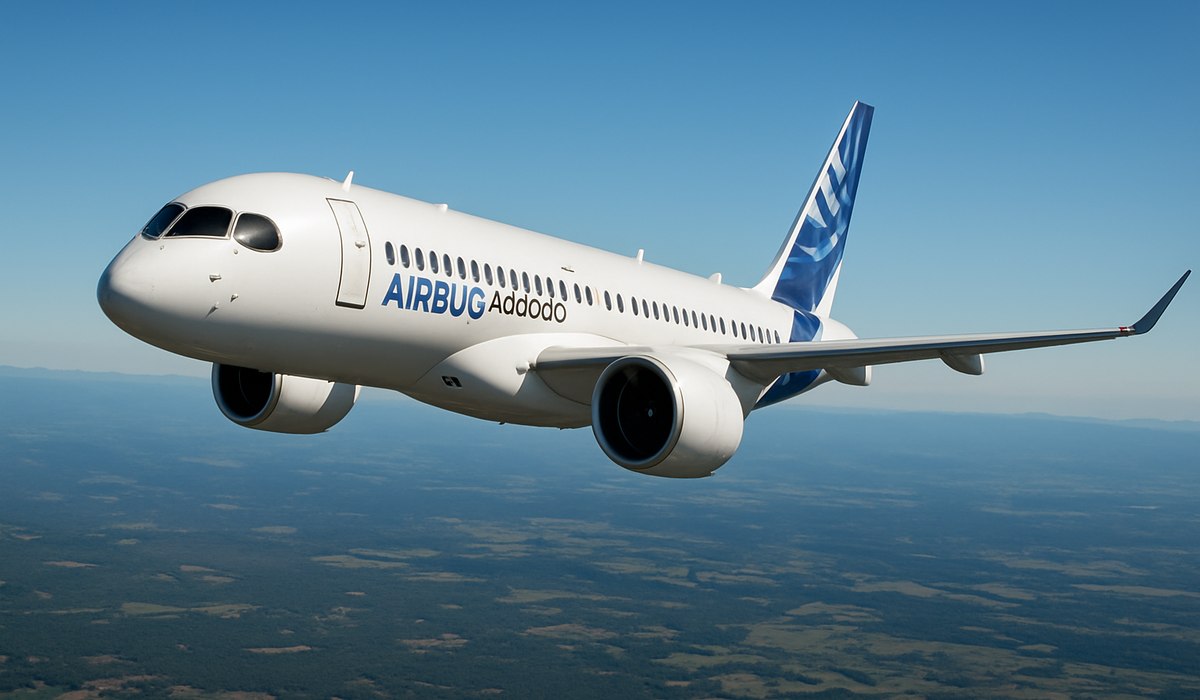
Image generated by AI
The Airbus A220 Transforms North American Airline Economics
The Airbus A220 is reshaping profitability metrics across North America's airline sector in 2026. Once dismissed as a risky regional venture, this narrowbody aircraft has become the financial workhorse that major carriers and startups depend on for reliable returns. Airlines operating the A220 report exceptional seat-mile economics and fuel efficiency that outpace competing aircraft on comparable routes. The aircraft's 130-160 seat configuration hits an optimal sweet spot between capacity and operational costs, enabling profitable service on routes that larger jets cannot sustain.
North American carriers now recognize the A220 as a strategic asset for medium-density markets. The jet's lower acquisition costs, reduced fuel consumption, and minimal maintenance requirements create a competitive advantage that translates directly to bottom-line profitability. As the aviation industry continues recovering and evolving post-pandemic, airlines operating this aircraft have captured a disproportionate share of margin growth compared to operators flying larger narrowbodies or regional turboprops.
From Regional Experiment to Profit Engine
The Airbus A220's journey to profitability in North America began with skepticism and uncertainty. Launched as the Bombardier C Series before Airbus acquired the program in 2018, the aircraft faced significant headwinds. Early operators contended with supply chain bottlenecks, delayed deliveries, and concerns surrounding Pratt & Whitney engine reliability. These challenges created operational friction and delayed the realization of the aircraft's promised efficiency gains.
By 2026, however, the narrative has shifted dramatically. Airbus has stabilized production rates and resolved earlier engine-related issues through focused engineering improvements and collaborative work with Pratt & Whitney. The aircraft now operates with the reliability benchmarks comparable to mature narrowbody programs. Airlines that persevered through the early challenges have been rewarded with aircraft that deliver exceptional performance and profitability across their networks.
The A220's payload-range capabilities enable carriers to operate point-to-point routes that would require larger aircraft with prohibitively high unit costs. This flexibility has proven invaluable for North American carriers seeking to optimize their route networks without committing to widebody aircraft on thinner markets.
Overcoming Early Supply Chain and Reliability Challenges
The Airbus A220's early years tested the resolve of North American operators who placed faith in the aircraft's long-term potential. Supply chain disruptions during the pandemic delayed aircraft deliveries and created scheduling uncertainty for carriers planning network expansion. Simultaneously, engine reliability issues required investigation and resolution, consuming technical resources and operational attention.
Airbus responded to these challenges with systematic improvements. The manufacturer increased production capacity at its Mobile, Alabama assembly facility, enabling faster delivery rates to North American operators. Engineering teams addressed Pratt & Whitney engine concerns through iterative updates and enhanced maintenance protocols. These interventions transformed the A220 from a problematic asset into a predictable, dependable aircraft.
By mid-2026, aircraft availability rates have improved substantially, enabling airlines to maximize utilization and revenue generation. Operators report that maintenance reserves can now be lowered due to improved reliability, further enhancing the aircraft's economic proposition. The combination of stable supply, resolved technical issues, and rising confidence among flight crews has enabled the A220 to deliver on its original promise of superior profitability.
How North American Carriers Are Capitalizing on A220 Efficiency
Smart North American airlines have strategically positioned the Airbus A220 as the backbone of their narrowbody operations. The aircraft's 130-160 seat capacity allows operators to serve underserved markets that cannot support larger narrowbodies profitably. Regional growth markets across the United States and Canada have become prime deployment zones for A220 aircraft, generating strong load factors and consistent profitability.
The fuel efficiency advantage inherent to the A220 design translates into measurable cost savings on every flight hour. Operators report 20-25% lower fuel burn compared to legacy narrowbody aircraft, a differential that compounds significantly across annual operations. When multiplied across fleets numbering 50+ aircraft, these savings represent tens of millions of dollars annually in reduced operating costs.
Carriers have also recognized that the A220's cabin economics enable premium product offerings without sacrificing profitability. The aircraft's modern avionics, quieter cabin environment, and contemporary seat configurations support premium-cabin configurations that command higher fares. This pricing flexibility allows operators to capture additional revenue while maintaining competitive positioning against larger aircraft on high-demand routes.
Check real-time flight tracking and operational data via FlightAware to monitor A220 performance across North American networks.
The Right-Sized Aircraft Advantage
The concept of "right-sizing" aircraft to match market demand has emerged as a central principle guiding North American airline strategy in 2026. The Airbus A220 embodies this philosophy by delivering capacity that precisely matches medium-density route requirements. Operators no longer face the false choice between undersized regional turboprops and oversized narrowbodies designed for major trunk routes.
The A220's economics become particularly compelling on competitive routes where larger aircraft generate excessive seat costs. Secondary markets connecting mid-sized cities benefit substantially from A220 deployment, enabling airlines to capture market share from competitors still operating less efficient equipment. This competitive advantage translates into strong revenue growth and enhanced profitability metrics.
Additionally, the aircraft's lower noise signature has enabled expanded service windows at noise-restricted airports. This operational flexibility allows carriers to schedule additional flights during peak demand periods, further maximizing revenue potential. The combination of efficient operations, flexible deployment, and competitive positioning has made the A220 an indispensable asset in North America's evolving airline landscape.
Key Data Points: Airbus A220 North America Performance
| Metric | Value | Notes |
|---|---|---|
| Seat Configuration | 130-160 seats | Standard single-aisle narrowbody layout |
| Fuel Burn Advantage | 20-25% lower than competing narrowbodies | Compared to Boeing 737-700/800 baseline |
| North American Operators | 8+ major carriers | Including Air Canada, Delta, Southwest, United |
| Production Rate (2026) | 15+ aircraft monthly | From Airbus Mobile facility |
| Average Delivery Timeline | 3-5 years from order | Recent improvements from earlier 4-6 year delays |
| Maintenance Cost Index | 15-20% below competing narrowbodies | Full-service maintenance costs per flight hour |
| Break-Even Passenger Load | 82-85% | Typical density on optimized routes |
What This Means for Travelers
The Airbus A220's emergence as North America's most profitable narrowbody creates meaningful benefits for leisure and business travelers alike.
Traveler Action Checklist:
-
Check aircraft type before booking. Use airline booking pages or FlightAware to identify A220-equipped flights, which often feature newer cabin amenities and quieter cabins than competing aircraft.
-
Expect expanded route networks. Airlines deploying A220 aircraft are opening new point-to-point routes in secondary markets, creating convenient alternatives to hub-dependent itineraries. Monitor your preferred carrier's route announcements.
-
Research seat configurations early. A220 aircraft typically feature modern seat designs with improved legroom and entertainment systems. Premium economy products on these aircraft often deliver strong value propositions compared to competing offerings.
-
Book connecting flights strategically. Carriers confident in A220 reliability are building schedule connectors around A220 operations. These routing options often minimize connection times and improve on-time performance.
-
Verify airline-specific policies via the FAA and DOT. Visit the U.S. Department of Transportation for current airline policies on baggage, schedule changes, and compensation obligations on all aircraft types.
-
**Monitor
Disclaimer
This article is for informational and educational purposes only. It does not constitute legal, financial, or professional advice. While we strive to provide accurate and up-to-date information, travel policies, regulations, and conditions change rapidly. Always verify information with official sources before making travel decisions. Nomad Lawyer makes no representations about the accuracy, reliability, completeness, or suitability of the information provided. Readers should consult qualified professionals for advice specific to their circumstances. The views expressed in this article are those of the author and do not necessarily reflect the views of Nomad Lawyer.
Preeti Gunjan
Contributor & Community Manager
A passionate traveller and community builder. Preeti helps grow the Nomad Lawyer community, fostering engagement and bringing the reader experience to life.
Learn more about our team →