STARLUX Expands Taipei Hakodate Flights: A330neo Winter Travel Guide 2026-2027

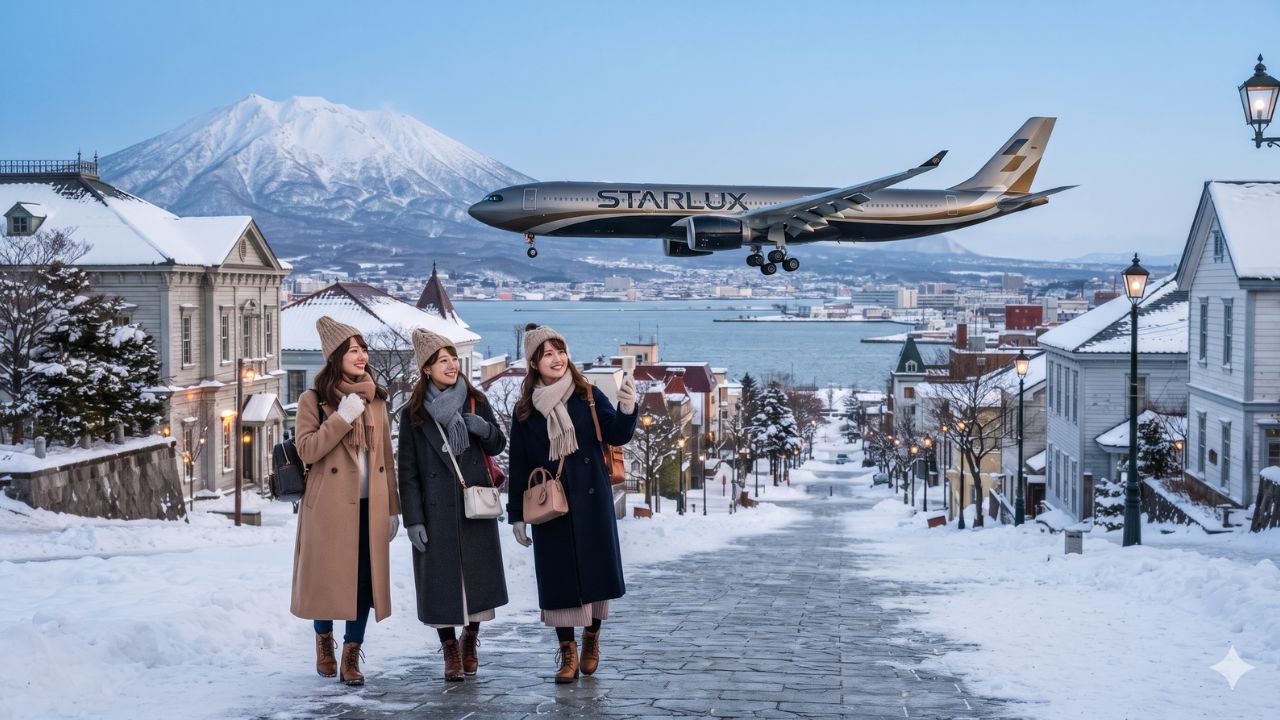
Taiwanese travelers generate nearly one in five international visits to Japan, averaging ¥234,000 per person and ranking first in visitor spending nationwide. Meeting this demand, boutique carrier STARLUX Airlines announced it will deploy its widebody Airbus A330-900neo daily between Taipei Taoyuan and Hakodate from December 1, 2026 through February 28, 2027, swapping out its A321neo to add 9,810 inbound seats to southern Hokkaido.
By increasing per-flight capacity from 188 to 297 seats—a 58% single-route expansion—the airline connects travelers directly to Hokkaido’s port city during peak Christmas, New Year, and Lunar New Year travel windows. Bypassing congested transfer hubs in Tokyo and Sapporo, the upgraded daily bridge brings international visitors straight to hot spring districts, historic star-shaped forts, and snow-covered morning seafood markets.
Deconstructing the STARLUX Winter Aircraft Upgrade
The 90-day seasonal deployment represents a major capacity shift for southern Hokkaido. Across the December-to-February period, STARLUX will offer 26,730 seats in each direction (53,460 two-way seats), compared to 16,920 under the previous A321neo configuration.
The aircraft upgrade delivers 109 extra seats on every daily service. Premium travelers benefit from a 250% increase in business class capacity, expanding from eight seats on the A321neo to 28 full-flat suites on the A330neo. Economy capacity increases by 89 seats, growing from 180 to 269 seats to accommodate independent travelers and family groups.
The daily flight schedule confirmed by Hakodate Airport features flight JX860 departing Taipei Taoyuan (TPE) at 12:00 and touching down in Hakodate (HKD) at 16:30 (a 3-hour 30-minute journey). The return service, JX861, leaves Hakodate at 18:00 and arrives back in Taipei at 21:40 (4 hours 40 minutes). The route also carries an international codeshare with Etihad Airways.
The table below contrasts the aircraft configurations and outlines airport transfer options:
| Service Category / Route Metric | Airbus A321neo (Base) | Airbus A330-900neo (Winter Upgrade) | Capacity Change |
|---|---|---|---|
| Business Class Seats | 8 seats | 28 seats | +20 seats (+250%) |
| Economy Class Seats | 180 seats | 269 seats | +89 seats (+49.4%) |
| Total Seats per Departure | 188 seats | 297 seats | +109 seats (+58.0%) |
| Monthly Inbound (30 Days) | 5,640 seats | 8,910 seats | +3,270 seats |
| 90-Day Total Inbound Seats | 16,920 seats | 26,730 seats | +9,810 seats |
| Two-Way Winter Capacity | 33,840 seats | 53,460 seats | +19,620 seats |
| Hakodate Station Shuttle | 20 minutes | Published Fare: ¥700 | Direct rail connection |
| Goryokaku Area Shuttle | 28 minutes | Published Fare: ¥500 | Historic center link |
| Shin-Hakodate-Hokuto Bus | 40–56 minutes | Published Fare: ¥1,000 | Shinkansen bullet train link |
| Onuma Resort Shuttle | 73 minutes | Published Fare: ¥1,500 | Quasi-National Park link |
Taiwan’s Surge and Hakodate’s Winter Visitor Economy
Data from the Japan National Tourism Organization (JNTO) indicates Taiwan delivered 6,632,300 visitors to Japan from January to October 2026 (+17.7% annually). In October 2026 alone, Taiwanese arrivals reached 634,600 (+6.5% year-on-year), representing 19.1% of Japan’s 34.64 million total arrivals.
According to the Japan Tourism Agency, visitor spending totaled ¥2.2076 trillion between July and September 2026 (+3.2% year-on-year), with Taiwan ranking first globally. With per-person spending averaging ¥234,000, filling the 9,810 additional seats at an 80% load factor (7,848 travelers) yields ¥1.84 billion in spending, rising to ¥2.30 billion at full capacity.
Locally, Hakodate recorded 6.058 million visits in FY 2025 (+0.6%), with 579,000 foreign overnight stays (up from 568,000). Direct widebody flights provide local merchants with reliable winter revenue.
What Makes Hakodate Distinct in Winter
Unlike inland Hokkaido resorts defined solely by ski runs, Hakodate offers coastal culture shaped by maritime trade:
Historic Motomachi and Star-Fort Goryokaku
Opened as an international treaty port in 1859, the Motomachi hillside features Russian Orthodox churches, Western consulates, and stone streets sloping to Hakodate Bay. Nearby stands Fort Goryokaku, a nineteenth-century star-shaped citadel whose moats freeze under snow, viewed from the 107-meter Goryokaku Tower.
Thermal Waters at Yunokawa Onsen
Located ten minutes by bus from Hakodate Airport, Yunokawa Onsen is among Hokkaido's oldest hot spring retreats. Coastal ryokan feature outdoor baths (rotenburo) over the Tsugaru Strait, while the Botanical Garden hosts Japanese macaques bathing in hot pools during winter.
Culinary Heritage and Morning Seafood
The Hakodate Morning Market gathers approximately 250 vendors near Hakodate Station. Visitors enjoy kaisendon bowls topped with sea urchin (uni), salmon roe (ikura), and squid (ika), alongside miso ramen in kelp broth.
Visitor Insider Tips: Navigating Winter in Hakodate
- Mount Hakodate Road Closure Notice: The access road is closed to cars, taxis, and buses from November 9, 2026 to April 12, 2027. Travelers must take the Mount Hakodate Ropeway, departing every 15 minutes, to view the peninsula night panorama.
- Dress for Sub-Zero Coastal Winds: With January temperatures averaging −2.4°C and coastal winds, wear cleated winter boots. Station shops sell slip-on rubber spikes (suberidome) to attach to shoes for icy streets.
- Explore Beyond the City to Onuma: Take the 73-minute airport bus or JR train to Onuma Quasi-National Park, where frozen lakes host ice fishing for pond smelt (wakasagi) and snowshoe tours through quiet forests.
- Leverage Visa-Free Travel Rules: Taiwanese passport holders with an ID number enter Japan visa-free for up to 90 days. Non-Taiwanese travelers connecting through Taipei should verify individual visa requirements before booking.
Cultural and Environmental Context: Regional Dispersal
Hakodate’s winter expansion aligns with Japan’s goal to disperse international travelers away from congested hubs in Tokyo, Kyoto, and Osaka. Southern Hokkaido links heritage sites, including prehistoric Jomon settlements recognized by the UNESCO World Heritage Centre, with working fishing ports.
Sustainable tourism in Hokkaido emphasizes community well-being. Municipal agencies encourage visitors to use public airport shuttles and trams over rental cars on icy roads, reducing traffic and emissions while directing patronage to family-run market stalls.
FAQ: Visiting Hakodate on STARLUX Airlines 2026-2027
When does STARLUX operate the A330neo to Hakodate?
The daily widebody Airbus A330-900neo operates between Taipei and Hakodate from December 1, 2026 through February 28, 2027.
How do I reach Mount Hakodate during the winter road closure?
With the access road closed between November 9, 2026 and April 12, 2027, the summit is accessible exclusively via the Mount Hakodate Ropeway.
How far is the hot spring district from Hakodate Airport?
Yunokawa Onsen is located approximately ten minutes from Hakodate Airport by local bus or taxi.
How much does the bus from Hakodate Airport to Hakodate Station cost?
The direct shuttle bus costs ¥700 for adults and takes approximately 20 minutes to reach Hakodate Station.
Widebody comfort and direct winter access connect travelers from Taipei’s warmth straight to Hakodate’s snow-draped star fort and steaming coastal onsen.
Related Travel Guides
This article is for informational purposes. Flight routes, passenger regulations, visa rules, and transit advisories are subject to change by airlines and aviation authorities. Readers are advised to verify schedules and travel documentation with relevant carriers and border agencies before departure.
Related Stories

Canada Winter Cities Guide 2026–2027: Nine Contrasting Cold-Weather Destinations

Baton Rouge Christmas Lights and Winter Sports Guide 2026