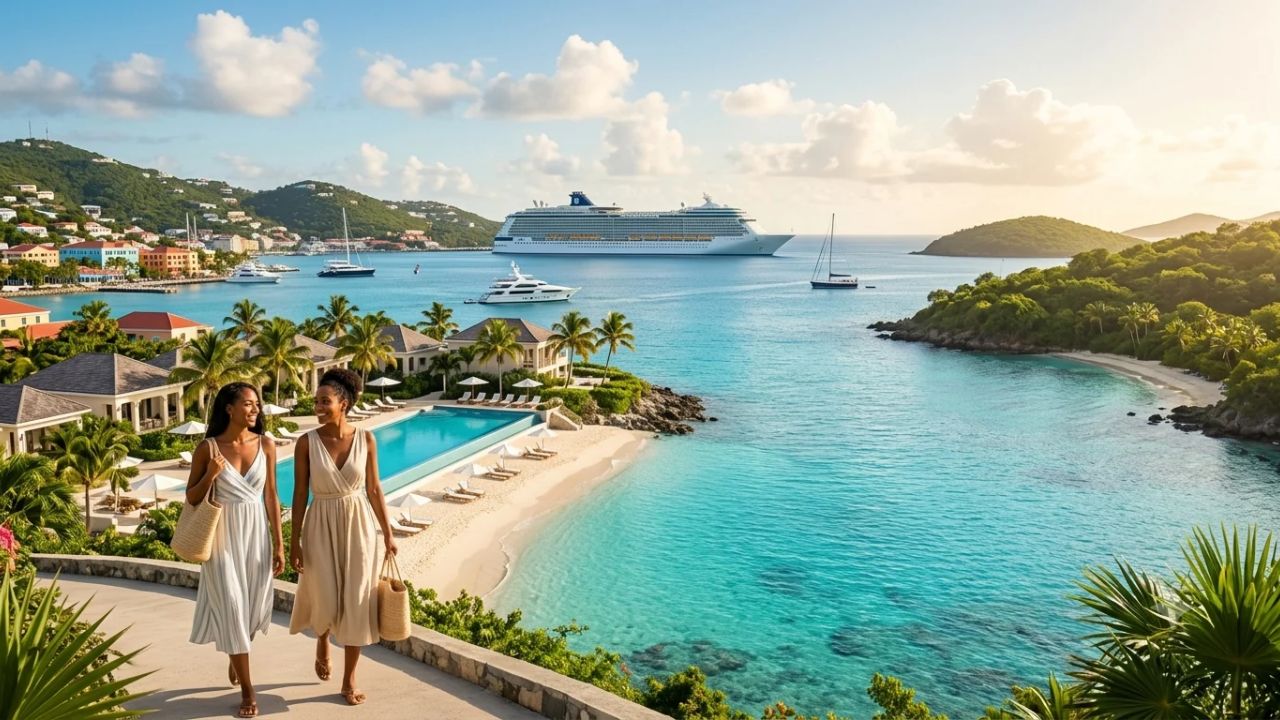
Jamaica Tourism Looks Beyond Recovery To Target Long-Term Earnings Growth

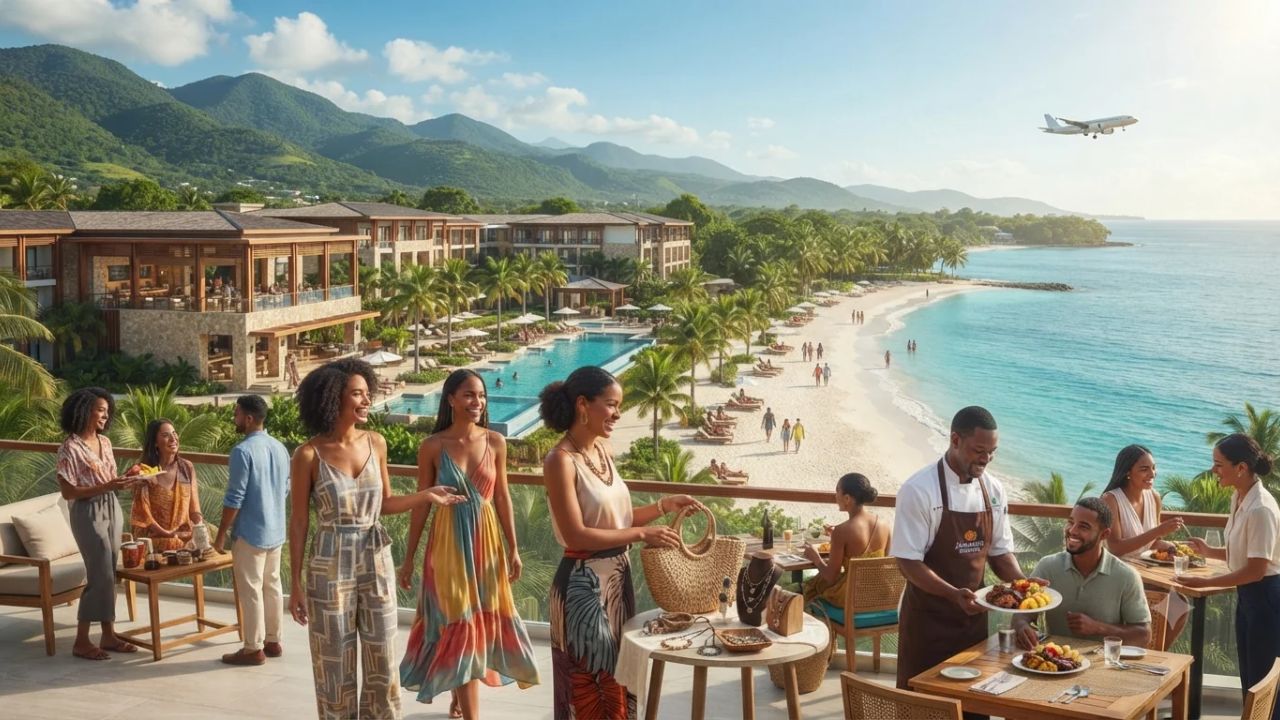
The Ministry of Tourism of Jamaica has officially pivoted from storm recovery toward aggressive decadal expansion with the unveiling of the 10x10x10 Tourism Vision, targeting 10 million visitors and US$10 billion in annual revenue within ten years through the progressive framework of Tourism 3.0.
The 10x10x10 Strategy: A Transformative Decadal Paradigm for Caribbean Tourism
During the high-profile gathering of international travel specialists, hospitality executives, and diplomatic leaders at The Kimberly Hotel in New York City during Caribbean Week, Jamaica’s Minister of Tourism, Hon. Edmund Bartlett, delivered an announcement that redefined the trajectory of regional tourism. Announcing the official launch of the 10x10x10 Tourism Vision, Minister Bartlett made it unequivocally clear that Jamaica is closing the chapter on post-storm recuperation. Instead, the island nation is embarking on an assertive, structured ten-year growth trajectory designed to attract 10 million annual visitors, generate US$10 billion in gross foreign exchange earnings, and achieve these targets within a decade.
This strategic shift represents far more than an ambitious public relations target; it marks a fundamental philosophical evolution in how a small island developing state measures tourism success. For decades, Caribbean destinations have measured performance primarily through gross stopover arrivals and passenger headcounts. While volume remains important for airline load factors and hotel room occupancy, top-line arrival numbers alone do not guarantee economic prosperity for local citizens. The 10x10x10 Vision explicitly ties volume growth to earnings expansion, setting a dual target that demands an elevation in average daily spend, extended length of stay, and broader geographical dispersal of visitors across all fourteen parishes.
The launch of the initiative comes at a critical juncture for the Caribbean basin. Global travelers are increasingly seeking destinations that deliver authentic cultural immersion, environmental stewardship, and ethical supply-chain engagement. By setting a ten-year horizon, Jamaica provides private developers, international airline partners, domestic financial institutions, and local agricultural producers with the regulatory predictability and long-term vision necessary to commit capital. The strategy positions tourism not merely as an isolated economic sector, but as the central engine driving national infrastructure, renewable energy adoption, digital transformation, and community wealth building.
From Crisis Resilience to Structural Growth: The Hurricane Melissa Rebound
Jamaica’s confidence in articulating such expansive decadal goals is rooted in verified macroeconomic performance and an unprecedented pace of physical recovery following the passage of Hurricane Melissa. While severe tropical weather events historically sidelined regional tourism economies for years, Jamaica’s structured institutional preparedness allowed the destination to restore operations with remarkable speed.
Rapid Restoration of Island Hospitality Inventory
Following the passage of Hurricane Melissa, the public and private sectors mounted an intensive, coordinated restoration campaign. Within months of the storm, approximately 80 percent of Jamaica’s total hotel room stock had been restored, inspected, and returned to active commercial inventory. The remaining 20 percent of accommodation units—primarily undergoing scheduled renovations and climate-resilient structural enhancements—are on track to achieve full island-wide operational capacity by early 2027.
The swift return of flagship coastal resorts played a decisive role in stabilizing international consumer sentiment and preserving forward bookings:
- Bahia Principe Escape Runaway Bay: Resumed full luxury operations along the northern coastline, welcoming back European and North American charter and scheduled vacationers.
- Princess Senses The Mangrove and Princess Grand Jamaica: The newly developed mega-resort complex in Green Island, Hanover, restored operations swiftly, re-establishing high-end family and adult-oriented luxury room capacity on the island’s western shores.
- Montego Bay and Negril Hotel Corridors: Independent boutique properties and established international brand resorts across the primary leisure corridors conducted rapid landscape clearing, structural restoration, and utility synchronization, ensuring that winter peak arrivals proceeded without disruption.
Unprecedented Arrival Numbers and Financial Performance
The velocity of Jamaica’s tourism rebound is demonstrated by hard financial and border arrival metrics. In the four-year cycle leading up to the announcement, the island had already established a formidable baseline, welcoming approximately 4.5 million annual visitors and generating US$4.3 billion in annual tourism earnings.
Rather than faltering under the weight of storm recovery, the first half of 2026 delivered record-breaking performance:
- First Quarter Performance: During Q1 2026, Jamaica welcomed over 1 million total visitors, generating US$956 million in foreign exchange earnings.
- Year-to-Date Milestones: By the end of May 2026, cumulative stopover arrivals and cruise passenger disembarkations surpassed 1.5 million visitors, injecting approximately US$1.5 billion directly into the domestic economy.
This sustained commercial momentum proves that consumer demand for the Jamaican brand remains exceptionally resilient. By converting this post-crisis rebound into a formal growth strategy, tourism leadership has prevented market stagnation and established a high baseline for the decade ahead.
The US$5 Billion Accommodation Pipeline: Delivering 20,000 New Rooms
Attracting 10 million annual visitors requires a significant expansion of physical room inventory. To prevent supply bottlenecks, reduce seasonal rate volatility, and accommodate diverse market demographics, Jamaica is executing a US$5 billion accommodation development pipeline that will add between 15,000 and 20,000 newly constructed rooms over the next five to ten years.
Geographical Distribution and Diverse Brand Portfolios
Unlike previous development cycles that concentrated investment almost exclusively in Montego Bay and Ocho Rios, the current development pipeline emphasizes balanced geographical distribution across the island:
- Hanover and Western Jamaica: The continued build-out of the Green Island corridor positions Hanover as a major luxury hospitality hub, capturing spillover demand from neighboring Negril and Montego Bay while developing high-end coastal eco-resorts.
- Trelawny and the Northern Shore: Major international hotel conglomerates from Spain, North America, and the United Kingdom are advancing master-planned resort communities featuring championship golf courses, wellness villages, and marina facilities along the historic Trelawny coastline.
- Kingston and Urban Business Tourism: Recognizing that business travel, cultural tourism, and creative industries represent high-yield segments, capital is flowing into the capital city. New lifestyle business hotels, boutique heritage properties in New Kingston, and extended-stay executive suites are expanding room capacity to support international conferences, music festivals, and sports events.
- Port Antonio and South Coast Eco-Tourism: Portland and St. Elizabeth are targeting low-density, high-value eco-resorts, regenerative agro-lodges, and wellness sanctuaries that preserve pristine mangrove ecosystems, river valleys, and community coastlines.
Climate-Resilient Architecture and Sustainable Construction
A vital component of the US$5 billion capital pipeline is the mandatory adoption of climate-resilient building codes and environmental certifications. Learning from past extreme weather events, all new hospitality developments must incorporate:
- Category 5 hurricane-rated structural engineering and reinforced building envelopes.
- On-site decentralized solar photovoltaic systems and battery energy storage microgrids to maintain essential power during municipal utility interruptions.
- Advanced reverse-osmosis seawater desalination systems and rainwater harvesting reservoirs to alleviate pressure on local freshwater aquifers.
- Closed-loop tertiary wastewater treatment facilities that recycle greywater for extensive landscape irrigation and agricultural buffer zones.
- BREEAM and LEED green building standards, ensuring that property operations minimize operational carbon emissions over their multi-decade lifespans.
| Development Corridor | Projected New Rooms (5–10 Yrs) | Primary Hospitality Segments | Key Environmental & Infrastructure Features |
|---|---|---|---|
| Hanover / Green Island | 4,000 – 5,500 Rooms | Ultra-Luxury, All-Inclusive, Eco-Resorts | Mangrove preservation buffers, solar microgrids, coastal setback enforcement |
| Montego Bay / Rose Hall | 3,500 – 4,500 Rooms | Luxury Lifestyle, Family Resorts, Branded Residences | Advanced desalination facilities, high-efficiency district cooling systems |
| Trelawny / Falmouth | 3,000 – 4,000 Rooms | Master-Planned Communities, Sports & Marina | Heritage architectural integration, wetland filtration systems |
| Ocho Rios / Runaway Bay | 2,500 – 3,500 Rooms | Experiential Luxury, Adventure Lodges | River basin protection protocols, localized organic farming partnerships |
| Kingston Metropolitan | 1,500 – 2,000 Rooms | Business Hotels, Heritage Boutique, Extended Stay | Urban walkability design, transit connectivity, historic district rejuvenation |
| South Coast / Port Antonio | 1,000 – 1,500 Rooms | Regenerative Eco-Lodges, Wellness Sanctuaries | Low-density footprints, 100% off-grid solar architecture, zero-plastic operations |
Tourism 3.0: Eradicating Economic Leakage and Democratizing Wealth
The quantitative targets of 10 million visitors and US$10 billion in revenue represent the headline goals of the 10x10x10 strategy. However, the structural engine driving the entire initiative is Tourism 3.0. Formulated under the philosophical mandate articulated by Minister Bartlett—“Tourism must not merely grow in Jamaica. Tourism must grow Jamaica”—Tourism 3.0 represents a comprehensive restructuring of the destination’s economic architecture.
The Structural Problem of Tourism Leakage in Island Economies
For decades, small island developing states across the Caribbean, South Pacific, and Indian Ocean have grappled with the economic reality of tourism leakage. Studies have demonstrated that in conventional all-inclusive resort models, a substantial percentage of every tourism dollar spent leaks out of the host country to pay for imported food, foreign airline tickets, international booking platform commissions, imported building supplies, and offshore management profits.
When economic leakage remains unaddressed, high arrival numbers create a frustrating paradox: crowded highways, strained public utilities, and rising living costs for residents, while the financial gains remain concentrated among foreign hotel operators. Tourism 3.0 directly attacks this structural imbalance through three foundational pillars: workforce empowerment, domestic supply-chain integration, and community-based cultural immersion.
Pillar One: Workforce Empowerment, Technical Skills, and Financial Security
Tourism 3.0 recognizes that service staff, culinary artisans, tour guides, and operational personnel represent the true foundation of Jamaica’s hospitality brand. To prevent hospitality workers from being trapped in low-wage, dead-end roles, the Ministry of Tourism is executing expansive training programs in partnership with the Jamaica Centre of Tourism Innovation (JCTI).
These educational programs provide globally recognized certifications in culinary arts, supervisory management, digital revenue tracking, data analytics, and customer relationship management. Rather than viewing artificial intelligence and automated hotel systems as a threat to human labor, workers are trained to utilize modern digital platforms to streamline administrative tasks, allowing staff to focus on high-touch, empathetic guest interactions that justify premium room rates.
Equally transformative is the ongoing expansion of the Tourism Workers Pension Scheme (TWPS). Established as the first comprehensive social safety net of its kind in the Caribbean, the TWPS provides formal pension coverage for hotel workers, craft vendors, contract carriage operators, red-cap porters, and agricultural suppliers. By securing long-term retirement benefits for informal and contract workers, the government is ensuring that the wealth generated by international tourism translates into lasting intergenerational financial security.
Pillar Two: Domestic Supply-Chain Integration and Agricultural Linkages
To capture a higher proportion of visitor expenditure, Jamaica is systematically replacing imported resort provisions with locally grown, high-quality domestic products. The Agri-Linkages Exchange (ALEX) platform—an innovative digital marketplace developed by the Tourism Enhancement Fund (TEF) and the Rural Agricultural Development Authority (RADA)—connects smallholder farmers directly with resort purchasing managers in real time.
Through ALEX, Jamaican farmers in St. Elizabeth, Manchester, and Trelawny receive guaranteed purchase agreements for fresh produce, including Scotch bonnet peppers, sweet potatoes, pineapples, melons, tomatoes, and organic herbs. This direct procurement model eliminates predatory middlemen, guarantees consistent pricing for rural producers, and provides hotel chefs with farm-fresh organic ingredients harvested within hours of culinary preparation.
To support this domestic supply chain, the government is making targeted capital investments in rural infrastructure. A prime example is the comprehensive rehabilitation of vital agricultural feeder corridors, such as the Fontabelle to Geddes Town Road in St. Mary. By transforming rough rural roads into asphalt corridors, smallholder farmers can transport fragile crops to resort kitchens without transit spoilage. Simultaneously, these road enhancements open previously inaccessible interior communities to heritage tours, community homestays, and eco-excursions.
Pillar Three: Authentic Cultural and Culinary Immersion
Tourism 3.0 actively dismantles the "enclave tourism" model that historically encouraged international guests to remain sequestered behind the private gates of all-inclusive resorts. The contemporary high-yield traveler does not travel thousands of miles merely to sit by a private swimming pool eating generic continental buffets; they crave visceral encounters with living culture, indigenous gastronomy, and local music.
Under the 10x10x10 framework, the Jamaica Tourist Board is investing heavily in cultural decentralization:
- Culinary Heritage Trails: Expanding organized food trails celebrating authentic Jamaican jerk in Boston Bay, seafood preparation along the Middle Quarters riverbanks, and single-origin Blue Mountain coffee farms in the mist-shrouded peaks of St. Andrew and Portland.
- The Creative Economy & Music Tourism: Integrating reggae, dancehall, dub poetry, and visual arts into curated evening events, recording studio tours, and cultural masterclasses in Kingston and Spanish Town.
- Artisan Cooperatives and Craft Market Rejuvenation: Transforming municipal craft markets into vibrant cultural bazaars where licensed artisans sell verified authentic, locally made woodwork, textiles, and ceramics, backed by digital point-of-sale infrastructure accepting contactless international payments.
Global Airlift Expansion and Caribbean Aviation Leadership
A ten-year target of 10 million visitors cannot materialize without an aggressive, highly coordinated expansion of international aviation seat capacity. Tourism leadership is actively collaborating with global airline partners, airport concessionaires, and international civil aviation authorities to unlock new direct flight corridors, eliminate travel friction, and position Jamaica as the premier aviation gateway of the Caribbean basin.
North American Market Expansion: Porter Airlines and Core Gateways
The United States and Canada continue to serve as Jamaica's primary international source markets, delivering over 70 percent of total stopover arrivals. To maintain dominance in these vital corridors while accessing previously underserved secondary cities, Jamaica has secured major airlift commitments:
A historic milestone is the major market expansion by Canadian carrier Porter Airlines. Starting in the winter 2026/2027 season, Porter Airlines is launching direct non-stop flights into Sangster International Airport in Montego Bay (MBJ) from three key Canadian metropolitan hubs:
- Toronto Pearson International Airport (YYZ): Augmenting existing legacy carrier frequencies with daily high-efficiency Embraer E195-E2 flights, offering premium economy comfort for Canadian leisure travelers.
- Ottawa Macdonald-Cartier International Airport (YOW): Establishing a direct, non-stop air link between Canada’s national capital and Jamaica’s primary resort gateway, eliminating the friction of mid-winter layovers in Montreal or Toronto.
- John C. Munro Hamilton International Airport (YHM): Providing convenient, non-stop access for the dense population corridors of southern Ontario, the Niagara peninsula, and the Greater Golden Horseshoe.
In addition to Canadian expansion, legacy and low-cost carriers across the United States—including Delta Air Lines, American Airlines, United Airlines, JetBlue Airways, and Southwest Airlines—are increasing seasonal frequencies into both Montego Bay and Norman Manley International Airport in Kingston (KIN), matching the rising hotel room inventory coming online.
Diversifying Feeder Corridors: Latin America and Europe
Recognizing that over-reliance on a single geographic market creates economic vulnerability, the 10x10x10 Vision prioritizes source market diversification across Latin America and Europe:
- Latin American Connectivity with Wingo: Low-cost carrier Wingo is scaling up direct flight frequencies from major South American hubs, including Bogota and Medellin, Colombia, and connecting passengers through Panama. This opens frictionless travel pathways for high-spending travelers from Brazil, Chile, Argentina, and Colombia who are increasingly drawn to Jamaica’s vibrant beach culture and duty-free retail offerings.
- European Long-Haul Expansion: Virgin Atlantic continues to reinforce its long-haul services from London Heathrow, providing vital connectivity for the British leisure market and the extensive Jamaican diaspora residing across the United Kingdom. Parallel negotiations are advancing with carriers across Germany, Scandinavia, and Spain to establish seasonal charter and scheduled direct links into Montego Bay.
Hosting the 2027 CTO Air Connectivity Summit in Kingston
Demonstrating its leadership role across the wider Caribbean archipelago, Jamaica will host the prestigious Caribbean Tourism Organization (CTO) Air Connectivity Summit in Kingston in February 2027.
For decades, intra-Caribbean aviation has suffered from fragmented regulatory frameworks, exorbitant regional taxes and fees, inadequate fleet capacity, and cumbersome multi-destination visa requirements. A traveler attempting to fly between neighboring Caribbean islands often faces circuitous routing through Miami, turning a 45-minute flight into an exhausting full-day journey.
The February 2027 summit in Kingston will convene commercial airline chief executives, civil aviation regulators, finance ministers, and destination marketing directors to address these structural bottlenecks. Central items on the summit agenda include:
- Harmonizing regional passenger departure taxes and aviation security fees to make multi-destination island-hopping financially viable.
- Establishing reciprocal visa waiver agreements and joint biometric passenger processing to facilitate frictionless multi-island vacations for international travelers.
- Encouraging regional codeshare agreements and wet-lease operations to expand inter-island connectivity between Jamaica, the Dominican Republic, the Cayman Islands, Cuba, and the Eastern Caribbean.
Empowering the Travel Trade to Drive Bookings
While direct-to-consumer digital marketing and online travel agencies (OTAs) handle significant transactional volume, high-value luxury bookings, multi-generational family reunions, destination weddings, and corporate incentive groups remain heavily directed by professional retail travel advisors.
Director of Tourism Donovan White confirmed that the Jamaica Tourist Board (JTB) is rolling out an upgraded global travel advisor incentive program designed specifically to support the 10x10x10 objectives:
The Next-Generation Travel Specialist Incentive Framework
The redesigned JTB specialist framework moves beyond simple transaction volume rewards to incentivize strategic booking behaviors that align with national tourism objectives:
- Dispersal Bonuses: Enhanced cash incentives and marketing co-op funds for travel advisors who book itineraries featuring boutique hotels, eco-lodges, and experiential villas located outside of the core resort hubs of Montego Bay and Ocho Rios.
- Extended Length-of-Stay Rewards: Tiered financial commissions that escalate significantly when advisors secure guest stays exceeding seven, ten, or fourteen nights, encouraging longer vacations that generate higher direct economic yield for local communities.
- Shoulder Season Commissions: Counter-cyclical reward structures designed to boost arrivals during traditional shoulder and off-peak months (May, June, September, and October), leveling out hotel occupancy rates and guaranteeing year-round employment stability for resort staff.
Digital Enablement and Experiential Fam Trips
The JTB is pairing financial rewards with state-of-the-art sales enablement tools. Global travel advisors receive access to interactive digital learning platforms featuring virtual property tours, real-time airline capacity dashboards, and direct messaging channels with local destination management companies (DMCs).
In addition, the JTB is expanding its curated familiarization (FAM) trip itineraries. Travel advisors are brought to Jamaica not merely to tour hotel rooms, but to personally experience the authentic components of Tourism 3.0: harvesting organic cacao on a working plantation in St. Mary, participating in a Rastafari indigenous village cultural exchange, touring historic coffee estates in the Blue Mountains, and dining at community-owned seafood spots along the coast. When travel advisors possess firsthand emotional connections to the destination, their ability to inspire high-spending clients multiplies exponentially.
Regional Comparison and Strategic Outlook for the Wider Caribbean Basin
The launch of the 10x10x10 Tourism Vision positions Jamaica at the forefront of a broader renaissance across the Caribbean hospitality sector. As climate change, infrastructure bottlenecks, and shifting traveler expectations challenge traditional island models, destinations are forced to innovate or lose market share.
Below is a detailed comparative analysis examining how Jamaica’s 10x10x10 decadal roadmap compares with competing destination strategies across the Caribbean basin:
| Strategic Dimension | Jamaica (10x10x10 Vision) | Dominican Republic | The Bahamas | Barbados & Eastern Caribbean |
|---|---|---|---|---|
| Primary 10-Year Target | 10M visitors & US$10B revenue by 2036 | 12M+ annual visitors with focus on Punta Cana & Miches | High-yield focus, 9M+ total arrivals (cruise + stopover) | High-yield heritage, luxury wellness, and boutique eco-tourism |
| Accommodation Growth | 15,000–20,000 new rooms (US$5B pipeline) | 25,000+ new rooms across new resort development poles | Selective mega-resort and luxury private island expansions | Boutique, low-density luxury, historic plantation conversions |
| Local Wealth Retention | Tourism 3.0, TWPS pension scheme, ALEX farm-to-resort digital exchange | Local procurement laws, domestic agricultural support | Small Business Development Centre, Bahamian artisan subsidies | Strong local gastronomic integration, national heritage trusts |
| Aviation Expansion | New Porter flights (YYZ, YOW, YHM), Wingo expansion, hosting CTO 2027 | Ultra-low-cost hub development (Arajet) connecting the Americas | Nassau airport modernization, major US hub feeder links | Bridgetown hub expansion, inter-island regional ferry initiatives |
| Sustainability Mandate | Category 5 resilient codes, solar microgrids, closed-loop water treatment | Coastal zone management, large-scale utility solar farms | Extensive marine protected areas, mangrove restoration bonds | High plastic ban compliance, ambitious 100% renewable grid targets |
Frequently Asked Questions Regarding Jamaica's 10x10x10 Tourism Strategy
What does the 10x10x10 Tourism Vision entail?
The 10x10x10 Tourism Vision is a strategic decadal roadmap announced by Jamaica’s Minister of Tourism, Hon. Edmund Bartlett. The strategy establishes three clear interconnected goals to be achieved within ten years: attracting 10 million annual visitors (combined stopover and cruise passengers), generating US$10 billion in annual gross tourism foreign exchange earnings, and completing this transformation within a 10-year timeline through the structural framework of Tourism 3.0.
What is Tourism 3.0 and how does it prevent economic leakage?
Tourism 3.0 is the operational philosophy guiding Jamaica’s new tourism era, based on the principle that "Tourism must not merely grow in Jamaica. Tourism must grow Jamaica." It combats economic leakage—where tourism revenue flows out of the island to foreign entities—by strengthening domestic linkages. This is achieved through three key mechanisms: empowering the local workforce with technical skills and pension security via the Tourism Workers Pension Scheme (TWPS); linking local farmers and manufacturers directly to hotel kitchens through platforms like the Agri-Linkages Exchange (ALEX); and encouraging travelers to explore community-based culinary, musical, and heritage experiences outside traditional all-inclusive resort gates.
What is the current status of hotel recovery following Hurricane Melissa?
Jamaica has achieved an exceptionally rapid recovery following Hurricane Melissa. Approximately 80 percent of the island’s total hotel room inventory has already been restored and returned to active service. Flagship properties such as Bahia Principe Escape Runaway Bay, Princess Senses The Mangrove, and Princess Grand Jamaica have fully resumed operations. The remaining room stock undergoing scheduled refurbishments is projected to bring the entire sector to 100 percent operational readiness by early 2027.
Which international airlines are expanding non-stop flights to Jamaica?
Multiple international carriers are scaling up airlift to support the 10x10x10 strategy. In Canada, Porter Airlines is launching direct non-stop winter services into Montego Bay (MBJ) from Toronto Pearson (YYZ), Ottawa (YOW), and Hamilton (YHM). In Latin America, regional low-cost carrier Wingo is expanding direct flights from major South American hubs via Colombia and Panama. In the United Kingdom, Virgin Atlantic is reinforcing its long-haul frequencies from London Heathrow, while major US legacy carriers continue to increase seasonal seat capacity into both Montego Bay and Kingston.
How does the US$5 billion accommodation pipeline affect local employment and infrastructure?
The US$5 billion accommodation pipeline will deliver between 15,000 and 20,000 newly constructed rooms across Hanover, Trelawny, Montego Bay, Ocho Rios, Kingston, and the South Coast. This investment generates tens of thousands of skilled construction jobs during development and thousands of permanent, high-skilled hospitality careers upon opening. Additionally, developments are accompanied by mandatory investments in climate-resilient construction, solar microgrids, desalination plants, and public infrastructure upgrades, such as the rehabilitation of rural road networks.
What is the significance of the 2027 CTO Air Connectivity Summit in Kingston?
Jamaica will host the Caribbean Tourism Organization (CTO) Air Connectivity Summit in Kingston in February 2027. The summit gathers international airline executives, regional civil aviation regulators, and tourism ministers to resolve chronic intra-Caribbean air travel challenges. Key priorities include lowering regional aviation taxes, establishing reciprocal visa processing to enable uninterrupted multi-destination island vacations, and unlocking new direct flight corridors connecting North America, Latin America, Europe, and the Caribbean archipelago.
Related Travel Guides
This article is for informational purposes. Flight routes, passenger regulations, visa rules, and transit advisories are subject to change by airlines and aviation authorities. Readers are advised to verify schedules and travel documentation with relevant carriers and border agencies before departure.
Related Stories

India Celebrates Destination of the Year 2027 Honour as Hotel Association of India Champions Global Tourism Expansion

Caribbean Tourism 2027: New UK and European Transit Strategies for Island Hopping