
Barcelona El Prat Airport Groundforce Strike 2026: 270 Flights Canceled and 6,000 Bags Stranded
An indefinite ground staff strike at Barcelona El Prat airport has led to 270 flight cancellations and 6,000 stranded bags, leaving thousands of summer travelers in limbo.
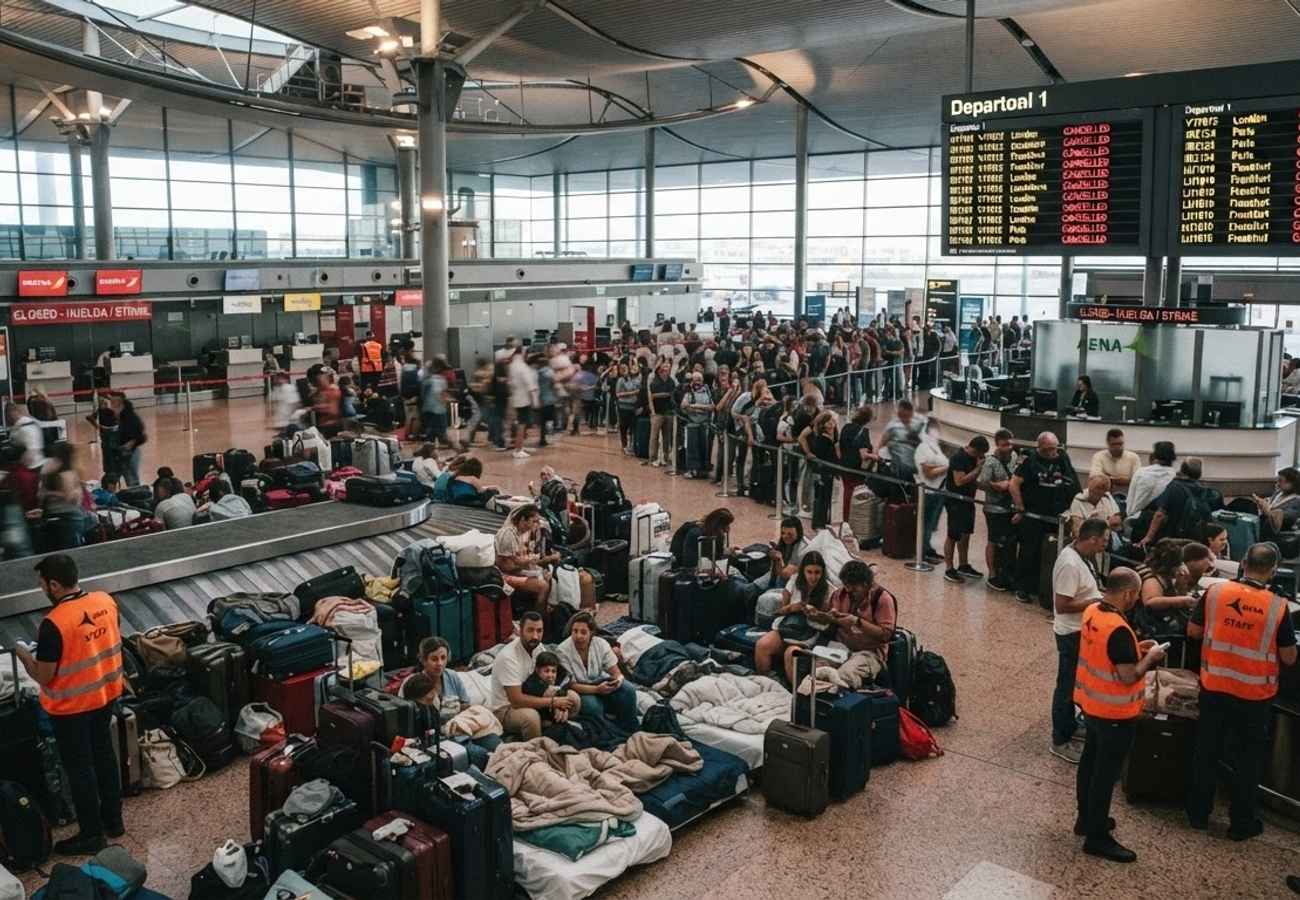
Image generated by AI
Barcelona is currently facing a severe aviation crisis as an indefinite walkout by ground-handling staff at Josep Tarradellas El Prat airport results in 270 canceled flights and approximately 6,000 stranded pieces of luggage. The industrial action, which began on 4 August 2026, continues to paralyze key airport operations during the height of the European summer holiday peak.
The disruption stems from a total breakdown in negotiations between the CGT union and Groundforce management. The dispute centers on critical labor issues, including inadequate staffing levels, problematic scheduling, and deteriorating working conditions. Because the strike was registered as "indefinite," there is currently no scheduled end date, leaving thousands of international travelers in a state of uncertainty.
Groundforce Walkout Paralyzes El Prat Operations
The industrial action commenced precisely at 00:00 on 4 August 2026, targeting the essential "behind-the-scenes" infrastructure of the airport. Approximately 1,100 Groundforce employees have ceased work, impacting the very functions that keep an airport operational: passenger check-in, boarding gate management, flight coordination, and baggage handling.
While the strike does not encompass every single employee at Barcelona El Prat, its strategic concentration on Groundforce—a primary contractor for numerous global airlines—has created a bottleneck effect. Reports from Catalan regional authorities indicate that this localized labor dispute is reflective of a larger trend of workforce volatility across Spanish and European airports throughout 2026, as the sector struggles to reconcile post-pandemic demand with staffing shortages.
Massive Flight Cancellations and Baggage Backlogs
The operational fallout has been significant. According to data compiled from regional media and aviation trackers, the walkout has directly caused the cancellation of roughly 270 flights. For those flights that did depart, the experience was often marred by extreme delays during the check-in and boarding processes.
The most critical failure, however, has been in the baggage reclaim systems. Current estimates show that 6,000 pieces of luggage have been misrouted, delayed, or left abandoned on the tarmac. In several instances, thousands of bags have been stockpiled in airport warehouses, awaiting manual matching with their owners.
Travelers have reported waiting up to five hours at baggage carousels, with some waiting days to be reunited with their belongings. The resulting queues at lost-luggage desks have reportedly stretched across the arrival halls, creating secondary congestion within the terminal.
Impacted Airlines and Route Exposure
The severity of the disruption depends entirely on which ground-handling company an airline employs. Because Groundforce services a specific portfolio of carriers, the impact is unevenly distributed across the airport.
The following airlines have been identified as the most exposed to the current strike:
| Airline Group | Affected Carriers |
|---|---|
| Major European Carriers | Air France, KLM, Lufthansa Group, Swiss, ITA Airways |
| International Giants | Qatar Airways, Turkish Airlines |
| Regional/Leisure | Air Europa, various charter operators |
Conversely, several low-cost carriers and domestic Spanish airlines utilize alternative handling providers. Passengers flying with these non-Groundforce carriers have generally reported normal processing times, creating a surreal scene where some check-in zones are operating smoothly while adjacent areas are in total chaos.
The scale of the risk is underscored by Aena, the Spanish airport operator, which reported that Barcelona handled nearly six million passengers and over 35,000 flight movements in July alone. With the August peak still in effect, any reduction in ground-handling capacity creates an immediate ripple effect across the entire European aviation network.
Passenger Rights and Legal Protections in Spain
In response to the growing crisis, Spanish and Catalan government portals have issued urgent advisories. Authorities are reminding travelers that despite the strike being a "third-party" labor dispute, the airline remains the primary entity responsible for passenger care.
Under European passenger-rights regulations, travelers facing significant delays or cancellations are entitled to:
- Rerouting or Refunds: Options to fly via an alternative route or receive a full ticket refund.
- Duty of Care: Provision of meals, refreshments, and hotel accommodation if an overnight stay is required.
- Financial Compensation: In specific circumstances, passengers may be eligible for monetary compensation, though "extraordinary circumstances" clauses are often debated during strikes.
Official guidance suggests that passengers should treat their travel plans as fluid. Experts recommend traveling with cabin baggage only to avoid the current baggage crisis and keeping all essential medications and valuables in carry-on luggage.
Navigating Travel Through Barcelona Now
For those currently booked to fly via Josep Tarradellas El Prat, industry observers suggest a proactive approach. Passengers flying with the affected carriers listed above should enable real-time airline notifications and verify their flight status before departing for the airport.
If baggage is checked, travelers are advised to label bags clearly and retain all receipts for emergency purchases (toiletries, basic clothing) necessitated by delayed luggage, as these are required for subsequent insurance or airline claims. Documentation is key; passengers should save all boarding passes and booking confirmations to support any future legal or financial claims for disruption.
Until a settlement is reached between the CGT union and Groundforce management, there is no confirmed timeline for a return to normalcy. Travelers are urged to allocate significantly more time for airport processing than usual.
The situation remains volatile as negotiations continue behind closed doors.
Related Travel Guides
Disclaimer
This article is for informational and educational purposes only. It does not constitute legal, financial, or professional advice. While we strive to provide accurate and up-to-date information, travel policies, regulations, and conditions change rapidly. Always verify information with official sources before making travel decisions. Nomad Lawyer makes no representations about the accuracy, reliability, completeness, or suitability of the information provided. Readers should consult qualified professionals for advice specific to their circumstances. The views expressed in this article are those of the author and do not necessarily reflect the views of Nomad Lawyer.