Valencia Tightens Sightseeing Rules with Ten-Person Limit on Guided Bicycle and Scooter Tours

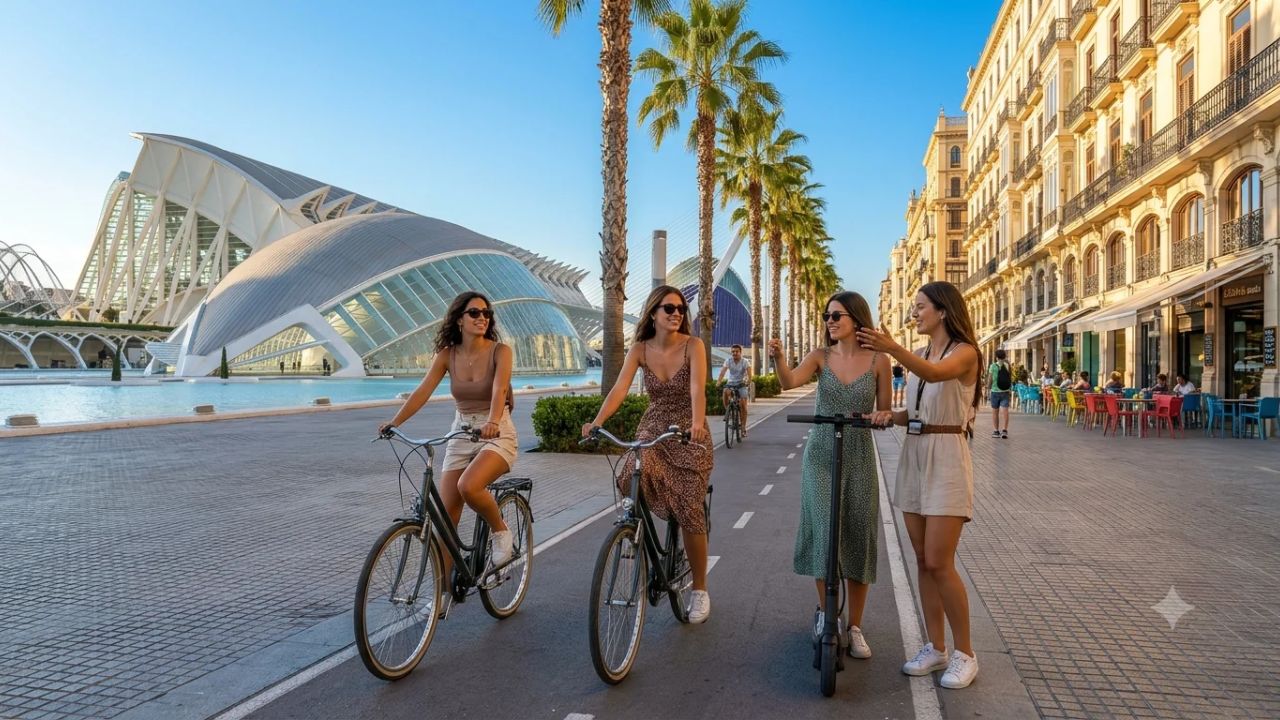
Valencia is advancing new municipal mobility amendments to cap guided bicycle and scooter tours at ten participants to improve urban coexistence.
VALENCIA, November 3, 2026 — Spain's Mediterranean tourism powerhouse of Valencia is preparing to enforce stringent new municipal restrictions on organized sightseeing, with city authorities formally proposing a ten-person ceiling and a mandatory 50-meter separation buffer for guided bicycle and electric scooter tours. The regulatory proposal, unveiled on November 2, 2026, aligns the coastal metropolis with an accelerating pan-European movement to curb urban overtourism, protect pedestrian mobility, and mitigate community friction in historic quarters shared by residents, daily commuters, and international vacationers.
[!NOTE] The draft amendment to Valencia's municipal Mobility Ordinance (Ordenanza de Movilidad) reduces the maximum permitted group size for guided bicycle and personal mobility vehicle (PMV / scooter) tours from 15 down to 10 participants, mandating that larger bookings split into separate units with at least 50 meters between subgroups. The proposal complements existing walking-tour caps under the Civic and Coexistence Ordinance, which limits pedestrian groups to 20 in the historic Ciutat Vella and 25 citywide while banning loudspeakers.
VALENCIA GUIDED BICYCLE & SCOOTER TOUR REGULATORY RESTRUCTURING
| Operational Metric Existing Regulatory Baseline Proposed Municipal Rule |
|---|
| Maximum Group Ceiling 15 Participants + Guide 10 Participants + Guide |
| Subgroup Splitting Informal Staggering Mandatory Split for >10 |
| Inter-Group Distance No Prescribed Separation Minimum 50-Meter Buffer |
| Independent Riders Unrestricted Standard Rules Completely Exempt |
| Current Legal Status Active Standard Practice Proposed Draft Ordinance |
| Complementary Framework: Walking Tour Caps (20 in Ciutat Vella / 25 Citywide; No Amps) |
Decongesting Urban Arteries: The Impetus Behind Valencia's Proposed Mobility Amendment
Over the past decade, Valencia has earned global recognition as one of Europe's premier cycling-friendly destinations. Supported by extensive flat topography, year-round Mediterranean sunshine, and more than 160 kilometers of segregated urban cycling lanes (Anillo Ciclista), the city has positioned micro-mobility at the center of its sustainable urban model. This green infrastructure is anchored by the renowned Turia Gardens (Jardín del Turia)—a nine-kilometer linear park created in the diverted riverbed of the Turia River, threading through the city from the Bioparc in the west to the futuristic City of Arts and Sciences (Ciudad de las Artes y las Ciencias) in the southeast.
However, the rapid post-pandemic surge in international tourism has placed unprecedented pressure on these shared transportation corridors. Commercial sightseeing operators routinely dispatch large pelotons of 15 or more cyclists and electric scooter riders through narrow medieval thoroughfares, congested pedestrianized plazas, and high-frequency commuter bike paths. During peak travel windows, these dense tourist columns frequently obstruct local bicycle commuters, impede pedestrian crossings, and create safety hazards at blind intersections across the historic center.
In response to mounting resident complaints and mobility audits, the Valencia City Council (Ajuntament de València) introduced a targeted draft reform to the municipal Mobility Ordinance. By lowering the maximum allowable size of guided cycling and scooter tours from 15 to 10 participants, municipal planners seek to reduce the physical footprint of organized tourist groups on public roadways, ensuring that commercial leisure activities do not compromise the safety or fluidity of everyday urban transport.
The Ten-Person Group Ceiling and the Fifty-Meter Separation Mandate
The proposed regulatory mechanism establishes explicit operational parameters for commercial tour operators, moving away from subjective enforcement toward measurable physical criteria.
Under the proposed rules, any commercial guided tour utilizing bicycles, e-bikes, or electric scooters (vehículos de movilidad personal - VMP) will be capped at a maximum of ten clients, accompanied by an authorized professional guide. When an agency handles larger tour reservations—such as school excursions, corporate incentive groups, or cruise ship shore excursions—the operator must divide participants into independent subgroups of no more than ten people each.
To prevent operators from circumventing the intent of the law by marching multiple subgroups in immediate succession, the ordinance introduces a mandatory 50-meter separation buffer. Operators must ensure that consecutive subgroups maintain a minimum continuous distance of 50 meters throughout the entirety of the route. This physical gap allows local pedestrians to cross designated cycle tracks safely, permits faster local bicycle commuters to overtake slower-moving tourist groups without leaving the bike lane, and prevents clustered tour groups from paralyzing busy traffic intersections.
City officials emphasize that the proposed restrictions are strictly targeted at organized commercial sightseeing operations. Independent tourists renting bicycles or electric scooters for private, self-guided travel throughout Valencia will not be subject to the ten-person tour ceiling, though they must continue adhering to standard traffic regulations governing speed limits, helmet usage, and sidewalk riding bans.
| Regulatory Parameter | Commercial Guided Tour Fleet | Independent Leisure Cyclists |
|---|---|---|
| Maximum Permitted Group Size | 10 participants (+1 professional guide) | Standard traffic codes (single file in traffic) |
| Mandatory Subgroup Distance | Minimum 50 meters between units | Standard safe braking distance |
| Governing Municipal Code | Amended Mobility Ordinance (Draft) | General Traffic & Road Safety Regulations |
| Applicable Vehicle Types | Bicycles, E-Bikes, Electric Scooters (PMVs) | All personal mobility and non-motorized vehicles |
| Primary Regulatory Objective | Prevent clustered congestion on bike paths | Ensure general road and pedestrian safety |
Educational Coexistence: Visit Valencia's Ten-Point Responsible Cycling Campaign
Recognizing that regulatory restrictions must be paired with proactive visitor education, the Valencia City Council has partnered with the municipal tourism promotion foundation, Visit Valencia, to launch a comprehensive responsible cycling campaign.
The initiative centers on an accessible, multi-lingual Ten-Point Good Cycling Practice Guide, distributed across tourist information offices, international hotels, bicycle rental storefronts, and digital booking platforms. The educational guide addresses both individual holidaymakers and organized tour participants, emphasizing behavioral norms essential for harmonious urban coexistence:
- Respect for Pedestrian Priority: Mandating complete pedestrian right-of-way at crosswalks, shared-space boardwalks, and pedestrianized shopping boulevards.
- Prohibition of Sidewalk Riding: Strictly reinforcing that bicycles and scooters must operate on designated cycle lanes (carriles bici) or road carriageways, never on pedestrian footpaths.
- Speed Discipline and Spatial Awareness: Encouraging moderate cycling speeds, particularly within shared recreational zones like the Turia Gardens.
- Lane Discipline and Passing Protocols: Instructing foreign riders to avoid riding abreast across cycle lanes, ensuring that faster local commuters can overtake safely.
- Proper Parking in Designated Racks: Educating visitors on using authorized bike docking stations rather than locking rental bicycles to historic railings, trees, or public benches.
By familiarizing international travelers with local traffic ordinances before they depart on a city tour, municipal planners aim to reduce inadvertent infractions and foster mutual respect between visitors and resident communities.
Existing Pedestrian Framework: Walking Tour Limits in Ciutat Vella and Loudspeaker Bans
Valencia's latest proposal for micro-mobility tours represents the second phase of a broader municipal strategy to regulate organized tourist footfall. The city had previously enacted targeted restrictions governing commercial walking tours under its Civic and Coexistence Ordinance (Ordenanza de Convivencia).
Under these established municipal rules, guided walking tours operating throughout the city of Valencia are legally capped at a maximum of 25 participants. However, in recognition of the acute physical vulnerability of the historic city center, the ordinance applies a stricter limit of 20 participants within the boundaries of Ciutat Vella (the historic Old Town). Ciutat Vella encompasses the city's ancient Roman, Visigothic, and Islamic foundations, characterized by tightly wound medieval alleyways, cobblestone lanes, and small neighborhood squares like the Plaza del Carmen and Plaza del Negrito.
In addition to group size ceilings, the coexistence ordinance enforces an outright ban on the use of megaphones, portable loudspeakers, and acoustic amplification devices by tour guides across all public thoroughfares. Guides operating in Valencia are legally required to utilize natural unamplified speech or supply participants with wireless digital audio systems (whisper headsets), ensuring that cultural narration remains audible only to registered clients while preserving residential tranquility.
VALENCIA HISTORIC CIUTAT VELLA REGULATORY LIMITS
| Category / Entity | Details / Impact |
|---|---|
| Pedestrian Walking Tours | Maximum 20 Tourists per Guide (25 Citywide) |
| Acoustic Amplification | Complete Ban on Megaphones, Loudspeakers, and PAs |
| Bicycle & Scooter Tours | Proposed Ceiling of 10 Participants (Draft Amendment) |
| Subgroup Separation | Mandatory 50-Meter Buffer Between Staggered Units |
| Restricted Heritage Quarters | Carmen, El Mercat, La Seu, El Pilar, Velluters |
The Pan-European Context: Benchmarking Valencia Against Amsterdam, Venice, and Florence
Valencia's legislative initiative does not exist in isolation; it mirrors a profound transformation in how Europe's most visited cultural capitals manage organized tourism. As urban overtourism sparks political debates across Southern and Western Europe, municipal governments are discarding voluntary self-regulation in favor of binding statutory limits.
Among European destinations, Amsterdam provides the closest direct operational parallel to Valencia. The Dutch capital has implemented comprehensive regulations governing guided tours across its central canal ring (Grachtengordel) and Red Light District (De Wallen). In designated regulated zones, Amsterdam caps guided walking, bicycle, scooter, and Segway tours at 15 participants. Tours involving more than four clients require a municipal exemption license, while guides are strictly prohibited from lingering in narrow bridge passages or utilizing voice amplification. While Amsterdam applies its 15-person limit uniformly across multiple transport modes, Valencia's proposal is notably stricter for micro-mobility, mandating a ten-person cap and a defined 50-meter separation buffer.
In Venice, municipal authorities introduced sweeping regulations in August 2024 to protect the fragile lagoon city. Guided tourist groups navigating Venice's historic center and the lagoon islands of Murano, Burano, and Torcello are restricted to a maximum of 25 people. Loudspeakers are banned, and guides face steep financial penalties for halting groups on bridges or narrow calli. However, because vehicular and bicycle transport is entirely prohibited within historic Venice, its regulations govern pedestrian tour groups exclusively.
In Spain, the historic Catalan city of Girona introduced a 25-person group cap and acoustic restrictions in May 2025 across its medieval Jewish Quarter (Call Jueu). Meanwhile, in major cultural metropolises like Barcelona and Florence, visitor group controls have historically been applied at the institutional level within major museums—such as Barcelona's Picasso Museum (capped at 20 visitors per group) and Florence's Uffizi Galleries and Palazzo Pitti (capped at 16 visitors per group). Valencia's new mobility initiative distinguishes itself by targeting public street-level cycling infrastructure rather than enclosed museum exhibitions.
| European Destination | Regulatory Scope | Group Size Limit | Specific Transport Focus | Acoustic / Operational Rules |
|---|---|---|---|---|
| Valencia (Proposed) | Street-Level Public Spaces | 10 Participants | Guided Bicycles & E-Scooters | 50m separation buffer; walking rules apply |
| Amsterdam (Netherlands) | Central Regulated Districts | 15 Participants | Walking, Bikes, Scooters, Segways | Permits required for >4; no bridge lingering |
| Venice (Italy) | Historic Center & Lagoon Islands | 25 Participants | Pedestrian Walking Tours | Outright ban on megaphones; no bridge stops |
| Girona (Spain) | Historic Old Quarter (Barri Vell) | 25 Participants | Pedestrian Walking Tours | Ban on megaphones; guide certification rules |
| Barcelona (Spain) | Major Cultural Institutions | 20 Participants | Museum Guided Visits (Picasso Museum) | Timed entry slots; exhibition flow controls |
| Florence (Italy) | Major State Museums | 16 Participants | Museum Guided Visits (Uffizi / Pitti) | Mandatory radio whisper sets; timed access |
Micro-Mobility Infrastructure: Turia Gardens and the Anillo Ciclista Commuter Pressures
To understand why bicycle and scooter tours have become the focal point of municipal intervention, one must examine the specific geography of Valencia's urban transport grid.
The centerpiece of the city's cycling identity is the Turia Gardens. When the devastating flood of 1957 prompted the diversion of the Turia River south of the city, the reclaimed riverbed was transformed into an immense public park rather than an urban highway. Today, the sunken park accommodates thousands of daily joggers, families, botanical gardens, sports fields, and twin cycling paths that run uninterrupted for nine kilometers. Because the riverbed is completely free of motorized vehicular cross-traffic, it represents the primary training ground and transit route for virtually every commercial bicycle tour in the city.
However, the park's popularity has created acute friction. During sunny mornings and weekends, guided pelotons of cruise ship passengers and tourists on electric cruisers share the same five-meter-wide pathways with competitive local road cyclists, daily commuters pedaling toward the port, and dog walkers. When multiple 15-person groups travel in close proximity, they occupy the entire path width, forcing opposing traffic onto grass verandas and creating collision hazards.
A parallel challenge exists on the Anillo Ciclista, the dedicated two-way cycle ring that encircles the perimeter of the historic center along the old city walls. Designed to handle commuter bike traffic connecting residential neighborhoods with downtown commercial avenues, the lane features high commuter volume during morning and afternoon rush hours. Large, slow-moving tourist groups navigating the ring frequently cause bicycle traffic jams at traffic-light crossings, frustrating local residents who rely on bicycles for daily transportation.
VALENCIA CYCLING INFRASTRUCTURE FRICTION HOTSPOTS
| Category / Entity | Details / Impact |
|---|---|
| Turia Gardens (Jardín del Turia) | Clustered tourist groups block commuter paths |
| Anillo Ciclista (Ring Route) | Slower-moving tour groups cause transit delays |
| Torres de Serranos & Quart | Dense historic gateways create pedestrian conflict |
| Plaza de la Virgen & La Reina | Shared-space plazas where cycling creates hazards |
| Ciudad de las Artes y Ciencias | High-density visitor arrivals overwhelm cycle paths |
Operational Realities for Tour Operators: Staffing Models, Staggered Waves, and Cost Pressures
If the draft amendment to the Mobility Ordinance receives final approval, commercial tour operators across Valencia will be required to execute substantial structural adjustments to their daily operations.
The reduction from 15 to 10 participants represents a 33 percent contraction in single-guide operational capacity. For a tour company that routinely accommodates cruise ship groups of 30 or 40 passengers arriving in the Port of Valencia, delivering an excursion under the proposed rules will require deploying four separate guides instead of two. This requirement will generate immediate demand for certified multi-lingual cycling guides, driving up direct labor costs for excursion providers.
To manage the mandatory 50-meter separation buffer, operators will need to adopt sophisticated departure scheduling:
- Staggered Departure Waves: Spacing subgroup departures by five to ten minutes at the storefront, ensuring that groups do not arrive simultaneously at bottlenecks like the Serranos Towers or narrow bridges over the Turia.
- Route Diversification: Developing alternative, secondary cycling circuits that bypass traditional choke-points, exploring vibrant residential quarters such as Ruzafa, Cabanyal, or the modern marina rather than funneling all tours along identical routes.
- Investment in Radio Systems: Equipping cycling guides and participants with short-range wireless intercoms, enabling guides to deliver narration safely while cycling without having to halt the group across active cycle lanes.
While smaller operators express concern regarding rising labor overheads and revised pricing structures, established destination management companies acknowledge that smaller groups offer clear operational benefits, including easier group supervision, reduced road accident liability, and superior client satisfaction.
| Operational Challenge | Traditional 15-Person Tour Model | Proposed 10-Person Restructured Model |
|---|---|---|
| Guide-to-Client Ratio | 1 Guide per 15 Participants | 1 Guide per 10 Participants (33% labor increase) |
| Departure Coordination | Single mass departure | Staggered departure waves spaced by 5–10 minutes |
| Route Management | Clustered routing along main corridors | Dispersed routes across secondary city neighborhoods |
| Auditory Communication | Shouted commands or frequent group stops | Individual wireless whisper headsets / radio systems |
| Safety & Supervision | Difficult to monitor lagging riders | Superior group cohesion and immediate hazard response |
Tourist Experience Transformation: Transitioning from Mass Pelotons to Intimate Storytelling
From the perspective of international travelers, the proposed transition toward smaller tour sizes delivers significant qualitative enhancements that outweigh minor adjustments in booking schedules.
Participating in a large, 15-person cycling tour through an unfamiliar European city can often induce anxiety for casual cyclists, families with teenagers, and older travelers. In large groups, participants at the rear frequently struggle to hear the guide's cultural commentary, feel pressured to keep pace with faster riders, and face heightened risks of collision when negotiating tight street corners.
By capping groups at ten participants, the proposed regulations create a more intimate, premium educational experience. Guides can maintain visual contact with every rider, deliver detailed historical insights regarding Valencia's UNESCO-listed Silk Exchange (La Lonja de la Seda) or modern architecture without straining their voices, and tailor their cycling pace to the group's physical comfort. Additionally, smaller groups blend more harmoniously into the urban fabric, allowing visitors to feel like welcome guests rather than an intrusive commercial invasion.
Urban Autonomy and Municipal Competencies: How Spanish City Councils Regulate Public Space
The legal foundation underpinning Valencia's proposed mobility reform rests on the statutory framework of Spanish administrative law. Under the Spanish Constitution of 1978 and the Law Regulating the Bases of the Local Regime (Ley Reguladora de las Bases del Régimen Local), municipal governments exercise direct regulatory authority over local transport management, road safety, urban traffic, and the commercial utilization of public thoroughfares (bienes de dominio público). This statutory autonomy empowers city councils to introduce binding technical requirements governing commercial activities that take place on municipal roadways, cycle paths, and pedestrian boulevards.
However, balancing municipal regulation against constitutional protections presents complex administrative challenges. Commercial tour companies and business associations often scrutinize municipal restrictions through the lens of constitutional protections safeguarding the freedom of enterprise (libertad de empresa). In previous administrative disputes across various autonomous communities in Spain, business federations have challenged municipal group caps by alleging that restrictions disproportionately hinder legitimate commercial commerce without adequate empirical justification.
To ensure that the amended Mobility Ordinance withstands judicial review before the High Court of Justice of the Valencian Community (Tribunal Superior de Justicia de la Comunitat Valenciana), municipal legal teams have linked the 10-person ceiling directly to measurable road safety and mobility indicators. Technical audits conducted along the Anillo Ciclista and shared pedestrian-cyclist boulevards demonstrate that columns exceeding ten bicycles generate severe passing bottlenecks, forcing oncoming riders to swerve abruptly and compelling faster commuter cyclists into pedestrian buffers. By grounding the regulatory amendment in technical road capacity data and public safety imperative rather than arbitrary commercial limits, Valencia establishes an evidentiary standard designed to protect municipal policy from legal challenges.
The Turia Riverbed Legacy: From Flood Control Project to Global Micro-Mobility Benchmark
To appreciate the urban significance of Valencia's cycling corridors, one must consider the singular history of the Turia Gardens. In October 1957, the catastrophic Great Flood of Valencia inundated three-quarters of the city, claiming scores of lives, devastating residential quarters, and triggering a fundamental re-evaluation of the city's relationship with its geography. In the flood's aftermath, the national administration devised the ambitious Plan Sur, an engineering undertaking that diverted the Turia River southward along an artificial bypass canal away from the urban center.
Initial municipal proposals for the abandoned riverbed envisioned converting the nine-kilometer dry trench into a high-speed arterial highway connecting the inland motorway network directly to the maritime port. However, during the early 1970s, an unprecedented citizen mobilization led by neighborhood associations and civic intellectuals fought to protect the space under the rallying slogan "El llit del Túria és nostre i el volem verd" (The Turia bed is ours and we want it green). This historic civic triumph successfully halted highway construction, transforming the decommissioned riverbed into an extraordinary 110-hectare linear park that earned Valencia designation as the European Green Capital in 2024.
Today, this sunken green artery serves as the backbone of the city's micro-mobility system. Because the park features gentle gradients and zero motorized vehicular crossings, it acts as a primary active transport corridor for tens of thousands of residents commuting between western residential districts, universities, and administrative centers. When commercial tour companies channel mass tourist pelotons into this shared recreational spine, the encounter between swift commuter transit and leisurely sightseeing creates immediate spatial tensions. The proposed ten-person group cap honors the foundational ethos of the Turia Gardens as a shared public sanctuary, preserving its utility as an inclusive, safe green space accessible to everyday Valencians.
Cruise Tourism Dynamics: Managing Shore Excursion Surges at the Port of Valencia
The operational necessity for stricter group controls is acutely evident in the evolving dynamics of Valencia's maritime tourism sector. Over the past five years, the Port of Valencia has emerged as one of the fastest-growing cruise turnaround and transit destinations in the Western Mediterranean, regularly welcoming modern mega-vessels carrying 4,000 to 6,000 international vacationers apiece. For global cruise operators, active shore excursions featuring guided bicycle and electric scooter tours through the City of Arts and Sciences and into the historic center represent high-margin, popular tour options.
The arrival of multiple cruise ships within a concentrated morning window creates acute micro-mobility surges. Shore excursion logistics often require disembarking several hundred passengers simultaneously, transporting them by shuttle bus to the port perimeter, and deploying dozens of guided cycling groups within the span of thirty minutes. Under the outgoing 15-person operational ceiling, these maritime waves produced concentrated convoys of forty or fifty cyclists navigating the maritime boulevard and entering the Turia Gardens in tightly clustered packs, effectively overwhelming standard cycle lanes during morning commuter rush hours.
The implementation of a mandatory ten-person maximum, paired with the 50-meter separation buffer, fundamentally reshapes cruise shore excursion logistics. Destination management companies servicing international cruise lines will need to stagger shore disembarkation slots across extended timeframes, establish pre-designated marshaling holding zones outside high-density corridors, and expand their rosters of certified multilingual cycling guides. This structural adaptation encourages cruise operators to disperse shore passengers across diverse regional circuits, reducing physical strain on central heritage quarters while elevating the safety and educational quality of shore-based cycling excursions.
Legislative Roadmap: Municipal Approvals, Public Consultation, and Implementation Timelines
It is essential for travelers, travel agencies, and local businesses to understand that the proposed bicycle and scooter restrictions remain in the legislative draft phase and do not yet constitute legally binding regulations.
The proposal announced on November 2, 2026, must complete several formal administrative stages before taking effect:
- Public Consultation Window: The draft amendment will be published in the official municipal gazette, opening a formal period during which commercial tour operator associations, cycling advocacy groups, resident federations, and political parties can submit formal observations and proposed amendments.
- Municipal Commission Review: The City Council's Mobility Commission will review stakeholder feedback, evaluate technical traffic safety data, and refine the legal wording of the text.
- Plenary Council Vote: The finalized amendment must be submitted to the Plenary Session of the Valencia City Council for a formal legislative vote.
- Official Gazetting and Grace Period: Following approval, the new regulation will be officially published in the Official Gazette of the Province of Valencia (Boletín Oficial de la Provincia de Valencia - BOP), typically accompanied by a grace period allowing tour companies to adapt booking systems and train personnel.
Until these legislative milestones are formally achieved and an official enactment date is decreed, commercial guided cycling tours in Valencia continue to operate under existing regulations permitting up to 15 participants.
As the debate progresses through municipal chambers, Valencia's proactive approach serves as an authoritative model for twenty-first-century sustainable tourism governance. By anticipating mobility bottlenecks before they reach crisis proportions, the city is demonstrating how popular destinations can accommodate thriving visitor economies while safeguarding the everyday livability of their shared streets and public spaces.
Related Travel Guides
This article is for informational purposes. Flight routes, passenger regulations, visa rules, and transit advisories are subject to change by airlines and aviation authorities. Readers are advised to verify schedules and travel documentation with relevant carriers and border agencies before departure.
Related Stories
Austria Advances Car-Free Tourism Across Salzburg with Free Visitor Transit Passes, Setting Benchmarks for European Multimodal Travel Integration

France Economic Stagnation: 2026 GDP Contraction and Travel Tourism Doubts