Spain Imposes New Road Rules and €200 Motorcycle Fines for 2026

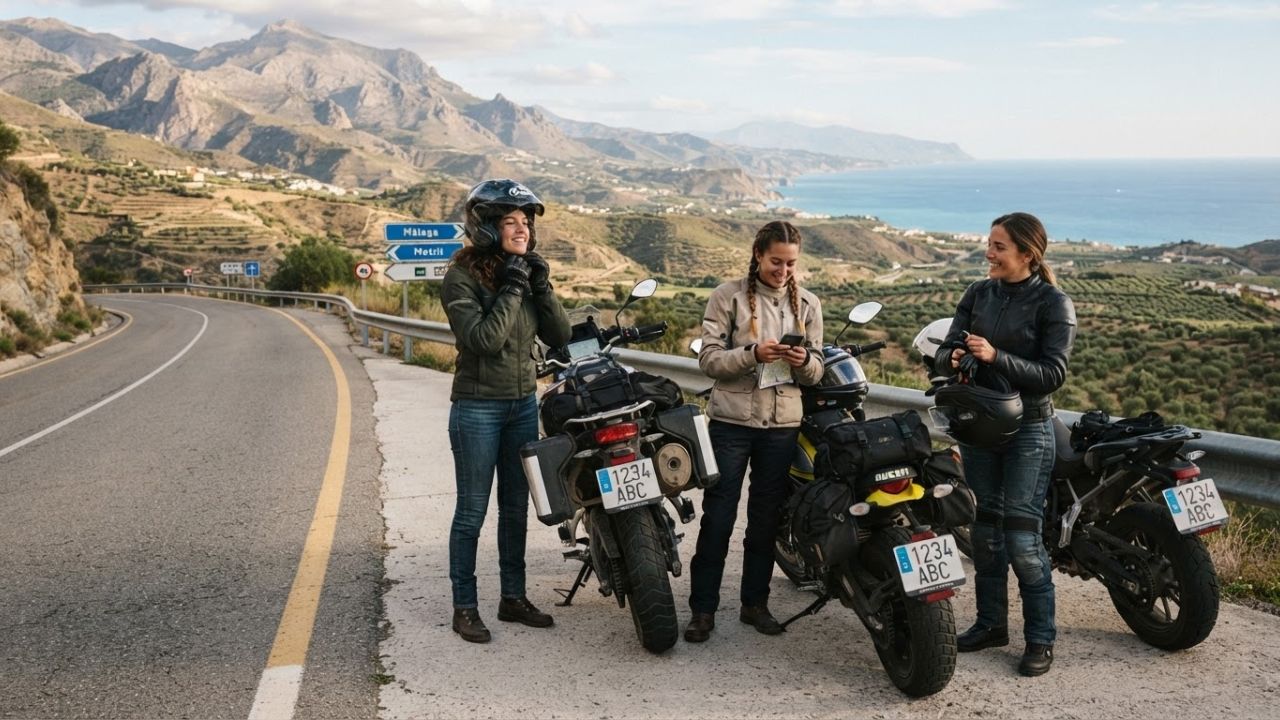
International travelers planning road trips across Spain face an extensive package of regulatory changes taking effect on October 1, 2026, including mandatory protective gear rules for rented motorcycles and mopeds carrying fines of €200 for non-compliance. Enacted under an updated General Traffic Regulations decree by the Directorate-General for Traffic (DGT), the legal reforms tighten safety obligations for vulnerable road users, mandate connected V16 emergency beacons, restrict urban Low-Emission Zones (ZBE), and introduce strict passing protocols around cyclists.
With Spain welcoming 93.8 million international visitors in 2024 according to National Statistics Institute (INE) data—and more than 14.2 million arriving directly by road—unfamiliarity with local traffic enforcement presents immediate legal and financial exposure. From the sun-drenched coastal highways of the Costa Brava and Andalusia to mountain passes in the Pyrenees and Sierra Nevada, understanding these mandatory vehicle protocols is essential for avoiding penalties and navigating Spanish roadways safely.
The Local Trend Revealed: DGT Overhauls Road Safety and Vulnerable User Rules
Spain’s traffic administration has restructured the national vehicle code to curb accident fatalities, introducing strict gear requirements and digital roadside technology:
- Mandatory Motorcycle Equipment from October 1, 2026: All riders and pillion passengers operating motorcycles or mopeds must wear approved protective gloves when traveling on interurban highways. Fully enclosed footwear—banning sandals, flip-flops, or open-toed shoes—is compulsory across all road categories, including urban streets. Violations are categorized as serious safety offenses carrying a €200 fine.
- Phase-In for Homologated Helmets: While current certified helmets remain legal, a stricter requirement mandating homologated helmets takes effect on October 1, 2027, following technical standards issued by the Ministry of the Interior.
- Controlled Motorcycle Shoulder Access: To alleviate heat fatigue and congestion risk, the reform permits motorcyclists to utilize the right-hand paved road shoulder during traffic jams, strictly capped at 30 km/h and only along sections featuring designated DGT signage.
- Connected V16 Beacons for Spanish Rentals: Since January 1, 2026, traditional reflective warning triangles have been officially superseded on Spanish-registered vehicles by the connected V16 hazard beacon. Magnetically mounted on the vehicle roof during breakdowns, the beacon flashes high-intensity 360-degree yellow light for at least 30 minutes (with an 18-month minimum battery lifespan) and automatically transmits GPS coordinates in real time to the DGT 3.0 cloud network. Foreign-plated vehicles traveling from abroad remain exempt under international conventions, but tourists hiring Spanish rental cars must verify that a certified V16 device is in the glovebox.
- National Standards for Electric Scooters (VMP): Personal Mobility Vehicles, including rented e-scooters, now enforce a strict national minimum operating age of 15 years. Riders must wear an approved helmet, keep continuous vehicle lights illuminated, and wear high-visibility reflective vests at night or during poor weather. Breaches carry a €200 fine.
| Rule / Traffic Benchmark | 2026 Mandatory Requirement | Enforcement & Fine Details |
|---|---|---|
| Motorcycle Protective Gloves | Compulsory on all interurban roads from Oct 1, 2026 | €200 fine for driver or passenger |
| Motorcycle Enclosed Footwear | Compulsory on all public roads from Oct 1, 2026 | €200 fine; open shoes strictly prohibited |
| Motorcycle Helmet Homologation | Enforced beginning October 1, 2027 | Mandatory technical homologation standard |
| Congestion Shoulder Access | Max 30 km/h on right shoulder during traffic jams | Authorized only on signposted segments |
| V16 Connected Emergency Beacon | Mandatory on Spanish-registered cars since Jan 1, 2026 | Replaces triangles; 30-min light, GPS real-time link |
| E-Scooter / VMP Minimum Age | Minimum 15 years of age | €200 penalty for underage operation |
| E-Scooter / VMP Helmet & Vest | Helmet mandatory; vest required at night/low light | €200 fine for non-compliance |
| Cyclist Overtaking Protocol | Reduce speed by 20 km/h; give 1.5m lateral berth | Must completely change lanes on multi-lane roads |
| Child Restraint Systems | Mandatory for all children under 135 cm | 4 licence penalty points for driver |
Cultural & Environmental Value: Protecting Heritage Corridors and Urban Air
The heightened traffic standards protect both travelers and Spain's historic towns and fragile natural environments:
- Navigating Urban Low-Emission Zones (ZBE): Under climate transition legislation, Spanish municipalities with over 50,000 residents—including Madrid, Barcelona, Seville, Valencia, and Málaga—enforce Low-Emission Zones (Zonas de Bajas Emisiones). Vehicles entering central historic districts must display certified DGT environmental badges (0 Emisiones, ECO, C, or B). International tourists renting cars should confirm their vehicle’s environmental classification at the rental desk before driving into historic city centers.
- Preserving Cycling Heritage and Mountain Roads: Spain is one of Europe's premier cycling destinations, hosting world-class cycling routes through the Picos de Europa and Mallorca's Serra de Tramuntana. The mandatory 20 km/h speed reduction and 1.5-meter clearance rule when overtaking cyclists protects both recreational tourists and local athletes sharing narrow mountain highways.
- Supporting Rural Economies via Roadside Ventas: Road tripping through Andalusia, Extremadura, or Castilla-La Mancha directly benefits small family-owned rural establishments. Travelers stopping at roadside ventas and mesones support traditional regional agriculture and artisanal cheese and cured ham production.
Visitor Insider Tips: Practical Guidance for Driving Across Spain
- Inspect Rental Motorcycle Gear Before Leaving the Lot: When hiring a scooter or motorbike in destinations like Ibiza, Mallorca, or Barcelona, do not settle for open-face novelty helmets or ride in canvas sneakers. Ensure the rental agency provides certified riding gloves and sturdy enclosed shoes. DGT survey data reveals passenger glove usage drops to 49.2% above 30°C, making warm-weather tourists prime targets for police checkpoints.
- Winter Mountain Overtaking Bans: If driving through the Pyrenees, Sierra Nevada, or Cantabrian Mountains between November and April, be aware that official snow-emergency declarations trigger an immediate overtaking ban. All vehicles must stay in the right-hand lane and obey temporary electronic overhead speed limits.
- Mastering Urban Parking Zones: Spanish cities enforce strict color-coded curbside parking. Blue Zones (Zona Azul) require pay-and-display meter tickets (often via apps like Telpark or EasyPark) during business hours, but are typically free during Sunday hours and daily siesta windows (2:00 p.m. to 4:00 p.m., though always verify local signage). Green Zones (Zona Verde) are strictly reserved for resident permit holders.
- Savor Authentic Roadside Dining: Skip highway fast-food plazas and seek out traditional roadside ventas. Order a lunchtime menú del día featuring chilled gazpacho andaluz or salmorejo, warm tortilla de patatas, freshly carved jamón ibérico, and a glass of sparkling water or non-alcoholic mosto (grape must).
- Strict Zero-Tolerance for Drinking and Driving: DGT accident reports indicate alcohol was present in 28% of fatal crashes in 2024, with alcohol-related road fatalities climbing 9% year-on-year and 24% compared to 2019. Spanish police carry out widespread, unannounced roadside breathalyzer checkpoints. If sampling Spanish wines or sangria, utilize local taxis, ride-hailing services, or public transit.
Tourism Outlook for Driving in Spain
Spain’s 2026 traffic reforms demonstrate that high-volume international tourism must align with rigorous public safety standards. By ensuring that foreign road users are well-equipped, legally compliant, and environmentally conscious, Spain balances open roadways and scenic driving vacations with world-class accident prevention.
Related Travel Guides
This article is for informational purposes. Flight routes, passenger regulations, visa rules, and transit advisories are subject to change by airlines and aviation authorities. Readers are advised to verify schedules and travel documentation with relevant carriers and border agencies before departure.
Related Stories

Odyssey Residential Cruise Strands 203 Passengers in Sihanoukville Cambodia as Fourfold Fuel Inflation Triggers Vessel Lay-Up

France Riots Travel Alert: Lyon, Nice, Paris, and Marseille Face Tourism Uncertainty as Hotel Bookings Slow in October 2026