
Kaziranga Safari Zones and the Jeep vs Elephant Question: How to Choose Before You Book
A comprehensive guide to Kaziranga National Park safari zones, comparing jeep vs elephant safaris, booking windows, gates, and essential rules for 2026.

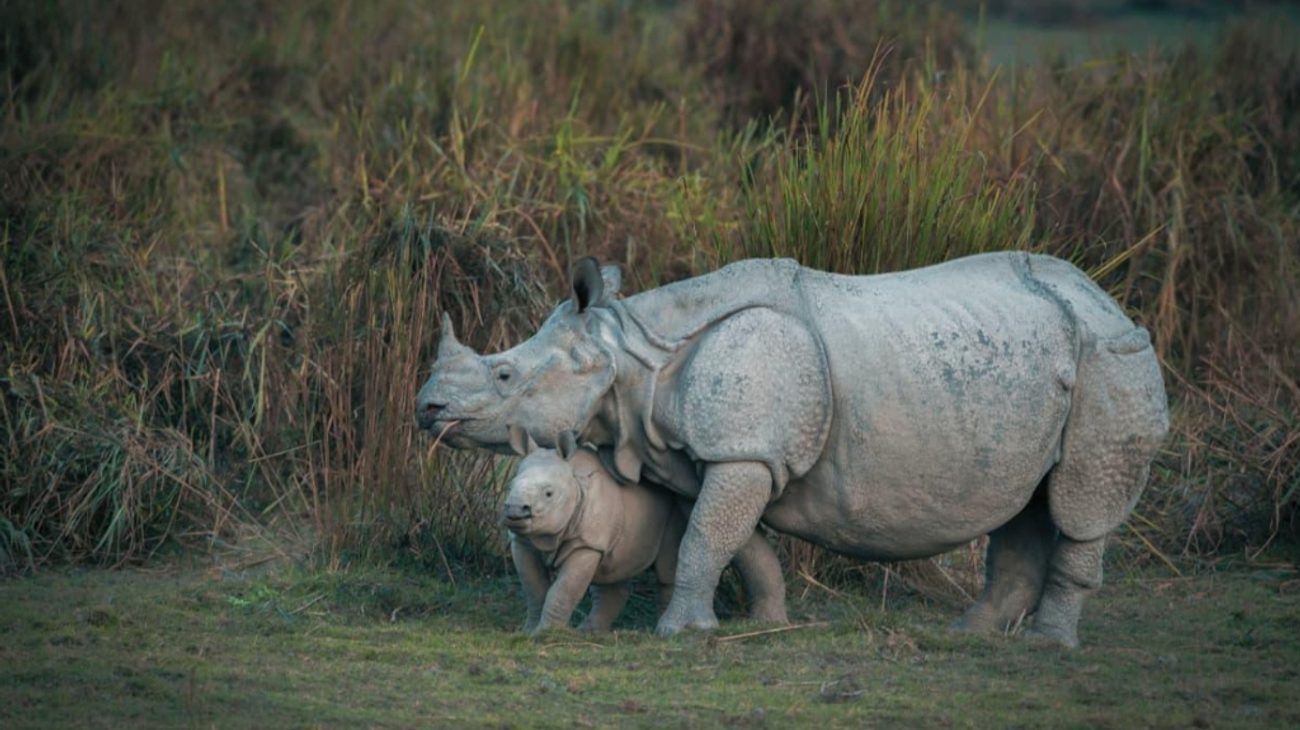
A greater one-horned rhino mother and calf in Kaziranga National Park, home to over two-thirds of the world's population.
Four ranges, two ways to ride, and one very large animal you would quite like to see. A plain guide to picking the right gate and the right seat for the 2026-27 season.
The first thing that reaches you at the Kohora gate is the smell, well before the view. Wet grass, diesel from a line of idling jeeps, woodsmoke from a tea stall that has been awake longer than you have. It is not yet six. Mist sits on the road at knee height, and the elephant grass beyond the barrier is a pale wall that gives nothing away. A guide beside me says, without looking up from his phone, that the rhinos were out near the beel yesterday and may be again today, or may not. A beel, by the way, is the shallow floodplain lake that Assam does so well, and Kaziranga has dozens of them. That sentence is the entire promise this park makes you, and it is more honest than most.
I have watched people spoil a perfectly good morning in that queue. They arrive with a decision half made. Someone told them Bagori, someone else told them to ride an elephant, a third person swore the afternoon is better. By seven they are arguing with their own itinerary. This guide exists so that you settle those questions at a desk, over a cup of tea, and not at the gate with a diesel headache.
Kaziranga lies on the southern bank of the Brahmaputra in central Assam, a flat floodplain of tall grass, beels and patches of semi-evergreen forest, with the Karbi Anglong hills rising to the south. Nobody agrees on where the name comes from. Locals will offer a Karbi village name, a legend about a girl called Kazi and a boy called Ranga, or simply a description of the place, and each version is delivered with complete confidence.
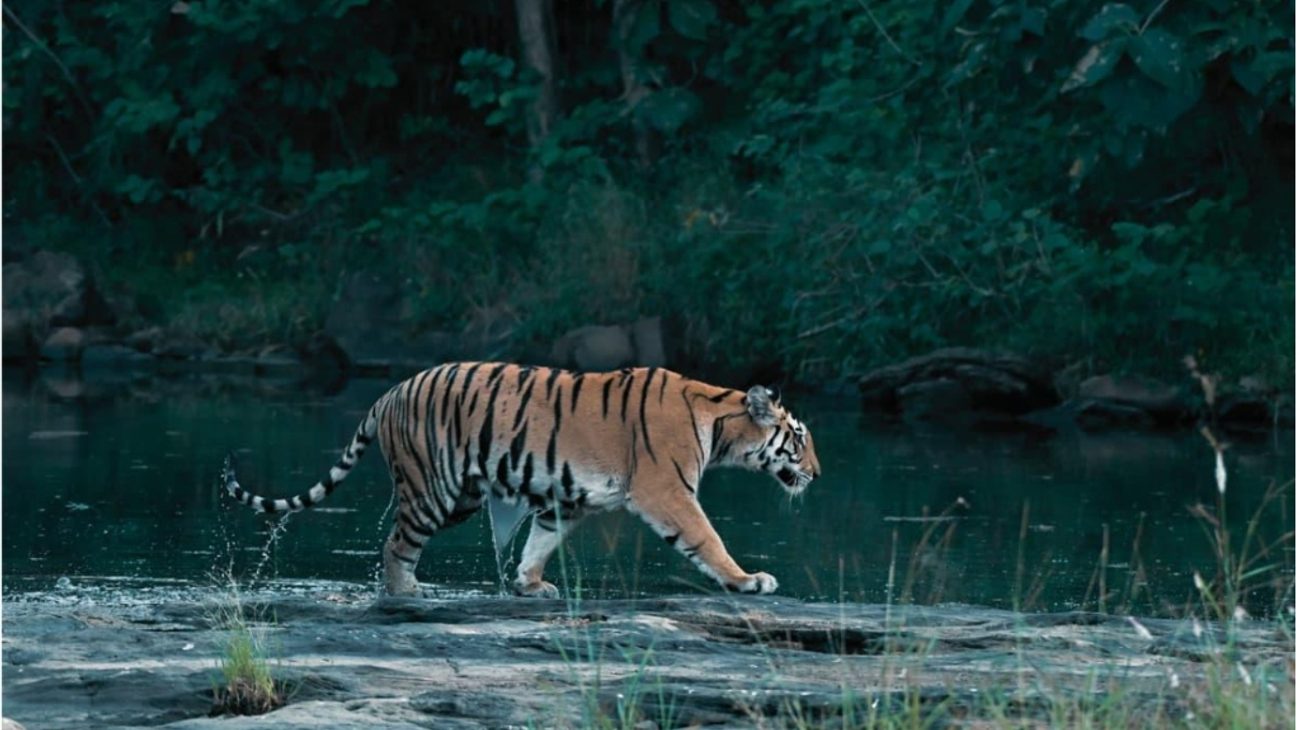
The park owes its existence, so the story goes, to a missing rhino. Mary Curzon, wife of the Viceroy, came to look in 1904, saw none, and pressed her husband to do something about it. A reserve forest followed. Kaziranga became a national park in 1974 and a UNESCO World Heritage Site in 1985. The census of March 2022 counted 2,613 one-horned rhinos, 200 more than in 2018, which is the reason most visitors are standing in that queue. Tigers are the quieter story. The 2024 status report put the tiger reserve at 148 adult tigers, a density of 18.65 per 100 square kilometres, the third highest in the world after Bandipur and Corbett. Do not book on the strength of that figure. Tigers here live in grass tall enough to hide a bus.
Every monsoon the Brahmaputra climbs its banks and most of the park goes under. Animals walk south towards the hills, crossing the national highway as they go, which is why traffic is limited to 40 km/h through the animal corridors. The flood is also why the park shuts from roughly May until early October, and why the grass is taller at the start of the season than it will be by January. That one fact drives most of what follows: how well you can see, which range you pick, and when you go.
| Quick Fact | Detail |
|---|---|
| Location | South bank of the Brahmaputra, central Assam (Golaghat, Nagaon and Karbi Anglong districts) |
| Status | National park since 1974, UNESCO World Heritage Site since 1985, tiger reserve |
| One-horned rhinos | 2,613 in the March 2022 census (2,413 in 2018) |
| Tigers | 148 adults and 18.65 per 100 sq km in the 2024 status report |
| Safari ranges | Central (Kohora), Western (Bagori), Eastern (Agaratoli), Burapahar (Ghorakati). The Forest Department also lists a Northern range at Biswanath |
| 2026-27 season | Jeep safaris reopened on 3 October 2026, starting in Kohora and Bagori, with other ranges reopening in stages. Elephant rides reported to resume from about 1 November |
| Gate windows (jeep) | 7:30 to 10:00 am and 1:30 to 3:00 pm, with strict exit cut-offs |
| Closed | Roughly May to early October (monsoon). The exact reopening date changes every year |
Order Kaziranga like a tasting menu, not a buffet: one safari is a single course, and the kitchen serves a different dish in every range.
Getting There, and Why the Distances Matter
Kohora is the hub, and almost everything is measured from it. Guwahati, the gateway to Assam and Meghalaya, has the better flight connections, and the drive takes four and a half to five hours by day, about 240 to 250 km along NH27 and NH715. Jorhat is nearer, a little over two hours by road, and a good choice if a flight there suits your North East route. Whichever you pick, do not schedule a dawn safari for the morning you arrive. Land, sleep, and start fresh the next day.
The park is not one place. The Forest Department lists five ranges, but most visitors use four. Bagori sits roughly 13 km west of Kohora, Agaratoli about 21 km east, and Burapahar about 33 km west, up against the Karbi Anglong hills. Those gaps matter more than they look on a map. A hotel near one gate means a 20 to 40 minute drive to another, in the dark, before your safari even begins.
| Route | Distance | Time | Note |
|---|---|---|---|
| Guwahati airport to Kohora | About 240-250 km | 4.5 to 5 hours by day | NH27 and NH715. Better flight options, longer road |
| Jorhat airport to Kohora | About 85-105 km | A little over 2 hours | Figures vary with the starting point used |
| Kohora to Bagori (Western) | About 13 km | Short drive | Highest rhino density |
| Kohora to Agaratoli (Eastern) | About 21 km | Short drive | Birds, wetlands, river channels |
| Kohora to Burapahar | About 33 km | Allow extra time | Hills, primates, fewest jeeps |
When to Go: Seasonal Windows and Wildlife Sightings
This year the park reopened on 3 October 2026 with a ceremony at the Kohora Range. Jeeps went in that day. Elephant rides were expected to follow, and one report pointed to 1 November. Reopening dates shift with the floods and the state of the roads, so treat any date, including mine, as something to confirm with your operator before you pay for a hotel.
Early season has a catch and a charm. The grass is still tall, so animals are harder to find, but crowds are thin and the park looks freshly washed. December to February is the classic window: cool, dry, and clearer across the open ground. It is also when everyone else comes. Over the last week of December 2025, officials and operators reported more than a thousand jeep trips a day across the park, and visitors struggled to find a vehicle at all. March and April are hotter, but waterholes shrink and animals gather around them, which photographers tend to like.
| Period | What to expect | Good for | Watch for |
|---|---|---|---|
| October | Park just reopened. Tall grass, fewer visitors. Jeeps in Kohora and Bagori first | Quiet safaris, green scenery | Harder sightings. Elephant rides not yet running. Some ranges still opening |
| November | Elephant rides expected to resume. Season finds its rhythm | Early booking, good value | Confirm ride dates and permits |
| December to February | Peak season. Cool, dry, best visibility. Agaratoli boat runs reported best December to February | First-timers, birders, boat trips | Heavy crowds around year-end. Book jeeps well ahead. Morning mist |
| March to April | Hotter days. Animals gather near shrinking water | Photographers, fewer crowds | Afternoon heat. Pack water and sun cover |
| May to September | Closed for the monsoon floods | Not applicable | Do not plan a safari trip |
Bagori is the salted caramel everyone reaches for first. Burapahar is the dark hazelnut you save for afterwards.
The Four Safari Ranges: How to Choose Your Gates
Start at Bagori if you have one safari and want a rhino. The Western range has the highest rhino density in the park. It is flat open grassland with a large waterbody, and it is the range most guides send photographers to for close shots from a jeep. Operators quote about a 95 per cent chance of a rhino on a morning drive. Treat that as guide talk, because nobody has counted, but the ranking agrees with what you hear in every lodge in Kohora. It is also the busiest range. In peak weeks, gate arrival by 5:15 am and booking 30 to 45 days ahead is the advice.
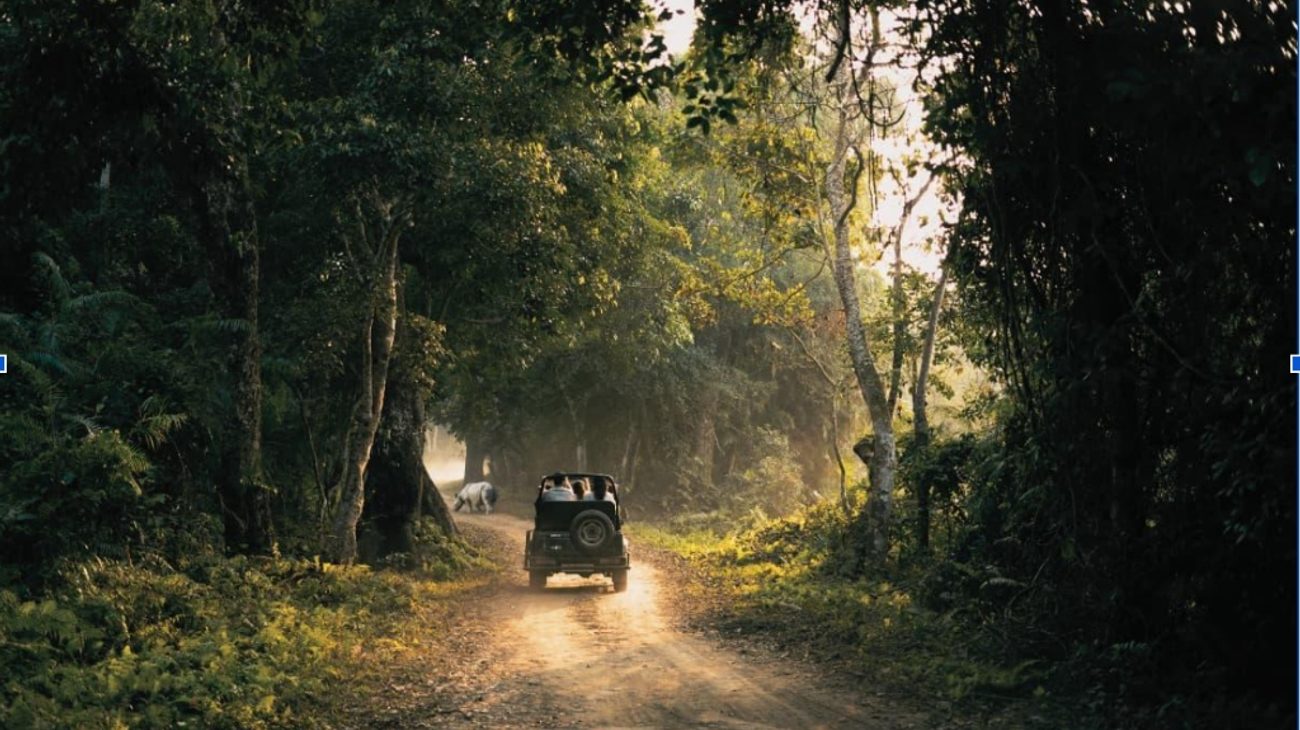
Choose Kohora for variety and the shortest commute. The Central range is the largest, a mix of tall grass, woodland and shallow beels. One loop can give you rhinos, swamp deer, hog deer and sometimes elephant herds, with watchtowers at Kathpora and Dunga for a long look over the open ground. Most lodging clusters near this gate. The afternoon slot is often underbooked, which makes it a useful fallback when the morning slots are gone.
Give Agaratoli one morning, ideally in winter. The Eastern range runs along the Brahmaputra through wet forest, river channels and Sohola Beel. Visibility from a jeep is lower here, and rhino odds are reported at about 70 per cent. What you gain is the river: dolphins, otters and a long list of waterbirds, with winter bringing the biggest flocks and the endangered Bengal florican. A boat run of one to two hours is reported from December to February at roughly 1,500 to 2,500 rupees a person. Ask whether it is included, because it is a separate product.
Treat Burapahar as a contrast, not a replacement. This hilly range near Karbi Anglong has moist deciduous forest, hoolock gibbons and capped langurs, and it is reported as the only range where guided walks on forest trails are allowed. Rhino odds are the lowest of the four, around half, and there are far fewer jeeps at the gate. Think of it as the palate cleanser between two heavier courses. Check on the day that walking is actually running.
Book the afternoon jeep. The numbers say a rhino is a little less likely after lunch. The light is warmer, the road is quieter, and you will not be sharing a sighting with a queue of twelve vehicles. Many travellers who do two morning drives and nothing else regret it by the end of day two.
Plan three safaris, not one. A first-time rhythm that works for most: an afternoon jeep in Kohora on arrival day to learn the ground, a dawn jeep in Bagori the next morning, and Agaratoli or Burapahar that afternoon for something different. If you want a dawn elephant ride, put it on the third morning so it does not replace your best jeep slot. Two nights is the minimum for this. Three nights is comfortable.
| Range | Setting | Best for | Reported morning rhino odds | Elephant ride | Honest note |
|---|---|---|---|---|---|
| Bagori (Western) | About 13 km west of Kohora. Flat grassland, large waterbody | First rhino, close photography | About 95% | Yes, dawn | Most jeeps. Book early in peak weeks |
| Kohora (Central) | Main hub. Largest range. Grass, woodland, beels | Variety, one-zone trips | About 85% | Yes, dawn | Most lodging nearby. Afternoon slot underbooked |
| Agaratoli (Eastern) | About 21 km east. River channels, forest, Sohola Beel | Birds, dolphins, boat trips | About 70% | Not reported | Lower jeep visibility. Boat is a separate ticket |
| Burapahar (Ghorakati) | About 33 km west. Hills, deciduous forest | Gibbons, langurs, walks | About 50% | Not reported | Quiet. Works as a half-day add-on |
| Biswanath (Northern) | Far side of the river. Long road approach | Rarely used by first-time visitors | Not reported | Not reported | Do not assume Kohora's meeting point or transfer |
An elephant ride is the truffle on the menu: one small, expensive bite. The jeep is the meal.
Jeep Safari or Elephant Ride: An Honest Comparison
The jeep is the workhorse. It runs in every range, in two daily windows, carries up to six visitors plus a driver and a guide, and covers two to three hours of ground. You sit low, you cover more habitat, and you can bring a tripod and long lens. Children and older travellers manage it easily. The elephant ride is a different animal entirely. It goes out in the first hour of light, runs about an hour on a short route, and is offered only from Kohora and Bagori. You sit above the grass line, which helps, and an elephant can ease close to a rhino in a way that a jeep engine does not.
Then there is the question most guides skip. In January 2026, Mongabay India reported on the death of Swarnamoyee, a safari elephant of about fifty, who collapsed on the highway on 11 December 2025 after finishing two tourist trips. The tentative diagnosis was respiratory failure, and a postmortem ruled out poisoning. A veterinary officer told the reporter that the elephants are tied beside the road, where traffic disturbs their sleep, and that they get up at 3 am for a 5 am safari. An owner disputed how close they are tied. The report found no decision to end the rides, and a ranger said they continue because of public demand. About 39 privately owned elephants work the park, and one conservationist quoted in the piece said no elephant should make more than two trips a day.
My own advice is plain. If you want a rhino up close and a sharp photograph, a jeep in Bagori delivers both and asks nothing of an animal. If the dawn ride is something you have wanted for years, take one trip, not a daily habit, and ask your operator which elephant you will ride, how many trips it makes in a day, and who the mahout is. A vague answer tells you what you need to know. Rides also stopped for a while in December 2023, when a dispute over seats reserved for forest staff halted them. That is a reminder that this product is more fragile than it looks.
| Feature | Jeep safari | Elephant ride |
|---|---|---|
| Window | Entry 7:30 to 10:00 am and 1:30 to 3:00 pm | About 5:30 to 7:30 am only |
| Duration | About 2 to 3 hours | About 1 hour |
| Where | All ranges (reopening in stages in 2026) | Kohora and Bagori only |
| Group | Up to six, plus driver and guide | Limited seats on a howdah |
| Viewpoint | Ground level, wider coverage, more habitats | Above the grass, closer to rhinos |
| Comfort | Easier for children and older travellers | Early, bumpy, needs climbing a platform |
| Photography | Wide shots, tripods and long lenses work | Handheld only, mist and low light |
| Indicative cost | Vehicle about 2,000-2,500 rupees plus 650 entry per foreign visitor, 300 toll and 100-200 guard (one operator blog). Another source quotes 2,500-3,500 per jeep | About 2,500 per foreign visitor (older figure). Reported 1,350 per person in January 2026, nationality not stated |
| Booking | Assam Sewa Setu system reported, original ID needed | Separate permit, limited seats, book early |
| Welfare | No specific concern reported | Documented concerns about rest, housing and workload |
Essential Safari Rules and Mistakes to Avoid
Do not leave the booking for the gate. Over the year-end week of 2025, reports described long queues and tourists unable to find a jeep, with officials and operators quoting more than a thousand trips a day. A driver put the vehicle count at nearly five hundred. Book the range and slot in advance, and in peak weeks book Bagori first, since it fills fastest.
Do not treat a percentage as a promise. Rhino odds, tiger talk and a guide's "yesterday there were three" are all just stories until you are in the vehicle. No range guarantees a sighting at any hour, and anyone selling a particular zone on the promise of tigers or shorter grass is selling something. Go for the whole morning, the birds, the light, and the way the mist lifts.
Do not book the hotel before the range. Choose your gates, then choose where to sleep. Staying near Kohora for a Burapahar-heavy trip, or near Bagori for an Agaratoli-heavy one, adds a long dark drive before every safari. Ask for the commute time to each gate in writing.
Do not assume last year's rules still apply. In August 2026 a report said Kaziranga plans to bar mobile phones inside the park, regulate visitor numbers, require a trained Forest Department guide in every tourist vehicle, move to online safari booking, and close one range for one day each week. The report said the measures would start with the next tourism season and gave no exact date. Ask your operator which of these are in force on your dates.
Do not pay a lookalike website. A site with Kaziranga in its name is not proof that it is official. Check who sells the ticket and who receives the payment, and ask for a written total in rupees that says what is included: vehicle, entry, guide, camera charges, taxes, transfers. A boat run or elephant ride is rarely bundled into a basic jeep ticket.
Do not choose the elephant because you think it is the real safari. It is one hour, in one of two ranges, at an hour when you will be half asleep. A good jeep morning is longer, wider and kinder to your back.
| Item | What to know |
|---|---|
| Booking channel | Assam Sewa Setu system reported for jeep permits. Confirm the official channel with the Forest Department or Assam Tourism, and check the seller |
| ID | Bring the original ID used at booking |
| Gate windows | 7:30 to 10:00 am and 1:30 to 3:00 pm. Exit cut-offs are strict |
| Jeep capacity | Six visitors plus a driver and a guide |
| Guide | Forest Department-approved guide reported to be required in every vehicle |
| Phones | Ban reported for the coming season. Start date not confirmed. Ask before you go |
| Weekly closure | One range closed one day a week reported. Not confirmed. Check your range |
| Conduct | Stay inside the vehicle, no feeding, no drones, no flash, keep your distance, and keep to 40 km/h on the highway corridors |
| Elephant rides | Separate permit, limited dawn seats in Kohora and Bagori. Confirm they are running on your dates |
Where to Stay: Strategic Gate Bases and Trade-Offs
The honest rule is to sleep near the gate you will use most. Government and Assam Tourism lodges cluster around Kohora, while private resorts sit nearer Bagori. Beyond that the choice follows the trade-offs below. I have not named individual lodges here because room standards and prices shift from season to season, and a list that is a year old does your trip no favours. Ask for current, verified options, and ask about the dawn pickup, breakfast timing and what happens if you arrive late.
| Base | Why choose it | Trade-off | Best for |
|---|---|---|---|
| Kohora strip | Most choice, including government and Assam Tourism lodges. Closest to the Central range gate | Busier. Roadside setting on the main highway | First-timers, short stays, mixed ranges |
| Near Bagori | Private resorts, shortest dawn drive to the best rhino range | Fewer options. Longer drive to the east | Photographers, rhino-first trips |
| Eastern side (Agaratoli) | Quieter. Close to birds and the river | About 21 km from Kohora. Fewer extras | Birders, boat trips |
| Hills side (Burapahar) | Closest to gibbon country and walking trails | About 33 km from Kohora. Few jeeps, fewer services | Primates, solitude |
| Jorhat or Guwahati night | Keeps flights and long road transfers away from dawn safaris | Adds a long drive the next day | Late arrivals, tight schedules |
Responsible Travel and Conservation Etiquette
Carry a LifeStraw bottle and refill it at your lodge. Single-use plastic is the first thing that ends up in a beel, and Assam's riverine habitats take months to recover from the kind of waste a safari line leaves behind. Keep your voice low, stay inside the vehicle at sightings, and leave drones at home, since they are banned and alarming to anything on the ground. Skip flash photography, which does nothing useful at that distance and startles animals.
Spend where it reaches people. Hire guides and drivers through your lodge or an accredited operator and pay them fairly. Buy a gamosa, the woven Assamese cloth, from a local weaver and not a roadside stall of mass-produced copies. Choose an elephant-ride operator only if you are comfortable with the answers to the questions in this article, and if they will not give you straight answers, choose the jeep. The park's animals have had a hard century. They do not need a bad review of their own safari.
Frequently Asked Questions About Kaziranga Safaris
Which range is best for a first-timer?
Bagori if you have one safari and want a rhino. Kohora if you want variety and the shortest commute.
Is the elephant ride worth it?
For a close, high view of a rhino at dawn, it can be memorable. It is one hour in two ranges, and there are documented welfare concerns, so I lean towards the jeep.
Can I see a tiger?
The park holds an estimated 148 adult tigers, but they live in very tall grass. Treat a sighting as a bonus.
How many safaris should I book?
Three over two nights is a good minimum, spread across at least two ranges.
When do elephant rides start this year?
Reports point to around 1 November 2026, pending preparations. Confirm before you book.
Is Kaziranga open all year?
No. The park closes for the monsoon from roughly May to early October.
Planning Your Kaziranga Safari Checklist
Decide your ranges first, then your hotel, then your dates. Book jeep slots as soon as your dates are firm, ask for a written total in rupees, and carry your original ID. Pack a light rain jacket, a hat and earth-toned clothes, binoculars, and a spare battery that can survive a cold dawn. At BizareXpedition we plan Kaziranga as a three-safari stay with the ranges, gate times and guides confirmed in advance, and where time allows we pair it with a Manas wildlife tour or Nameri so the same trip covers more of Assam's wild country.
Indicative Safari Budget Guide
Safari costs depend on how many people share a jeep, because the vehicle, toll and guard are shared while the entry fee is paid by each person. The figures below are built from one operator blog's published rates. Official tariffs change, so use them for planning only.
| Scenario | Indicative cost per foreign visitor, one morning | Note |
|---|---|---|
| Jeep, party of six | About 1,100 rupees | Shared vehicle, toll and guard, plus 650 entry |
| Jeep, party of four | About 1,325 rupees | Same basis |
| Jeep, couple | About 2,000 rupees | Same basis |
| Elephant ride, one person | About 2,500 rupees | Older figure. Reported 1,350 per person in January 2026, nationality not stated |
| Jeep, solo traveller | About 3,350 rupees | Whole vehicle cost plus 650 entry |
| Agaratoli boat run | 1,500 to 2,500 rupees per person | Reported, season-dependent, separate ticket |
Kaziranga rewards the traveller who arrives with two plans and a flask of tea. The rhinos keep their own schedule, and on the right morning they will let you borrow it.
BizareXpedition™ Services Pvt. Ltd. • bizarexpedition.com • Haridwar, Uttarakhand
Related Travel Guides
Sri Lanka Reopens Yala National Park Safari Zones: Latest Travel Update
Indian Railways Reservation and Regional Transit Travel Guide 2026
Manas National Park Wildlife Safari and Assam Eco-Tourism Guide 2026-27
Disclaimer
This article is for informational and educational purposes only. It does not constitute legal, financial, or professional advice. While we strive to provide accurate and up-to-date information, travel policies, regulations, and conditions change rapidly. Always verify information with official sources before making travel decisions. Nomad Lawyer makes no representations about the accuracy, reliability, completeness, or suitability of the information provided. Readers should consult qualified professionals for advice specific to their circumstances. The views expressed in this article are those of the author and do not necessarily reflect the views of Nomad Lawyer.
Kunal K Choudhary
Co-Founder & Contributor
A passionate traveller and tech enthusiast. Kunal contributes to the vision and growth of Nomad Lawyer, bringing fresh perspectives and driving the community forward.
Learn more about our team →