Spain General Strike 2026: Nationwide Transport Collapse Hits Madrid and Barcelona Airports

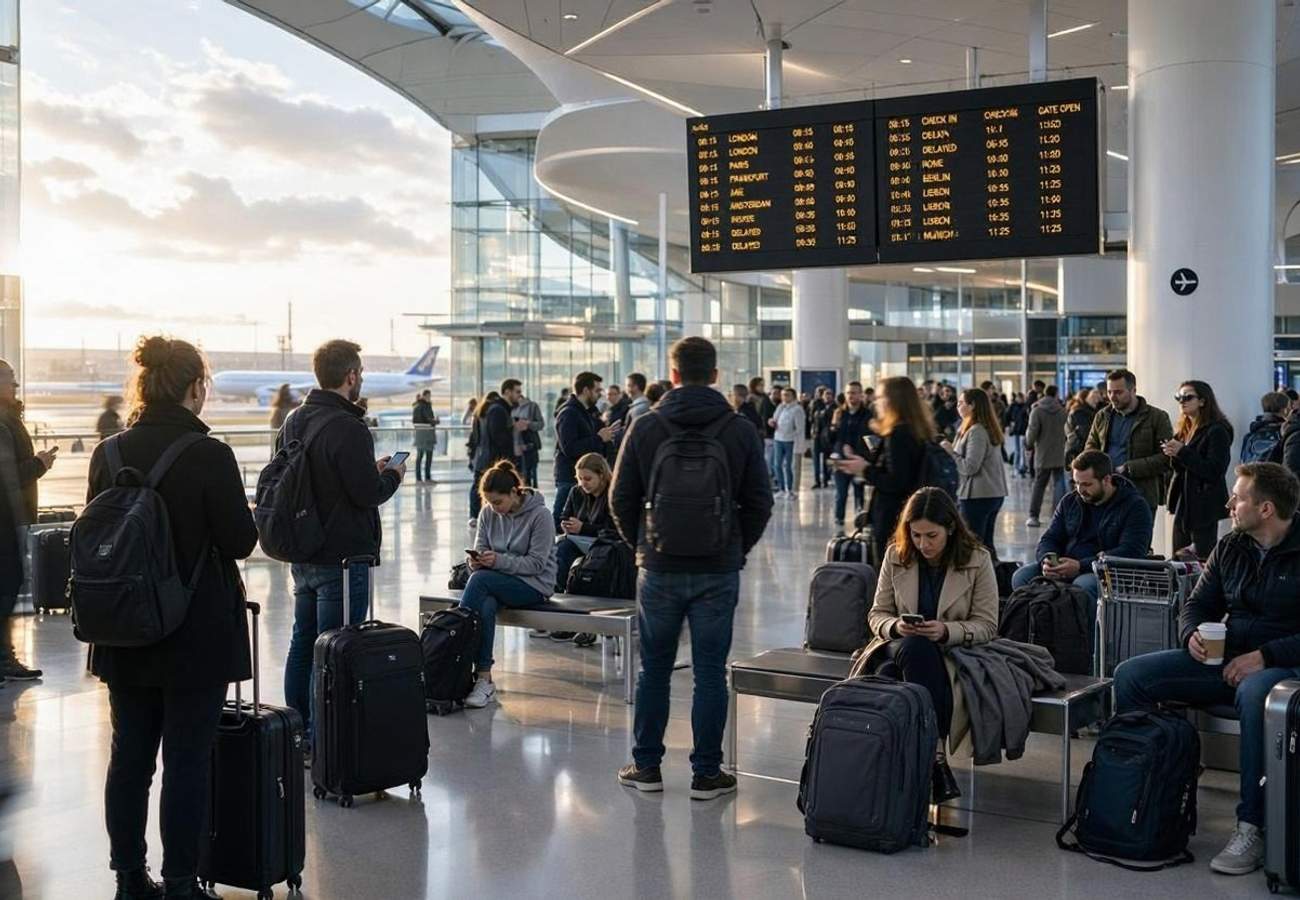
Image generated by AI
A 24-hour coordinated walkout on November 11, 2026, has effectively frozen the Iberian Peninsula's economic and logistical arteries. For the first time since 2012, Spain's primary labor coalitions—the General Union of Workers (UGT) and the Workers’ Commissions (CCOO)—have aligned with the General Confederation of Labor (CGT) and the National Confederation of Labor (CNT) to execute a total national stoppage. The result is a systemic failure of transport hubs in Madrid and Barcelona, leaving millions of international business travelers and tourists stranded.
The Socio-Economic Catalyst for Paralysis
The current disruption is not a simple labor dispute but a reaction to a severe residential and inflationary crisis. The mobilization, themed “Salaries. Housing. Prices,” was triggered by a tipping point in public sentiment following the eviction and subsequent death of an 87-year-old Madrid resident. This event galvanized tenant unions and labor syndicates against a decade of unregulated urban property booms.
In Spain's metropolitan cores, residential rents have nearly doubled over the last ten years. The proliferation of short-term tourist rentals and corporate acquisitions by real estate funds has displaced the local workforce, forcing many to spend 50% to 60% of their net monthly income on basic housing and utilities. This friction is now manifesting as logistical chaos just 18 days before a high-stakes snap general election.
Logistics Breakdown: Aviation and Rail Impact
While the Spanish government has invoked "minimum essential services" (servicios mínimos) to prevent a total blackout, these mandates have created concentrated bottlenecks rather than fluid movement.
Aviation Sector Chokepoints
The collapse in aviation is not primarily due to pilot strikes, but the failure of ground operations. The strike has targeted the invisible machinery of the airport: baggage handling, refueling, tarmac dispatch, and security screening. Consequently, aircraft are frequently grounded at gates not because of crew shortages, but because there are no personnel to load luggage or clear passengers through security checkpoints. Travelers at major hubs should monitor official updates via the Aena network or their respective carriers, such as Iberia.
Rail and Urban Transit Constraints
The rail network, managed by Renfe and private competitors, has seen significant schedule reductions. The fragility of the system was already heightened by previous disputes with the train drivers’ union (SEMAF) and existing infrastructure damage on southern routes.
Transport Capacity and Service Levels
| Transport Mode | Operator/Sector | Minimum Service Level | Operational Status |
|---|---|---|---|
| High-Speed Rail | Renfe (AVE, Avlo) | ~73% | Heavily congested; cascading delays |
| Regional Rail | Renfe | ~65% | Sparse schedules; frequent cancellations |
| Private Rail | Ouigo | 18 of 26 daily runs | Reduced capacity |
| Aviation | Ground Handling | Skeleton Crews | Severe bottlenecks at security/baggage |
| Urban Transit | Metro/Bus | Erratic/Sparse | Diverted due to mass demonstrations |
Expert Analysis: The "Minimum Service" Paradox
For travelers currently in Spain, the "minimum essential services" decree is a double-edged sword. While it technically prevents a 100% shutdown, it creates a dangerous illusion of availability. When a network operates at 65% to 73% capacity but demand remains at 100%, the result is extreme overcrowding and a higher probability of total system failure if a single technical glitch occurs.
The direct consequence for the passenger is "cascading delay." In a tightly integrated rail network like Spain's, a 30-minute delay on a morning commuter line in Madrid can paralyze inter-city junctions for the entire afternoon. For those booking flights, the bottleneck at security means that even if a plane is ready for takeoff, the passenger may not reach the gate in time. This creates a legal gray area regarding "flight delays" versus "passenger arrival delays," potentially complicating insurance claims for missed connections.
The pricing pressure created by this instability often leads to a surge in last-minute private transport costs, though these are currently offset by the physical gridlock caused by union marches blocking major city arteries.
Key Takeaways
- Ground Operations are the Weak Link: Flight cancellations are being driven by ground staff (security, baggage, fueling) rather than flight crews.
- Rail Capacity is Rationed: Renfe high-speed lines are operating at roughly 73%, while regional lines are at 65%, leading to severe overcrowding.
- Housing is the Driver: The strike is a political response to rent hikes and evictions, timed to influence the upcoming general election.
- Minimum Services $\neq$ Normal Service: Do not rely on "minimum service" schedules for tight connections; build in significant buffers.
- Urban Gridlock: Expect city-center transport (taxis, buses) to be non-functional in Madrid and Barcelona due to simultaneous street protests.
FAQ: Spain Transport Strike 2026
Are my flights still flying during the general strike? Flights may be scheduled, but ground handling shortages (security and baggage) are causing massive delays. Check your airline's app and arrive at the airport several hours early.
Can I still use the AVE high-speed train? Yes, but only at reduced capacity (approximately 73%). Expect extreme crowding and potential delays as the network struggles with reduced staffing.
What are my rights if my transport is cancelled? Under EU regulations, you are entitled to rebooking or a refund for cancelled flights. For rail, check your ticket terms and the International Air Transport Association (IATA) guidelines for general passenger rights.
Will the strike affect local buses and metros? Yes. Urban transit is operating on sparse schedules, and many routes are diverted due to large-scale union demonstrations in city centers.
When the cost of living exceeds the capacity for patience, the tracks and runways are the first to feel the friction.
Related Travel Guides
This article is for informational purposes. Flight routes, passenger regulations, visa rules, and transit advisories are subject to change by airlines and aviation authorities. Readers are advised to verify schedules and travel documentation with relevant carriers and border agencies before departure.
Related Stories
Spain Faces 72-Hour Transport Crisis: Rail and Flight Disruptions as November Strikes Impact Madrid and Barcelona

Japan Offshore Gale Warning 2026: How to Navigate Maritime Disruptions Across East Asia