
SouthWest Airlines SWA4817 Operated with a Boeing 737-7H4 from Baltimore to Sarasota and Diverted at McCoy Air Force Base, United States: Update Based on Sudden Flight Diversion
Southwest Airlines flight SWA4817 (Boeing 737-7H4) diverted to Orlando's McCoy Air Force Base due to severe thunderstorm

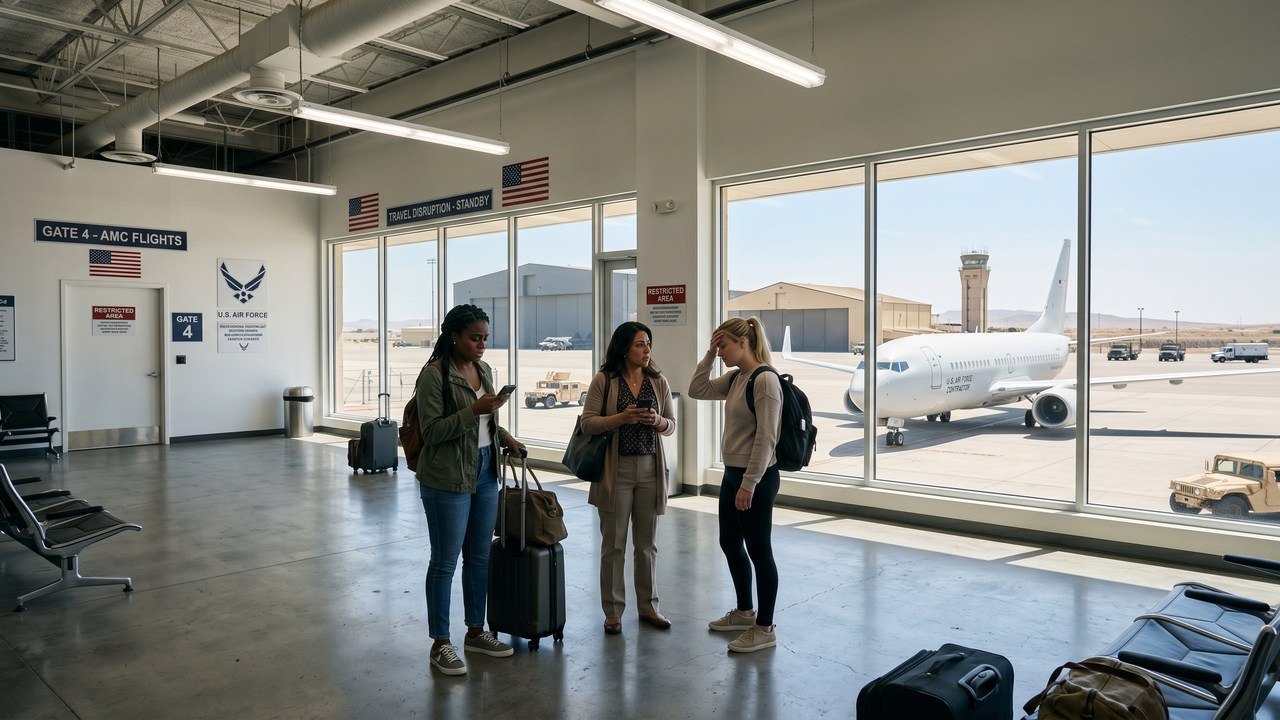
Image generated by AI
[Orlando, June 29, 2026] — A Southwest Airlines flight traveling from Baltimore to Sarasota was forced to divert to Orlando International Airport on Saturday evening after severe weather conditions compromised the approach to its original destination. The aircraft, flight SWA4817, operated by a Boeing 737-7H4, successfully landed at the historic McCoy Air Force Base site without incident following the detection of dangerous wind shear and heavy precipitation.
Severe Weather Disrupts Florida Coastal Airspace
The diversion occurred during a period of intense atmospheric instability common to the southern United States during peak summer months. Flight SWA4817 departed from Baltimore/Washington International Thurgood Marshall Airport under favorable conditions; however, the weather deteriorated rapidly as the aircraft entered Florida airspace.
According to flight tracking data and industry reports, the crew received real-time radar notifications indicating that convective thunderstorms had developed directly over the runway approach corridors in Sarasota. These cells produced heavy rainfall and significant wind shear, which are known to create unstable approach conditions. Such volatility increases the risk of runway excursions, prompting the flight crew to execute defensive safety maneuvers to avoid a hazardous descent.
Flight Crew Executes Emergency Rerouting for SWA4817
To ensure the safety of all passengers and crew members, the pilots of the Boeing 737-7H4 abandoned the descent into Sarasota and initiated a standard missed approach procedure. This maneuver allowed the aircraft to climb away from the localized storm cells and regain a safe altitude.
The flight crew coordinated with regional air traffic control to identify a viable alternate airfield. A critical factor in this decision was the management of fuel reserves. Pilots determined that remaining in a holding pattern to wait for the storm to clear would have depleted the mandatory safety fuel margins. Consequently, the crew reprogrammed the flight management computer to chart a direct, high-speed course northeast toward Orlando.
Throughout the diversion, cabin crew members provided continuous updates to passengers to maintain order and transparency. The aircraft transitioned through cloud layers under the guidance of the central Florida terminal radar approach control and touched down safely at 6:40 PM.
Strategic Importance of McCoy Air Force Base as a Diversion Site
The decision to divert to Orlando International Airport—the site of the former McCoy Air Force Base—was based on the facility's robust infrastructure. The airport's military heritage provided it with exceptionally long and wide runways, which are ideal for accommodating large commercial jets during emergency or unplanned arrivals.
The airfield's layout, featuring multiple parallel landing paths, allows air traffic controllers to integrate diverted flights into the traffic flow without causing significant delays to other scheduled operations. This structural advantage was key in the rapid and safe landing of SWA4817.
| Flight Detail | Specification |
|---|---|
| Flight Number | SWA4817 |
| Aircraft Type | Boeing 737-7H4 |
| Origin | Baltimore/Washington International (BWI) |
| Intended Destination | Sarasota-Bradenton International |
| Diversion Airport | Orlando International (MCO / McCoy AFB) |
| Landing Time | 6:40 PM |
| Primary Cause | Convective Thunderstorms / Wind Shear |
Operational Advantages of Carrier Presence in Orlando
Beyond the physical infrastructure of the airport, the diversion was streamlined by the carrier's extensive operational footprint in Orlando. As a major crew domicile and maintenance hub, the airline possesses significant ground resources at this location.
By diverting to a primary base, the airline was able to bypass the logistical hurdles typically associated with "outstation" diversions. Ground handling personnel and specialized maintenance teams were immediately available to receive the Boeing 737-7H4. This proximity allowed for the rapid allocation of arrival gates and the efficient processing of displaced passengers, mitigating the overall impact of the disruption.
Why This Matters: The Intersection of Infrastructure and Safety
The diversion of SWA4817 highlights a critical synergy between historical military aviation infrastructure and modern commercial safety protocols. The use of McCoy Air Force Base's expansive runways demonstrates how legacy military designs continue to provide a necessary safety net for the current aviation ecosystem, particularly in weather-prone regions like Florida.
From an operational perspective, this incident underscores the importance of "hub-centric" diversion planning. When an airline diverts to a location where it maintains a significant corporate presence, the recovery time for both the aircraft and the passengers is drastically reduced. The ability to deploy internal maintenance and ground staff immediately prevents a tactical diversion from turning into a long-term logistical failure.
Furthermore, the event illustrates the non-negotiable nature of wind shear protocols. In the modern aviation era, the preference for a costly diversion over a risky approach reflects a matured safety culture where "Information Gain" from real-time radar is prioritized over schedule adherence. This incident serves as a case study in how proactive decision-making by flight crews, supported by strategic airport selection, eliminates the risks associated with the volatile summer weather patterns of the American South.
Related Travel Guides
Disclaimer
This article is for informational and educational purposes only. It does not constitute legal, financial, or professional advice. While we strive to provide accurate and up-to-date information, travel policies, regulations, and conditions change rapidly. Always verify information with official sources before making travel decisions. Nomad Lawyer makes no representations about the accuracy, reliability, completeness, or suitability of the information provided. Readers should consult qualified professionals for advice specific to their circumstances. The views expressed in this article are those of the author and do not necessarily reflect the views of Nomad Lawyer.
Raushan Kumar
Founder & Lead Developer
Full-stack developer with 11+ years of experience and a passionate traveller. Raushan built Nomad Lawyer from the ground up with a vision to create the best travel and law experience on the web.
Learn more about our team →