
SkyWest Operated United Airlines Flight UA6074, a Bombardier CRJ200 from Chicago to Clarksburg Divert to John Glenn Columbus International Airport, United States Sparks Questions After Unexpected Flight Diversion to Columbus
SkyWest-operated United Airlines Flight UA6074 diverted from Chicago to Columbus on June 27, 2026. Details on the Bombar

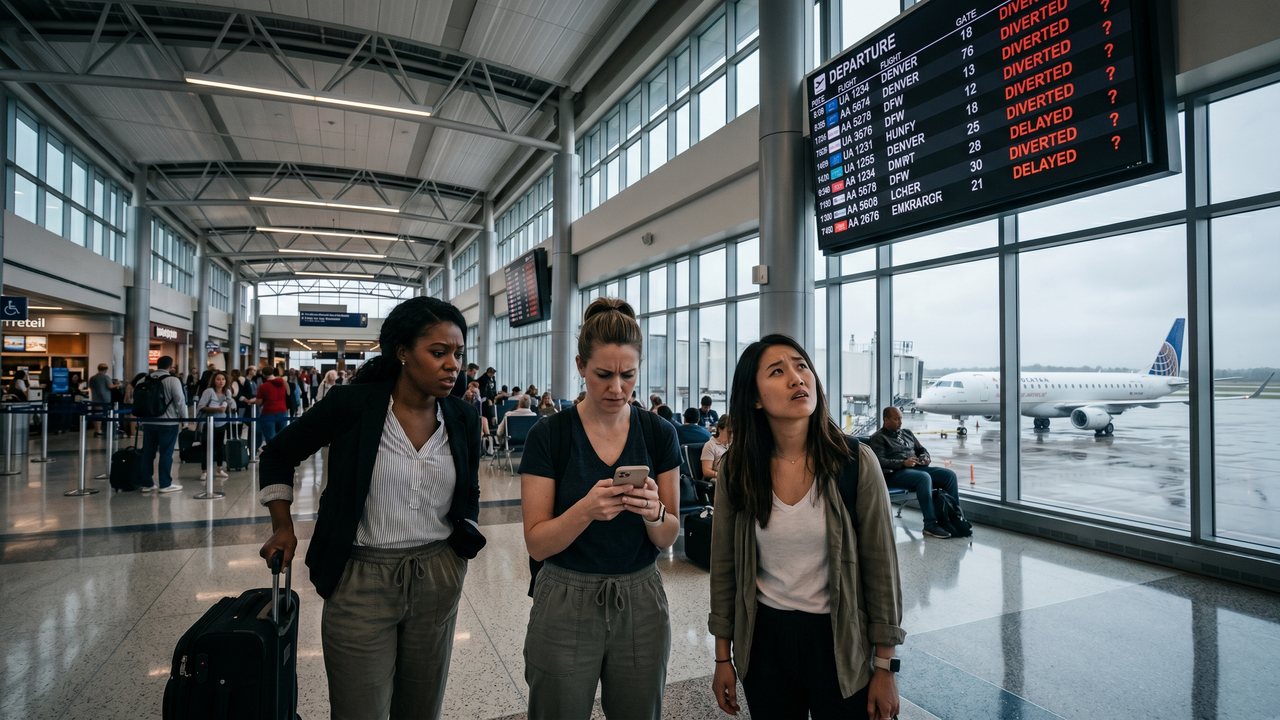
Image generated by AI
[Columbus, June 29, 2026] — A regional flight operated by SkyWest Airlines on behalf of United Airlines unexpectedly diverted to John Glenn Columbus International Airport on June 27, 2026, leading to questions regarding the operational cause of the detour. The aircraft, a Bombardier CRJ200 designated as Flight UA6074, was originally scheduled to fly from Chicago to Clarksburg, West Virginia.
The diversion occurred after the flight departed from Chicago O’Hare International Airport. While the aircraft successfully landed in Columbus, Ohio, neither the operating carrier nor federal aviation regulators have provided a specific reason for the change in course.
Unexplained Diversion of United Airlines Flight UA6074 to Columbus
The incident involving United Airlines Flight UA6074 has drawn industry attention due to the sudden nature of the diversion. According to flight-tracking data, the Bombardier CRJ200 was en route to North Central West Virginia Airport in Clarksburg when the flight crew opted to redirect the aircraft to John Glenn Columbus International Airport.
Despite the unexpected change in destination, reports indicate that the landing was executed normally. There were no immediate reports of onboard emergencies, aircraft damage, or passenger injuries. As of the latest updates, official channels from the airline and aviation authorities remain silent on the specific trigger for the diversion.
Operational Protocols for Regional Jets in the United States
Industry observers note that diversions are a standard component of aviation safety management. In the United States, flight crews are trained to prioritize the safety of the aircraft and passengers over the adherence to a scheduled arrival time. When a pilot determines that continuing to the original destination is no longer the most secure option, they are authorized to select a suitable alternate airport.
Common factors that lead to such decisions include:
- Sudden shifts in weather patterns at the destination airport.
- Technical anomalies or cockpit indications requiring inspection.
- Medical emergencies involving passengers or crew.
- Air traffic control restrictions or airport operational closures.
In the case of UA6074, none of these factors have been officially confirmed. The event is currently categorized as a precautionary operational decision.
Impact on Passenger Travel and Regional Logistics
For the passengers aboard the Bombardier CRJ200, the diversion resulted in an unplanned stop in Ohio, potentially leading to missed connections and disrupted travel itineraries. However, the selection of John Glenn Columbus International Airport as the alternate site ensured that passengers were landed at a facility capable of handling the aircraft and providing necessary ground support.
Within the broader U.S. aviation network, such incidents are relatively rare compared to the thousands of daily flights. The ability of a crew to identify a risk and redirect to a safe harbor is viewed as a success of the safety-first culture prevalent in modern aviation.
Flight Details and Diversion Summary
The following table summarizes the factual data regarding the flight event:
| Detail | Information |
|---|---|
| Flight Number | UA6074 |
| Operating Carrier | SkyWest Airlines |
| Marketing Carrier | United Airlines |
| Aircraft Type | Bombardier CRJ200 |
| Departure Airport | Chicago O’Hare International Airport (ORD) |
| Scheduled Destination | North Central West Virginia Airport (CKB) |
| Diversion Airport | John Glenn Columbus International Airport (CMH) |
| Date of Incident | June 27, 2026 |
| Reported Injuries | None |
| Aircraft Status | Landed Safely |
Analyzing the Implications for Aviation Safety
The lack of an immediate public explanation from United Airlines or SkyWest is not uncommon in the early stages of an operational review. Aviation authorities typically conduct a thorough analysis of flight data recorders and crew reports before issuing a formal statement to avoid the spread of inaccurate information.
Because the aircraft landed without incident and no emergency was declared, this event underscores the conservative nature of regional flight operations. The decision to divert suggests that the crew identified a variable—whether technical or environmental—that did not meet the strict safety thresholds required for a landing in Clarksburg.
Why This Matters: Information Gain
This incident provides a clear example of the "Safety-First" paradox in modern aviation: while a diversion is seen as a "disruption" by passengers, it is viewed as a "success" by safety auditors. The use of a Bombardier CRJ200, a staple of regional connectivity, highlights the importance of having robust alternate airport options in the Midwest and Appalachian corridors.
From an industry perspective, the diversion of UA6074 demonstrates that regional carriers maintain a high level of vigilance. The fact that the aircraft was diverted to Columbus—a well-equipped international hub—rather than attempting to push through to a smaller regional strip in West Virginia, indicates a risk-averse strategy. This reinforces the trend of "precautionary diversions," where crews choose to land at a superior facility at the first sign of an anomaly, rather than waiting for a situation to escalate into a declared emergency.
Until official logs are released, the event serves as a reminder that operational reliability in the U.S. aviation sector is measured not by the absence of diversions, but by the safety and precision with which those diversions are executed.
Related Travel Guides
Disclaimer
This article is for informational and educational purposes only. It does not constitute legal, financial, or professional advice. While we strive to provide accurate and up-to-date information, travel policies, regulations, and conditions change rapidly. Always verify information with official sources before making travel decisions. Nomad Lawyer makes no representations about the accuracy, reliability, completeness, or suitability of the information provided. Readers should consult qualified professionals for advice specific to their circumstances. The views expressed in this article are those of the author and do not necessarily reflect the views of Nomad Lawyer.
Raushan Kumar
Founder & Lead Developer
Full-stack developer with 11+ years of experience and a passionate traveller. Raushan built Nomad Lawyer from the ground up with a vision to create the best travel and law experience on the web.
Learn more about our team →