
Bypassing Travel Chaos: Southwest Airlines Drives Massive 2026 Premiumization Shift at Phoenix Sky Harbor, Forcing Travelers to Pay to Escape Airport Disruptions: Airline News
As airlines monetize the escape from travel chaos, Southwest leads a massive U.S. premiumization shift, overhauling operations at hubs like Phoenix Sky Harbor.

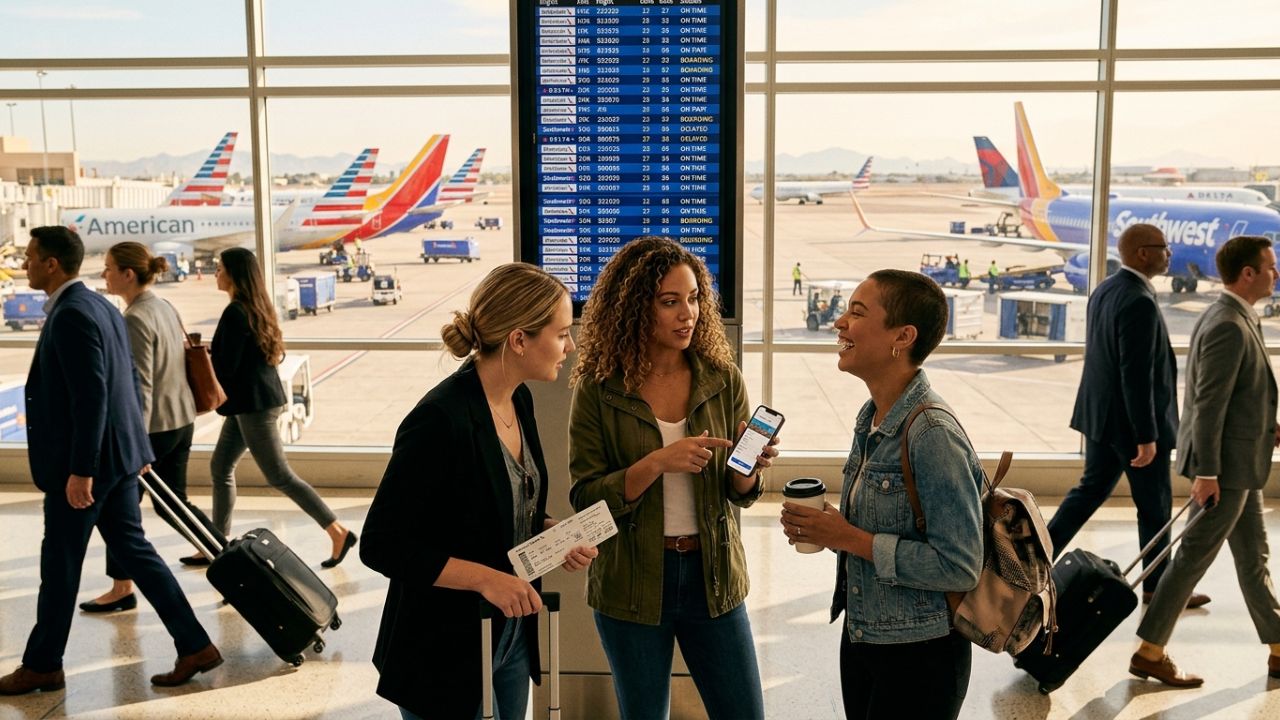
Image generated by AI
In a massive structural transformation that forces passengers to explicitly pay to bypass the severe travel chaos choking the U.S. domestic grid, Southwest Airlines has aggressively triggered a new era of aviation economics. Reported on June 20, 2026, as budget travelers frantically monitor the latest airline news to avoid rolling flight cancellations and hidden fees, the iconic low-cost carrier has fundamentally overhauled its business model. By executing a massive "premiumization" strategy—introducing checked baggage fees for most fare classes and launching tiered seating—Southwest is joining Delta, American, United, Alaska, and JetBlue in completely redefining domestic air travel. This industry-wide shift, centered explosively at booming hubs like Phoenix Sky Harbor Airport, effectively monetizes the escape from massive airport disruptions. By forcing customers to buy their way out of crowded budget zones, airlines are providing expensive but necessary "survival intelligence" for travelers demanding reliability, cementing this premiumization trend as today's most crucial headline in breaking aviation updates.
By introducing direct passenger coordination and dynamic scheduling backups, the regional aviation hubs target growing passenger demand across vital commerce sectors. The choice to coordinate flight departures in phases helps to manage gate capacity, supporting the country's broader regional transportation network.
Context: Monetizing the Escape from Gridlock
For the highly interconnected United States aviation sector, forcing passengers to pay for "premium" reliability is the ultimate tactical defense against structural revenue stagnation.
Historically, budget travel in the U.S. meant tolerating dense cabins and chaotic boarding processes in exchange for low, all-inclusive fares. However, as massive mega-hubs experience severe, localized air traffic control limitations, the resulting gridlock instantly triggers a massive ripple effect, degrading the entire travel experience. The massive 2026 airline premiumization trend permanently exploits this logistical vulnerability. Carriers like Southwest have realized that passengers are desperate to escape the operational meltdowns that routinely cripple the budget flying experience. By introducing a hybrid premium-style revenue system—charging extra for cabin reconfigurations that offer more legroom and guaranteed boarding positions—airlines are effectively selling "chaos immunity." This completely shatters the traditional low-cost advantage gap, confirming that the true cost of air travel has massively increased as passengers rely on ancillary services to secure a tolerable journey.
To view live flight schedules, verify the active fare class requirements of your specific itinerary, or to track potential route restorations prior to heading to the airport, travelers must consult official aviation directories. For direct updates regarding how this massive shift in baggage policies might shield you from current flight cancellations out of Phoenix, travelers should aggressively utilize the official digital portals of their respective airlines. To explore live flight tracking and monitor the exact severity of the cascading bottlenecks paralyzing the broader domestic airspace, passengers can consult the official FlightAware tracking service.
Section-Wise Breakdown: The Hubs of Premiumization
Phoenix Sky Harbor: The Epicenter of Demand
Phoenix Sky Harbor Airport has aggressively positioned itself at the absolute center of this premiumization trend. The facility is experiencing structurally high demand, transitioning into the premier hub for Western U.S. air travel. The Denver–Phoenix corridor remains one of the most heavily trafficked routes in the continental United States, driven by significant leisure travel demand and high-frequency flight schedules. Airlines are exploiting this massive, captive commuter base by deploying their new, highly segmented premium cabins directly onto these short-haul domestic networks.
Southwest Airlines: Abandoning the Pure Budget Model
Southwest Airlines has executed the most shocking pivot of 2026. By introducing checked baggage fees for the vast majority of its fare classes and modifying its iconic open-seating policy to include tiered seating with extra legroom, the airline is fiercely hunting ancillary revenue. This massive cabin reconfiguration on high-frequency domestic routes places Southwest directly in competition with legacy giants, completely altering the landscape for budget-conscious families.
The Legacy Carrier Response
The shift is entirely industry-wide. Delta Air Lines is expanding its premium economy options to capture the mid-tier market. United Airlines is pouring massive capital into its premium cabins while restructuring loyalty pricing. American Airlines is focusing on improved fare segmentation and optimized hub operations. Meanwhile, Alaska Airlines is heavily expanding premium seating across its West Coast dominance, and JetBlue Airways is aggressively leveraging its Mint strategy to monopolize transcontinental luxury.
Technical Roster: Official Airline Premiumization Matrix
To ensure absolute factual accuracy regarding the exact carrier strategies and the specific domestic pressure points defining this massive 2026 economic shift, the following matrices detail the strictly verified operational data:
Official U.S. Airline Premiumization Strategy Matrix (2026)
| Airline | Core 2026 Premium Strategy | Key Revenue Impact |
|---|---|---|
| Southwest Airlines | Checked baggage fees; tiered seating with extra legroom | Cabin reconfigurations; hybrid low-cost model |
| Delta Air Lines | More premium economy options | Expanded ancillary revenue |
| American Airlines | Improved fare segmentation | Improved hub plans and operations |
| United Airlines | Greater investment in premium cabins | More options for loyalty pricing |
| Alaska Airlines | Expansion of premium seating | Greater focus on West Coast dominance |
| JetBlue Airways | Retained hybrid low cost + Mint | Transcontinental premium competition |
Key Domestic Route Pressure Points (2026)
| Flight Corridor | Route Characteristics | Strategic Impact |
|---|---|---|
| Denver to Phoenix | High frequency, leisure and business | Increasing stability for premium demand |
| Las Vegas to West Coast | Tourism heavy, strong demand | Capturing premium leisure travelers |
| San Diego to Sacramento | Regional commuter | High-demand regional segmentation |
| Dallas to Las Vegas | Massive volume, entertainment focus | Strong ancillary revenue generation |
Data accurately reflects the verified revenue strategies and route pressure points tracking the massive U.S. aviation premiumization trend as of June 2026.
Passenger Impact: The True Cost of Flying
For the tens of millions of domestic travelers navigating the U.S. airspace, this new reality instantly eradicates the concept of "cheap" budget flying.
Passengers are facing a terrifying economic squeeze: total travel costs have massively increased, even while base fares appear superficially stagnant. This illusion is created by a rigid pay-per-service approach. Travelers who refuse to pay ancillary fees for seat selection or baggage find themselves forced into the most chaotic, rigid boarding zones. Furthermore, this trend is heavily impacting ground infrastructure. The intense concentration of premium travel in specific hubs has triggered increased demand for hotels in Phoenix, Las Vegas, and San Diego, dramatically driving up regional hospitality pricing as travelers desperately seek deals on shorter, more concentrated trips.
Industry Analysis: Profit Per Passenger
Aviation analysts monitoring the Phoenix hub note that the aggressive pivot toward premiumization represents a massive, permanent structural change in U.S. airline systems.
Analysts emphasize that airlines have entirely abandoned the strategy of simply increasing raw passenger volume. Instead, transit companies have adopted higher profitability strategies that explicitly focus on extracting maximum profit per passenger. By dismantling the traditional low-cost carrier model and forcing budget airlines like Southwest to adopt legacy-style revenue tactics, the industry has fundamentally broken the budget flying perception. Aviation operators warn that this highly confusing pricing structure will permanently require passengers to spend significantly more time auditing their tickets, as hidden fees now dictate the entire travel experience.
Actionable Advice for Navigating Premiumization
If you are planning to travel domestically through heavily segmented hubs like Phoenix Sky Harbor, you must execute this strategic booking checklist immediately:
- Audit the True Cost: Never assume the base fare is the final price. You must explicitly audit the total trip cost—including carry-on fees, checked baggage fees, and mandatory seat selection penalties—before comparing a budget airline to a full-service legacy carrier.
- Pre-Purchase Ancillaries Early: Do not wait until you arrive at the airport to handle your luggage. Book your bags and seats at the exact moment of ticket purchase to avoid paying the massive, dynamically priced penalties imposed at the check-in counter.
- Utilize Flexible Travel: To avoid being gouged on peak travel days where premium seating and baggage fees are at their absolute highest, maintain flexible travel dates. Shifting your flight to a Tuesday or Wednesday will significantly reduce your exposure to peak-season ancillary price surging.
FAQ: U.S. Airline Premiumization
What exactly is the 2026 airline premiumization trend?
It is a massive structural shift where U.S. airlines introduce more premium seating options and multiple tiers of pricing to extract higher revenue per passenger.
Why are budget airlines like Southwest charging for luggage?
Airlines are aggressively seeking new ways to generate ancillary revenue, ensuring corporate profitability without directly raising the advertised base ticket prices.
Which U.S. airports are most affected by this trend?
Phoenix Sky Harbor, Denver International, and Las Vegas Harry Reid are the most affected due to their highly packed, high-frequency domestic routes.
The Reality of Pay-to-Play Aviation
The historic pivot by Southwest Airlines proves definitively that the era of truly egalitarian budget travel is completely dead. By effectively deploying tiered seating and baggage fees, the industry has successfully guaranteed that affluent travelers can buy their way out of the terrifying congestion of the economy cabin. Yet, as eager tourists frantically secure premium economy fares via airline apps, they must accept a critical new reality: avoiding travel chaos now requires significant financial capital. Surviving this era of rapid domestic premiumization demands extreme attention to detail, a complete refusal to be blindsided by hidden ancillary fees at the gate, and the tactical discipline to calculate the true cost of your journey long before you reach the runway.
Key Takeaways
- Southwest Paradigm Shift: Southwest Airlines introduced checked baggage fees and tiered seating, abandoning its pure low-cost model.
- Industry-Wide Premiumization: Delta, American, United, Alaska, and JetBlue are heavily expanding premium cabins and ancillary revenue streams.
- Phoenix Epicenter: Phoenix Sky Harbor and the Denver-Phoenix corridor are experiencing massive demand, acting as testing grounds for this structural shift.
- Economic Illusion: Base fares remain stagnant while total travel costs massively increase due to a rigid pay-per-service structure.
- Survival Strategy: Passengers are strongly urged to explicitly check baggage policies and pre-purchase seat selections to avoid massive hidden fees at the airport.
Related Travel Guides
Massive Travel Chaos Paralyzes Chicago O'Hare with 1,425 Disruptions
Disclaimer
This article is for informational and educational purposes only. It does not constitute legal, financial, or professional advice. While we strive to provide accurate and up-to-date information, travel policies, regulations, and conditions change rapidly. Always verify information with official sources before making travel decisions. Nomad Lawyer makes no representations about the accuracy, reliability, completeness, or suitability of the information provided. Readers should consult qualified professionals for advice specific to their circumstances. The views expressed in this article are those of the author and do not necessarily reflect the views of Nomad Lawyer.
Kunal K Choudhary
Co-Founder & Contributor
A passionate traveller and tech enthusiast. Kunal contributes to the vision and growth of Nomad Lawyer, bringing fresh perspectives and driving the community forward.
Learn more about our team →