
Bypassing Travel Chaos: 5,000 Tourists Stranded in Phuket as Middle East Hub Collapse Triggers Massive 200-Flight Meltdown in Bangkok: Airline News
As severe travel chaos paralyzes Middle East transit hubs, over 5,000 tourists are stranded in Phuket while major airlines suffer massive flight cancellations.

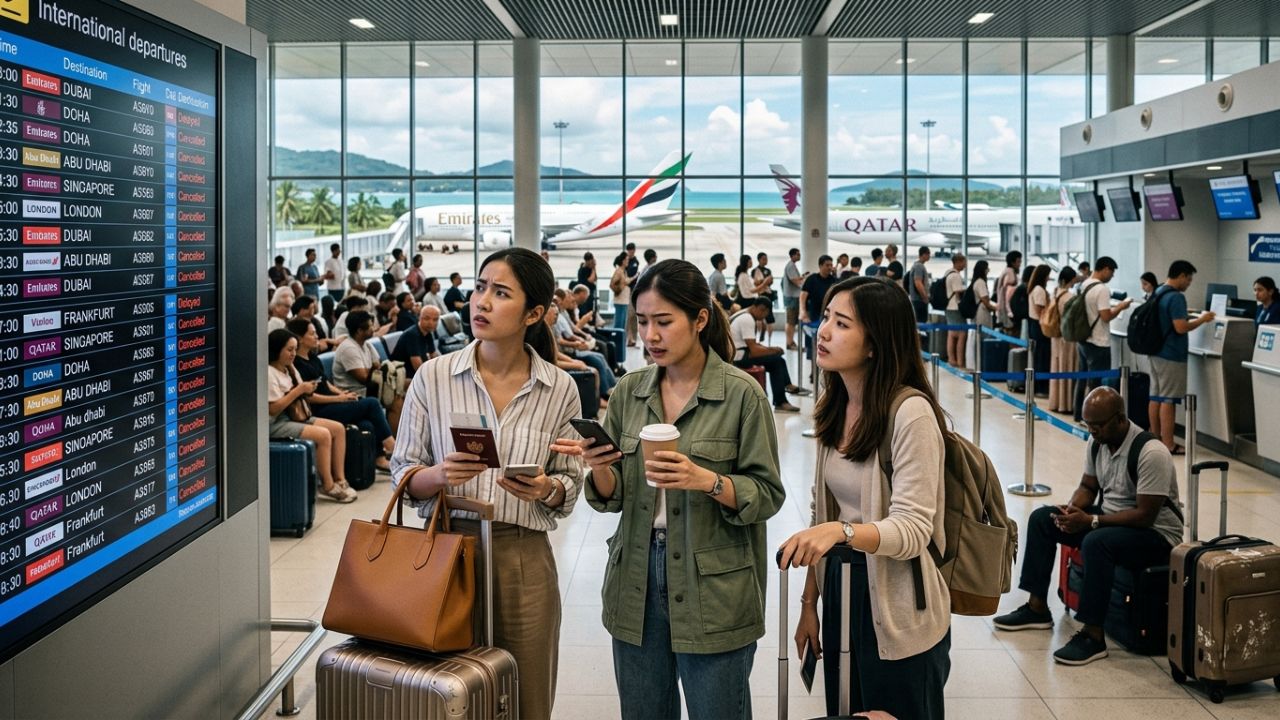
Image generated by AI
In a catastrophic infrastructure failure that is aggressively spreading systemic travel chaos across the entire Asia-to-Europe corridor, the total collapse of seamless Middle Eastern transit networks has stranded thousands of vacationers in Thailand. Reported on June 20, 2026, as panicked holidaymakers frantically monitor the latest airline news for an escape from rolling flight cancellations and agonizing terminal gridlock, over 5,000 tourists are currently trapped in Phuket. Because legacy carriers—including Emirates, Qatar Airways, Air India, Thai Airways, Singapore Airlines, and Etihad Airways—are suffering massive operational breakdowns at their Gulf hubs, the fallout has triggered over 200 cascading delays at Bangkok’s Suvarnabhumi Airport. This massive logistical meltdown has severed vital Europe-Asia connections, triggering severe airport disruptions and forcing desperate travelers to scramble for regional ASEAN bypass routes, cementing this transit collapse as today's most crucial headline in breaking aviation updates.
By introducing direct passenger coordination and dynamic scheduling backups, the regional aviation hubs target growing passenger demand across vital commerce sectors. The choice to coordinate flight departures in phases helps to manage gate capacity, supporting the country's broader regional transportation network.
Context: The Collapse of the Gulf Transit Model
For the massive volume of international tourists attempting to access the high-value coastal resorts of Southeast Asia, relying on the Middle Eastern "mega-hub" transit model is now the absolute ultimate exposure to structural travel failure.
Historically, passengers traveling between Europe and Asia relied exclusively on the massive, highly efficient Gulf transit hubs of Dubai, Doha, and Abu Dhabi. However, when these centralized chokepoints suffer severe congestion or airspace restrictions, the entire global network fails. Currently, interconnected networks are buckling under the pressure of disrupted crew rotations, extended flight distances, and the inability to reposition aircraft. Connections that were once seamless now take several days to complete. Because long-haul routes are entirely reliant on hub efficiency for the transfer of passengers, a delay in Dubai instantly triggers travel chaos in Thailand. The ongoing collapse of these hub-centric networks has effectively trapped thousands of tourists in Phuket, forcing massive spikes in emergency hotel occupancy and overwhelming local authorities with visa extension requests as travelers physically cannot exit the region.
To view live flight schedules, verify the active severity of the Gulf hub gridlock, or to track potential route restorations prior to heading to the airport, travelers must consult official aviation directories. For direct updates regarding how this massive capacity crisis might trigger flight cancellations for your specific airline, travelers should aggressively utilize the official digital portals of their respective carriers. To explore live flight tracking and monitor the exact severity of the cascading bottlenecks paralyzing alternative Asian airspace, passengers can consult the official FlightAware tracking service.
Section-Wise Breakdown: The Global Contagion
Thailand: The Epicenter of the Stranding
Phuket has absorbed the most catastrophic impact of this crisis. Over 5,000 tourists are physically unable to depart or continue their international travel due to massive Gulf-hub cancellations. Hotels are reporting sudden, massive spikes in emergency occupancy from mishandled passengers, while new arrivals have plummeted. The contagion has also infected the capital; Bangkok’s Suvarnabhumi Airport has logged over 200 massive delays as airlines desperately attempt to reroute flights and manage the overwhelming backlog of stranded Europe-bound travelers.
The UAE and India: The Congestion Chokepoints
The root of this massive travel chaos lies in the Gulf. Dubai International Airport has experienced an avalanche of flight cancellations caused by severe terminal and airspace congestion. Passengers in transit are enduring agonizing, multi-hour waiting periods or facing extreme rerouting measures. This congestion immediately impacts India. Major international gateways like Delhi and Mumbai are experiencing massive systemic delays due to aircraft rerouting. The heavy reliance on Gulf transit has exposed the extreme vulnerability of the Indian outbound tourism market, leading to a severe deceleration in travel to Southeast Asia.
Singapore: The Regional Safe Harbor
Amidst the total collapse of long-haul transit, Singapore Changi Airport stands as a vital outlier. While Changi is experiencing inbound delays due to the global network breakdown, it is largely avoiding the catastrophic flight cancellations paralyzing the rest of the world. Consequently, there is a massive shift in consumer behavior: travelers are abandoning highly vulnerable long-distance routes in favor of short-haul ASEAN travel, utilizing Singapore as a secure, regional safe harbor to bypass the Middle Eastern chaos entirely.
Technical Roster: Official Regional Flight Disruption Matrix
To ensure absolute factual accuracy regarding the exact operational delays, specific airline impacts, and the precise passenger stranding metrics defining this massive infrastructure failure, the following matrix details the strictly verified aviation data:
Official Regional Flight Disruption Matrix
| Operational Hub / Metric | Verified Aviation Disruption Data |
|---|---|
| Phuket, Thailand | Over 5,000 tourists currently stranded; massive spikes in emergency hotel occupancy. |
| Bangkok Suvarnabhumi | Reporting over 200 severe flight delays affecting international departures. |
| Dubai International (UAE) | Avalanche of flight cancellations driven by severe hub congestion and transit breakdowns. |
| Delhi & Mumbai (India) | Experiencing massive systemic delays due to global aircraft rerouting. |
| Singapore Changi | Enduring inbound delays but actively avoiding massive cancellations; serving as an ASEAN safe harbor. |
| Severely Impacted Airlines | Emirates, Qatar Airways, Air India, Thai Airways, Singapore Airlines, Etihad Airways. |
| Transit Degradation | Formerly seamless Europe-Asia connections now requiring several days to complete. |
Data accurately reflects the verified passenger stranding metrics and the specific regional hub breakdowns tracking the Asia-Middle East travel crisis as of June 2026.
Industry Analysis: The Fragility of the Mega-Hub
Aviation analysts monitoring the intensely volatile Europe-Asia transit market note that the Phuket stranding is a terrifying indicator of the fundamental weakness inherent in global hub-and-spoke networks.
Analysts emphasize that the global aviation system has become dangerously over-reliant on just three cities: Dubai, Doha, and Abu Dhabi. When these centralized hubs fail, the cascading flight cancellations instantly sever the primary arteries connecting Europe to Asia. This triggers a massive spike in long-term operational costs for airlines, which are now forced to reposition aircraft globally and manage the massive financial burden of refunding tickets and housing stranded passengers. In response, travel analysts predict a massive structural shift in the airline industry. To bypass this vulnerability, airlines will be forced to open new, direct point-to-point routes and expand alternative transit gateways throughout Southeast Asia and Central Asia, actively dismantling the world's reliance on the fragile Gulf hubs.
Actionable Advice for Stranded Travelers
Because this massive transit collapse fundamentally alters the reliability of international travel out of Asia, passengers currently navigating this crisis must execute this strategic survival checklist immediately:
- Avoid All Gulf Layovers: If you are currently attempting to leave Thailand or India for Europe, absolutely refuse to book short layover routes through Dubai, Doha, or Abu Dhabi. The congestion is so severe that a missed connection will strand you in the Middle East for days. Immediately seek refunds and pivot to alternative, direct routes or transit through unaffected Pacific/Central Asian hubs.
- Pre-empt the Rebooking Gridlock: Do not wait in massive terminal lines. You must continuously monitor your airline's digital app for real-time travel updates and rebook your flights instantly the moment a delay is announced, before the alternative flights sell out completely.
- Secure Flexible Accommodations: If you are among the 5,000 tourists trapped in Phuket, immediately contact your hotel regarding flexible voucher extensions. Furthermore, you must aggressively document and retain all receipts for necessary expenses related to this travel disruption, as you will need to leverage these against the airlines or your travel insurance for mandatory compensation.
FAQ: Phuket & Middle East Travel Chaos
Why are over 5,000 tourists currently stuck in Phuket?
Vacationers are trapped because massive flight cancellations and delays across Middle Eastern transit hubs have completely severed the primary flight corridors connecting Thailand to Europe.
Which major airlines are experiencing the most severe disruptions?
The massive travel chaos has directly paralyzed operations for Emirates, Qatar Airways, Air India, Etihad Airways, Thai Airways, and Singapore Airlines.
How long will this massive travel disruption last?
The duration of the crisis is entirely contingent upon the stabilization of the congested Middle Eastern transit hubs; travelers should expect severe, continued disruptions in the near term.
The Reality of Transit Defense
The catastrophic passenger stranding in Phuket proves definitively that relying on centralized, long-haul mega-hubs is the ultimate risk in modern aviation. By funneling millions of passengers through highly sensitive Gulf chokepoints, the airline industry has successfully guaranteed that a single regional delay will trigger global travel chaos. Yet, as Thai authorities frantically process visa extensions for 5,000 trapped vacationers, passengers must accept a critical new reality: surviving the massive disruptions of global commerce demands extreme personal preparedness. Navigating the hostile 2026 airspace requires a complete refusal to book vulnerable multi-stop itineraries, and the tactical discipline to pivot immediately to regional ASEAN travel or secure direct, point-to-point extractions that bypass the collapsing mega-hubs entirely.
Key Takeaways
- Massive Phuket Stranding: Over 5,000 international tourists are physically trapped in Phuket due to the total collapse of Middle Eastern transit corridors.
- 200+ Bangkok Delays: The crisis has triggered cascading delays at Suvarnabhumi Airport as airlines struggle to reposition aircraft and manage passenger backlogs.
- Gulf Hub Collapse: Severe congestion and cancellations at Dubai, Doha, and Abu Dhabi have severed the critical Europe-Asia travel sector.
- Major Airline Gridlock: Emirates, Qatar Airways, Air India, Thai Airways, Singapore Airlines, and Etihad Airways are heavily impacted by disrupted crew rotations.
- Regional Safe Harbor: Travelers are abandoning vulnerable long-haul routes and pivoting to short-haul ASEAN travel, utilizing Singapore as a secure bypass.
Related Travel Guides
Massive Travel Chaos Paralyzes Chicago O'Hare with 1,425 Disruptions
Disclaimer
This article is for informational and educational purposes only. It does not constitute legal, financial, or professional advice. While we strive to provide accurate and up-to-date information, travel policies, regulations, and conditions change rapidly. Always verify information with official sources before making travel decisions. Nomad Lawyer makes no representations about the accuracy, reliability, completeness, or suitability of the information provided. Readers should consult qualified professionals for advice specific to their circumstances. The views expressed in this article are those of the author and do not necessarily reflect the views of Nomad Lawyer.
Kunal K Choudhary
Co-Founder & Contributor
A passionate traveller and tech enthusiast. Kunal contributes to the vision and growth of Nomad Lawyer, bringing fresh perspectives and driving the community forward.
Learn more about our team →