
Southwest Airlines Unveils Aggressive Expansion: 23 New Routes Reshaping U.S. Network Through Year-End
Breaking airline news and aviation industry updates for 2026.

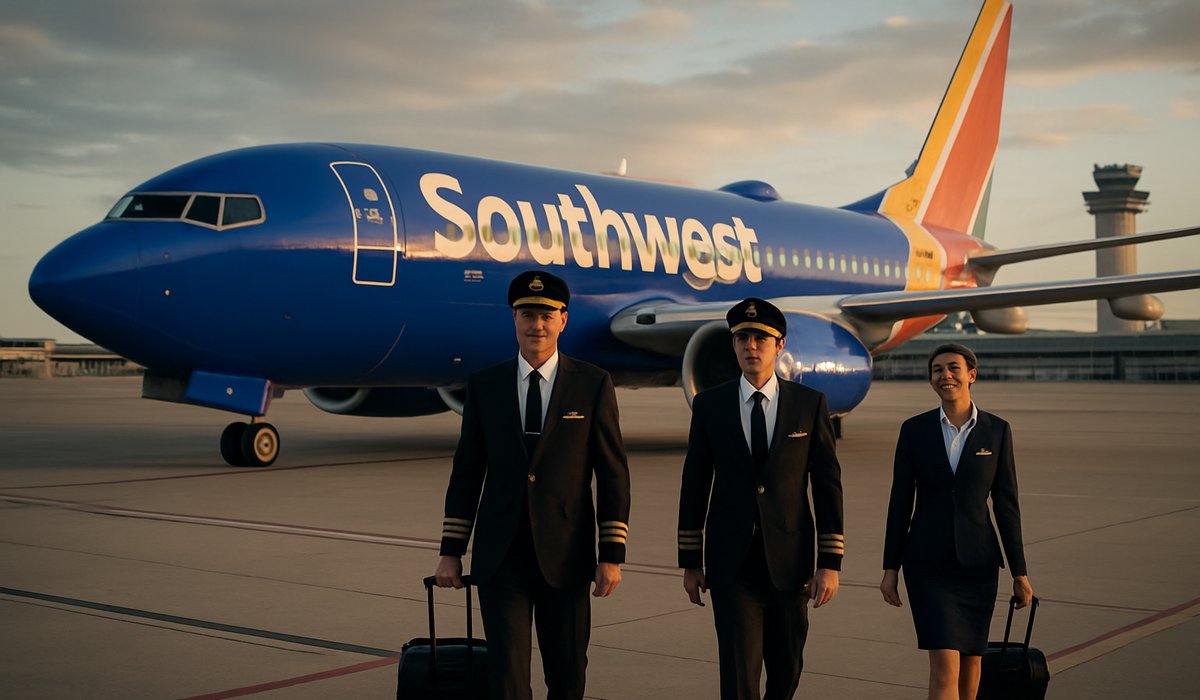
Image generated by AI
Southwest Airlines Unveils Aggressive Expansion: 23 New Routes Reshaping U.S. Network Through Year-End
The carrier's second-half offensive signals competitive repositioning amid industry consolidation pressures
Major Route Expansion Underway
Southwest Airlines is preparing to reshape its domestic and international network with the launch of 23 new and restored flight routes spanning the final six months of 2026. The Dallas-based carrier's ambitious expansion—comprising 21 domestic services and two international connections—represents a strategic move to capture market share and enhance connectivity across underserved corridors as the aviation industry navigates post-pandemic recovery dynamics and shifting travel demand patterns.
Breaking Down the Expansion Plan
The carrier's scheduling decisions reflect careful market analysis in an increasingly competitive landscape where legacy carriers and low-cost competitors continue jockeying for position. Of the 23 route additions, the vast majority targets domestic American markets, signaling Southwest's core strategy remains firmly rooted in connecting secondary and tertiary U.S. cities—a model that has historically differentiated the airline from full-service carriers charging premium fares on trunk routes.
The two international routes represent a measured expansion beyond Southwest's traditional borders, suggesting the carrier is testing appetite for transnational leisure and business travel recovery in select markets. This measured international approach aligns with industry trends, as carriers balance international ambitions against fuel price volatility and currency headwinds that have pressured margins throughout 2026.
Strategic Implications for the Industry
Southwest's expansion strategy arrives amid broader aviation sector consolidation and shifting consumer expectations around airline fees, baggage charges, and route accessibility. As jet fuel prices remain subject to geopolitical and supply-chain pressures, carriers are increasingly relying on network optimization and load-factor improvements to maintain profitability rather than capacity-chasing strategies of previous cycles.
The expansion also reflects competitive dynamics within the low-cost carrier segment, where Southwest faces intensifying pressure from ultralow-cost operators and growing ancillary revenue expectations among consumers navigating higher travel costs generally. By adding routes rather than increasing frequencies on existing services, Southwest appears positioned to reach new customer demographics while maintaining operational efficiency.
The timing—mid-2026—suggests the carrier has assessed demand recovery sufficiently robust to justify incremental capacity deployment, particularly as summer and autumn travel seasons typically demonstrate strongest booking momentum for leisure and business segments alike.
What's Next
Industry observers will closely monitor whether these 23 routes achieve target load factors and contribute meaningfully to Southwest's overall profitability amid ongoing pressures on aviation margins. The expansion's success could influence broader network decisions heading into 2027.
Frequently Asked Questions
What new routes is Southwest Airlines launching in the second half of 2026? Southwest Airlines is deploying 23 new and restored routes from July through December 2026, including 21 domestic U.S. connections and 2 international services, though specific route details have been previously disclosed by the carrier.
How do airline route expansions affect baggage fees and travel costs? New route additions can increase competitive pressure on established services, potentially moderating baggage charges and ancillary fees as carriers compete for price-sensitive leisure travelers seeking value propositions.
Why are airlines expanding despite jet fuel price uncertainties? Carriers invest in capacity expansion when demand recovery sufficiently offsets fuel cost risks; Southwest's expansion suggests confidence in sustained travel demand through year-end 2026.
How does Southwest's expansion strategy differ from legacy carriers? Southwest emphasizes point-to-point domestic connectivity rather than hub-and-spoke models, allowing the carrier to serve secondary markets competitors often overlook while maintaining lower operational costs.
What impact could this expansion have on the aviation industry? Southwest's growth strategy may intensify competitive pressures on pricing and route frequency, ultimately benefiting consumers through expanded choices and potential fare moderation in affected markets.
Related Travel Guides
-
Modern Aircraft Landing Gear Systems Push the Boundaries of Engineering Excellence
-
Southeast Asia Aviation Chaos: 735 Delays and 21 Cancellations Hit Kuala Lumpur, Jakarta, and Bali
External Resources
Disclaimer
This article is for informational and educational purposes only. It does not constitute legal, financial, or professional advice. While we strive to provide accurate and up-to-date information, travel policies, regulations, and conditions change rapidly. Always verify information with official sources before making travel decisions. Nomad Lawyer makes no representations about the accuracy, reliability, completeness, or suitability of the information provided. Readers should consult qualified professionals for advice specific to their circumstances. The views expressed in this article are those of the author and do not necessarily reflect the views of Nomad Lawyer.
Raushan Kumar
Founder & Lead Developer
Full-stack developer with 11+ years of experience and a passionate traveller. Raushan built Nomad Lawyer from the ground up with a vision to create the best travel and law experience on the web.
Learn more about our team →