
Scandinavian Airlines Places Landmark $15 Billion Order for 40 Airbus Widebody Jets
Breaking airline news and aviation industry updates for 2026.

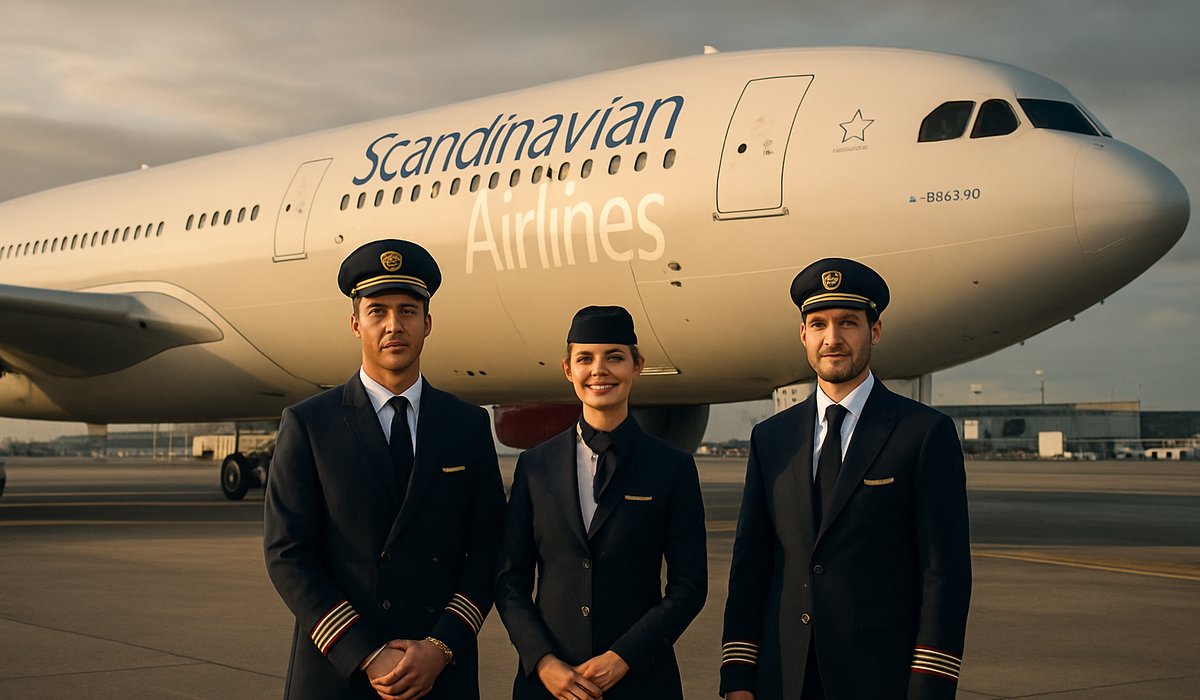
Image generated by AI
Scandinavian Airlines Places Landmark $15 Billion Order for 40 Airbus Widebody Jets
Historic fleet modernization signals Nordic carrier's aggressive expansion strategy amid industry recovery
Record Investment Reshapes SAS Fleet Strategy
Scandinavian Airlines has committed to what represents the most substantial capital investment in the carrier's 75-year operational history, finalizing a transformative agreement with Airbus for up to 40 widebody aircraft from the A330 family. The landmark procurement—encompassing both A330-300 and next-generation A330-900 variants—underscores the Nordic airline's ambitious repositioning within an increasingly competitive global aviation landscape.
The blockbuster deal, valued at approximately $15 billion at catalog prices, marks a decisive shift in SAS's long-haul capacity and signals confidence in sustained demand recovery following pandemic-related disruptions that devastated international carriers across Europe and North America.
Strategic Fleet Modernization and Route Expansion
The acquisition directly addresses SAS's aging long-haul fleet, replacing older Boeing 767 and Airbus A340 aircraft with fuel-efficient, next-generation widebodies. The A330-900, an enhanced iteration featuring improved aerodynamics and 19% lower fuel consumption compared to earlier variants, positions the Swedish-Norwegian-Danish alliance carrier to capitalize on expanding transatlantic and Asia-Pacific routes while managing elevated jet fuel prices that have pressured airline margins since 2021.
Industry analysts attribute the aggressive investment to SAS's strategic response to competitive pressures from well-capitalized Middle Eastern and Asian carriers, combined with recovery in premium leisure and business travel corridors where widebody operations remain essential for profitability.
Timing Reflects Industry Confidence Despite Economic Headwinds
The announcement arrives amid broader aviation sector uncertainty, including persistent inflationary pressures on maintenance costs and competing demands for capital allocation. Yet SAS's board confidence suggests the carrier has secured favorable financing arrangements—a critical consideration as commercial aircraft values remain volatile and lessors tighten lending standards.
Delivery schedules, commencing in 2026, provide SAS operational breathing room to integrate new platforms while retiring fuel-inefficient legacy aircraft. This phased approach offers flexibility should macroeconomic conditions deteriorate or fuel surcharges and baggage fee structures require further optimization.
Market Implications for European Aviation
The transaction carries implications extending beyond SAS operations. Airbus strengthens its commercial aircraft order book during competitive pressure from Boeing, while European aviation establishes renewed growth momentum as carriers position for post-pandemic normalization. The deal potentially triggers competitive responses from rival Nordic and European network carriers seeking comparable capacity upgrades.
Frequently Asked Questions
How will new aircraft impact airline fees and passenger costs? Modern widebodies typically reduce unit costs per available seat mile by 15-20%, allowing carriers to potentially moderate baggage fees and fuel surcharges, though pricing ultimately depends on market competition and fuel price trajectories.
What timeline applies to fleet deliveries? SAS expects initial aircraft deliveries commencing in 2026, with the complete order fulfilled across the subsequent 5-7 years.
Why choose A330 over Boeing 787 competitors? The A330-900 offers superior widebody economics on established long-haul routes, proven reliability across SAS's existing Airbus operational framework, and competitive lease rates in current aircraft markets.
How does elevated jet fuel prices affect this investment? Newer A330-900 variants burn 19% less fuel than predecessors, directly offsetting inflationary fuel cost pressures and supporting long-term profitability margins.
What geographic routes will benefit from expanded widebody capacity? SAS will prioritize transatlantic services to North America and emerging Asia-Pacific connections, where widebody efficiency directly determines profitability and competitive positioning.
Related Travel Guides
External Resources
Disclaimer
This article is for informational and educational purposes only. It does not constitute legal, financial, or professional advice. While we strive to provide accurate and up-to-date information, travel policies, regulations, and conditions change rapidly. Always verify information with official sources before making travel decisions. Nomad Lawyer makes no representations about the accuracy, reliability, completeness, or suitability of the information provided. Readers should consult qualified professionals for advice specific to their circumstances. The views expressed in this article are those of the author and do not necessarily reflect the views of Nomad Lawyer.
Raushan Kumar
Founder & Lead Developer
Full-stack developer with 11+ years of experience and a passionate traveller. Raushan built Nomad Lawyer from the ground up with a vision to create the best travel and law experience on the web.
Learn more about our team →