
Southwest Airlines Flight SWA3881 Boeing 737-700 Diverts to Dallas Love Field After Technical Alert on Oklahoma City Route
Southwest Airlines Flight SWA3881 Boeing 737-700 Diverts to Dallas Love Field After Technical Alert on Oklahoma City Rou

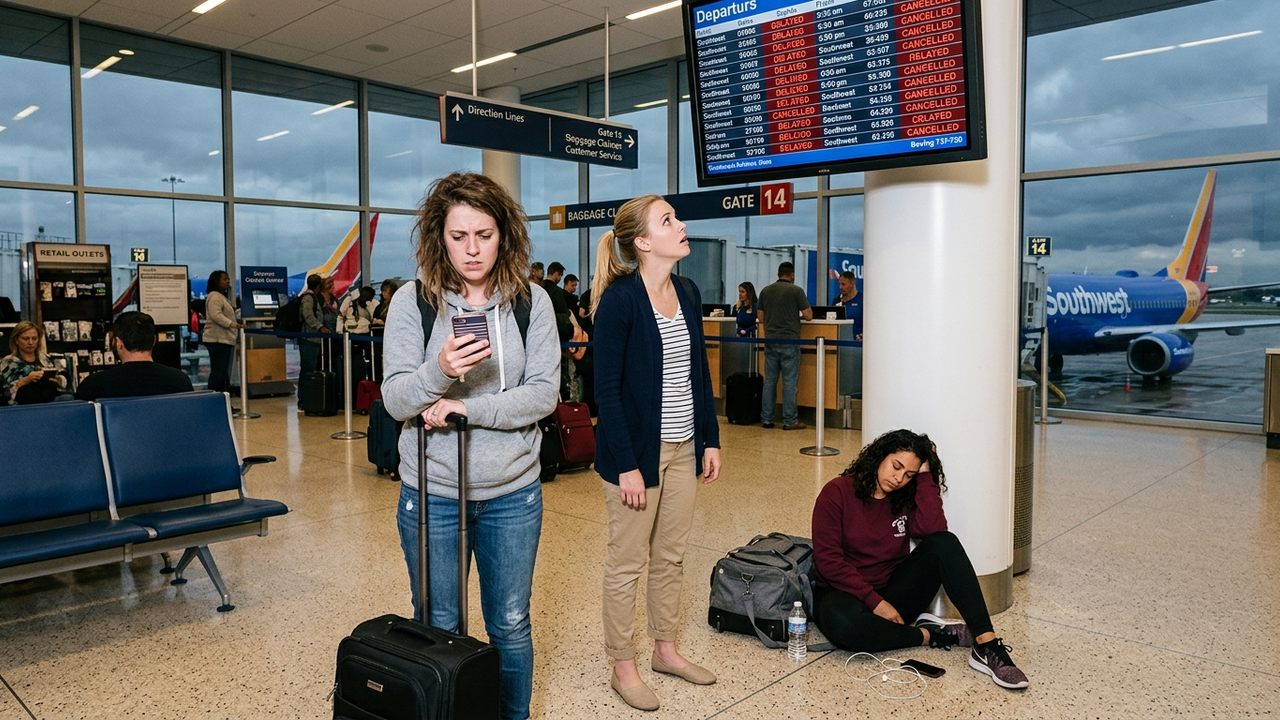
Image generated by AI
[Dallas, June 28, 2026] — Southwest Airlines flight SWA3881, a Boeing 737-700 operating a domestic route from Chicago Midway to Oklahoma City, executed a precautionary diversion back to Dallas Love Field Airport on 26 June 2026. Flight tracking data indicates the aircraft registered as N7815L altered its course shortly after departure, landing safely at the Texas hub following an unexpected operational signal. The controlled return highlights standard aviation safety protocols where early detection systems prioritize immediate assessment over continuing a scheduled domestic route.
Background of Southwest Airlines Network Operations
Southwest Airlines operates an extensive domestic network across the United States, relying heavily on Dallas Love Field Airport (DAL) as a central operational hub. The facility functions as a primary base for maintenance, scheduling, and rapid recovery operations. The aircraft involved in this event, a Boeing 737-700, represents a core component of the carrier's short-haul fleet, specifically designed for high-frequency routes connecting the Midwest and Southern regions of the country.
When irregularities arise mid-flight, routing an aircraft back to a major hub like DAL ensures access to specialized technical inspection teams and streamlined passenger rebooking services. The operational structure of low-cost carriers often depends on rapid aircraft turnarounds, making the immediate availability of maintenance infrastructure a vital factor in minimizing cascading delays across the network.
Chicago Midway Departure Triggers Precautionary Return for Southwest Airlines
Southwest Airlines flight SWA3881 departed Chicago Midway International Airport on 26 June 2026, heading toward Oklahoma City (OKC). According to aviation tracking platforms, the Boeing 737-700 changed course shortly after taking off. Instead of proceeding to its intended destination, the flight crew initiated a controlled return, ultimately landing at Dallas Love Field Airport (DAL).
Industry observers note that the flight's behavior suggests a precautionary operational diversion rather than an emergency landing. Modern commercial aviation relies on continuous system monitoring, and even minor deviations from expected parameters can trigger an immediate safety response. The decision to return to the departure region—specifically redirecting to Dallas instead of continuing to Oklahoma City or returning to Chicago Midway—reflects a calculated operational choice. Dallas Love Field offers superior maintenance capabilities for Southwest Airlines compared to the destination airport, making it the preferred location for technical evaluations.
Boeing 737-700 Onboard Systems Prompt Dallas Love Field Diversion
The Boeing 737-700 is equipped with advanced monitoring technology that continuously tracks critical flight parameters, including engine performance, fuel distribution, hydraulic pressure, avionics status, and cabin pressurization. When Southwest Airlines flight SWA3881 diverted back to Dallas Love Field Airport, operational data suggests an onboard system or flight crew identified an irregular condition requiring immediate evaluation.
In commercial aviation, continuing to a destination with an unverified technical alert poses unnecessary risks. Aircraft monitoring systems are designed to flag anomalies long before they become critical failures. This early warning architecture allows pilots to coordinate with ground-based dispatch teams to determine the safest and most efficient diversion airport. Dallas Love Field serves as the most efficient diversion point for Southwest's Midwest-to-Southwest routes, offering immediate maintenance capacity. This allows the airline to maintain strict aviation safety compliance while minimizing network disruption. The Boeing 737-700's systems provide real-time diagnostic data that ground crews can begin analyzing before the aircraft even lands, ensuring maintenance teams are prepared for immediate action upon arrival.
Southwest Airlines Maintenance Teams Initiate Post-Landing Inspections at Dallas Love Field
Following the safe landing of Southwest Airlines flight SWA3881 at Dallas Love Field, a structured technical response is immediately initiated. Maintenance teams begin comprehensive diagnostic inspections covering the Boeing 737-700's engines, avionics systems, hydraulic lines, and environmental controls. The goal is to determine if a specific fault triggered the operational alert.
Concurrently, Southwest Airlines' operations control center manages passenger recovery procedures. Travelers are often rebooked onto later flights to Oklahoma City or rerouted through connecting services within the airline's domestic network. Because Dallas Love Field operates as a major hub, alternative travel options are typically available within short timeframes, reducing overall passenger inconvenience. The logistics of deplaning a diverted aircraft, conducting safety checks, and rebooking passengers require precise coordination. Ground staff at Dallas Love Field are trained to handle these specific recovery scenarios, ensuring that travelers receive updated itineraries and accommodation if necessary while the Boeing 737-700 undergoes evaluation.
FAA Oversight and Aircraft Return-to-Service Protocols
If maintenance teams confirm a technical fault on the Boeing 737-700, the issue is documented under Federal Aviation Administration (FAA) oversight requirements. This ensures regulatory compliance and maintains safety transparency across the United States aviation network. The documentation process involves logging the specific system irregularity, the steps taken to resolve it, and the final clearance sign-off by certified mechanics.
If no mechanical issue is found, the aircraft generally undergoes precautionary checks before being cleared for return to service. This protocol reinforces a core principle within modern commercial operations: safety verification always takes priority over schedule adherence. The FAA mandates strict reporting to identify any recurring fleet-wide issues, meaning a single diversion on flight SWA3881 contributes to a broader database of aircraft health monitoring.
Impact on Domestic Travel and Network Recovery
The diversion of Southwest Airlines flight SWA3881 impacts the carrier's tightly woven domestic schedule. While the Boeing 737-700 is designed for rapid turnarounds, an unexpected return to Dallas Love Field requires immediate resource reallocation. Gate availability, maintenance crew deployment, and passenger rebooking logistics must be coordinated instantly.
For passengers traveling from Chicago Midway to Oklahoma City, the diversion introduces delays. However, the availability of high-frequency flights from Dallas Love Field mitigates the disruption. The airline's operational model allows for quick recovery, ensuring travelers reach OKC with minimal lost time. Industry data shows that diversions to major hubs like DAL result in shorter overall delay times compared to diversions to smaller regional airports, simply because the resources required to resolve both the aircraft issue and the passenger rebooking process are already concentrated at that location.
Why This Matters (Information Gain)
The diversion of Southwest Airlines flight SWA3881 underscores the high reliability of modern aviation safety systems. When a Boeing 737-700 detects a potential irregularity, the operational framework demands immediate action, treating every alert with maximum caution. This event demonstrates how airlines balance operational efficiency with uncompromising safety standards. By diverting to Dallas Love Field, Southwest Airlines utilized its primary maintenance hub to resolve a potential issue before it could escalate.
For the broader travel industry, this incident serves as a reminder that flight diversions, while inconvenient, are often proactive safety measures rather than reactions to active crises. The seamless integration of advanced aircraft monitoring, crew training, and hub-based recovery infrastructure ensures that domestic air travel remains highly resilient even when unexpected operational signals occur. The incident also highlights the strategic advantage of hub-and-spoke network models in irregular operations. By centralizing maintenance and recovery operations at Dallas Love Field, Southwest Airlines can rapidly address technical alerts, minimizing downtime and maintaining high operational integrity across its entire route network. This proactive approach to safety management ultimately builds passenger confidence, as travelers can see that airlines prioritize their well-being over strict schedule compliance.
Related Travel Guides
Disclaimer
This article is for informational and educational purposes only. It does not constitute legal, financial, or professional advice. While we strive to provide accurate and up-to-date information, travel policies, regulations, and conditions change rapidly. Always verify information with official sources before making travel decisions. Nomad Lawyer makes no representations about the accuracy, reliability, completeness, or suitability of the information provided. Readers should consult qualified professionals for advice specific to their circumstances. The views expressed in this article are those of the author and do not necessarily reflect the views of Nomad Lawyer.
Raushan Kumar
Founder & Lead Developer
Full-stack developer with 11+ years of experience and a passionate traveller. Raushan built Nomad Lawyer from the ground up with a vision to create the best travel and law experience on the web.
Learn more about our team →