
Denver International Airport Logs 237 Flight Delays and 1 Cancellation Amid Severe Weather
Severe weather and air traffic management initiatives forced 237 flight delays and one cancellation at Denver Internatio

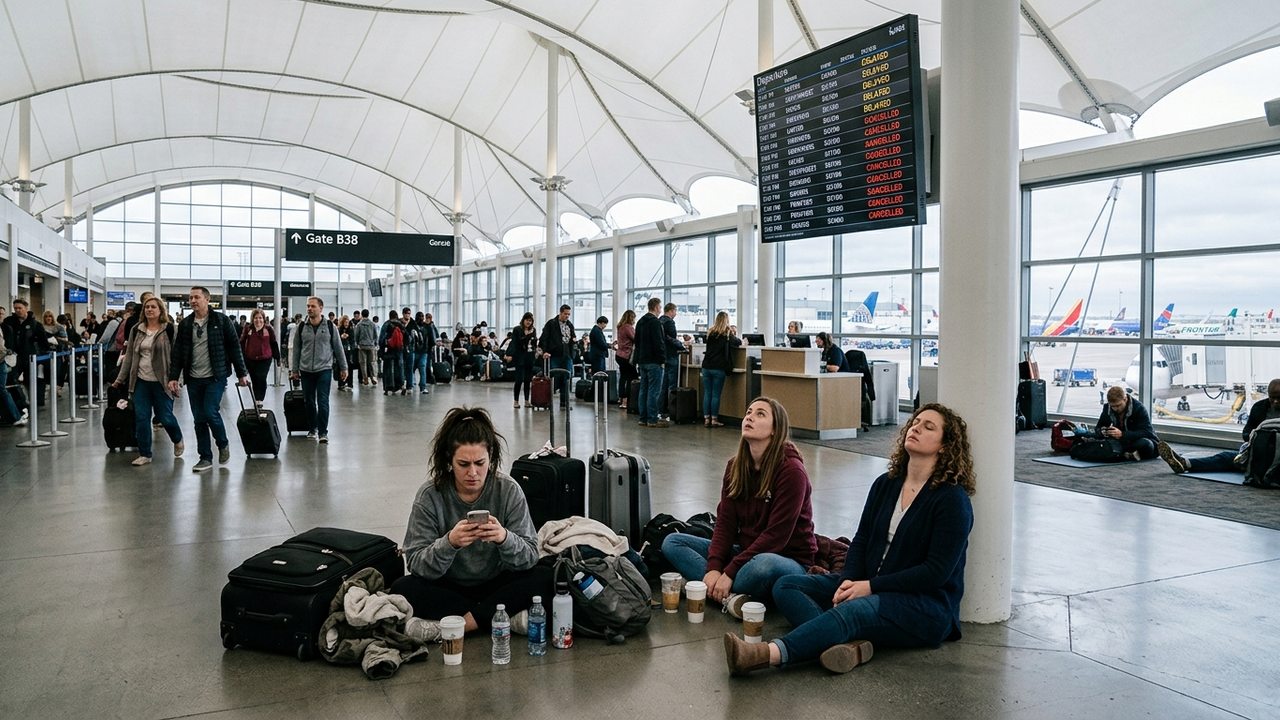
Image generated by AI
Denver International Airport (DEN) experienced significant operational friction on June 28, 2026. The Federal Aviation Administration (FAA) implemented traffic management initiatives in response to forecasted thunderstorms. These measures reduced airport arrival rates and slowed departures.
Instead of halting operations completely, air traffic controllers regulated aircraft flow. They spaced departures and arrivals farther apart to ensure safe separation during periods of unstable weather. Airlines largely maintained their schedules. Operations continued throughout the day with only one flight canceled.
Key Facts Breakdown
- Date of Disruption: June 28, 2026
- Airport: Denver International Airport (DEN)
- Total Delays: 237 flights
- Total Cancellations: 1 flight
- Primary Cause: Thunderstorms and FAA traffic management initiatives
- Airlines Impacted: United Airlines, Southwest Airlines, Frontier Airlines, American Airlines, Delta Air Lines
- Affected Domestic Routes: Chicago, New York, Los Angeles, Las Vegas, Phoenix, Dallas
- Affected International Routes: London, Frankfurt, Tokyo, Mexico City
| Metric | Count |
|---|---|
| Delayed Flights | 237 |
| Canceled Flights | 1 |
| Date of Disruption | June 28, 2026 |
| Primary Cause | Severe Weather (Thunderstorms) |
Why This Matters
Industry observers note that delay-heavy operating days reveal a strategic shift in airline operational resilience. Carriers increasingly prefer delayed flights over outright cancellations to avoid logistical nightmares. Cancellations trigger complex aircraft repositioning, crew scheduling adjustments, and passenger reaccommodation.
Our analysis of the flight data indicates that preserving aircraft rotations, even with extended departure times, minimizes network-wide collapse. Denver’s central geographic location amplifies this strategy. A late aircraft arriving at DEN immediately delays the next scheduled departure, creating a chain reaction across the national aviation network.
Market trends suggest the FAA's ongoing modernization program will eventually mitigate these disruptions. By integrating advanced data analysis—combining weather forecasts, airport capacity, and airline schedules—the agency aims to predict congestion before aircraft depart. Until these technologies fully deploy, weather remains the most volatile operational variable.
Industry Outlook
Summer travel will keep DEN at peak capacity. Seasonal thunderstorms and strong winds will periodically force similar traffic management initiatives.
Passengers must prioritize real-time monitoring. Checking flight status directly with airlines and monitoring gate updates via mobile applications remains the best defense against unexpected pauses. Expect temporary traffic management measures to prioritize passenger safety over on-time performance.
Related Travel Guides
Disclaimer
This article is for informational and educational purposes only. It does not constitute legal, financial, or professional advice. While we strive to provide accurate and up-to-date information, travel policies, regulations, and conditions change rapidly. Always verify information with official sources before making travel decisions. Nomad Lawyer makes no representations about the accuracy, reliability, completeness, or suitability of the information provided. Readers should consult qualified professionals for advice specific to their circumstances. The views expressed in this article are those of the author and do not necessarily reflect the views of Nomad Lawyer.
Kunal K Choudhary
Co-Founder & Contributor
A passionate traveller and tech enthusiast. Kunal contributes to the vision and growth of Nomad Lawyer, bringing fresh perspectives and driving the community forward.
Learn more about our team →