
Chicago O'Hare International Airport Records 211 Flight Delays With Zero Cancellations, Impacting United Airlines, American Airlines, Delta Air Lines, Southwest Airlines on Domestic and International Routes to New York, Los Angeles, London, Toronto, Tokyo, and Frankfurt
Chicago O'Hare International Airport Records 211 Flight Delays With Zero Cancellations, Impacting United Airlines, Ameri

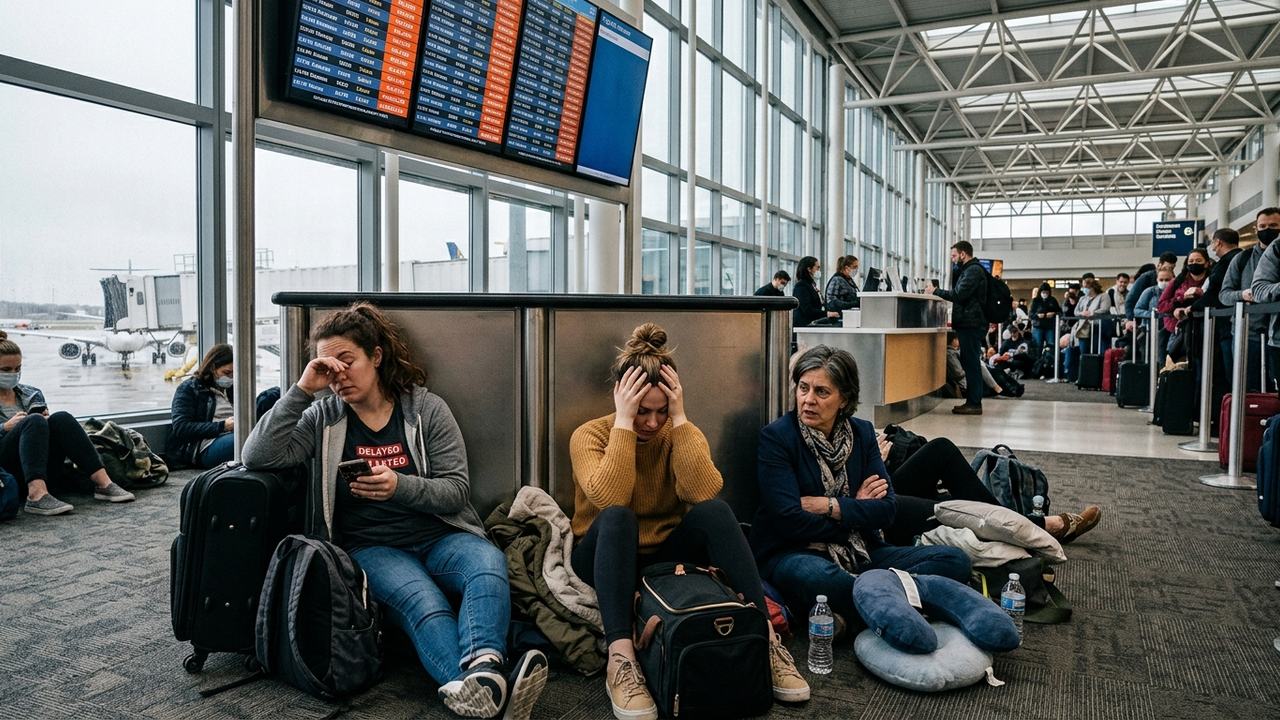
Image generated by AI
[Chicago, June 28, 2026] — Chicago O'Hare International Airport (ORD) reported 211 delayed flights with zero cancellations on June 28, 2026, affecting major carriers including United Airlines, American Airlines, Delta Air Lines, and Southwest Airlines across domestic and international routes to New York, Los Angeles, London, Toronto, Tokyo, and Frankfurt. Passengers faced extended wait times but retained their original bookings, avoiding the more severe disruption of outright flight cancellations.
The operational data from one of the world's busiest aviation hubs highlights the ongoing tension between heavy passenger demand and the capacity constraints that plague major American airports during peak travel periods. While delays tested traveler patience, the complete absence of cancellations signaled that airlines, airport authorities, and the Federal Aviation Administration (FAA) managed to keep every scheduled flight in service despite mounting operational pressure.
Chicago O'Hare Sustains Full Flight Schedule Despite 211 Delays
Flight tracking data from Chicago O'Hare International Airport confirmed that 211 flights experienced delays during the reporting period, while not a single flight was cancelled. This distinction matters significantly for travelers: delayed passengers retain their original reservations and simply wait longer, whereas cancellations force rebooking, overnight stays, and cascading itinerary failures.
For the thousands of passengers moving through ORD on June 28, 2026, the day became an exercise in patience rather than a travel emergency. Business travelers heading to New York and Los Angeles, vacationers bound for London and Frankfurt, and passengers connecting through Toronto and Tokyo all encountered longer-than-expected wait times but ultimately reached their destinations on their originally booked flights.
The affected carriers — United Airlines, American Airlines, Delta Air Lines, Southwest Airlines, and additional operators — maintained their full schedules across both domestic and international routes. The ability to sustain complete service during a period of widespread delays reflects the operational coordination between airline dispatchers, airport ground crews, and FAA traffic managers.
Why O'Hare Faces Chronic Operational Pressure as a Major US Hub
Chicago O'Hare functions as one of the most critical connecting airports in the United States, processing thousands of aircraft movements daily. Its role as a primary hub for multiple domestic and international airlines means that operational efficiency depends on an intricate web of interconnected variables — any one of which can trigger cascading delays across the entire day's schedule.
Industry observers identify several recurring factors that contribute to delay patterns at ORD:
- Heavy air traffic volumes exceeding runway capacity during peak hours
- Weather-related restrictions, particularly during Midwest storm seasons
- Air traffic control spacing requirements imposed by the FAA
- Aircraft rotation schedules that depend on precise timing
- Crew availability constraints under federal duty-time regulations
- Runway maintenance and ongoing airport construction projects
- Congestion at connecting airports that feeds delays into Chicago
Because O'Hare operates as a hub where arriving aircraft become departing aircraft for subsequent legs, even minor interruptions during high-traffic periods compound throughout the day. A 15-minute delay on an early morning arrival from New York can translate into a 30-minute departure delay for the next flight to Los Angeles, which then affects the subsequent leg to Tokyo.
FAA Manages Air Traffic Congestion Across National Airspace System
The Federal Aviation Administration bears responsibility for managing traffic flow not only at Chicago O'Hare but across the entire National Airspace System. The agency employs sophisticated traffic management systems that evaluate weather conditions, airport capacity, scheduled demand, and available airspace in real time.
When demand exceeds available airport or airspace capacity at facilities like ORD, the FAA implements measures such as Ground Delay Programs, which hold departing aircraft at their origin airports to prevent excessive queueing at the destination. These programs reduce airborne holding patterns and fuel consumption while managing the flow of arrivals into congested airports.
The FAA has also pursued modernization initiatives focused on predictive scheduling technology and improved air traffic flow management tools. These efforts aim to reduce nationwide delays by giving controllers and airline dispatchers better visibility into potential congestion points before they develop into operational bottlenecks.
At Chicago O'Hare specifically, the FAA has introduced temporary scheduling limits during peak travel periods. These limits restrict the number of flights that airlines can schedule during the most congested windows, helping to reduce runway queue times and improve on-time performance while ongoing construction and modernization work continues at the airport.
Capacity Constraints Grow as Chicago O'Hare Modernization Continues
O'Hare has faced increasing operational pressure over recent years, driven by strong airline growth and simultaneous infrastructure projects. Airport expansion programs designed to add runway capacity and improve terminal facilities have temporarily reduced the airport's operational flexibility during construction phases.
The tension between modernization needs and daily operational demands creates a challenging environment for airport operators. Construction work may close runways or taxiways, reducing the airport's ability to handle peak-hour traffic volumes. At the same time, airlines continue adding routes and frequencies to meet growing passenger demand, increasing the baseline number of aircraft movements that the facility must accommodate.
The FAA's temporary scheduling limits represent one approach to managing this tension. By capping the number of departures and arrivals during the most constrained periods, regulators aim to maintain operational reliability even as the airport undergoes physical transformation.
Ripple Effects Extend Beyond Illinois as Delays Propagate Nationwide
Because Chicago O'Hare serves as a connecting hub for routes spanning the United States and international destinations, delays at ORD rarely remain confined to Illinois. Aircraft arriving late into Chicago typically depart later for their subsequent destinations, affecting travelers in cities across multiple states and countries.
A United Airlines flight delayed arriving from New York may cause a downstream delay for passengers connecting to Los Angeles. An American Airlines aircraft held on the ground at ORD can push back the departure of a flight to London. Delta Air Lines crews whose schedules are disrupted by accumulated delays may face duty-time limitations that require reserve crew activation. Southwest Airlines' point-to-point model, while less dependent on hub connections, still experiences schedule disruption when aircraft rotations fall behind their planned timelines.
This propagation effect means that a 211-flight delay event at O'Hare can influence departure boards in New York, Los Angeles, Toronto, Tokyo, Frankfurt, and dozens of other cities where affected aircraft are scheduled to operate later in the day.
What Travelers Passing Through O'Hare Should Anticipate
Passengers traveling through Chicago O'Hare should prepare for potential schedule adjustments, particularly during periods of high demand or adverse weather. Travel experts recommend several practical steps to minimize disruption:
- Check flight status through airline mobile applications before departing for the airport
- Allow additional time for security screening, especially during peak travel windows
- Monitor FAA airport delay information for real-time updates on ground stops and traffic management programs
- Maintain flexibility when booking tight connections, allowing buffer time for potential delays
- Review airline notification systems to receive immediate updates on gate changes or schedule adjustments
These measures cannot eliminate delays, but they can reduce passenger stress when unexpected operational changes occur.
Zero Cancellations Signal Operational Resilience at Chicago O'Hare
The absence of any flight cancellations alongside 211 delays represents a notable operational achievement. Keeping every scheduled flight operating — even when delayed — requires coordination among airline operations centers, airport ground handlers, gate agents, and air traffic controllers.
Cancellations typically occur when delays compound to the point where crews exceed legal duty-time limits, aircraft miss their scheduled maintenance windows, or passengers would face arrival times so late that the flight serves no practical purpose. Avoiding cancellations entirely indicates that these thresholds were not crossed, suggesting that the delay pattern remained manageable despite its scale.
For passengers, arriving late remains far preferable to having travel plans cancelled altogether. Delayed travelers keep their seat assignments, avoid rebooking queues, and do not face the prospect of finding hotel accommodations or alternative routing through distant airports.
Summer Travel Demand Keeps Pressure on Chicago O'Hare Operations
With summer travel demand elevated across the United States, Chicago O'Hare is expected to continue operating under significant strain. Airport operators, airlines, and the FAA will maintain their focus on balancing safety, efficiency, and passenger convenience while managing one of the most complex aviation networks in the country.
Travelers can expect ongoing operational monitoring as authorities respond to changing weather conditions, airspace capacity fluctuations, and daily traffic volume variations. Modernization efforts and traffic management improvements continue across the national aviation system, with industry leaders working to minimize future disruptions while maintaining reliable service for the millions of passengers who pass through ORD each year.
Why This Matters: Delays Without Cancellations Reveal a System Under Strain but Still Functioning
The June 28, 2026 operational report from Chicago O'Hare International Airport offers a revealing snapshot of the current state of American aviation infrastructure. A 211-flight delay event with zero cancellations demonstrates that the system is functioning — but only just. The margin between inconvenience and crisis has narrowed considerably at major hubs like ORD, where capacity constraints, construction projects, and relentless demand growth leave little room for error.
The fact that United Airlines, American Airlines, Delta Air Lines, Southwest Airlines, and other carriers maintained full schedules across domestic routes to New York and Los Angeles and international routes to London, Toronto, Tokyo, and Frankfurt speaks to the sophistication of modern airline operations management. Dispatchers, crew schedulers, and airport coordinators worked through the day's disruptions without reaching the breaking point that would trigger cancellations.
However, the FAA's need to implement temporary scheduling limits, Ground Delay Programs, and traffic management initiatives reveals the underlying fragility of the system. When an airport must artificially restrict flight volumes to maintain operational reliability, it signals that demand has approached or exceeded the facility's practical capacity. The modernization projects underway at O'Hare — including runway reconfigurations and terminal expansions — represent long-term investments aimed at resolving these constraints, but the benefits will materialize over years, not days.
For the broader travel and aviation industry, the O'Hare delay event underscores a reality that passengers and operators alike must navigate: at the world's busiest connecting hubs, delays have become a structural feature of the travel experience rather than an exceptional event. The system's ability to avoid cancellations on a day with 211 delayed flights represents resilience, but the frequency of such delay events points to capacity challenges that will require sustained investment and innovation to address.
Related Travel Guides
Disclaimer
This article is for informational and educational purposes only. It does not constitute legal, financial, or professional advice. While we strive to provide accurate and up-to-date information, travel policies, regulations, and conditions change rapidly. Always verify information with official sources before making travel decisions. Nomad Lawyer makes no representations about the accuracy, reliability, completeness, or suitability of the information provided. Readers should consult qualified professionals for advice specific to their circumstances. The views expressed in this article are those of the author and do not necessarily reflect the views of Nomad Lawyer.
Raushan Kumar
Founder & Lead Developer
Full-stack developer with 11+ years of experience and a passionate traveller. Raushan built Nomad Lawyer from the ground up with a vision to create the best travel and law experience on the web.
Learn more about our team →