
Saarburg In Germany Offers A Unique Waterfall Experience In Its Historic Old Town
Saarburg In Germany Offers A Unique Waterfall Experience In Its Historic Old Town

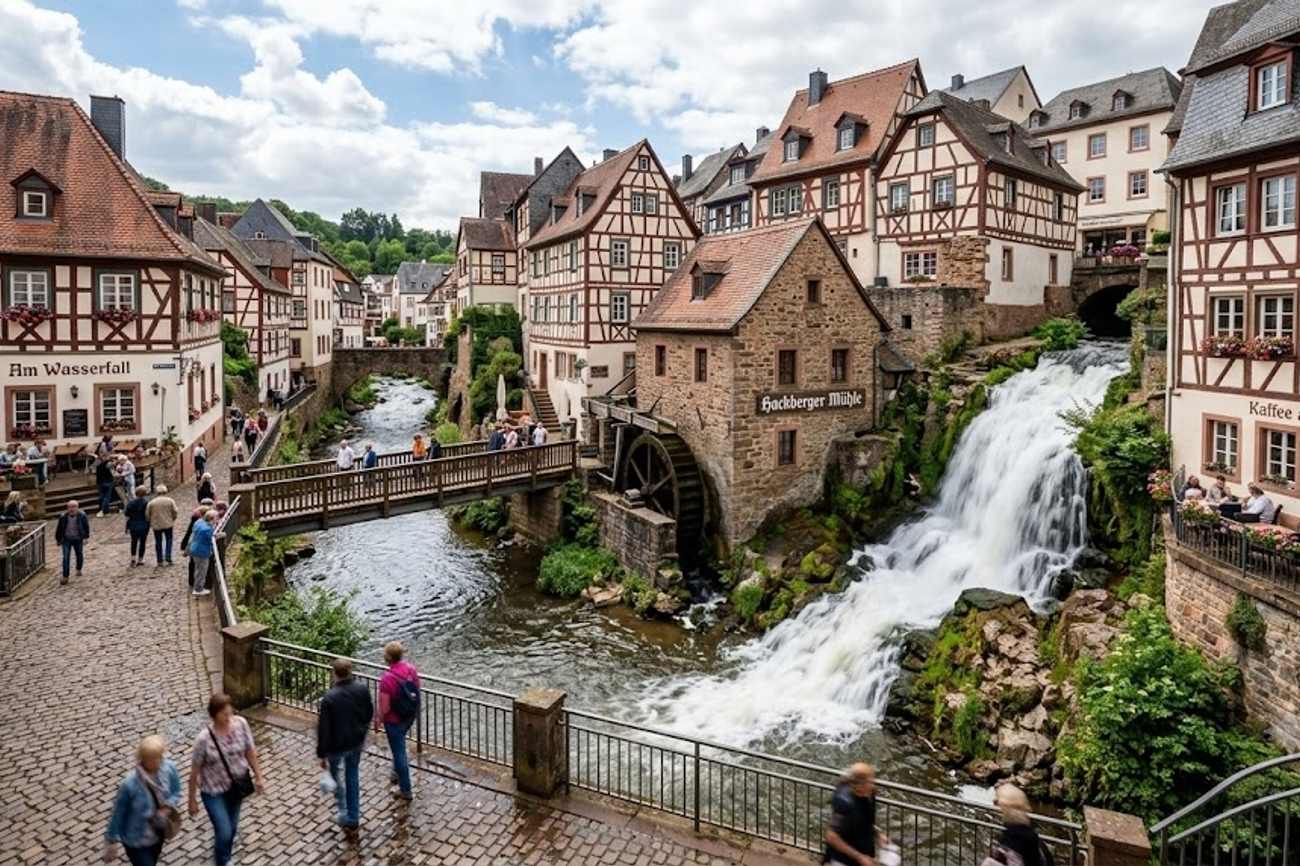
Image generated by AI
A 20-metre vertical drop of the Leukbach stream directly into a historic town center defines the architectural and tourist identity of Saarburg. While most travelers associate waterfalls with remote wilderness or mountainous terrain, this settlement in Germany’s Rheinland-Pfalz region has integrated a cascading watercourse into its urban fabric, creating a rare hybrid of natural attraction and municipal engineering.
The Urban Hydraulics of the Leukbach
The central draw of Saarburg is not merely the aesthetic of falling water, but the deliberate integration of the Leukbach stream into the town's residential and commercial core. As the stream descends approximately 20 metres through the old town, it passes through the Buttermarkt, where the sound of rushing water serves as a constant backdrop to the surrounding cafés and pedestrian zones.
This is not a purely organic occurrence. The current state of the waterfall is the result of strategic modifications made between the eleventh and twelfth centuries. During this period, the course of the Leukbach was altered to serve two primary municipal functions: providing a reliable water source for firefighting and powering the local mills that drove the town's early economy. This early form of urban planning transformed a natural stream into a piece of industrial infrastructure, a legacy that remains visible today through the town's bridges and the water-driven mechanisms of the Hackenberger Mühle.
For the modern traveler, this creates a "Little Venice" atmosphere. While the town lacks the expansive canal networks of Italy, the reliance on waterways for its foundation—including buildings supported by historic oak piles—establishes a similar relationship between architecture and water.
Regional Integration and Tourism Assets
Saarburg does not exist in a vacuum but serves as a strategic satellite to Trier, located roughly 20 minutes away by car. This proximity allows the town to capture overflow from the larger Roman heritage sites of the region while offering a more intimate, slow-paced alternative.
The town's appeal is diversified across three primary sectors: hydraulic history, viticulture, and medieval fortification. The Saar wine-growing region is characterized by slate-rich soils, which are essential for the production of high-quality Riesling. This agricultural backdrop provides a secondary layer of attraction, moving the visitor experience from the urban center of the Buttermarkt out into the surrounding hills.
The following table outlines the primary infrastructure and attractions that shape the Saarburg visitor experience:
| Attraction | Primary Travel Experience | Functional Significance |
|---|---|---|
| Leukbach Waterfall | Urban nature sightseeing | 20m drop through the town center |
| Buttermarkt | Social and culinary hub | Primary viewing point for the cascades |
| Hackenberger Mühle | Industrial heritage | Demonstration of historic water power |
| Saarburg Castle | Medieval history | Hilltop vantage point over the valley |
| Saar Vineyards | Agritourism | Riesling production and hiking paths |
| Saar-Radweg | Active transport | Cycling route along the river landscape |
| Saar-Leuktal-Panorama | Nature trekking | Panoramic views of the surrounding countryside |
Expert Analysis: The Economics of "Micro-Destinations"
From a travel logistics perspective, Saarburg represents the rise of the "micro-destination"—a small-scale location that leverages a single, highly specific geographic anomaly (in this case, an urban waterfall) to compete with larger regional hubs. For travelers booking a trip to the Rheinland-Pfalz region, the direct consequence of Saarburg's layout is an extreme concentration of value. Unlike traditional nature tourism, which requires separate transport to a forest or mountain, the "cost of access" here is zero once the traveler has reached the town center.
The pricing pressure created by this model typically benefits local hospitality. Because the primary attraction—the waterfall—is free and centrally located, the economic capture happens in the surrounding "ring" of cafés and boutiques in the Buttermarkt. This creates a high-density spending zone where the natural attraction acts as a loss-leader for the local service economy.
Furthermore, the integration of the German National Tourist Board standards for regional development is evident in the way Saarburg links its waterfall to the broader Saar-Radweg cycling network. By connecting a static attraction (the waterfall) to a mobile infrastructure (the cycling path), the town ensures a steady stream of transient visitors who may have otherwise bypassed a small village. For the nomad or slow traveler, this means Saarburg is best utilized not as a standalone destination, but as a strategic stop on a larger itinerary through the European Commission's designated cultural regions.
Key Takeaways
- Urban Water Integration: The Leukbach waterfall drops 20 metres directly through the town center, eliminating the need for wilderness trekking to see a natural cascade.
- Engineering Heritage: The watercourse was modified in the 11th and 12th centuries to power mills and provide firefighting capabilities.
- Strategic Location: Situated 20 minutes from Trier, the town serves as a gateway to the slate-rich Riesling vineyards of the Saar region.
- Diversified Activity: Beyond the waterfall, the town offers a medieval castle, a chairlift, and the Saar-Leuktal-Panorama hiking route.
- Architectural Oddity: The "Little Venice" moniker stems from the town's bridges and the use of oak piles to support buildings along the water.
FAQ: Saarburg Travel 2024
How do I get to the Saarburg waterfall? The waterfall is located in the center of the old town. The best way to experience it is by walking through the Buttermarkt, where the Leukbach stream is most visible as it cascades through the town.
Is Saarburg accessible for people with limited mobility? The town center and the area around the Buttermarkt are generally accessible, though some of the historic streets and the paths leading to Saarburg Castle may involve steep inclines or uneven surfaces.
What is the best time of year to visit the Saar vineyards? While vineyards are scenic year-round, the autumn harvest period is ideal for those interested in wine tourism. It is recommended to contact local producers in advance to confirm tasting availability.
Can you visit Saarburg as a day trip from Trier? Yes. Saarburg is approximately a 20-minute drive from Trier, making it a highly feasible half-day or full-day excursion for those exploring the Moselle and Saar regions.
A rare instance where municipal engineering and natural hydraulics converge to create a high-density tourist asset.
Tags: Saarburg, Leukbach Waterfall, Rheinland-Pfalz, Saar Wine Region, German Urban Tourism, Buttermarkt
Related Travel Guides
- Philippines’ Secret Island Gem Lagen Island Roars Back With Stunning Beaches, Exclusive Resorts And Sustainable Luxury Experiences
- Sri Lanka Issues Travel Alert as Massive Central Highlands Landslide Cuts Off Hatton Bogawantalawa Road Disrupting Hill Country Tourism Routes
- Madagascar Enforces Mandatory Health Declarations and Arrival Screenings for Travelers Under Preventive Ebola Border Control Measures
Disclaimer
This article is for informational and educational purposes only. It does not constitute legal, financial, or professional advice. While we strive to provide accurate and up-to-date information, travel policies, regulations, and conditions change rapidly. Always verify information with official sources before making travel decisions. Nomad Lawyer makes no representations about the accuracy, reliability, completeness, or suitability of the information provided. Readers should consult qualified professionals for advice specific to their circumstances. The views expressed in this article are those of the author and do not necessarily reflect the views of Nomad Lawyer.
Kunal K Choudhary
Co-Founder & Contributor
A passionate traveller and tech enthusiast. Kunal contributes to the vision and growth of Nomad Lawyer, bringing fresh perspectives and driving the community forward.
Learn more about our team →