
Busan Travel Searches Surge 50% on Expedia: Translating Digital Demand into Longer Stays
Flight and hotel searches for Busan jumped 50% on Expedia ahead of 2027, as South Korea's maritime capital targets 5 million foreign visitors by 2028.

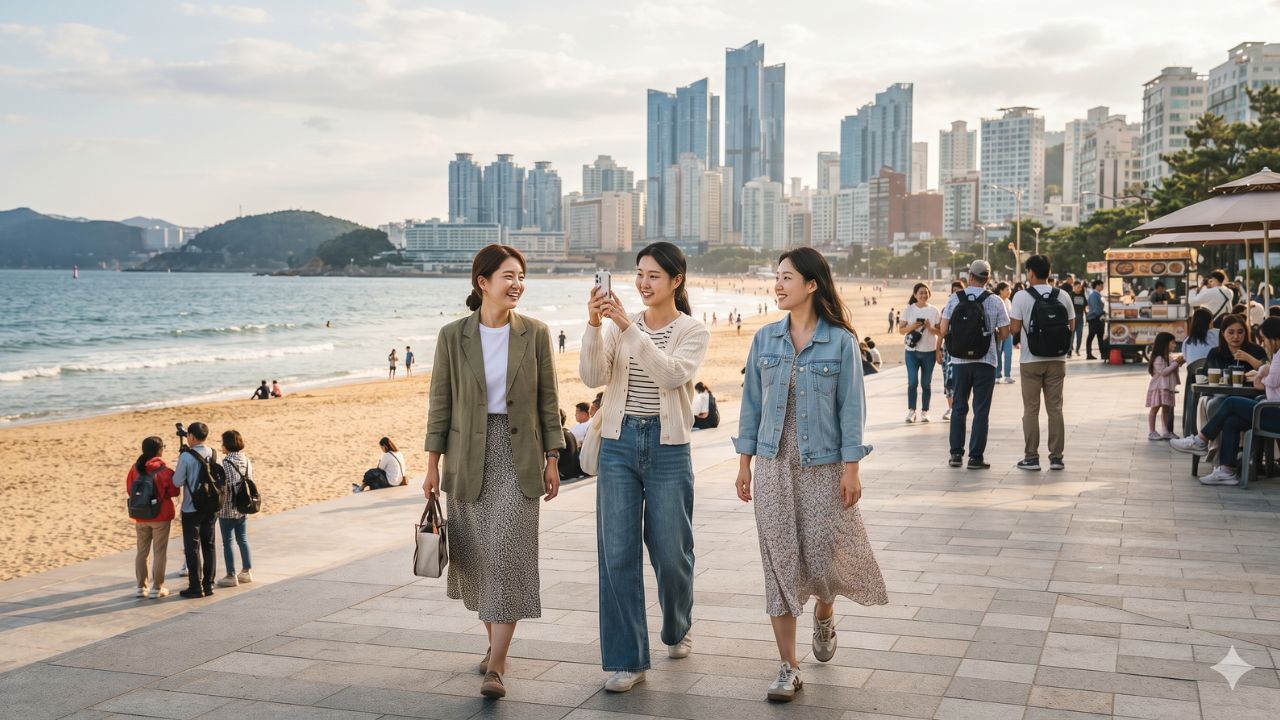
Image generated by AI
Propelled by a 50% year-on-year surge in flight and accommodation searches between September 1, 2025, and July 27, 2026, South Korea’s maritime metropolis of Busan ranked fifth globally among emerging travel destinations in Expedia’s Unpack '27 index. This digital search momentum arrives as municipal leaders accelerate long-range master plans to transform the southern coastal gateway from a secondary day-trip detour into an extended multi-day hub. Backed by official municipal targets aiming for five million foreign visitors and KRW 1.5 trillion in annual tourist receipts by 2028, tourism authorities face the structural task of converting top-of-funnel booking queries into extended hotel bed-nights, culinary spending, and regional neighborhood dispersal.
Search Velocity Versus Physical Inbound Reality: The Conversion Gap
Expedia’s global forecasting report places Busan among the fastest-growing coastal destinations worldwide, awarding the city its proprietary Smart Travel Health Check designation—an internal sustainability and community-balance framework modeled on guidelines from the World Travel & Tourism Council (WTTC). However, aviation and hospitality analysts caution that search volume reflects consumer curiosity rather than finalized commercial transactions. An algorithmic query spike on an online booking platform does not automatically correlate with elevated hotel occupancy, increased airline load factors, or expanded tourist length-of-stay.
To assess whether digital enthusiasm matches on-the-ground performance, tourism planners examine verified historical baselines published by Busan Metropolitan City. During the initial four months of 2025 (January through April), Busan welcomed 1,061,284 foreign travelers, representing a robust 24% expansion over the equivalent period in 2024. Across the broader January–October 2025 reporting window, inbound foreign arrivals reached 3,019,164 visitors, generating KRW 859.2 billion in direct overseas tourist spending—a 31.5% increase over comparative 2024 receipts.
These baseline figures demonstrate that foreign demand was expanding rapidly before the Expedia search spike. The strategic challenge lies in the velocity of stay durations: historically, international travelers arriving in South Korea spend four to five nights in Seoul before allocating merely 24 to 36 hours in Busan to visit coastal landmarks like Haeundae Beach, Jagalchi Fish Market, and cliffside temples such as Haedong Yonggungsa before returning to the capital.
Strategic Metrics: 2025 Baseline Figures and the 2028 Municipal Targets
To dismantle the single-night transit pattern, municipal authorities launched an aggressive diversification framework in June and December 2025, coordinating regional marketing, digital card integration, and transport connectivity.
The table below outlines the core statistical indicators, comparative growth rates, and structural 2028 policy milestones governing Busan's travel economy.
| Performance Indicator | Reporting Period & Source Agency | Official Metric & Variance | Strategic Policy Target for 2028 |
|---|---|---|---|
| Expedia Search Volume | Sep 1, 2025 – Jul 27, 2026 (Expedia) | +50% search increase; Rank 5 | Capitalize on international digital interest |
| Inbound Foreign Visitors | Jan–Apr 2025 (Busan Metropolitan City) | 1,061,284 arrivals (+24% YoY) | Establish consistent quarterly momentum |
| Ten-Month Arrival Total | Jan–Oct 2025 (Busan Metropolitan City) | 3,019,164 foreign visitors | Expand to 5.0 million foreign visitors annually |
| Direct Foreign Tourist Spend | Jan–Oct 2025 (Busan Metropolitan City) | KRW 859.2 billion (+31.5% YoY) | Achieve KRW 1.5 trillion in annual spend |
| Urban Sightseeing Pass Uptake | Ongoing 2025–2026 rollout | Visit Busan Pass (24h/48h formats) | Expand independent digital transit integration |
| Target Travel Segments | Regional master plan framework | Nighttime tourism, cruise berthing | Disperse visitor spend into outer coastal wards |
Achieving the 2028 milestone of KRW 1.5 trillion in foreign spend requires an average annual spending expansion exceeding 25%. Consequently, municipal planners are heavily subsidizing gastronomy marketing, night tours around Gwangalli Bridge, and cruise passenger shore itineraries to induce secondary evening spending.
Expert Analysis: Inventory Pricing, High-Speed Rail Flows, and Pass Logistics
For travelers booking this route, the direct consequence of rising search demand is seasonal hotel rate compression across prime beachfront zones. In Haeundae and Gwangalli, four-star and five-star coastal properties experience extreme occupancy volatility, with weekend rates surging up to 80% higher than midweek pricing. As Western and Southeast Asian long-haul travelers increasingly flag Busan on booking platforms, forward hotel reservation windows are tightening, reducing last-minute room availability during major autumn events such as the Busan International Film Festival and seasonal firework spectacles.
The pricing pressure this creates means independent travelers must carefully calculate itinerary economics. While the KTX high-speed rail line operated by Korail links Seoul Station to Busan Station in roughly 2 hours and 15 minutes, rail seating frequently sells out days in advance during peak Friday and Sunday transit windows. To capture independent foreign travelers, national marketing campaigns by the Korea Tourism Organization promote the Visit Busan Pass—available in 24-hour, 48-hour, or prepaid credit configurations. The pass grants entry to over 30 major municipal attractions, integrated with the transit-card payment network for subways and municipal buses.
However, consumer analysis indicates that sightseeing cards provide tangible financial savings only when travelers commit to a packed attraction schedule. Travelers planning relaxed coastal stays centered on local dining and coffee culture in neighborhoods like Yeongdo or Jeonpo Cafe Street often spend less by purchasing transit cards and dining directly, rather than locking themselves into prepaid multi-attraction passes.
From an aviation perspective, search interest has yet to produce a corresponding influx of direct long-haul intercontinental air capacity into Gimhae International Airport (PUS). Because Gimhae operates under strict runway curfew restrictions and limited wide-body gate infrastructure, the overwhelming majority of international travelers must still enter via Incheon International Airport (ICN) and transit south via high-speed rail or domestic feeder flights. Until regional airport infrastructure expansions materialize, Busan’s tourism growth remains structurally tethered to domestic intercity rail throughput.
Key Takeaways
- 50% Search Spike on Expedia: Busan ranked fifth among top-trending global destinations in Expedia's Unpack '27 report, tracking searches from September 2025 to July 2026.
- 3 Million Foreign Visitors in 2025: Official city data registered 3,019,164 international arrivals through October 2025, generating KRW 859.2 billion in overseas expenditure.
- Aggressive 2028 Municipal Targets: The city's master plan aims to welcome 5 million international visitors annually and generate KRW 1.5 trillion in foreign revenue by 2028.
- Visit Busan Pass Integration: Digital all-inclusive sightseeing passes and integrated transit payments aim to simplify independent navigation and encourage multi-day stays.
- Transit Infrastructure Bottleneck: Limited long-haul international flights into Gimhae Airport mean most foreign visitors remain dependent on Seoul KTX rail connections.
FAQ: Busan Tourism and Travel Planning 2026
Does a 50% search increase mean hotel prices in Busan have doubled?
No. Search volume reflects online consumer interest rather than finalized bookings. Hotel rates fluctuate based on seasonal demand, with sharp price increases concentrated during summer weekends and major autumn festivals.
How fast is the train journey between Seoul and Busan?
KTX high-speed rail trains connect Seoul Station and Busan Station in approximately 2 hours and 15 minutes to 2 hours and 40 minutes, with frequent departures throughout the day.
Is the Visit Busan Pass worth purchasing for independent travelers?
The Visit Busan Pass delivers substantial cost savings if you plan to visit multiple major paid attractions like Haeundae Blueline Park, Busan X the Sky, and coastal cable cars within 24 or 48 hours.
What are the main sights driving foreign visitor interest in Busan?
Key attractions include Haeundae and Gwangalli beaches, Jagalchi Fish Market, the coastal Haedong Yonggungsa Temple, Gamcheon Culture Village, and the emerging food districts of Yeongdo.
Travelers planning a South Korean journey should consider dedicating three to four nights to Busan to experience the rich coastal culture beyond Seoul.
Related Travel Guides
The 10 Best Neighborhoods to Stay in Busan, According To Reddit
Disclaimer
This article is for informational and educational purposes only. It does not constitute legal, financial, or professional advice. While we strive to provide accurate and up-to-date information, travel policies, regulations, and conditions change rapidly. Always verify information with official sources before making travel decisions. Nomad Lawyer makes no representations about the accuracy, reliability, completeness, or suitability of the information provided. Readers should consult qualified professionals for advice specific to their circumstances. The views expressed in this article are those of the author and do not necessarily reflect the views of Nomad Lawyer.
Kunal K Choudhary
Co-Founder & Contributor
A passionate traveller and tech enthusiast. Kunal contributes to the vision and growth of Nomad Lawyer, bringing fresh perspectives and driving the community forward.
Learn more about our team →