
Indiana Tourism Economy Hits £13.5 Billion: Indianapolis and Fort Wayne Drive Midwest Travel Surge
Direct visitor spending across Indiana reached £13.5 billion as Indianapolis convention hosting, Fort Wayne youth sports, and regional drive markets fueled 83.3 million trips.

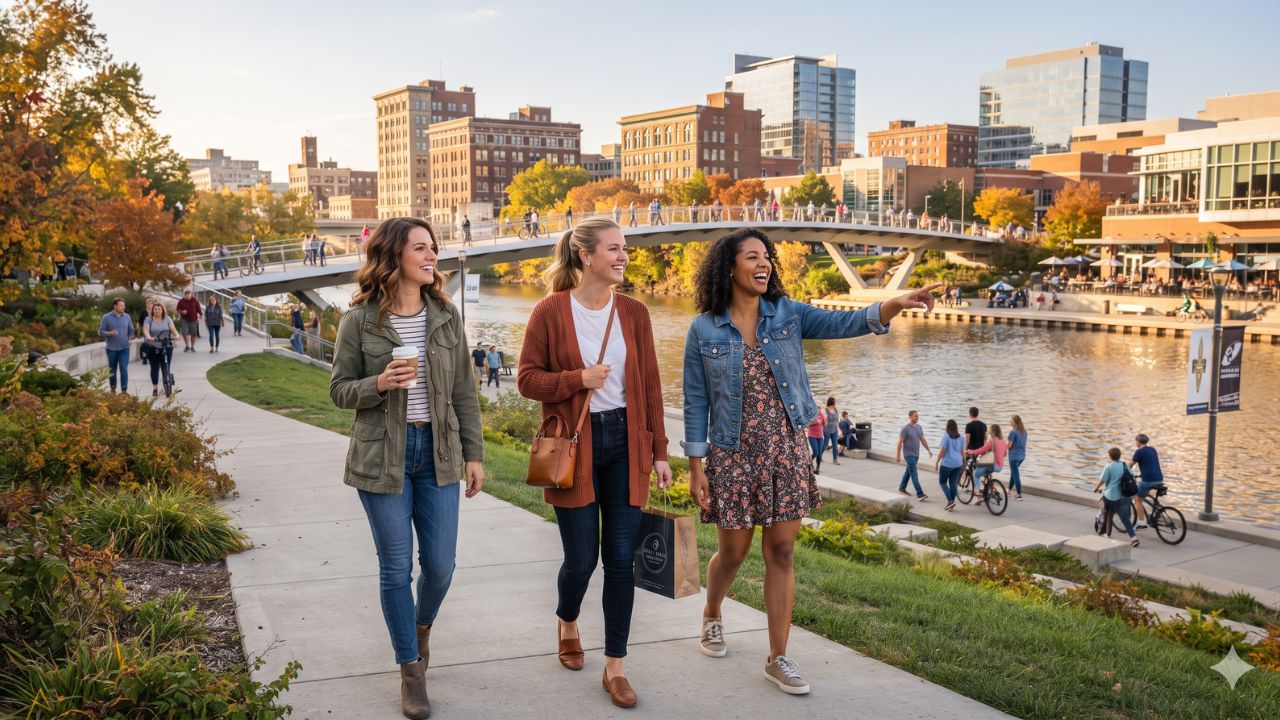
Indianapolis downtown waterfront and commercial center during peak Midwest travel period
Generating £13.5 billion in direct visitor expenditures across 83.3 million annual person trips, Indiana’s travel economy has achieved a 4.7% year-over-year expansion, surpassing pre-pandemic records. The performance reflects a systematic shift from passive sightseeing toward high-yield sports infrastructure, corporate convention clusters, and regional road-trip capture. Backed by an advertising return of £25.60 in direct visitor spend for every single pound deployed in promotional initiatives, the Hoosier State has positioned its urban and suburban corridors to retain visitor capital within local municipal borders.
Structural Growth Drivers: Convention Scale, Youth Athletics, and Suburban Luxury Corridors
The primary engine of Indiana's tourism economy remains Marion County, where the capital city of Indianapolis generated £5.12 billion in direct visitor spending. Welcoming 30.5 million visitors annually, Indianapolis supports approximately 78,000 direct and indirect positions while contributing £2.4 billion in total wages across the metropolitan workforce. The capital's economic stability rests on long-term investments in integrated sports and convention facilities, anchored by the Indiana Convention Center and marquee athletic competitions including the Indianapolis 500 and NCAA tournaments. Major corporate gatherings, such as the National FFA Convention & Expo, provide multi-day room block commitments that insulate downtown hotels from seasonal leisure volatility.
North of the capital, Fort Wayne in Allen County has built a specialized regional tourism model centered on youth athletic tournaments and downtown riverfront development. By constructing modern athletic complexes capable of hosting large regional soccer, baseball, and basketball competitions, Fort Wayne attracts thousands of traveling families for multi-day weekend stays. These tournaments drive sustained occupancy across northeast Indiana hotels and dining corridors, fed by drive-market arrivals from Ohio, Michigan, and Illinois. Complementing youth athletics, Fort Wayne’s riverfront park expansions and downtown hotel investments have extended visitor dwell times and broadened regional retail spending.
Further diversification occurs in northern suburban enclaves and southern river valleys. In Hamilton County, Carmel commands premium per-visitor yields through cultural assets like the Center for the Performing Arts, combined with boutique lodging, high-end retail, and corporate headquarters that generate steady weekday executive travel. In St. Joseph County, South Bend leverages University of Notre Dame football weekends and academic events to push average daily lodging rates to annual highs, supported by targeted heritage investments such as a £40,000 state preservation grant for the Studebaker National Museum. In southwestern Indiana, Evansville and Vanderburgh County anchor Ohio River leisure through gaming facilities and regional entertainment draws, highlighted by the £16 million Cannonball Water Coaster investment at Holiday World & Splashin’ Safari.
Statewide, public promotional coordination led by Visit Indiana and the Indiana Destination Development Corporation (IDDC) has maximized regional visibility. Operating under the "IN Indiana" promotional banner, state campaigns have targeted high-density drive markets in Chicago, Cincinnati, Detroit, and Louisville. By incentivizing short-haul travelers to convert single-day excursions into multi-night stays, local jurisdictions ensure that nearly two-thirds of all gross visitor spending remains directly within municipal tax boundaries.
Regional Tourism Performance and County-Level Economic Contributions
The table below breaks down visitor volume, direct spending, key infrastructure assets, and employment metrics across Indiana's leading county travel corridors.
| County & Urban Anchor | Annual Visitor Volume | Direct Visitor Spending | Workforce & Wage Impact | Core Infrastructure & Event Catalysts | Regional Feeder Corridors |
|---|---|---|---|---|---|
| Marion County (Indianapolis) | 30.5 million visitors | £5.12 billion direct spend | 78,000 jobs; £2.4 billion in wages | Indiana Convention Center, Indianapolis Motor Speedway, NCAA, National FFA | Nationwide corporate, convention, and major sports routes |
| Allen County (Fort Wayne) | Regional tournament volume | High multi-day leisure spend | Multi-sector hospitality support | Modern youth sports facilities, Promenade Park riverfront development | Short-haul drive traffic from Ohio, Michigan, and Illinois |
| Hamilton County (Carmel) | High-yield corporate/arts travel | Top per-capita spending | Executive hospitality & dining | Center for the Performing Arts, boutique hotel additions, corporate campuses | Northern Indianapolis suburban business & luxury corridors |
| St. Joseph County (South Bend) | Seasonal weekend surges | Elevated peak lodging rates | Academic & heritage employment | University of Notre Dame athletics, £40,000 Studebaker Museum grant | Direct transport links capturing Chicago metropolitan traffic |
| Vanderburgh County (Evansville) | Cross-border regional leisure | Multi-county tax generator | Regional gaming & outdoor jobs | £16M Cannonball Water Coaster at Holiday World, Ohio River recreation | Multi-state tri-state border traffic (Kentucky, Illinois) |
| Statewide Totals (Indiana) | 83.3 million person trips | £13.5 billion direct spend | 210,000+ jobs; £25.60 ROI per £1 | "IN Indiana" campaign, agritourism trails, state park systems | Short-haul drive markets: Chicago, Cincinnati, Detroit, Louisville |
Statewide travel and tourism activity supports over 210,000 direct and indirect jobs, spanning hotel operations, culinary arts, retail, and regional transportation services.
Expert Analysis: Local Tax Retention, Drive-Market Economics, and Hospitality Pricing
For travelers booking this route, the direct consequence of Indiana's sports and convention clustering is extreme lodging price volatility during marquee event weekends. In Indianapolis and South Bend, hotel operators employ aggressive dynamic yield-management pricing. When the Indianapolis 500, major NCAA championship rounds, or Notre Dame home football games coincide with convention schedules, entry-level room rates in metropolitan cores frequently surge three to four times above baseline mid-week levels. Securing accommodations requires booking several months in advance or shifting lodging reservations toward secondary suburban perimeters along Interstate 69 or Interstate 465.
The pricing pressure this creates means traveling families and independent tourists must absorb elevated municipal lodging surcharges alongside rising base rates. Indiana counties rely heavily on county innkeeper's taxes, food-and-beverage levies, and car rental taxes to fund municipal civic projects without burdening residential property owners. While this fiscal structure shields local taxpayers, it shifts infrastructure costs onto transient visitors. In high-density travel corridors like Marion and Hamilton counties, combined state and local lodging taxes routinely add 10% to 17% onto total room charges.
Simultaneously, the economic durability of Indiana's tourism sector stems from its auto-mobility advantage. Situated within a single-day drive of four major Midwestern metropolitan hubs—Chicago, Cincinnati, Detroit, and Louisville—Indiana remains insulated from disruptions in commercial aviation schedules, airline capacity cuts, and volatile jet fuel surcharges. When consumer airline ticket prices spike, regional travelers pivot toward personal vehicle road trips, directing their leisure budgets toward boutique accommodations, independent restaurants, and craft beverage trails rather than costly flight itineraries.
Looking toward long-term returns, the state's marketing efficiency—evidenced by a £25.60 return on investment for each advertising pound spent—proves that coordinated regional branding yields tangible economic dividends. By directing capital grants into heritage preservation, such as the £40,000 allocation to South Bend's Studebaker National Museum, and expanding outdoor trail connectivity along the Ohio River valley, Indiana has built an itinerary model that balances high-intensity downtown event hosting with distributed rural and suburban exploration.
Key Takeaways
- Record-Breaking Economic Impact: Direct visitor spending in Indiana reached £13.5 billion, marking a 4.7% increase that pushed tourism revenues past pre-pandemic highs.
- Massive Statewide Scale: Over 83.3 million annual person trips took place across Indiana, supporting more than 210,000 hospitality, culinary, and transport jobs.
- Indianapolis Drives Capital Yields: Marion County drew 30.5 million visitors and £5.12 billion in direct expenditures, backing 78,000 jobs and £2.4 billion in worker earnings.
- Exceptional Marketing Efficiency: The state's destination marketing initiatives generated £25.60 in direct visitor spending for every single pound invested in advertising.
- Midwest Drive-Market Dominance: Auto-mobility from Chicago, Cincinnati, Detroit, and Louisville insulates the regional tourism economy from commercial airline disruptions while keeping two-thirds of revenue local.
FAQ: Indiana Tourism Economy 2026
What was the total direct visitor spending across Indiana in 2026?
Official economic data confirms direct visitor spending reached £13.5 billion, reflecting a 4.7% year-over-year increase that surpassed pre-pandemic records across 83.3 million person trips.
How much economic activity does tourism generate in Indianapolis?
Marion County generated £5.12 billion in annual direct visitor expenditures from 30.5 million visitors, supporting roughly 78,000 jobs and £2.4 billion in total wages.
What return on investment does Indiana's tourism marketing achieve?
State-level destination promotional campaigns under the "IN Indiana" initiative generated £25.60 in direct traveler expenditures for every single pound spent on advertising.
What are the primary drive markets feeding Indiana's travel economy?
Indiana's visitor base relies heavily on automotive travel from nearby Midwestern metropolitan centers, primarily Chicago, Cincinnati, Detroit, and Louisville.
Travelers exploring Indiana should balance major city event calendars with suburban and rural scenic corridors to secure competitive lodging rates.
Related Travel Guides
Pennsylvania US States Tourism Economy Growth Report 2025–2026
FIFA World Cup 2026 Sparks Tourism Surge Across 1000 US Counties: Industry Targets 100M Visitors
The 10 Best Midwest Road Trips and Scenic Drives, According To Reddit
Disclaimer
This article is for informational and educational purposes only. It does not constitute legal, financial, or professional advice. While we strive to provide accurate and up-to-date information, travel policies, regulations, and conditions change rapidly. Always verify information with official sources before making travel decisions. Nomad Lawyer makes no representations about the accuracy, reliability, completeness, or suitability of the information provided. Readers should consult qualified professionals for advice specific to their circumstances. The views expressed in this article are those of the author and do not necessarily reflect the views of Nomad Lawyer.
Kunal K Choudhary
Co-Founder & Contributor
A passionate traveller and tech enthusiast. Kunal contributes to the vision and growth of Nomad Lawyer, bringing fresh perspectives and driving the community forward.
Learn more about our team →