South Korea and Asia Expand Regional Flight Networks: Provincial Airport Travel Guide 2026

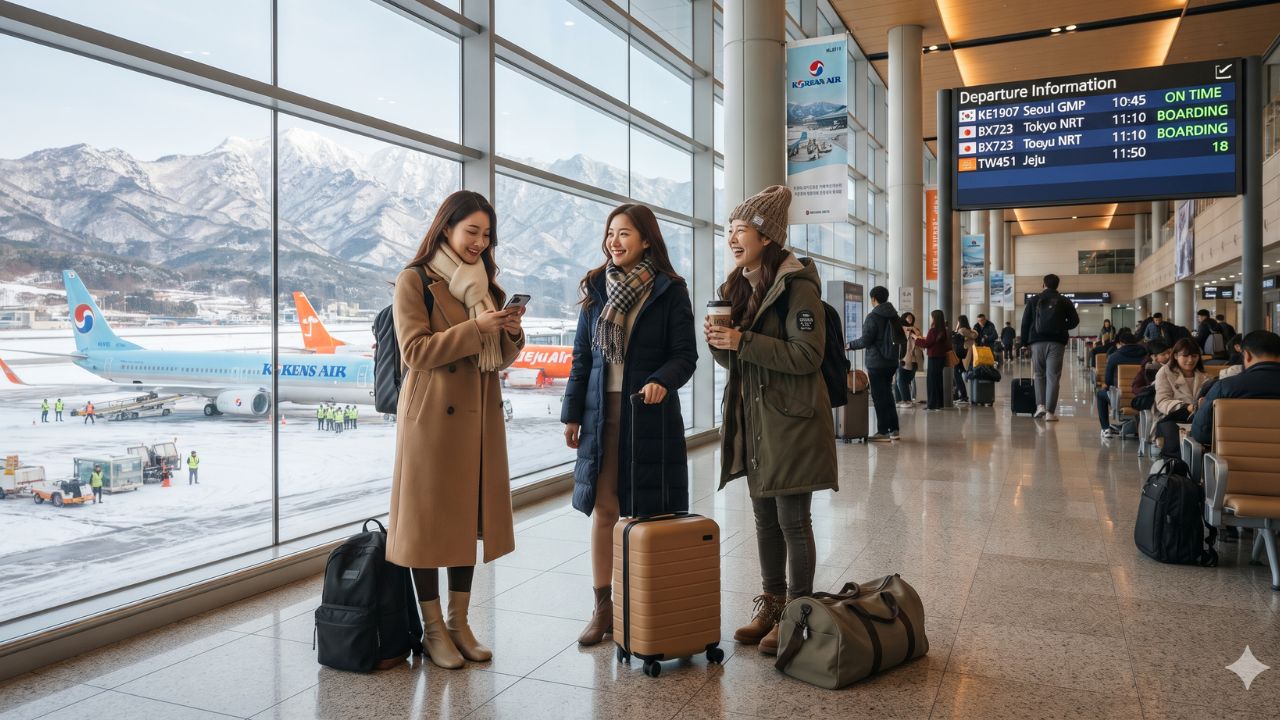
While international flight schedules across major East Asian capital hubs show flat or declining growth, provincial airports are quietly absorbing record route expansions. In South Korea, weekend aircraft movements at regional Cheongju Airport have jumped from 144 to 180 slots under a national winter aviation plan scheduling up to 5,353 weekly international passenger flights across 264 routes serving 44 countries. Rather than funneling every foreign traveler through congested terminals in Seoul Incheon or Tokyo Haneda, regional air networks are directing international travelers into provincial cities, delivering direct access to heritage sites, coastal towns, and mountain parks.
This decentralized aviation shift is transforming itineraries across Asia. From central Vietnam and southern Thailand to prefectural Japan and China's inland scenic hubs, provincial runways are reshaping winter travel by eliminating domestic connection delays and placing travelers directly into regional communities.
Provincial Runways Over Capital Hubs: The Shifting Asian Winter Network
For decades, visiting East and Southeast Asia meant an identical transit routine: landing at a sprawling capital hub, clearing long border queues, and transferring to domestic flights or trains. Today, regional civil aviation authorities are actively redistributing international flight paths.
South Korea's winter plan expands capacity at Gimhae International Airport in Busan and Cheongju International Airport in North Chungcheong Province. Raising Cheongju's weekend movement ceiling from 144 to 180 slots provides airlines space to schedule regional flights, turning this airfield into an accessible doorway for central Korea.
Japan displays an even sharper contrast. Transport ministry data shows that while nationwide international flights in the first week of the winter schedule fell 3 percent compared to 2025, international passenger services at regional airports grew 7 percent. Scheduled routes to China declined sharply, but services connecting regional Japanese cities with South Korea, Malaysia, and India increased.
Arrival statistics highlight this geographic rebalancing. Japan recorded roughly 3.1 million international arrivals in September 2026, down 5 percent from September 2025. Yet seven source markets reached record September totals, including South Korea, India, and Singapore. The Japan National Tourism Organization continues encouraging these arriving visitors to explore regional prefectures rather than concentrating exclusively along the Tokyo-Kyoto corridor.
What Makes Regional Gateway Travel Different: Beyond Mega-Hub Terminals
Landing at a secondary airport delivers an immediate local atmosphere. At Cheongju, travelers clear customs in under twenty minutes, stepping out near Songnisan National Park, ancient Beopjusa Temple, and rural fermentation villages. Supported by the Korea Tourism Organization, these regional hubs allow visitors to begin cultural exploration immediately upon touchdown.
At Gimhae International Airport, passengers arrive minutes from Busan's Jagalchi fish market and a short express ride from the ancient Silla tombs in Gyeongju. In central Vietnam, Da Nang International Airport serves as a coastal gateway between the historic streets of Hoi An and the imperial halls of Hue.
In Thailand, air networks are expanding outward. Air India Express launched a twice-weekly route connecting Visakhapatnam and Bangkok on 27 October 2026. Thailand's tourism authority logged nearly 1.9 million Indian arrivals between January and 26 October 2026, steering visitors beyond the capital into Ayutthaya, Phang-nga, Chiang Mai, and Chiang Rai. In Phuket, Virgin Atlantic launched a seasonal three-times-weekly service from London Heathrow on 19 October 2026, running through 26 March 2027 to provide 774 inbound weekly seats. The Tourism Authority of Thailand notes that UK visitors average 14.18 days per trip, spending approximately 61,615 baht.
Winter Route Expansions Across Regional Asia
The table below illustrates how civil aviation authorities and airlines have adjusted winter flight capacities across key regional Asian markets.
| Aviation Market | Total International Capacity | Regional Gateway Adjustments | Key Growth Metrics & Inbound Shifts |
|---|---|---|---|
| South Korea | Up to 5,353 weekly flights across 264 routes in 44 countries | Cheongju weekend movements raised from 144 to 180; Gimhae capacity expanded | Regional routes grow faster than Incheon; direct access to Chungcheong and Busan |
| Japan | Overall international services down 3% in first week of winter schedule | Regional airport international services up 7% | China routes decline; South Korea, Malaysia, and India expand; 3.1M September arrivals (-5% YoY) with records from South Korea, India, Singapore |
| Thailand | Nationwide long-haul and regional route additions | Visakhapatnam–Bangkok starts 2x weekly; London Heathrow–Phuket adds 774 seats/week | Nearly 1.9M Indian arrivals through 26 Oct 2026; UK travelers average 14.18 days stay and 61,615 baht spend |
| Vietnam | 17.7M international arrivals in 9 months (+14.5% YoY; >80% by air) | Da Nang–Singapore daily (42 weekly returns); Hanoi–Ahmedabad 4x weekly | Indian arrivals reached >670,000 (+33% YoY) in 9 months; Da Nang formalizes 2030 tourism pact |
| China | 16,654 weekly flights across 84 countries (CAAC schedule) | Inbound flights across 16 dedicated tourism routes up +45.9% | 15 major inbound markets up +14.4%; top 10 hubs gain share; routes include Busan–Zhangjiajie and Moscow–Haikou |
In Vietnam, Vietnam Airlines launches daily Da Nang–Singapore flights on 17 November 2026, bringing its Vietnam-Singapore network to 42 weekly return flights. On 3 November 2026, the carrier added four weekly return flights between Hanoi and Ahmedabad, expanding its Indian network to five destinations after Indian arrivals surged 33 percent to over 670,000 visitors. Total international arrivals reached roughly 17.7 million, with air travel accounting for more than four in five arrivals.
In China, the CAAC listed 16,654 weekly international passenger flights to 84 countries. Frequencies to 15 major inbound markets grew 14.4 percent, while services across 16 dedicated tourism routes jumped 45.9 percent, connecting origins like Busan to Zhangjiajie and Moscow to Haikou, even as top 10 hubs absorbed a larger total passenger share.
Visitor Insider Tips: Maximizing Secondary Gateways
- Cheongju Rail Connection: When arriving at Cheongju Airport, take a 10-minute taxi to Osong Station, a major KTX rail junction connecting to Seoul in 45 minutes or Gyeongju in under an hour.
- Busan Transit: From Gimhae Airport, board the light rail directly to Sasang Station to transfer to Busan Metro Line 2, avoiding morning road traffic into Seomyeon and Haeundae.
- Local Payment Systems: Regional taxis and rural shops often decline international credit cards. Buy a local transit card—like Korea's T-money or Japan's IC cards—inside airport convenience stores before departure.
- Da Nang Transfers: When traveling from Da Nang Airport to Hoi An, arrange a direct transfer with your lodging to secure standard rates along the 30-minute coastal route.
- Phuket Island Links: Speedboats from Phuket to Koh Yao and Phang-nga stop departures before dusk; schedule morning or mid-day flights if connecting onward to islands.
Cultural and Environmental Context: Regional Dispersal Versus Overtourism
Expanding provincial air links helps resolve heavy urban overtourism. Popular historic districts in Seoul, Kyoto, and Bangkok have faced crowded footpaths and strained public facilities. Direct provincial flights redistribute spending into regional communities where it supports family guesthouses, local restaurants, and craft workshops.
Da Nang's partnership with Vietnam Airlines through 2030 reflects this strategy, coordinating golf, culture, and culinary tours to create sustained stays. Distributing arrivals across regional airports also eases transit pressure on capital networks, though local authorities must safeguard delicate natural parks like Songnisan and Zhangjiajie through sustainable visitor management.
FAQ: Visiting Regional Asia Destinations 2026
What are the main benefits of flying into regional airports in Asia?
Regional gateways provide quick customs clearance, short walking distances, and direct access to local cultural and natural attractions without capital city transit delays.
How do I travel onward from Cheongju Airport?
A quick taxi brings you to Osong Station, a premier high-speed KTX hub with frequent bullet trains running north to Seoul and south to Busan.
Do regional airports have currency exchange and SIM card kiosks?
Yes. International regional terminals in Cheongju, Da Nang, and Phuket offer automated bank ATMs, local telecommunications counters, and ground transportation desks.
Do regional Asian destinations require separate regional entry visas?
No. Standard national visa policies apply. A valid visa or visa-free entry for South Korea, Japan, Thailand, or Vietnam covers arrival through any designated regional gateway.
Bypassing capital transit bottlenecks, Asia's regional flight networks open direct paths to provincial culture, mountain retreats, and coastal heritage.
Related Travel Guides
This article is for informational purposes. Flight routes, passenger regulations, visa rules, and transit advisories are subject to change by airlines and aviation authorities. Readers are advised to verify schedules and travel documentation with relevant carriers and border agencies before departure.
Related Stories

Discover Brunei Launches One-Stop Booking Platform: Visit Brunei Year 2027 Travel Guide

Indonesia Shields Holiday Flyers as Asia Faces Jet Fuel Squeeze: Travel and Airfare Guide 2026