
South Korea Airline Boom: Korean Air, Asiana Lead Recovery as Global Airfares Collapse in 2026
South Korea's aviation sector surges as Korean Air, Asiana Airlines, and Eastar Jet capitalize on stabilizing oil prices, plummeting airfares, and a tourism explosion across Asia-Pacific and beyond.

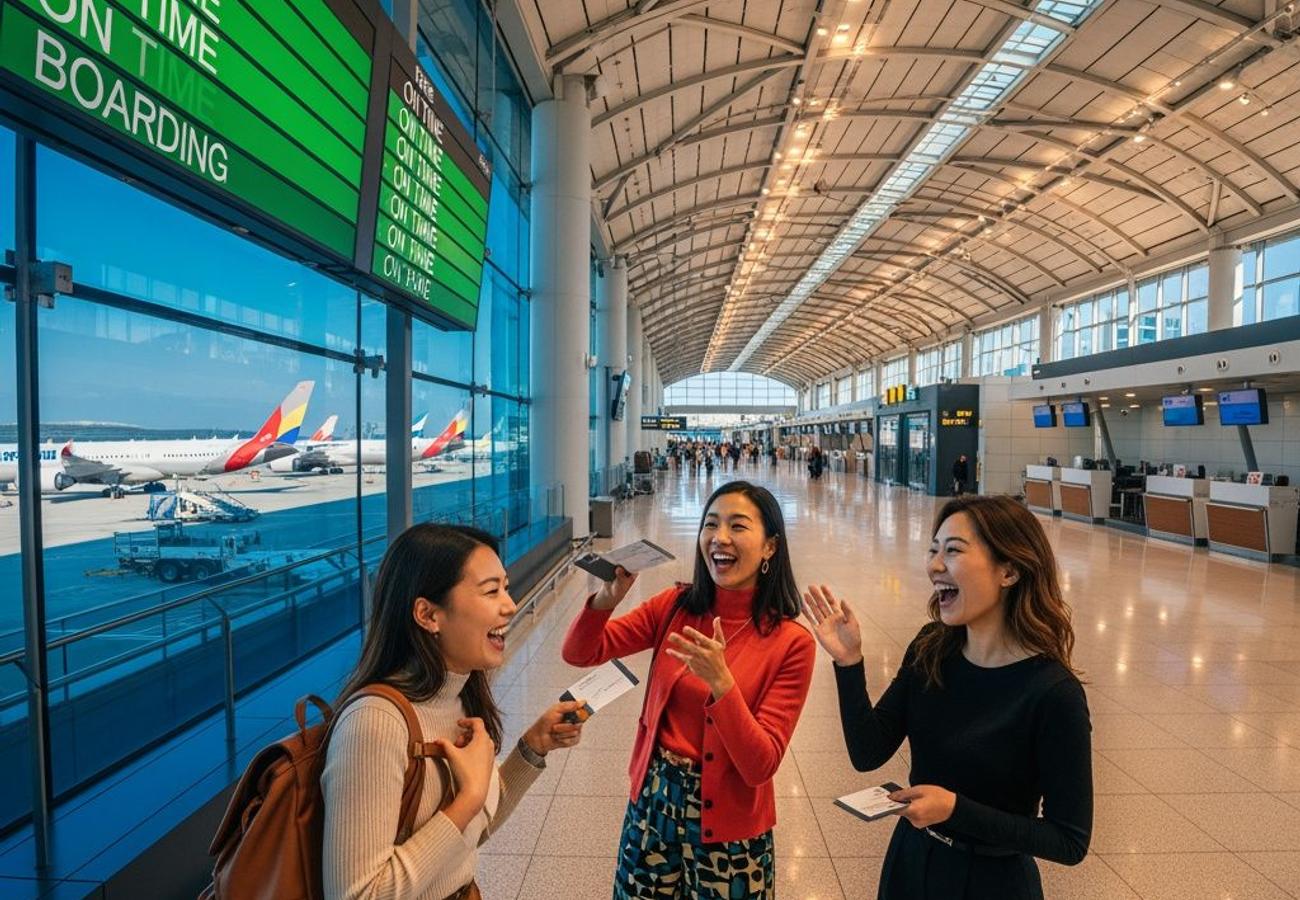
Image generated by AI
The Perfect Storm: Why Global Airfares Just Imploded
Something seismic just shifted in the aviation world. After months of relentless pressure from volatile energy markets and geopolitical uncertainty, the sector has hit an inflection point—and passengers are the beneficiaries.
Stabilising crude oil prices, easing international tensions, and improving foreign exchange conditions have collided simultaneously. The result? A synchronized global aviation recovery that's now reshaping ticket prices across every major route.
South Korea's three powerhouse carriers—Korean Air, Asiana Airlines, and Eastar Jet—are at the epicenter of this transformation, joining a wave of recovery that includes the United States, China, Japan, Singapore, Taiwan, Iran, and a dozen other major aviation markets.
The Fuel Surcharge Shock That's Reshaping Airfares
For years, fuel surcharges have been the villain in passenger budgets. These supplementary fees, once legitimately justified by volatile energy prices, had become embedded in every long-haul ticket.
Now they're collapsing.
As crude oil markets stabilize, carriers are aggressively reducing—or eliminating—fuel surcharges entirely. International routes to North America and Europe are experiencing the sharpest fare reductions, while intra-Asia connectivity is seeing steady, significant price drops.
This isn't a promotional gimmick. This is structural. Airlines with reduced operating costs are passing savings directly to consumers because the competitive pressure to fill seats at lower price points is enormous.
Reddit: "Just booked a Seoul-LAX ticket for $380 less than three months ago. Same date, same seat class. Something major just shifted." — r/travel
How South Korea's Airlines Are Winning
Korean Air is the first mover, aggressively expanding North American and European routes where demand is recovering at double-digit growth rates. The carrier is deploying fuel-efficient aircraft and increasing frequency on profitable leisure corridors.
Asiana Airlines is following a similar playbook, optimizing fleet efficiency while maintaining medium and long-haul service standards. Both carriers are positioning themselves as premium regional alternatives while capturing price-sensitive leisure travelers through dynamic pricing models.
Eastar Jet, operating South Korea's low-cost segment, is experiencing the fastest growth trajectory. The carrier is expanding rapidly across Northeast and Southeast Asia, capitalizing on price sensitivity in emerging markets where the new lower airfares open travel access for first-time international passengers.
The Tourism Explosion Nobody Saw Coming
Lower tickets prices aren't just moving numbers on spreadsheets. They're moving people.
Tourism boards across Japan, Thailand, Vietnam, France, and Italy are reporting unprecedented booking momentum for summer and holiday travel. Southeast Asian destinations are particularly benefiting—airfare accessibility to secondary cities is opening entirely new traveler demographics.
This is the cascading effect of affordability: when price barriers drop, travel participation expands exponentially. First-time international travelers from India, Indonesia, and other emerging markets are now entering the global tourism ecosystem at scale.
The Low-Cost Carrier Renaissance
If there's a clear winner in this recovery cycle, it's the low-cost carrier segment.
Reduced fuel surcharges eliminate one of the LCC's historical cost disadvantages. When legacy carriers and LCCs are operating on similar fuel surcharge bases, the ultra-efficient operators win on price alone. Eastar Jet is proving this thesis in real time, expanding regionally while maintaining load factors above 80%.
The broader Asia-Pacific LCC network—including AirAsia, Lion Air, and regional competitors—is experiencing similar expansion. Secondary airports are now economically viable, and high-frequency short-haul networks are proving to be the fastest-growing aviation segment.
15 Countries Driving Synchronized Global Recovery
This recovery isn't isolated. It's systemic across major economies:
United States (long-haul and domestic rebound), China (post-reopening international surge), Japan (inbound tourism peak), Singapore (hub strength), Taiwan (regional connectivity), Iran (geopolitical stabilization), Thailand (tourism-led boom), India (expanding middle class), Australia (outbound recovery), Germany (business travel rebound), France (cultural tourism resurgence), United Kingdom (transatlantic stability), Malaysia (LCC network growth), Indonesia (domestic expansion), and South Korea.
Each market is reinforcing global demand, creating a powerful feedback loop that's extending recovery timelines and widening profit margins.
What Airlines Are Actually Doing With This Window
Don't mistake falling ticket prices for airline desperation. Strategic carriers are being calculating about opportunity.
Expansion of high-demand international routes, increased frequency on leisure corridors, deployment of fuel-efficient aircraft, focus on secondary city connectivity, and aggressive ancillary revenue strategies (baggage, upgrades, seat selection) are all being executed simultaneously. Airlines are capturing the recovery through volume and optimization, not price alone.
This is a transition from survival-driven operations to growth-oriented strategy. It matters.
The Real Story: Passenger Confidence Is Back
Financial projections matter less right now than behavioral signals. Airlines are reporting stronger forward bookings, particularly for Q3 and Q4 travel seasons. Load factors—the percentage of seats actually filled—are climbing across international networks.
This confidence isn't fragile. It's being reinforced by multiple variables: visible fare reductions, improved geopolitical sentiment, currency tailwinds in key markets, and the natural human desire to travel after periods of constraint.
South Korea's position in this recovery is particularly strategic. As an economic and tourism powerhouse with three major carriers executing different strategies (premium, full-service, and low-cost), the country is capturing leisure travelers, business passengers, and price-sensitive emerging-market travelers simultaneously.
The aviation recovery isn't coming—it's already here, and the real winners are frequent flyers with flexible dates.
Related Travel Guides
Disclaimer
This article is for informational and educational purposes only. It does not constitute legal, financial, or professional advice. While we strive to provide accurate and up-to-date information, travel policies, regulations, and conditions change rapidly. Always verify information with official sources before making travel decisions. Nomad Lawyer makes no representations about the accuracy, reliability, completeness, or suitability of the information provided. Readers should consult qualified professionals for advice specific to their circumstances. The views expressed in this article are those of the author and do not necessarily reflect the views of Nomad Lawyer.
Preeti Gunjan
Contributor & Community Manager
A passionate traveller and community builder. Preeti helps grow the Nomad Lawyer community, fostering engagement and bringing the reader experience to life.
Learn more about our team →