
Mega-Merger Alert: Korean Air and Asiana Airlines Enter Final Integration Phase to Reshape Global Aviation and Prevent Future Travel Chaos Across Asia
Korean Air and Asiana Airlines enter the final phase of their strategic merger, targeting a December 2026 integration to create a dominant global aviation powerhouse.

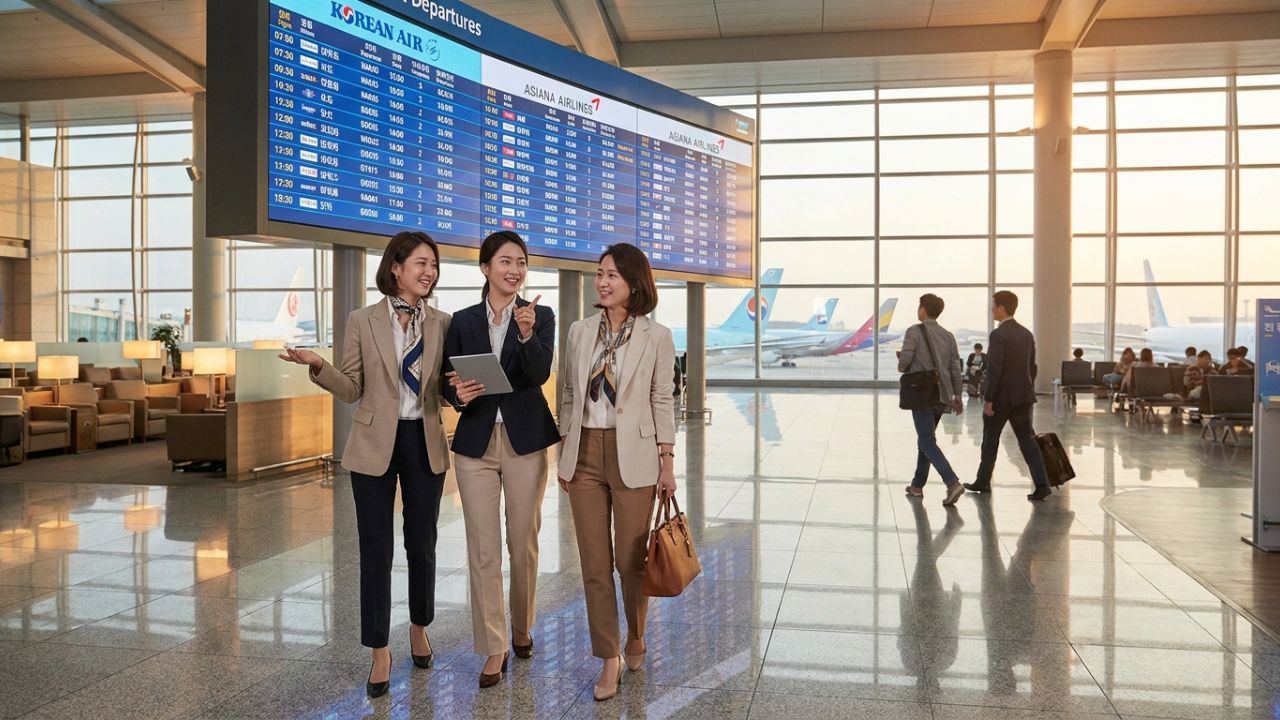
Image generated by AI
In a definitive move that is set to realign the global civil aviation landscape, the historic mega-merger between Korean Air and Asiana Airlines has officially entered its final integration phase. This monumental airline news update comes as both carrier boards granted their formal approval on May 13, 2026, followed by the high-stakes signing of the integration contract on May 14. With a final integration date now locked in for December 17, 2026, the industry is bracing for the birth of a South Korean "super-carrier" designed to dominate the transpacific corridors and provide a strategic buffer against the type of travel chaos and flight cancellations that often plague fragmented regional markets.
Breaking: The Sky-High Consolidation of Seoul’s Giants
The strategic combination of Korean Air and Asiana Airlines represents far more than a simple corporate takeover; it is a fundamental restructuring of the Northeast Asian travel market. By unifying the strengths of these two global networks, South Korea aims to create a powerhouse that can challenge the world’s top-tier carriers in terms of international passenger volume and cargo capacity.
As the aviation updates continue to roll in, the focus has shifted to the meticulous operational integration required to ensure that the December 17 transition does not trigger airport disruptions at Seoul’s Incheon International Airport. The combined entity is projected to control approximately 50% of the local market, commanding half of all domestic and international passenger movements departing from the peninsula.
Section-Wise Breakdown: The Road to December 17
Regulatory Milestones and the June Operational Pivot
The merger has cleared significant hurdles, but the paperwork remains intensive. On May 14, 2026, Korean Air filed its formal merger application with South Korea’s Ministry of Land, Infrastructure and Transport. Looking ahead to June 2026, the carrier plans to submit a critical application for the amendment of its Operations Specifications. This technical step will officially expand Korean Air’s Air Operator’s Certificate (AOC) to include Asiana’s diverse fleet and safety systems, a move essential for preventing any post-merger flight cancellations due to certification gaps.
The Shareholder Mandate: August 2026 Extraordinary Meeting
While the boards have signaled their intent, the final democratic hurdle lies with the investors. Asiana Airlines has scheduled an extraordinary general meeting for August 2026. During this session, shareholders will cast the deciding votes on the merger proposal. Without this formal approval, the multi-billion dollar deal would face a catastrophic stall, though analysts predict a favorable outcome given the strategic necessity of the tie-up.
International Concessions: Satisfying the Global Watchdogs
To secure the blessing of international regulators, Korean Air has had to offer several major concessions. These "fair competition" safeguards are designed to prevent a monopoly on lucrative long-haul routes, particularly those heading to Europe and North America.
| Regulatory Authority | Condition / Concession | Purpose |
|---|---|---|
| European Commission | Surrender of certain European routes | To maintain competitive market access |
| South Korean Authorities | Divestment of Asiana’s cargo business | Prevent cargo market concentration |
| US Aviation Review Bodies | Fair competition safeguards | Ensure transpacific route balance |
Strategic Data: The Financial and Operational Blueprint
The terms of the merger reflect a calculated share swap and a significant capital infusion designed to stabilize the new entity's balance sheet.
- Integration Date: 17 December 2026
- Share Swap Ratio: 1 Korean Air share for 0.2736432 Asiana Airlines shares
- Expected Capital Increase: Approximately KRW 101.7 billion (USD 68.3 million)
- Target Certification: Comprehensive amendment of Korean Air’s existing Air Operator’s Certificate
Passenger Impact: Loyalty, Luxury, and Logistics
For the millions of travelers who frequent the Seoul hub, the merger promises a more streamlined experience, though it requires careful management to avoid airport disruptions.
- Unified Loyalty Programs: Frequent flyers will see the merging of Korean Air’s SKYPASS and Asiana’s Asiana Club. This will offer members a significantly larger network for miles redemption and tier benefit recognition.
- Consistent Service Standards: Korean Air has indicated plans to standardize cabin products across the inherited Asiana fleet, ensuring that whether you are on a Boeing 787 or an Airbus A350, the "Korean Excellence" service remains uniform.
- Job Security: In a move that has stabilized the local labor market, Korean Air has confirmed that all Asiana Airlines employees will be retained. This commitment is vital for maintaining operational morale and preventing the staffing-related travel chaos seen during previous global airline mergers.
Industry Analysis: The Birth of a Global Powerhouse
The creation of this unified Korean entity is a direct response to the evolving competition in the Asian aviation sector. With Chinese carriers expanding rapidly and Middle Eastern giants like Emirates and Qatar Airways siphoning transit traffic, South Korea needed a single, massive carrier to defend its Incheon hub.
Consolidation allows for better fleet utilization and reduced overhead through unified procurement. By removing the internal rivalry between the two Seoul-based carriers, the merged airline can focus its resources on negotiating stronger global partnerships and attracting more transit passengers from Southeast Asia and the Americas.
Conclusion: A New Era for the Incheon Hub
As Korean Air and Asiana Airlines move toward their December 17, 2026, integration, the global aviation community is watching a masterclass in strategic consolidation. While the path involves difficult concessions—such as the divestment of cargo operations and the surrender of European slots—the result will be a leaner, more powerful carrier capable of weatherproofing the industry against future travel chaos. For the passenger, the employee, and the investor, the merger represents the dawn of a new era in East Asian connectivity, where Seoul stands as the undisputed gateway to the Pacific.
Key Takeaways
- Integration Deadline: The merger will be fully operational by December 17, 2026.
- Board Approval: Both carriers signed the final contract on May 14, 2026.
- Shareholder Vote: A critical extraordinary general meeting is set for August 2026.
- Market Dominance: The new carrier will control 50% of the South Korean aviation market.
- Employee Retention: All Asiana staff will be transferred to the new unified entity.
- Concession Strategy: Major cargo divestments and route surrenders are underway to satisfy EU and US regulators.
Related Travel Guides
Disclaimer
This article is for informational and educational purposes only. It does not constitute legal, financial, or professional advice. While we strive to provide accurate and up-to-date information, travel policies, regulations, and conditions change rapidly. Always verify information with official sources before making travel decisions. Nomad Lawyer makes no representations about the accuracy, reliability, completeness, or suitability of the information provided. Readers should consult qualified professionals for advice specific to their circumstances. The views expressed in this article are those of the author and do not necessarily reflect the views of Nomad Lawyer.
Kunal K Choudhary
Co-Founder & Contributor
A passionate traveller and tech enthusiast. Kunal contributes to the vision and growth of Nomad Lawyer, bringing fresh perspectives and driving the community forward.
Learn more about our team →