
Modern Combat Aviation: Why Today's Fighter Jets Are Deliberately Designed Slower Than Their Cold War Predecessors
Breaking airline news and aviation industry updates for 2026.

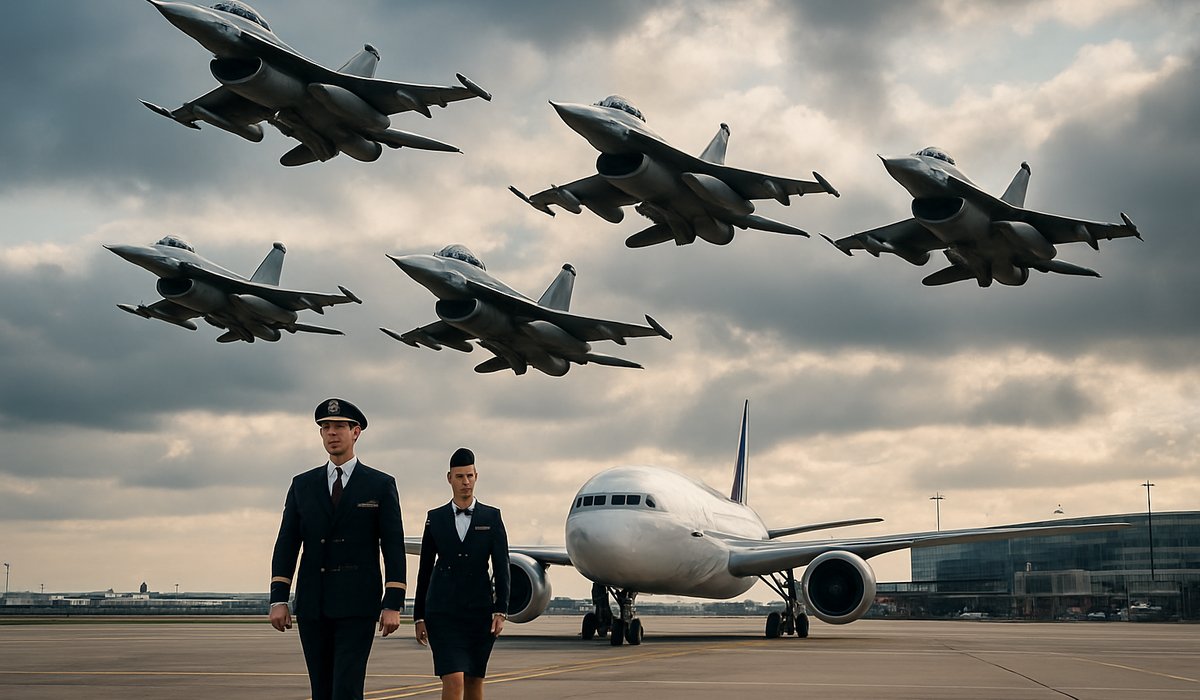
Image generated by AI
Modern Combat Aviation: Why Today's Fighter Jets Are Deliberately Designed Slower Than Their Cold War Predecessors
Military strategists abandon hypersonic ambitions as operational data reveals speed beyond Mach 2 reduces combat effectiveness
The Mach 2 Paradox: Why Faster Isn't Always Better
The aerospace industry's understanding of fighter jet performance has undergone a fundamental shift in recent decades. What emerged from Cold War-era thinking—that maximum speed represented the ultimate competitive advantage—has been thoroughly challenged by real-world combat analysis and operational experience.
When the United States conducted comprehensive assessments of aerial engagements during the Vietnam War, military planners uncovered a counterintuitive finding: combat speeds exceeding Mach 1.8 were rarely, if ever, utilized in actual dogfights. This discovery fundamentally reshaped procurement strategies and design philosophies across the global aviation defense sector.
The Physics of Operational Reality
The reasons behind this shift reveal critical trade-offs inherent in aircraft design. Sustained flight at hypersonic velocities dramatically depletes fuel reserves, significantly reducing an aircraft's operational range and combat radius—factors that prove decisive in modern military operations. Additionally, extreme speeds compromise maneuverability, the very attribute that often determines engagement outcomes in close-quarters aerial combat.
These aerodynamic constraints forced defense contractors and military engineers to reassess priorities. Rather than chasing marginal speed gains, contemporary fighter development emphasizes balanced performance characteristics: adequate velocity paired with superior agility, endurance, and sensor integration.
The F-35 Case Study: Strategic Recalibration
The evolution of the F-35 Lightning II exemplifies this strategic recalibration. Originally conceived with a maximum design velocity of Mach 1.8, the specifications were subsequently reduced to Mach 1.6 during development phases. This deliberate reduction wasn't an engineering failure but rather a calculated decision reflecting lessons learned from decades of combat operations and tactical analysis.
The F-35, today's most technologically sophisticated fighter platform, demonstrates that modern air superiority depends less on raw speed and more on advanced avionics, sensor fusion capabilities, stealth characteristics, and tactical networking—attributes that define contemporary aerial dominance.
Broader Industry Implications
This conceptual shift carries profound implications for military procurement, defense budgets, and geopolitical power dynamics. Nations investing in next-generation fighter programs now prioritize multi-domain capabilities over singular performance metrics. The pivot away from hypersonic design priorities reflects matured military thinking and evidence-based operational doctrine.
Frequently Asked Questions
What is Mach 2 in fighter jets, and why was it once considered critical? Mach 2 equals twice the speed of sound (approximately 1,320 mph). During the Cold War, maximum velocity was viewed as essential for combat superiority and interception capabilities.
Why don't modern fighter jets prioritize speed above Mach 2? Combat analysis from Vietnam and subsequent conflicts revealed that excessive speed reduces fuel efficiency, operational range, and aircraft maneuverability—all factors more valuable in actual engagements.
How does the F-35's Mach 1.6 design speed compare to earlier fighter generations? While slower than Cold War fighters, the F-35 compensates through advanced avionics, stealth technology, sensor integration, and networked warfare capabilities that provide tactical advantages.
What are the current priorities in fighter jet design if not maximum speed? Modern fighter development emphasizes maneuverability, sensor fusion, multi-role versatility, reduced radar signatures, and networked interoperability with allied forces.
Which active fighter jets can still exceed Mach 2? Several legacy platforms retain hypersonic capabilities, though operational protocols rarely exploit these upper-speed envelopes due to the tactical disadvantages outlined in modern combat doctrine.
Related Travel Guides
Flight Delay Compensation Guide 2026
Understanding Airline Route Changes
Airport Security Process Updated (2026)
External Resources
Disclaimer
This article is for informational and educational purposes only. It does not constitute legal, financial, or professional advice. While we strive to provide accurate and up-to-date information, travel policies, regulations, and conditions change rapidly. Always verify information with official sources before making travel decisions. Nomad Lawyer makes no representations about the accuracy, reliability, completeness, or suitability of the information provided. Readers should consult qualified professionals for advice specific to their circumstances. The views expressed in this article are those of the author and do not necessarily reflect the views of Nomad Lawyer.
Kunal K Choudhary
Co-Founder & Contributor
A passionate traveller and tech enthusiast. Kunal contributes to the vision and growth of Nomad Lawyer, bringing fresh perspectives and driving the community forward.
Learn more about our team →