
Paignton Station Restores Full-Length Platform Access for Nine-Car GWR Services in 2026
Network Rail has reinstated full-length access to Platform 2 at Paignton station, allowing nine-carriage Great Western Railway services to resume following repairs from a July fire.

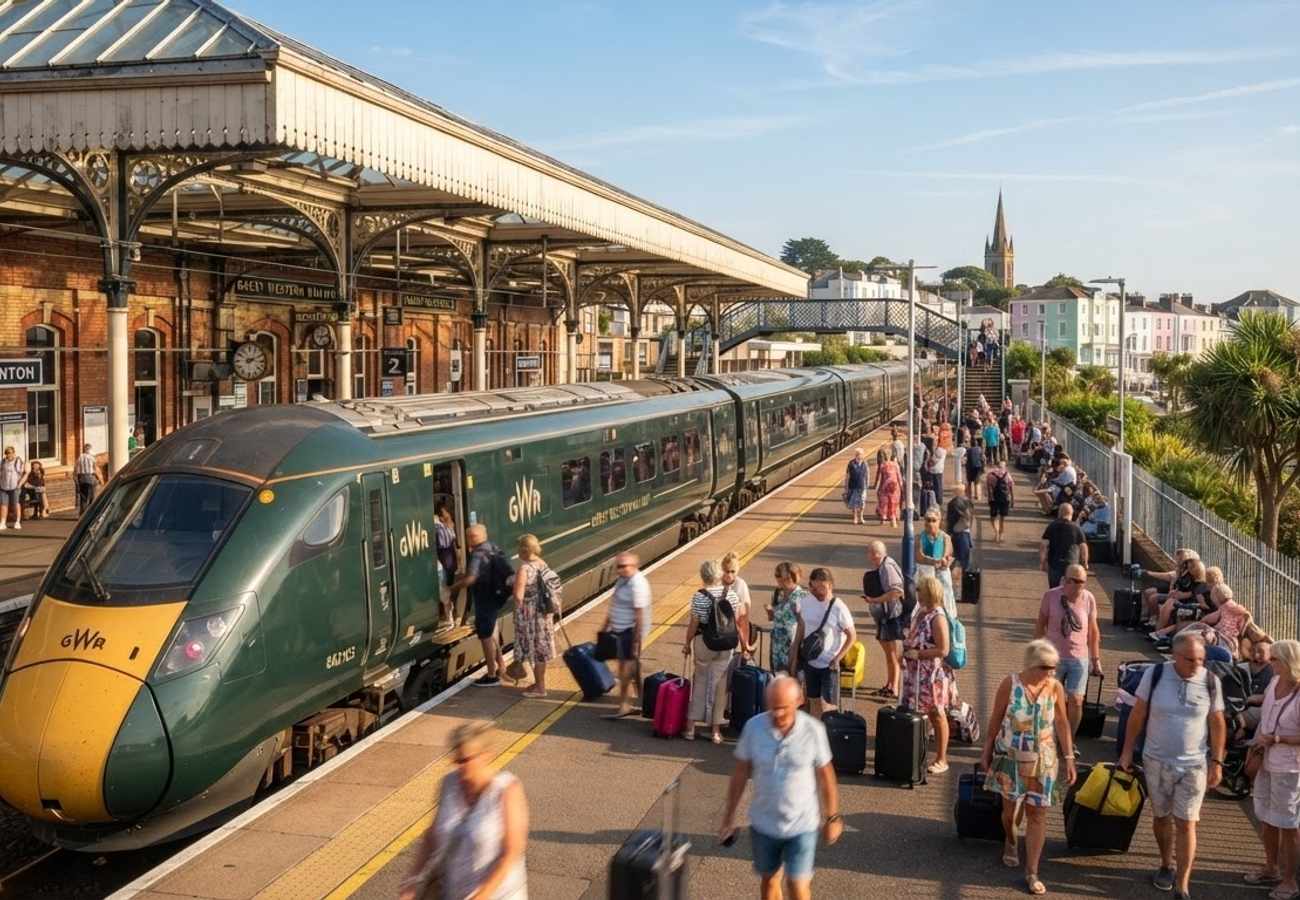
Image generated by AI
Full-length access at Paignton’s main GWR platform returns for nine-car services, improving summer capacity, reliability and connectivity across South Devon’s busy Riviera Line.
Network Rail has confirmed that full-length access to Platform 2 at Paignton station will be reinstated starting Monday, 24 August. This restoration follows extensive infrastructure repairs necessitated by a major fire in July. The project was completed several days ahead of schedule, a critical timing win as late-summer tourism demand peaks in the English Riviera.
The restoration immediately allows Great Western Railway (GWR) to resume running nine-carriage formations. Previously, these longer trains were curtailed due to the inaccessible section of the platform, creating capacity bottlenecks on the Riviera Line between Exeter, Torquay, and Paignton.
Operational Impact on the Riviera Line
Paignton serves as the southern terminus for GWR services and acts as a primary gateway for visitors to local beaches and attractions. The return of full platform length removes the need for selective door opening (SDO) and streamlines passenger flow for Intercity Express Trains traveling to and from London Paddington.
Our analysis of the route indicates that Paignton is linked to the Great Western Main Line via Newton Abbot and Exeter. The ability to deploy nine-car trains is essential for managing the high seasonal volumes typical of the South Devon coast.
Key Service Facts:
- Effective Date: Monday, 24 August.
- Affected Infrastructure: Platform 2, Paignton Station.
- Train Capacity: Nine-carriage GWR services reinstated.
- Route Frequency: Typically at least two trains per hour between Newton Abbot, Torquay, and Paignton.
- Primary Connection: Great Western Main Line via Newton Abbot and Exeter.
Regional Infrastructure Integration
The rapid repair of the Paignton platform is not an isolated event but fits into a wider investment strategy for rail in Devon and Cornwall. Regional transport bodies and GWR are currently implementing signaling upgrades and rolling stock modernization to increase overall resilience.
Market trends suggest a shift toward longer train formations to accommodate forecasted growth in rail demand. By removing the platform length constraint at the terminus, GWR can now fully utilize cascaded rolling stock and longer formations without operational restrictions.
Impact on Passenger Accessibility
From a logistical perspective, this restoration significantly benefits passengers with reduced mobility, families with pushchairs, and travelers with heavy luggage. National Rail data confirms the station provides step-free access to both platforms via level crossings and local streets. The ability to board or alight from any coach of a nine-car train simplifies the transit experience and reduces boarding congestion.
For the local economy, this ensures that the rail network can absorb peak flows of day-trippers visiting Paignton Zoo and the seafront, providing a viable alternative to the frequently congested road networks of South Devon.
Strategic Implications for Future Growth
The restoration of capacity at Paignton reinforces its role in the broader Great Western network. As a key destination for GWR’s bi-mode intercity fleet, the station's ability to handle full-length trains is vital for the resilience of cross-country and London-bound services.
Industry observers note that FirstGroup, the parent company of GWR, has proposed additional open-access services on the Great Western network. This could include extending more London Paddington operations toward Paignton. Having a fully operational long platform is a prerequisite for any such regulatory approval or timetable expansion.
The rapid return to full capacity at Paignton ensures the English Riviera remains accessible during its most critical tourism window.
Related Travel Guides
Disclaimer
This article is for informational and educational purposes only. It does not constitute legal, financial, or professional advice. While we strive to provide accurate and up-to-date information, travel policies, regulations, and conditions change rapidly. Always verify information with official sources before making travel decisions. Nomad Lawyer makes no representations about the accuracy, reliability, completeness, or suitability of the information provided. Readers should consult qualified professionals for advice specific to their circumstances. The views expressed in this article are those of the author and do not necessarily reflect the views of Nomad Lawyer.
Kunal K Choudhary
Co-Founder & Contributor
A passionate traveller and tech enthusiast. Kunal contributes to the vision and growth of Nomad Lawyer, bringing fresh perspectives and driving the community forward.
Learn more about our team →