
South American Airports Deploy Biometric Scanning Hubs Across Brazil Chile and Argentina in 2026
South American aviation hubs are replacing manual border checks with automated facial recognition and digital identity networks, raising critical questions regarding data sovereignty and passenger privacy.

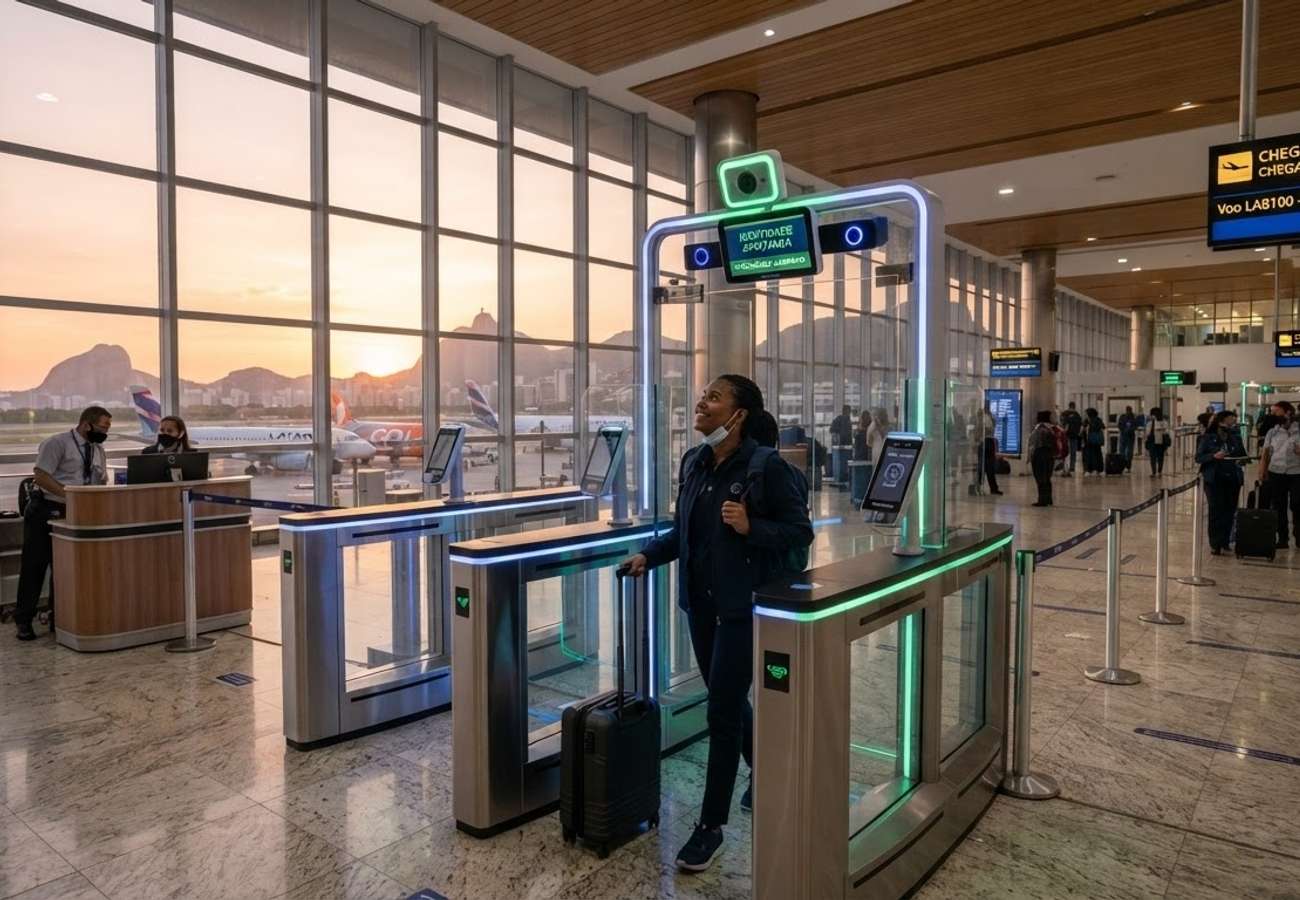
Image generated by AI
The transition from manual immigration checkpoints to automated biometric hubs is now active across major South American transit points. This shift drastically reduces processing times but introduces significant legal complexities regarding digital identity and data privacy.
The Shift to Automated Border Control
South American aviation hubs are rapidly phasing out traditional passport stamping in favor of automated facial recognition systems and centralized biometric databases. This regional modernization is driven by the MERCOSUR Digital Citizen Framework and national mandates, specifically Brazil’s Carteira de Identidade Nacional (CIN).
The objective is to create a paperless border environment where movement is determined by digitized systems rather than physical document inspection. While this increases throughput at high-density terminals, it shifts the nature of border security from human oversight to algorithmic determination.
The deployment of these systems is concentrated at primary international gateways and strategic land crossings:
- Brazil: São Paulo’s Guarulhos International Airport (GRU) and Rio de Janeiro’s Galeão International Airport (GIG) utilize the CIN to match passengers against Federal Police databases in real-time.
- Chile: Arturo Merino Benítez International Airport (SCL) in Santiago employs ICAO Public Key Directory (PKD) standards for cryptographic ePassport verification.
- Argentina: Ezeiza International Airport utilizes automated gates to clear passengers via cryptographic signatures on microchips, reducing manual handling.
- Land Borders: The Friendship Bridge (connecting Foz do Iguaçu, Brazil, to Ciudad del Este, Paraguay) has integrated digital verification to eliminate paperwork delays.
Technical Architecture and Compliance
The interoperability of these systems relies on International Civil Aviation Organization (ICAO) Doc 9303 standards. By using the Public Key Directory (PKD), biometric templates generated at one gate remain readable and secure across different national jurisdictions.
| Country / Protocol | Primary Identity Credential | Technical Architecture | Operational Focus | Primary Privacy Risk |
|---|---|---|---|---|
| MERCOSUR | National Digital ID | PKI Mutual Authentication | Cross-border verification | Unaligned legislative timelines |
| Brazil (GRU/GIG) | CIN | ICAO Doc 9303 / ISO 19794-5 | Automated control gates | Cloud hosting & LGPD compliance |
| Chile (SCL) | Cédula / E-Passport | ICAO PKD / Transnational Feeds | Intelligence sharing | Third-party data transfers |
Passenger Rights and Advisory
For the affected passenger, the transition to biometric gates changes the legal nature of "consent" during transit. Our analysis of current frameworks suggests several critical points for travelers:
The Consent Dilemma Under Brazil’s Lei Geral de Proteção de Dados (LGPD), biometric data is classified as sensitive and requires free, specific, and unambiguous consent. However, when the alternative to a biometric scan is a significantly longer secondary manual line, the "voluntary" nature of this consent becomes legally questionable.
Data Sovereignty Risks Many of these biometric engines are hosted on global cloud platforms (AWS, Microsoft Azure, Google Cloud). This creates a jurisdiction gap; under the U.S. CLOUD Act, foreign law enforcement may request data stored by these providers regardless of where the physical server is located, potentially bypassing local privacy protections.
Algorithmic Bias Passengers should be aware that proprietary facial recognition algorithms, often trained on foreign datasets, can exhibit higher false-match rates for diverse South American populations. If a biometric gate fails to recognize a passenger, they should immediately request a manual review to avoid undue delays.
The integration of the CIN in Brazil represents a broader trend of "functional convergence," where travel identity is linked to social welfare and financial systems. By anchoring the CPF tax number to biometric registries, the state is effectively merging border security with fiscal administration.
While this reduces identity fraud and streamlines the passenger experience, it creates a systemic vulnerability. A failure in the biometric network or a data breach does not just impact a traveler's ability to board a flight—it potentially compromises their access to social benefits and banking services. The reliance on third-party global vendors for critical border infrastructure introduces supply chain risks that national governments have yet to fully mitigate.
The era of the physical passport is ending, replaced by a digital shadow that follows the traveler long after they leave the airport.
Related Travel Guides
Disclaimer
This article is for informational and educational purposes only. It does not constitute legal, financial, or professional advice. While we strive to provide accurate and up-to-date information, travel policies, regulations, and conditions change rapidly. Always verify information with official sources before making travel decisions. Nomad Lawyer makes no representations about the accuracy, reliability, completeness, or suitability of the information provided. Readers should consult qualified professionals for advice specific to their circumstances. The views expressed in this article are those of the author and do not necessarily reflect the views of Nomad Lawyer.
Preeti Gunjan
Contributor & Community Manager
A passionate traveller and community builder. Preeti helps grow the Nomad Lawyer community, fostering engagement and bringing the reader experience to life.
Learn more about our team →