
How Streaming Narco Dramas Catalyzed Cultural Tourism in Colombia and South America
Media-induced travel reshapes South America as ProColombia reports rising visitor arrivals, transforming televised cartel history into conscious community tourism.

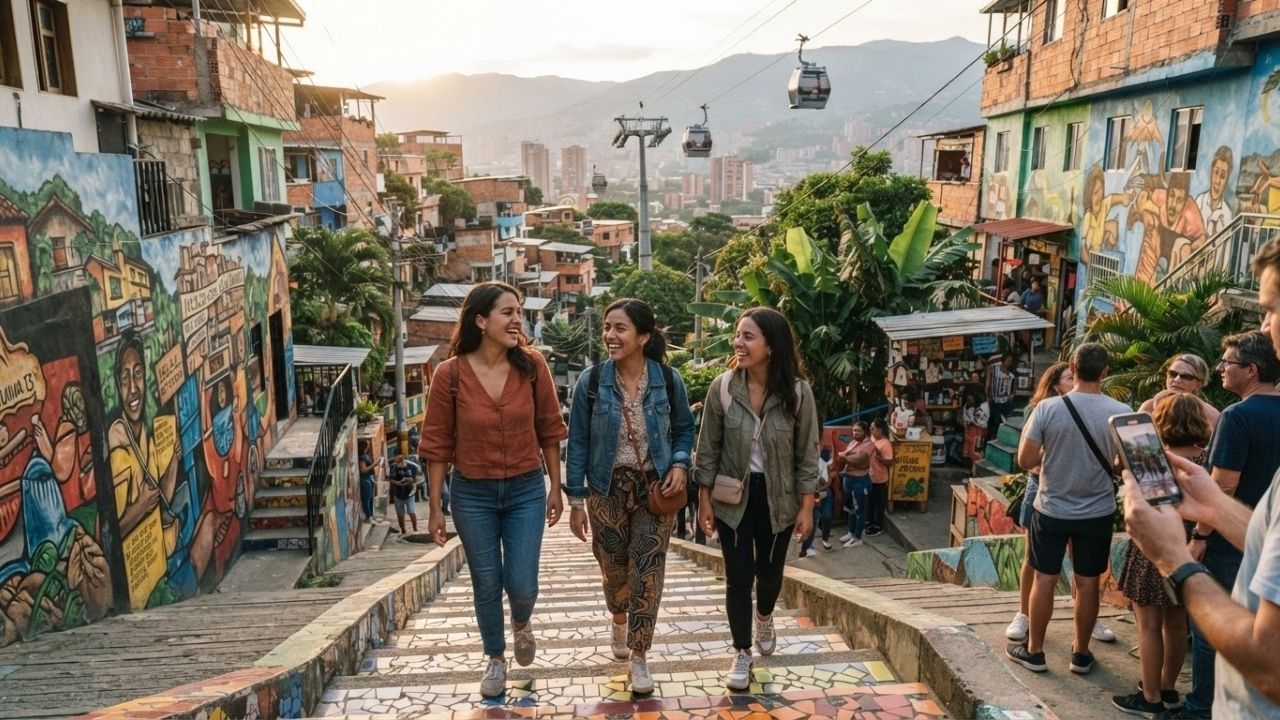
Image generated by AI
Global streaming series dramatizing historical cartel conflicts have inadvertently sparked an international tourism boom across South America, prompting travelers to venture beyond screen scripts to discover community resilience in Colombia, Panama, and Nicaragua.
The Local Trend: Screen-Induced Travel to Andean and Caribbean Gateways
High-budget television dramas exploring the rise and fall of historical figures like Pablo Escobar and Griselda Blanco have projected the lush topography of South America into hundreds of millions of living rooms. According to official data from ProColombia, the national tourism promotion agency, international visitor arrivals have demonstrated steady year-on-year growth, with media exposure and cultural curiosity ranking as primary motivators.
Instead of deterring international travelers, cinematic depictions of Colombia dismantled outdated travel hesitations. Visitors who initially tune in for television drama arrive in South America seeking real-world geography, only to encounter modern, progressive urban centers. In Medellín—the Andean city once associated internationally with cartel turbulence—urban renewal has transformed the metropolis through integrated public transit infrastructure, including the elevated Metrocable gondola lines and outdoor public escalators in Comuna 13.
The movement through Comuna 13 illustrates this transition: hillside alleyways once dominated by conflict now feature open-air street art galleries, breakdancing exhibitions, and community-guided tours led by residents who survived the turbulent 1980s and 1990s. The momentum extends to Cartagena on the Caribbean coast, where preserved 16th-century fortress walls, colonial squares, and pastel-painted balconies offer an evocative historic counterpoint to the high-altitude Andean capital of Bogotá.
Regional Expansion Across Panama and Nicaragua
The phenomenon of geopolitical screen tourism has crossed borders into neighboring Central American transit corridors:
- Panama's Dual Identity: Frequently depicted in espionage thrillers as an offshore banking and logistical crossroads, Panama is redirecting visitors toward environmental and cultural attractions. Beyond the engineering locks of the Panama Canal, travelers explore the restored Spanish colonial plazas of Casco Viejo, vibrant specialty Geisha coffee houses, and the pristine marine ecosystems of the Bocas del Toro archipelago.
- Nicaragua's Untamed Geography: Depictions of Central American historical conflicts have catalyzed interest in Nicaragua's biodiversity. Travelers journey to Ometepe Island—an eco-sanctuary formed by twin volcanoes in Lake Nicaragua—to hike ancient petroglyph trails, explore colonial Granada, and peer into the active crater of Masaya Volcano.
Media-Induced Tourism Profile Across Northern South America
| Destination / Corridor | Primary Cinematic Hook | Real-World Urban & Cultural Transformation | Key Economic Beneficiaries |
|---|---|---|---|
| Medellín (Colombia) | Cartel thriller biographies | Comuna 13 electric escalators, Metrocable transit | Community street artists & local tour guides |
| Cartagena (Colombia) | Caribbean maritime smuggling plots | UNESCO-listed stone ramparts, colonial architecture | Heritage boutique hotels & culinary cooperatives |
| Panama City (Panama) | Offshore financial & canal thrillers | Casco Viejo historic restoration & Geisha coffee culture | Indigenous handicraft artisans & canal docents |
| Ometepe Island (Nicaragua) | Geopolitical frontier narratives | Twin volcanic nature preserves, freshwater lakes | Agricultural agro-tourism & eco-lodges |
| Granada (Nicaragua) | Central American historical conflicts | Preserved neoclassical plazas, artisan cigar workshops | Local transport drivers & preservation trusts |
Managing Dark Heritage Through Community Stewardship
Local governments and tourism authorities are actively steering screen-driven curiosity away from sensationalism and toward educational, ethical travel:
- Banning Cartel Glorification: Municipal regulations in Medellín discourage commercial memorabilia that glorifies criminal syndicates, prioritizing memorials for victims and historical accuracy.
- Directing Funds to Local Cooperatives: Registered tour operators partner with neighborhood associations, ensuring entrance fees directly fund community youth arts centers, music academies, and fair-trade coffee cooperatives.
- Conscious Visitor Education: Licensed local guides provide first-hand oral histories, transforming sensationalized Hollywood tropes into nuanced lessons on democratic renewal, social equity, and community resilience.
Destination Specialist Local Insider Tips
Travelers navigating screen-inspired destinations across Colombia and Central America can ensure respectful, rewarding journeys with these practical tips:
- Hire Registered Community Guides in Comuna 13: Always book neighborhood walking tours with verified resident guides from organizations like the Comuna 13 Street Art collective to ensure your visit directly supports local families.
- Take the Metrocable Line L to Parque Arví: Ride Medellín’s integrated public transit system up to the mountain plateau of Parque Arví for an inexpensive bird's-eye view of the Aburrá Valley and indigenous hiking trails.
- Sample Single-Origin Coffee in Casco Viejo: When exploring Panama City's historic quarter, visit micro-roasteries to taste pour-over Geisha coffee harvested in the cloud forests of Boquete.
- Avoid Asking Insensitive Questions About Cartel Lore: When speaking with local residents in Medellín or Cali, focus conversations on present-day cultural achievements and avoid romanticizing the violence that impacted families.
- Explore Ometepe Island by Scooter or Mountain Bike: Rent a dual-sport motorcycle or bicycle upon arrival at Moyogalpa port in Nicaragua to explore petroglyph sites and organic coffee fincas independently.
Future Outlook
Screen-induced travel has evolved from morbid fascination into a powerful catalyst for regenerative cultural tourism. By reclaiming their narratives through street art, community enterprise, and public architecture, cities like Medellín and Cartagena prove that international media exposure, when guided by ethical local stewardship, can permanently rewrite a nation's global standing.
Related Travel Guides
Disclaimer
This article is for informational and educational purposes only. It does not constitute legal, financial, or professional advice. While we strive to provide accurate and up-to-date information, travel policies, regulations, and conditions change rapidly. Always verify information with official sources before making travel decisions. Nomad Lawyer makes no representations about the accuracy, reliability, completeness, or suitability of the information provided. Readers should consult qualified professionals for advice specific to their circumstances. The views expressed in this article are those of the author and do not necessarily reflect the views of Nomad Lawyer.
Raushan Kumar
Founder & Lead Developer
Full-stack developer with 11+ years of experience and a passionate traveller. Raushan built Nomad Lawyer from the ground up with a vision to create the best travel and law experience on the web.
Learn more about our team →