South Africa Backs Women-Owned Hotel 247 With New Restaurant and Tourism Investment

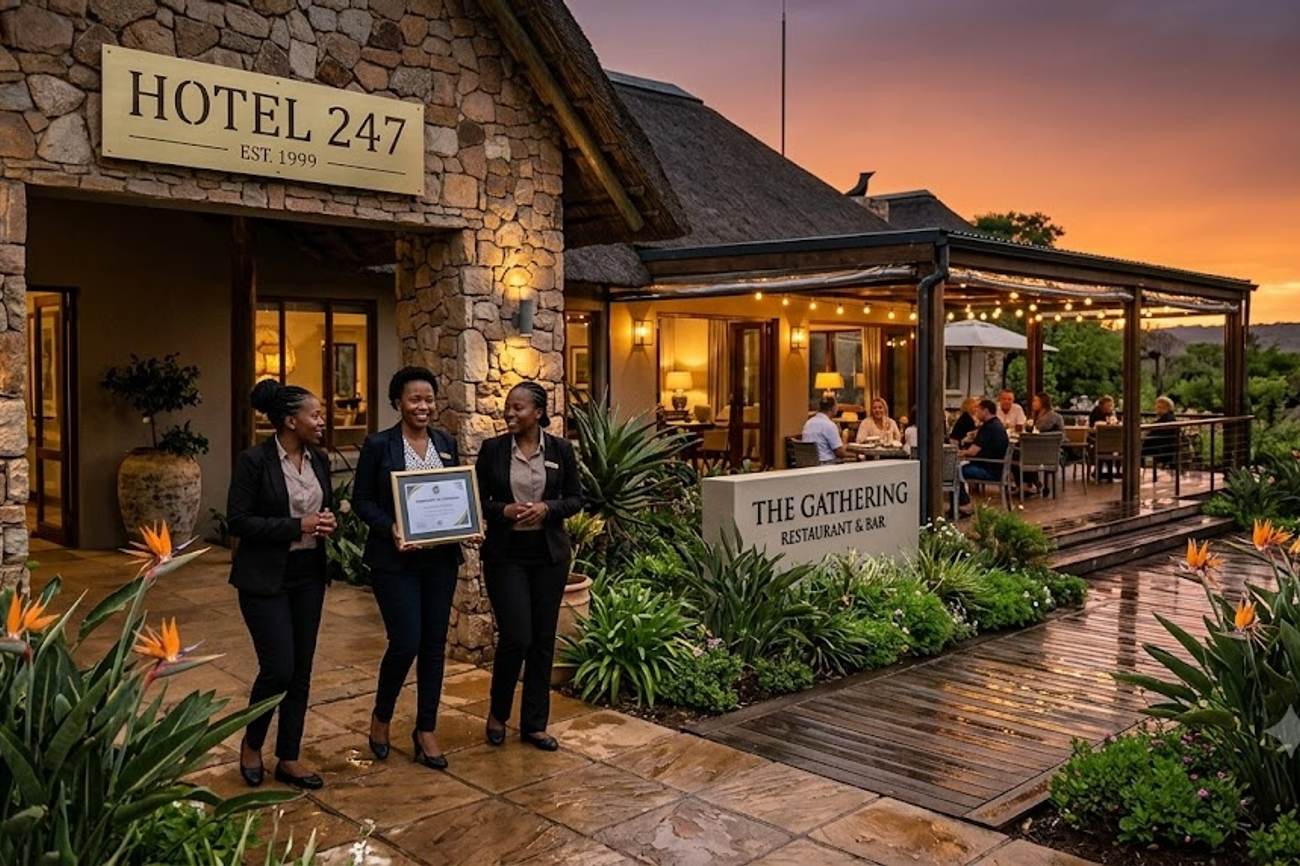
Image generated by AI
City: White River, Mpumalanga Date: September 2026
South Africa has expanded the operational capacity of Hotel 247 in White River, Mpumalanga, through a strategic funding partnership designed to increase black women's ownership of capital assets within the tourism sector. The project culminated in the September 2026 relaunch of the property's refurbished restaurant, marking a shift in government policy from merely promoting employment to fostering direct ownership of productive tourism infrastructure.
The initiative was spearheaded by the Department of Tourism and the National Empowerment Fund (NEF), with Deputy Tourism Minister Maggie Sotyu presiding over the official proceedings during Tourism Month. The investment focuses on the three-star establishment owned by entrepreneur Khosi Mthalane, who acquired the property—formerly known as Forever White River—during the 2021 COVID-19 pandemic. The current upgrades include expanded dining facilities, new equipment, and the implementation of alternative-energy infrastructure, making Hotel 247 the first green-energy hotel in the White River area.
The Financial Framework of the Expansion
The capital injection for Hotel 247 utilizes a blended finance model, combining government grants and development loans with private capital from the owner. This structure ensures that while the facility improves its service offerings, the ownership remains concentrated in the hands of the female entrepreneur.
The officially reported support is broken down as follows:
- Tourism Transformation Fund: R1.65 million grant
- National Empowerment Fund: R1.65 million senior loan
- Alternative Energy Fund: R242,600
- Owner Contribution: Private financial contribution (exact figure not disclosed)
The Tourism Transformation Fund, managed jointly by the Department of Tourism and the NEF, targets commercially viable, black-owned enterprises that require capital for asset expansion or establishment. In this instance, the funds were not used to build a new hotel from the ground up but to strengthen an existing operational business by enhancing its conference, food, and energy capabilities.
Impacted Markets and Infrastructure
The expansion of the restaurant and the modernization of the facilities allow Hotel 247 to capture a wider array of visitor segments. The property currently features 52 en-suite rooms and a restaurant and bar capable of hosting 140 guests. Additionally, the conference facilities can accommodate up to 200 delegates.
The following markets are directly impacted by these upgrades:
- International Travelers: Visitors exploring the Mpumalanga province and those utilizing White River as a gateway to the Kruger National Park.
- Domestic Leisure Tourists: South African citizens traveling the Panorama Route and the Lowveld.
- Corporate Clients: Business travelers and organizations requiring meeting spaces for events serving the Mbombela district.
- Transit Visitors: Tourists moving between regional attractions such as God’s Window and Graskop.
By expanding the restaurant, the hotel now provides a destination for non-resident visitors and local residents, diversifying its revenue streams beyond overnight lodging.
Practical Traveler Advisory and Strategic Insights
For the modern traveler, the upgrades at Hotel 247 translate into a more sustainable and versatile stay in the Lowveld region. The transition to green energy reduces the property's carbon footprint and provides a more reliable power supply—a critical factor for business travelers and international tourists in regions prone to energy instability.
Passengers booking flights into nearby airports or planning road trips through Mpumalanga will find increased capacity for mid-sized conferences (up to 200 people) and improved dining options that do not require an overnight stay. The shift toward "ownership transformation" suggests a growing trend of locally owned, high-standard boutique hospitality options in the region, offering visitors an experience more closely tied to the local economy.
National Tourism Growth and 2030 Targets
The investment in Hotel 247 occurs against a backdrop of surging demand for South African tourism. According to the 2026 tourism budget statement, international arrivals reached 10.5 million in 2025, a significant increase from the 8.9 million arrivals recorded in 2024. The first quarter of 2026 saw more than 2.9 million inbound visitors, representing a 12.6% growth compared to the same period the previous year.
The broader economic indicators for the sector are as follows:
- Domestic Tourism Spending: R111.6 billion
- International Tourism Spending: R102.2 billion
- Direct Tourism Employment: 954,000 jobs
These figures underscore the importance of the domestic market, which currently outspends international tourists. For an independent establishment like Hotel 247, this makes the ability to attract local business events and regional road-trippers essential for long-term viability.
The project is a micro-level execution of the Tourism Growth Partnership Plan. The South African government has set aggressive targets for 2030 to further scale the industry:
- International Arrivals: 15 million tourists annually
- Domestic Trips: 45.1 million annual trips
- Domestic Spending: R139.4 billion
- International Spending: R115.2 billion
- Direct Employment: 1 million jobs
- Indirect/Induced Employment: 1.5 million jobs
Employment and Local Economic Spillover
While the scale of the project is smaller than a major resort, the employment gains are concrete. Hotel 247 currently employs 29 staff members. The recent investment phase created five new permanent positions and 15 temporary roles during the renovation period.
The government's strategy relies on the "multiplier effect," where a successful hotel drives demand for surrounding services. This includes:
- Transport and Fuel: Increased demand for shuttles and fuel retail for visitors heading to the Panorama Route.
- Supply Chain: Local procurement of food and beverages for the expanded 140-seat restaurant.
- Visitor Services: Increased opportunities for local guides, craft producers, and maintenance contractors.
The ultimate success of this economic spillover will depend on the hotel's procurement policies and its integration with local White River suppliers.
FAQ: Hotel 247 & Mpumalanga Tourism 2026
What makes Hotel 247 different from other hotels in White River? Hotel 247 is the first green-energy hotel in the White River area and is a fully black female-owned enterprise. It offers a blend of 52 en-suite rooms and expanded conference facilities for up to 200 people.
How does this project affect the local economy in Mpumalanga? Beyond creating 24 new jobs (5 permanent, 15 temporary), the hotel serves as a hub for visitors heading to Kruger National Park and the Panorama Route, encouraging tourists to spend more time and money within the Lowveld region.
Who funded the renovations at Hotel 247? The project was funded through a combination of a R1.65 million grant from the Tourism Transformation Fund, a R1.65 million senior loan from the National Empowerment Fund, and R242,600 from the Alternative Energy Fund, alongside private investment from the owner.
Is Hotel 247 only for overnight guests? No. The recently expanded restaurant and bar can accommodate 140 guests, making it available for local residents and transit travelers who are not staying overnight at the property.
A blueprint for shifting from employment to equity in the Lowveld.
Related Travel Guides
- Germany And More Reshape European Hotel Yields as Autumn Trade Fairs Surge While Coastal Tourism Margins Contract
- Luxury Hospitality Celebrates Chef Rajesh Bhatt’s Remarkable Journey From Kitchen Leadership To National Recognition
- Minor Hotels Expands Worldwide Luxury Influence With New MICHELIN Keys Across Asia Europe And Beyond
This article is for informational purposes. Flight routes, passenger regulations, visa rules, and transit advisories are subject to change by airlines and aviation authorities. Readers are advised to verify schedules and travel documentation with relevant carriers and border agencies before departure.
Related Stories
EU Probes Booking.com Under Digital Services Act Over Fake Hotel Listings, Hijacked Reservations, and Search Ranking Transparency