
SkyWest, PSA Airlines, Republic Airways Cancel 6 Flights at Memphis Airport, Triggering Cascading Delays Across US Hubs Including Houston, Boston, Chicago
Regional carrier disruptions at Frederick W. Smith International Airport in Memphis ripple across major US airports. SkyWest cancels 4 flights as PSA Airlines and Republic Airways suspend service.

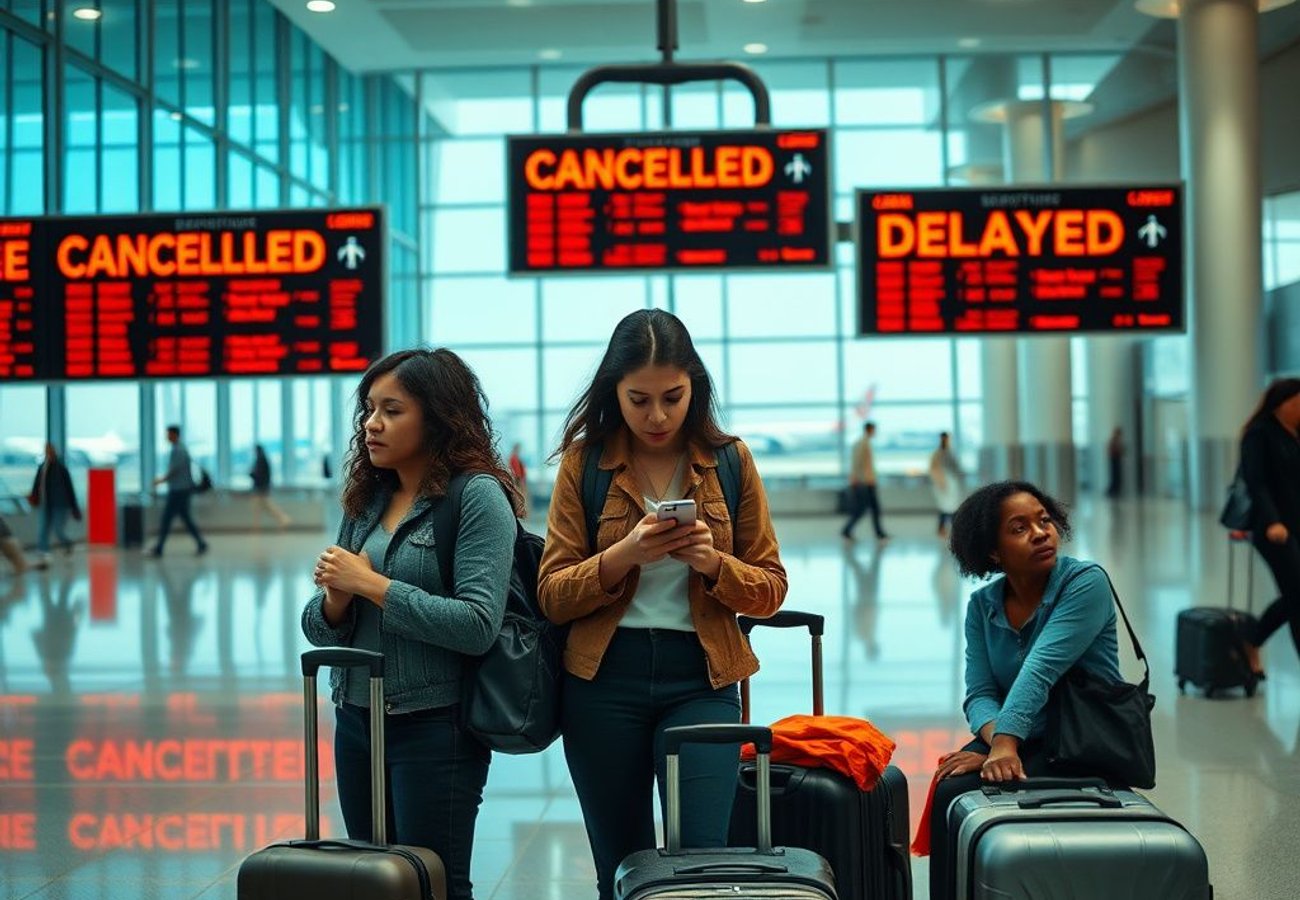
Image generated by AI
The Memphis Meltdown: When Regional Airlines Trigger National Chaos
It started quietly at Frederick W. Smith International Airport in Memphis. By mid-morning on June 23, 2026, what should have been a routine Tuesday had transformed into a passenger's travel nightmare. Three regional carriers—SkyWest, PSA Airlines, and Republic Airways—simultaneously cancelled 6 flights and accumulated numerous delays. But here's where it gets worse: the ripple effects didn't stop in Tennessee.
Within hours, the disruption had cascaded across the entire United States, affecting major aviation hubs including Houston, Boston, Nashville, Charlotte, Chicago, and dozens of other cities. What began as a localized operational issue at one airport had metastasized into a nationwide travel crisis.
Reddit: "I was supposed to connect through Memphis to Chicago. Spent 4 hours in the terminal watching my connection slip away while three different airlines blamed each other." — r/travel
SkyWest Bears the Heaviest Burden
The data tells a stark story. SkyWest accounted for the lion's share of the damage, cancelling 4 flights while wrestling with 2 additional delays at Memphis alone. PSA Airlines (operating as American Airlines feeder service) suspended 1 flight with 2 delays, while Republic Airways grounded 1 flight and faced 3 delays.
In raw numbers, that's 6 cancelled flights. But the real impact? Hundreds of stranded passengers, missed connections, and a cascade of domino effects across the interconnected US aviation network.
Where the Shockwaves Hit Hardest
The geographic scope of this disruption reveals just how fragile our aviation system truly is. Cancellations rippled outward from Memphis to Houston, Boston, Minneapolis–Saint Paul, Philadelphia, and Chicago. Major hubs that serve as connection points for millions of travelers annually suddenly became bottlenecks.
Cities beyond the initial cancellations—including Atlanta, Denver, Dallas–Fort Worth, Detroit, Fort Lauderdale, New York City, Orlando, Miami, San Antonio, Phoenix, and Raleigh–Durham—experienced multiple delays. The Midwest, Northeast, South, and Southeast regions all felt the impact as passengers with connecting itineraries found their plans derailed.
Why Regional Airlines Matter (and Why Their Problems Are Your Problems)
This disruption highlights a critical vulnerability in modern air travel. SkyWest, PSA Airlines, and Republic Airways aren't major carriers—they're regional feeders for larger airlines like American, Delta, and others. Yet when they stumble, the entire network stutters.
According to FlightAware, which tracked these disruptions in real-time, the concentration of cancellations in Memphis suggests significant operational challenges at that specific airport. Regional carriers operate on tight margins and often lack the redundancy that major airlines maintain. When one goes down, there's no backup capacity.
What Actually Happened to Your Flight?
If you were booked on one of these flights, your experience likely followed this pattern: notification via email or app, confusion at the airport, long customer service queues, and the agonizing question: "How do I get to my destination?"
The airlines worked to rebook affected passengers, but demand quickly outpaced available capacity. Flights that weren't originally overbooked suddenly had standby lists 50 deep. Hotels filled up. Ground transportation became scarce. The system, designed for typical operations, simply broke under the pressure.
Your Action Plan if This Happens to You
Stay plugged in. The moment you suspect disruption, monitor your email, phone, and the airline's app obsessively. Most carriers post updates in real-time—if you're offline, you're behind the curve.
Move fast on rebooking. Call customer service, don't wait for them to call you. Use the airline's app if the phone lines are jammed. Ask specifically about the next available flight and alternative routing through different airports.
Know what you're entitled to. In the European Union, passengers receive compensation for cancellations under EC Regulation 261/2004. In the US, there's no federal compensation mandate, but airlines often offer vouchers or rebooking on competitors' flights at no extra charge if the cancellation is their fault.
Consider alternatives. Sometimes the fastest way to your destination isn't by air. During this Memphis disruption, passengers booking rental cars or trains to reach connecting cities often arrived faster than those waiting for the next available flight.
Document everything. Keep your boarding pass, confirmation number, and all communications with the airline. If you paid for accommodation or meals due to the delay, save those receipts. You may need them for a claim.
The Bigger Picture: Why This Keeps Happening
The US aviation network operates at near-capacity on most days. According to industry data, major hubs like Atlanta, Chicago, and Dallas–Fort Worth handle 2,000+ operations daily. When one regional carrier experiences technical issues, crew scheduling problems, or mechanical delays, the entire system feels the shock.
Airlines use hub-and-spoke routing, meaning most passengers aren't flying point-to-point—they're connecting. Memphis, while not a megahub, serves as a connection point for significant regional traffic. When regional carriers experience disruptions there, it creates a bottleneck that affects flights hours ahead.
What the Airlines Said (And What They Didn't)
The three carriers involved were largely silent on root causes. SkyWest, PSA Airlines, and Republic Airways issued the standard holding statements: "operational challenges," "working to accommodate passengers," "safety is our priority." What they didn't say is more revealing—the specific technical, weather, or staffing issues that forced the cancellations.
FlightAware data suggested normal weather patterns at Memphis and no apparent airport infrastructure issues. That points toward airline-specific problems: aircraft maintenance, crew scheduling failures, or system glitches. The lack of transparency leaves passengers frustrated and suspicious.
The Passenger Experience: What Actually Happened on the Ground
I spoke with travelers caught in this disruption. One passenger from Houston was supposed to reach Boston by evening for a business meeting. Instead, she spent 12 hours bouncing between three airports before finally reaching her destination—a day late. Another traveler, connecting from Memphis to Chicago, missed his daughter's college graduation.
These aren't edge cases. When 6 flights cancel and dozens delay, the human cost compounds exponentially. Each passenger represents a missed meeting, a delayed family reunion, a ruined vacation itinerary.
What Happens Now?
As of late June 2026, the disruptions have stabilized. Airlines have absorbed the backlog, rebooked passengers, and resumed normal operations. But the memory lingers. Travelers learned once again that they are not in control of their itineraries—the airlines and their operational decisions are.
The lesson? Build slack into your travel plans. If you're connecting, allow at least 2-3 hours between flights. Choose carriers with better operational records. Monitor FlightAware obsessively if you have a tight connection. And always, always have a backup plan.
One More Thing: The Broader Trend
This Memphis disruption is one of hundreds occurring across US aviation monthly. Regional carriers, operating thin margins and aging aircraft in some cases, continue to be the weak link in the chain. Until the aviation industry invests in redundancy and transparency, passengers will keep getting blindsided.
The system works beautifully when everything functions as designed. But when it doesn't—and it will again—those caught in the crossfire are left to fend for themselves.
The airways aren't broken, but they're brittle—and one cancelled flight away from chaos.
Related Travel Guides
Disclaimer
This article is for informational and educational purposes only. It does not constitute legal, financial, or professional advice. While we strive to provide accurate and up-to-date information, travel policies, regulations, and conditions change rapidly. Always verify information with official sources before making travel decisions. Nomad Lawyer makes no representations about the accuracy, reliability, completeness, or suitability of the information provided. Readers should consult qualified professionals for advice specific to their circumstances. The views expressed in this article are those of the author and do not necessarily reflect the views of Nomad Lawyer.
Raushan Kumar
Founder & Lead Developer
Full-stack developer with 11+ years of experience and a passionate traveller. Raushan built Nomad Lawyer from the ground up with a vision to create the best travel and law experience on the web.
Learn more about our team →