
Dallas-Fort Worth Airport Chaos: Envoy Air and Air Canada Cancel 4 Flights, Trigger Delays Across 60+ Cities in North America, Europe, and Beyond
Flight disruptions at Dallas-Fort Worth International Airport involving Envoy Air and Air Canada suspend 4 flights and trigger cascading delays affecting major hubs across the US, Canada, Europe, and beyond.

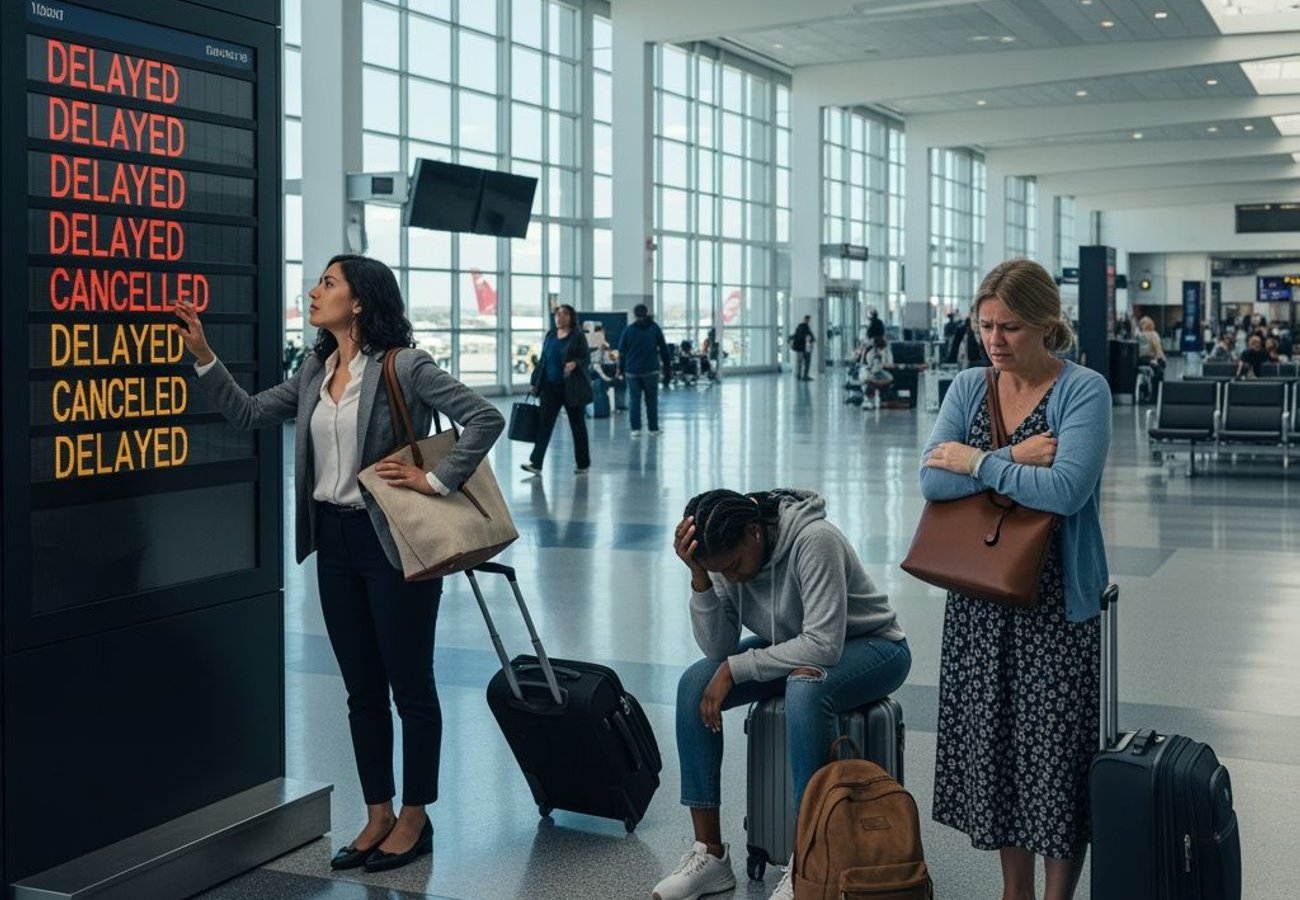
Image generated by AI
When a Hub Freezes, Everything Stops
I watched it unfold in real time. On June 18, 2026, Dallas-Fort Worth International Airport (DFW) became the epicenter of a cascading travel nightmare that rippled across continents. Envoy Air and Air Canada suspended a combined 4 flights while simultaneously reporting 32 additional delays, creating a domino effect that crippled travel networks spanning North America, Europe, the Caribbean, Latin America, and Asia-Pacific.
What makes this story critical for frequent flyers: a relatively modest number of cancellations at a major hub can weaponize chaos. The operational disruption affected travelers headed to over 60 cities, from New York City and Los Angeles to Frankfurt, London, Amsterdam, Tokyo, and Bogotá.
The Scale of Disruption: From Texas to Toyko
The geographic footprint of this disruption was staggering. DFW serves as a major connection point for both domestic and international networks. The suspension of just 2 Envoy Air flights and 2 Air Canada flights cascaded into delays affecting:
-
United States: Dallas, Houston, Atlanta, Chicago, Denver, Los Angeles, San Francisco, New York City, Miami, Philadelphia, Washington D.C., Detroit, Minneapolis, Las Vegas, Phoenix, Seattle, and dozens of secondary markets.
-
Canada: Toronto, Montreal, Vancouver, and Calgary experienced significant knock-on delays.
-
Europe: Frankfurt, London, Amsterdam, Madrid, Rome, Venice, and Zurich all reported travel disruptions.
-
Latin America & Caribbean: Mexico City, Cancún, Puerto Vallarta, San José, Bogotá, Punta Cana, Nassau, and numerous regional hubs.
-
Asia-Pacific: Tokyo, Incheon, and Anchorage felt the ripple effects of network congestion.
Reddit: "A single hub freeze can turn your entire travel day into a nightmare. Always build in connection buffers at major airports." — r/travel
Breaking Down the Numbers
According to real-time operational data from FlightAware, the cancellation figures paint a revealing picture of selective but impactful disruption:
| Airport | Airline | Cancelled | Delayed |
|---|---|---|---|
| Dallas-Fort Worth (DFW) | Envoy Air | 2 | 31 |
| Dallas-Fort Worth (DFW) | Air Canada | 2 | 1 |
Envoy Air maintained an exceptionally low 0% cancellation rate overall—despite the 2 cancelled flights—but absorbed a substantial operational burden with 31 delays. Air Canada, operating a comparatively smaller schedule at DFW, recorded a 28% cancellation rate, indicating more severe disruption to its Dallas-Fort Worth operations.
Beyond the primary hub, additional cancellations were recorded at Quad Cities International Airport (MLI) and Toronto Pearson International Airport (YYZ), extending the operational challenge into secondary and tertiary networks.
What Actually Happened?
The primary issue wasn't widespread cancellations—it was systemic delay accumulation. When flights don't depart on time at a major hub, aircraft positioning, crew scheduling, and passenger connections cascade into delays across the entire network.
Passengers experienced:
- Schedule uncertainty and missed connections
- Extended airport wait times
- Rebooking challenges due to network congestion
- International schedule disruptions affecting transatlantic and transpacific routes
The operational strain was significant enough that airport teams and airline staff worked continuously throughout the day to manage passenger accommodations and rebook disrupted travelers.
Your Rights When Flights Get Cancelled
If you were caught in this disruption or face similar operational challenges, here's what you need to know:
Stay Informed in Real Time
The moment you receive a flight cancellation notification, check your email, text messages, and the airline's mobile app immediately. Airlines typically initiate rebooking within minutes of a cancellation. Visiting the airline's website or app provides real-time updates on alternative flight options and departure schedules.
Contact Customer Service Strategically
If you're at the airport, head directly to the airline's service desk—physical interaction often yields faster rebooking than phone lines during mass disruptions. If you're not at the airport, use the airline's online chat system or mobile app to avoid lengthy phone queues. Airlines process digital rebooking requests faster during operational crises.
Know Your Legal Protections
Your passenger rights vary by jurisdiction. Under EU regulations, passengers are entitled to compensation for cancellations within the airline's control—typically ranging from €250 to €600 depending on flight distance. In the United States, the Department of Transportation requires airlines to provide rebooking on the next available flight at no additional charge. In Canada, the Canadian Transportation Agency enforces passenger rights standards. Always consult your airline's specific policy and your jurisdiction's aviation authority.
Consider Alternative Transport
If flights are backed up across your desired timeframe, explore train services, bus operators, or rental car options. For international travel, checking alternative carriers and routing through different hubs can sometimes bypass network congestion faster than waiting for rebooking on the original airline.
The Bigger Picture: Hub Vulnerability
What this DFW disruption reveals is fundamental to modern airline networks: major hubs are both essential infrastructure and single points of failure. When Dallas-Fort Worth—one of the busiest airports in North America—experiences even minor operational issues, the effects propagate globally within hours.
Airlines face increasing pressure from crew scheduling regulations, weather variability, and aging ground infrastructure. The operational challenge isn't always visible to passengers until delays stack up and cancellations multiply.
For business travelers and leisure passengers alike, the lesson is clear: build flexibility into high-hub connections. Book flights with minimum 2-3 hour connection windows at major airports like DFW, Atlanta (ATL), Chicago (ORD), and Denver (DEN). Monitor real-time flight tracking tools before heading to the airport.
What Authorities Say
According to information manually obtained from FlightAware's official tracking data, all operations remain subject to continuous modification based on real-time conditions. Airlines actively adjust schedules to maintain safety standards. Aviation authorities emphasize that passengers should avoid panic during operational disruptions and explore alternative travel options proactively.
Relying on real-time flight tracking, reviewing airline rebooking policies thoroughly, and maintaining schedule flexibility remain the most effective strategies for navigating network disruptions.
The hub that connects the world is only as reliable as its weakest operational moment—and we're all watching.
Related Travel Guides
Disclaimer
This article is for informational and educational purposes only. It does not constitute legal, financial, or professional advice. While we strive to provide accurate and up-to-date information, travel policies, regulations, and conditions change rapidly. Always verify information with official sources before making travel decisions. Nomad Lawyer makes no representations about the accuracy, reliability, completeness, or suitability of the information provided. Readers should consult qualified professionals for advice specific to their circumstances. The views expressed in this article are those of the author and do not necessarily reflect the views of Nomad Lawyer.
Preeti Gunjan
Contributor & Community Manager
A passionate traveller and community builder. Preeti helps grow the Nomad Lawyer community, fostering engagement and bringing the reader experience to life.
Learn more about our team →