
United Airlines Flight UAL3885, a Boeing 737-900 to Chicago Diverts Back to Cleveland Hopkins International Airport, United States: Here’s the Latest Update
United Airlines Flight UAL3885, a Boeing 737-900ER, diverted to Cleveland Hopkins International Airport during a trip fr

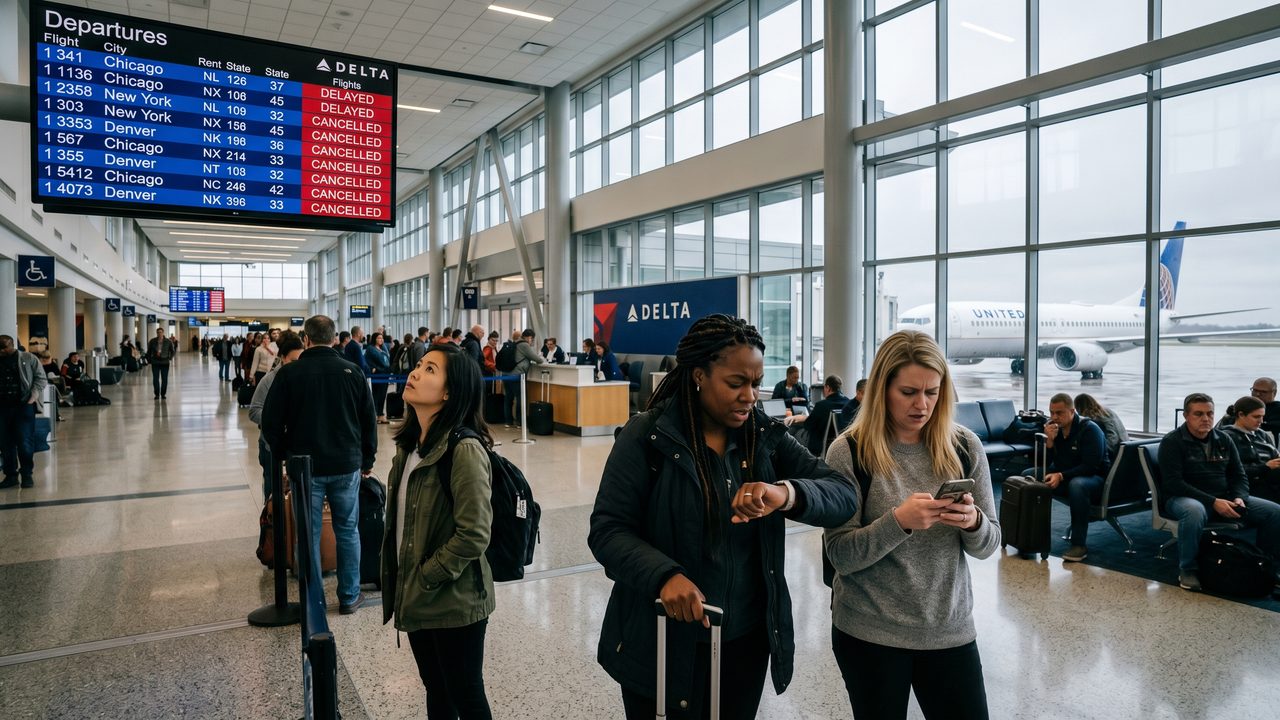
Image generated by AI
[Cleveland, June 29, 2026] — A United Airlines domestic flight operating from Winston-Salem to Chicago was forced to divert to Cleveland Hopkins International Airport on June 28, 2026, after an operational interruption occurred mid-flight. Flight UAL3885, operated by a Boeing 737-900ER, landed safely in Ohio, though the airline and federal aviation regulators have not yet disclosed the specific cause for the detour.
The incident involved a scheduled service connecting Smith Reynolds Airport in North Carolina to Chicago O’Hare International Airport. Aviation monitoring data indicates that the aircraft departed its origin at approximately 10:16 AM EDT. While initially proceeding toward the Midwest, the flight path was altered, leading to a landing at Cleveland Hopkins International Airport (CLE) at roughly 11:24 AM EDT.
Flight UAL3885 Diverts to Cleveland Hopkins International Airport
According to live tracking data from aviation services such as FlightAware and FlightRadar24, the Boeing 737-900ER, registered as N69804, completed just over an hour of flight time before arriving in Cleveland. The diversion appears to have been a controlled maneuver rather than a sudden emergency descent, as the aircraft maintained a standard cruising profile for a significant portion of the journey before diverting northeast.
As of the latest reports, neither United Airlines nor the Federal Aviation Administration (FAA) has issued a formal statement regarding the trigger for the diversion. There has been no official emergency declaration filed within the National Transportation Safety Board (NTSB) or FAA databases. Industry observers note that when flights are classified simply as "diversions" on tracking platforms, it typically suggests a precautionary measure taken by the flight crew rather than a critical system failure.
Technical Specifications of the Boeing 737-900ER
The aircraft involved in the diversion is a Boeing 737-924ER, a narrowbody jet manufactured in 2013. This specific model is a staple of United Airlines' domestic fleet and is powered by CFM56 engines, which are standard for short and medium-haul operations across the United States.
The airworthiness and operational status of N69804 are confirmed via the FAA aircraft registry. While the exact reason for the landing in Cleveland remains unverified, common catalysts for such diversions include:
- Onboard technical alerts or sensor malfunctions.
- Medical emergencies involving passengers or crew.
- Air traffic control sequencing or unexpected weather shifts.
- Precautionary safety checks triggered by cockpit indications.
Operational Data and Route Analysis
The planned trajectory for Flight UAL3885 was a direct route from Winston-Salem (INT) to Chicago (ORD). The decision to land at Cleveland Hopkins International Airport (CLE) is a common procedural choice for flights in this corridor. Due to its geographic location, CLE serves as a strategic diversion hub for aircraft traveling between the East Coast and major Midwest hubs.
| Flight Detail | Information |
|---|---|
| Flight Number | UAL3885 |
| Aircraft Type | Boeing 737-900ER |
| Registration | N69804 |
| Departure Point | Winston-Salem (INT) |
| Intended Destination | Chicago O'Hare (ORD) |
| Diversion Airport | Cleveland Hopkins (CLE) |
| Departure Time | 10:16 AM EDT (June 28, 2026) |
| Landing Time | 11:24 AM EDT (June 28, 2026) |
| Manufacturer Year | 2013 |
Post-Diversion Protocols and Passenger Impact
Once an aircraft diverts to a facility like Cleveland Hopkins, standard operating procedures dictate a series of safety and logistical steps. Maintenance crews typically perform a comprehensive technical inspection of the aircraft to ensure it is safe for further flight, especially if the diversion was prompted by a cockpit alert.
For the passengers onboard UAL3885, the diversion resulted in an immediate interruption of their travel schedule. Under standard irregular operations (IROPS) policies, airlines generally provide the following support:
- Reaccommodation: Rebooking passengers on the next available flight to Chicago O’Hare.
- Logistical Support: Providing ground transportation or hotel accommodations if the delay extends overnight.
- Communication: Updating travelers via digital apps and SMS regarding the new departure times.
Because no formal safety alert was issued, this event is currently categorized as an operational diversion. The aircraft will likely remain under observation until the airline's engineering team clears the Boeing 737-900ER for return to active service.
Why This Matters: Impact on Aviation Safety and Reliability
This incident highlights the critical role of "diversion hubs" in the United States' National Airspace System. The use of Cleveland Hopkins as a safety valve for flights heading toward Chicago demonstrates how aviation networks are designed with redundancy to prioritize safety over schedule adherence.
From an industry perspective, the lack of an immediate emergency declaration suggests that the flight crew exercised "precautionary diversion" logic. This is a hallmark of a conservative safety culture where pilots opt to land at the nearest suitable airport at the first sign of a technical anomaly, rather than attempting to push through to the final destination.
Furthermore, the reliance on real-time tracking data (such as FlightRadar24) allows for immediate transparency in modern aviation. While the airline may be slow to release a public statement, the flight path itself reveals the nature of the event—controlled, planned, and safe. For the broader aviation sector, these events underscore the reliability of the Boeing 737-900ER fleet's safety protocols and the efficiency of Midwest airport coordination during irregular operations.
Related Travel Guides
Disclaimer
This article is for informational and educational purposes only. It does not constitute legal, financial, or professional advice. While we strive to provide accurate and up-to-date information, travel policies, regulations, and conditions change rapidly. Always verify information with official sources before making travel decisions. Nomad Lawyer makes no representations about the accuracy, reliability, completeness, or suitability of the information provided. Readers should consult qualified professionals for advice specific to their circumstances. The views expressed in this article are those of the author and do not necessarily reflect the views of Nomad Lawyer.
Raushan Kumar
Founder & Lead Developer
Full-stack developer with 11+ years of experience and a passionate traveller. Raushan built Nomad Lawyer from the ground up with a vision to create the best travel and law experience on the web.
Learn more about our team →