
Delta Air Lines Flight DL2529 Diverts at Melbourne Orlando International Airport in the United States, USA: Austin to Orlando Journey Interrupted as Unexpected Flight Diversion Raises Fresh Questions
Delta Air Lines Flight DL2529 from Austin to Orlando diverted to Melbourne Orlando International Airport. Learn about th

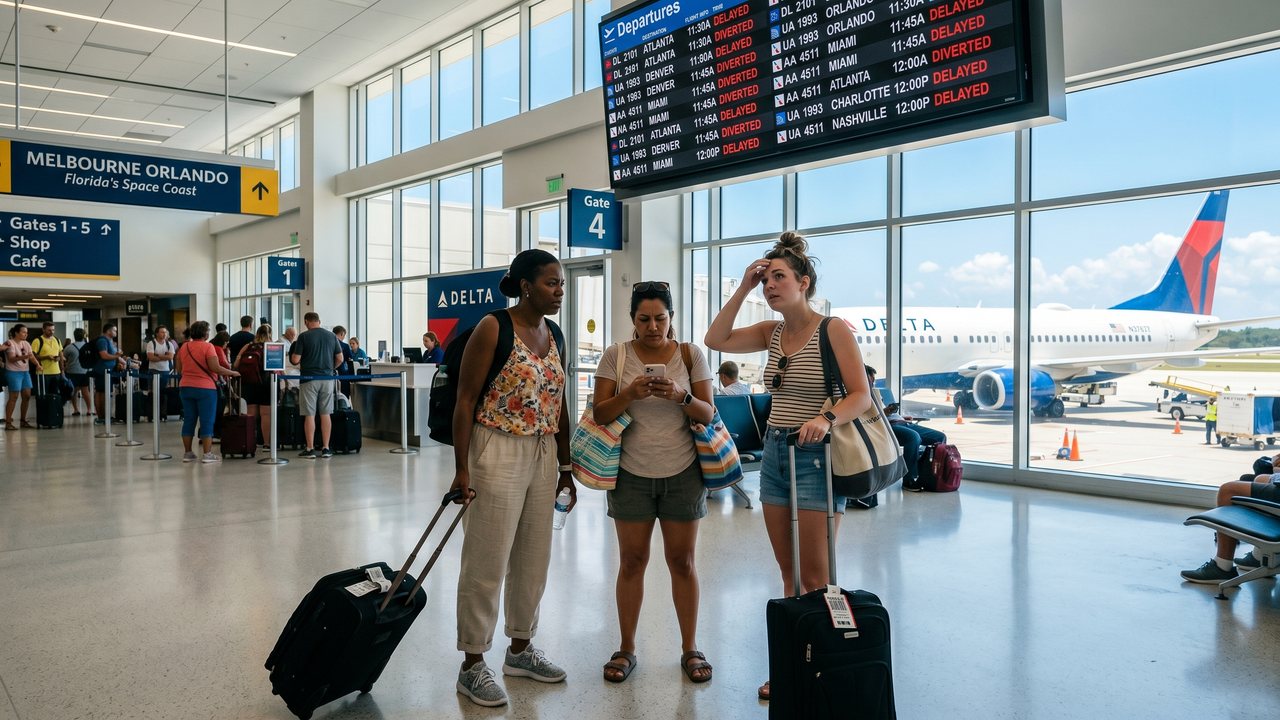
Image generated by AI
[Florida, June 29, 2026] — A Delta Air Lines flight traveling from Texas to Florida was forced to change course on Sunday, resulting in a safe landing at an alternate airfield after a routine domestic journey was interrupted. Flight DL2529, which was scheduled to transport passengers from Austin to Orlando, diverted to Melbourne Orlando International Airport instead of its intended destination.
The aircraft, an Airbus A319, departed from Austin-Bergstrom International Airport in the afternoon. While the flight was expected to conclude at Orlando International Airport, flight tracking data confirmed a late-stage change in routing. The diversion has sparked inquiries from passengers and aviation observers, though no immediate cause for the change in flight path has been disclosed by the carrier.
Airbus A319 Diverts to Melbourne Orlando International Airport
According to flight tracking records provided by FlightAware, the aircraft identified by registration N333NB successfully touched down at Melbourne Orlando International Airport. The transition from the original flight plan to the alternate airport was executed without reported incident.
Industry sources indicate that Delta Air Lines has not yet released a formal statement detailing the specific operational trigger for the diversion. In the absence of a public explanation, the event is currently classified as a precautionary operational decision. Such maneuvers are standard in commercial aviation when flight crews or ground control determine that landing at a secondary location is the safest course of action.
Operational Factors Influencing Flight Diversions in Florida
While the specific cause for Flight DL2529's diversion remains unconfirmed, aviation experts note several common variables that lead to such decisions. In the Florida region, sudden weather shifts, air traffic congestion at major hubs like Orlando International, or technical indications on the flight deck often necessitate a change in destination.
Other potential factors include:
- Medical Emergencies: Onboard health crises requiring immediate stabilization at the nearest capable facility.
- Air Traffic Control (ATC) Restrictions: Holding patterns or runway closures at the destination airport.
- Precautionary Technical Checks: Minor system alerts that require a physical inspection upon landing.
- Fuel Management: Ensuring optimal safety margins based on current arrival delays.
It is important to note that a diversion does not inherently signify a critical emergency. Rather, it reflects the rigorous safety protocols mandated for all commercial flights operating within the United States.
Standard Procedures Following an Unplanned Landing
When a commercial aircraft diverts, a complex set of logistical protocols is activated. Flight crews must maintain constant communication with air traffic controllers and the airline's operations center to coordinate the arrival. Upon landing at an alternate site, such as Melbourne Orlando International Airport, the priority shifts to passenger welfare and aircraft assessment.
Logistical challenges associated with diversions typically include:
- Engineering Inspections: Maintenance teams must verify the aircraft's airworthiness if the diversion was technical.
- Crew Legalities: Pilots and cabin crew must adhere to strict "duty time" regulations; if a diversion pushes them over their legal limit, replacement crews may be required.
- Passenger Transit: Airlines must arrange ground transportation or connecting flights to move passengers from the alternate airport to their final destination.
- Baggage Logistics: Coordinating the transfer of luggage from the diverted aircraft to the original destination hub.
Detailed Flight Data for DL2529
The following table summarizes the confirmed data regarding the interrupted service:
| Flight Detail | Information |
|---|---|
| Flight Number | DL2529 |
| Airline | Delta Air Lines |
| Aircraft Type | Airbus A319 |
| Registration | N333NB |
| Departure Point | Austin-Bergstrom International Airport |
| Scheduled Destination | Orlando International Airport |
| Actual Landing Site | Melbourne Orlando International Airport |
| Departure Time | Approx. 3:53 PM Local Time |
| Status | Landed Safely |
Safety Implications and Passenger Impact
Reports indicate that there were no injuries or onboard emergencies reported during the flight. The diversion appears to have been a controlled operational move. Passengers on DL2529 experienced a delay in reaching Orlando, but the safe arrival at Melbourne Orlando International Airport underscores the efficacy of the "safety-first" culture prevalent in U.S. aviation.
Aviation observers are continuing to monitor for an official report from Delta Air Lines. Until such a report is filed, the diversion is viewed as a successful application of safety redundancies designed to mitigate risk during domestic transit.
Why This Matters: The Role of Alternate Airports in Aviation Safety
The diversion of Flight DL2529 highlights a critical but often overlooked component of the aviation ecosystem: the strategic importance of alternate airports. Melbourne Orlando International Airport serves as a vital safety valve for the heavily congested airspace surrounding Orlando.
From an industry perspective, the ability to divert an aircraft without incident demonstrates the high level of coordination between flight crews and ground infrastructure. When an airline chooses a diversion over attempting a landing under suboptimal conditions, it is exercising "risk aversion," which is the cornerstone of modern aviation safety. This event reinforces the fact that in the hierarchy of airline priorities, schedule adherence is always secondary to the physical safety of the passengers and crew. For the broader travel industry, these incidents serve as a reminder that the systemic redundancies in place—such as alternate landing sites and strict operational protocols—are what maintain the overall safety record of commercial flight.
Related Travel Guides
Disclaimer
This article is for informational and educational purposes only. It does not constitute legal, financial, or professional advice. While we strive to provide accurate and up-to-date information, travel policies, regulations, and conditions change rapidly. Always verify information with official sources before making travel decisions. Nomad Lawyer makes no representations about the accuracy, reliability, completeness, or suitability of the information provided. Readers should consult qualified professionals for advice specific to their circumstances. The views expressed in this article are those of the author and do not necessarily reflect the views of Nomad Lawyer.
Raushan Kumar
Founder & Lead Developer
Full-stack developer with 11+ years of experience and a passionate traveller. Raushan built Nomad Lawyer from the ground up with a vision to create the best travel and law experience on the web.
Learn more about our team →