SkyAlps Launches Exclusive Groningen to Bolzano Flights for Summer 2027 Unlocking the Italian Dolomites

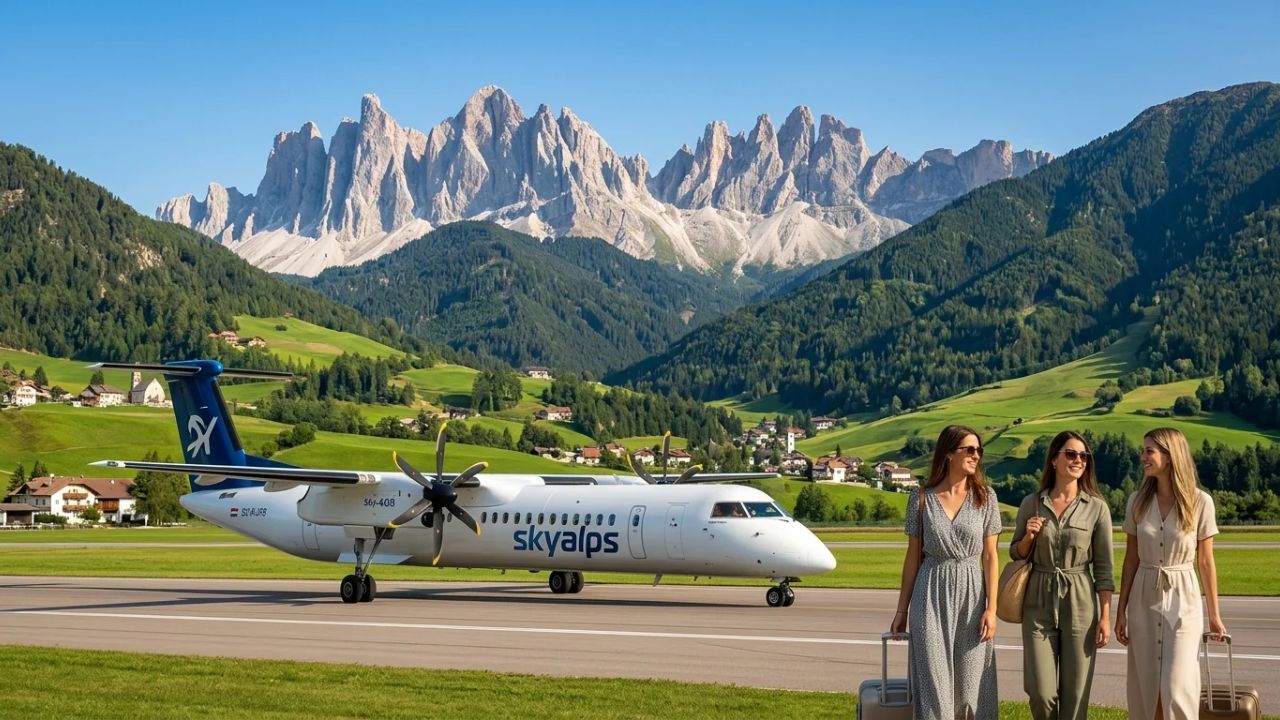
SkyAlps will introduce twice-weekly seasonal flights connecting Groningen Airport Eelde with Bolzano Airport starting April 26, 2027.
GRONINGEN, November 3, 2026 — Italian regional carrier SkyAlps has officially unveiled a landmark seasonal route connecting Groningen Airport Eelde in the Netherlands directly with Bolzano Airport in the heart of the Italian Alps, commencing operations on April 26, 2027. Operating twice weekly on Mondays and Thursdays through early September, the non-stop link establishes the sole direct aviation corridor between the Netherlands and South Tyrol, unlocking the UNESCO World Heritage-listed Dolomites for outdoor enthusiasts while expanding the international leisure footprint of the Northern Netherlands.
[!NOTE] Beginning April 26, 2027, SkyAlps will operate twice-weekly scheduled services between Groningen Airport Eelde (GRQ) and Bolzano Airport (BZO) utilizing 76-seat De Havilland Canada Dash 8-400 turboprop aircraft. The route operates every Monday and Thursday through early September 2027, marking the Italian carrier's third scheduled destination from Groningen alongside Knock and Kerry in Ireland, while eliminating the necessity for northern Dutch travelers to transit via congested European megahubs.
SKYALPS GRONINGEN–BOLZANO ROUTE SPECIFICATIONS
| Operational Metric Commercial Parameter Strategic Impact |
|---|
| Origin Gateway Groningen Airport Eelde (GRQ) Northern Netherlands Hub |
| Destination Gateway Bolzano Airport (BZO) South Tyrol / Dolomites |
| Inaugural Flight Date April 26, 2027 Summer Season Launch |
| Seasonal Operating Window April 26 to Early September 2027 Peak Alpine Summer Season |
| Weekly Flight Frequency Twice Weekly (Mondays & Thursdays)Flexible Weekend/Week Stays |
| Assigned Aircraft Fleet Dash 8-400 (76 Seats) Regional Fuel-Efficient |
| Intermediate Hub Transfer None (Direct Nonstop Service) Bypasses AMS, FRA, MUC |
| Core Regional Catchment: Groningen, Friesland, Drenthe, Lower Saxony, South Tyrol |
Trans-European Regional Connectivity: SkyAlps Bridges the Northern Netherlands and South Tyrol
The launch of non-stop scheduled flights between Groningen and Bolzano represents an innovative evolution in trans-European point-to-point regional aviation. Historically, travelers residing in the Northern Netherlands provinces of Groningen, Friesland, and Drenthe who wished to explore the dramatic alpine peaks of South Tyrol (Alto Adige) faced an arduous logistical journey. Reaching Bolzano typically required a two-to-three-hour highway or rail trek south to Amsterdam Airport Schiphol, followed by a commercial flight to Innsbruck, Verona, or Venice, and an onward two-hour bus or rental car transfer into the alpine valleys. Alternatively, travelers embarked on a grueling 1,100-kilometer road journey across Germany's heavily congested Autobahn network and the Brenner Pass.
SkyAlps' direct service dismantles this travel friction. By establishing a direct airport-to-airport link between Groningen Airport Eelde and Bolzano Airport, total transit time is reduced from nearly eight hours down to just over two hours of flight time. Passengers depart from an intimate, low-stress regional terminal in the Netherlands and step off directly into the dramatic Adige river valley beneath soaring limestone massifs.
The announcement cements a deepening operational partnership between SkyAlps and Groningen Airport Eelde. For the regional Italian carrier, which has anchored its fleet and brand identity in Bolzano, the Groningen route represents a calculated strategic expansion into high-yield Northern European markets where outbound demand for active nature holidays, mountain trekking, and cultural tourism continues to outpace traditional Mediterranean sun-and-sand vacations.
The Dash 8-400 Fleet: Fuel Efficiency, Low Noise, and Regional Turboprop Economics
Central to the commercial viability and environmental efficiency of the Groningen–Bolzano service is SkyAlps' exclusive deployment of the De Havilland Canada Dash 8-400 (formerly known as the Bombardier Q400). Configured in a comfortable, single-class 76-seat layout, the high-speed regional turboprop is ideally matched to thin, high-yield regional corridors where operating a 180-seat mainline narrowbody jet would be economically unviable and environmentally irresponsible.
The Dash 8-400 offers distinct technological and economic advantages on regional European sectors:
- Exceptional Fuel Efficiency and Emissions Reductions: Powered by twin Pratt & Whitney Canada PW150A turboprop engines, the Dash 8-400 burns up to 35 percent less fuel per passenger-kilometer compared to regional jet aircraft of comparable seating capacity operating over similar stage lengths. This substantial reduction in fuel burn directly translates into lower carbon dioxide and nitrogen oxide emissions, aligning with rigorous European Union aviation decarbonization targets.
- Short Takeoff and Landing (STOL) Performance: Bolzano Airport is characterized by a relatively constrained runway hemmed in by surrounding mountain topography. The Dash 8-400's powerful twin turboprops and steep climb gradients allow the aircraft to operate in and out of high-altitude mountain airfields with full passenger loads and safety margins, even during warm summer afternoons when thin mountain air reduces aerodynamic lift.
- Advanced Acoustic Cabin Comfort: Equipped with an active noise and vibration suppression (ANVS) system, the Dash 8-400 cabin delivers internal sound levels that rival modern jetliners. Computer-controlled tuned vibration absorbers mounted throughout the fuselage cancel out propeller acoustic frequencies, ensuring a quiet, peaceful passenger environment.
For passengers, the 76-seat cabin layout features a spacious 2-2 seating configuration that completely eliminates the dreaded middle seat, ensuring that every traveler enjoys either a window view of the approaching Alps or direct aisle access.
Gateway to the Dolomites: Accessing a UNESCO World Heritage Mountain Sanctuary
The primary leisure magnet underpinning the new route is the extraordinary natural beauty of the Italian Dolomites (Dolomiti), inscribed on the UNESCO World Heritage List in 2009 across nine distinct mountain systems covering more than 141,000 hectares. Renowned globally for their jagged vertical spires, sheer pale limestone cliffs, and dramatic chromatic transformations at sunrise and sunset—a phenomenon known locally as the Enrosadira—the Dolomites represent the crown jewel of European mountain tourism.
Arriving at Bolzano Airport places Dutch holidaymakers within immediate striking distance of the region's most celebrated alpine valleys and mountain passes:
- Val Gardena and the Sella Massif: Situated less than forty minutes from Bolzano, Val Gardena offers world-class summer mountain sports, surrounded by the soaring vertical walls of the Langkofel (Sassolungo) and the Sella group.
- Alta Badia and the Val Badia: Celebrated for its unique Ladin linguistic heritage and Michelin-starred culinary landscape, Alta Badia provides access to gentle alpine meadows and high-altitude hiking circuits.
- The Iconic Three Peaks (Tre Cime di Lavaredo): The legendary freestanding limestone towers that form the visual symbol of the Dolomites, accessible via panoramic hiking loops from the Val Pusteria.
- Pristine Glacial and Alpine Lakes: Breathtaking turquoise waters at Lago di Carezza (Karersee), reflecting the jagged spires of the Latemar range, and the world-famous emerald shores of Lago di Braies (Pragser Wildsee).
Beyond wilderness excursions, the provincial capital of Bolzano itself offers an enchanting cultural sanctuary. Shaped by centuries of dual Germanic and Italian heritage, the historic city features medieval arcaded shopping boulevards (Lauben), lively open-air fruit and wine markets in Piazza delle Erbe, and the renowned South Tyrol Museum of Archaeology, home to Ötzi the Iceman, the world-famous 5,300-year-old glacier mummy discovered in the nearby Ötztal Alps.
The region's unique gastronomic identity provides an additional compelling incentive for international visitors. South Tyrolean cuisine represents a harmonious marriage of hearty Austrian alpine traditions and refined Italian Mediterranean artistry. Travelers can savor artisanal smoked speck, handmade dumplings (canederli or knödel), alpine pasture cheeses, and fresh handmade pasta, paired with exceptional cold-climate wines produced on steep hillside vineyards, including aromatic white Gewürztraminer and indigenous red Lagrein and Vernatsch.
Schedule Architecture and Flexible Itineraries: Structuring Monday and Thursday Departures
The scheduling architecture designed by SkyAlps reflects a sophisticated understanding of leisure travel patterns, offering travelers flexible options to tailor holidays around their available vacation time.
Operating every Monday and Thursday between April 26 and early September, the timetable facilitates three distinct vacation models:
- The Extended Alpine Weekend (Thursday to Monday): Departing Groningen on Thursday morning and returning Monday evening allows working professionals and busy couples to enjoy four full days of high-altitude mountain hiking, spa relaxation, and fine dining with minimal time taken away from corporate obligations.
- The Mid-Week Mountain Retreat (Monday to Thursday): Designed for active retirees, digital nomads, and travelers seeking quiet mountain trails and uncrowded alpine refuges (rifugi), the mid-week departure cycle avoids peak weekend tourism surges in the mountain passes.
- The Comprehensive Multi-Week Active Holiday (7, 10, or 14 Nights): Combining consecutive Monday and Thursday rotations allows families and dedicated outdoor enthusiasts to embark on ambitious, long-distance trekking routes—such as the Alta Via 1 and Alta Via 2 multi-day hut-to-hut circuits—without the pressure of tight transit schedules.
This structural flexibility eliminates the fatigue and stress of marathon highway driving. For Dutch families who previously spent two full days navigating congested transit corridors across southern Germany and Austria, the ability to board a morning flight in Groningen and embark on an afternoon hike in the Val di Funes fundamentally enhances the quality and relaxation of the entire holiday. In addition, travelers planning multi-day hut-to-hut treks are advised to secure their alpine refuge reservations several months in advance, as high-altitude lodges along the Tre Cime and Sella circuits experience intense seasonal demand from international mountaineers throughout July and August.
Clean Data Table: SkyAlps Groningen–Bolzano Route Profile & Flight Operations Matrix
The following structured data table outlines the operational, technical, and commercial specifications governing the new scheduled air service:
| Operational Parameter | Baseline Technical Specification | Strategic & Commercial Significance |
|---|---|---|
| Airline Operator | SkyAlps (Bolzano, Italy) | Premium Italian regional carrier |
| Origin Airport | Groningen Airport Eelde (GRQ) | Primary gateway for Northern Netherlands |
| Destination Airport | Bolzano Airport (BZO) | Exclusive direct air gateway to South Tyrol |
| Inaugural Flight Date | April 26, 2027 | Opening of summer regional flight schedule |
| Operating Season | April 26 to early September 2027 | Peak spring and summer mountain holiday window |
| Weekly Frequency | Twice Weekly (Mondays and Thursdays) | Optimizes short breaks and extended trekking stays |
| Aircraft Assigned | De Havilland Canada Dash 8-400 | Advanced 76-seat regional turboprop |
| Engine Architecture | Pratt & Whitney Canada PW150A | Low emissions, high-altitude STOL performance |
| Seating Configuration | 2-2 Layout (No Middle Seats) | Spacious passenger comfort with 31-inch pitch |
| Flight Duration | Approximately 2 hours 15 minutes | Replaces 12-hour driving itineraries |
| Primary Catchment Area | Groningen, Friesland, Drenthe, Lower Saxony | Regional passenger diversion from Amsterdam Schiphol |
| Onward Mountain Access | Val Gardena, Alta Badia, Val di Fassa | Direct highway and bus transfers into Dolomites |
Groningen Airport Eelde's Niche Strategy: Diversifying the Northern Dutch Aviation Portfolio
The introduction of Bolzano marks a defining milestone in the long-term strategic transformation of Groningen Airport Eelde. Located just ten kilometers south of the city of Groningen, the airport serves a prosperous regional catchment area encompassing more than 1.7 million residents across the three northern Dutch provinces and adjacent districts of Lower Saxony in northwest Germany.
Rather than attempting to compete directly with massive international hubs like Amsterdam Airport Schiphol or regional powerhouses like Eindhoven Airport for high-density, low-yield holiday routes to crowded Mediterranean beach resorts, Eelde's management team has executed a disciplined niche strategy. The airport focuses on cultivating exclusive, specialized air services that connect northern residents directly to unique outdoor adventure, cultural, and nature-oriented destinations:
- The Irish Expansion with BBI Travel: Bolzano represents SkyAlps' third scheduled destination from Groningen during the summer 2027 season. The carrier also operates specialized charter and scheduled services to Knock (Ireland West Airport) and Kerry in southwest Ireland on behalf of leading Dutch tour operator BBI Travel, catering to outdoor enthusiasts exploring the Wild Atlantic Way.
- Scandinavian Winter and Summer Corridors: The airport maintains direct seasonal services to Scandinavian Mountains Airport (SCR), providing seamless access to the premier ski slopes and summer hiking networks of Sälen in Sweden and Trysil in Norway.
- Unique Island Destinations: Specialized charter flights connect Groningen with Guernsey in the Channel Islands, providing a direct connection to historic coastal heritage.
Looking toward the future, Groningen Airport Eelde is actively exploring opportunities to expand its portfolio into high-demand primary European markets, evaluating prospective air links to London, Copenhagen, and selected Spanish holiday destinations. By maintaining a judicious balance between niche seasonal outdoor routes and broader commercial services, the airport strengthens its financial viability while delivering unmatched convenience to regional travelers who value seamless 15-minute terminal check-in procedures and stress-free airport parking over the chaotic queues of congested metropolitan airports.
Cross-Border Economic Dividends: Boosting South Tyrolean Hospitality and Dutch Leisure Spending
The economic advantages generated by the Groningen–Bolzano route operate as a mutually beneficial cross-border catalyst, stimulating capital investment and visitor spending across both regional economies.
In South Tyrol, the arrival of direct flights from the Northern Netherlands injects valuable, high-spending tourism revenue into the provincial economy. Dutch holidaymakers consistently rank among Europe's most dedicated outdoor recreation consumers, allocating substantial budgets toward quality mountain accommodations, specialized equipment rentals, licensed alpine climbing guides, and regional gastronomic experiences. By establishing direct air access early in the season on April 26, SkyAlps helps local hoteliers, mountain refuge operators, and family-owned agriturismo farmstays extend their summer revenue window into the late spring shoulder season.
Concurrently, the route creates exciting reciprocal tourism opportunities for South Tyrolean travelers seeking to discover the distinctive landscapes of the Northern Netherlands. Travelers departing Bolzano can step off in Groningen to explore:
- The UNESCO World Heritage Wadden Sea: The world's largest unbroken system of intertidal sand and mud flats, offering guided mudflat walking (wadlopen) and boat safaris to observe grey seal colonies.
- The Frisian Lakes and Waterways: Renowned internationally as a premier sailing and canal boating haven, featuring picturesque historic harbor towns like Sneek and Harlingen.
- The Drenthe Megaliths and National Parks: Expansive heathlands, ancient prehistoric stone monuments (hunebedden), and peaceful forest cycling networks.
- Groningen's Vibrant University Culture: An energetic cultural hub celebrated for its cutting-edge Groninger Museum, lively canal-side cafes, world-class cycling infrastructure, and historic Hanseatic architecture.
By facilitating effortless two-way cultural and commercial exchange, the new service reinforces the vitality of both regional ecosystems without channeling traffic through congested national capitals.
The Alpine Terroir and Viticulture of South Tyrol: High-Altitude Wine Routes of the Isarco and Adige Valleys
Beyond its jagged limestone peaks, South Tyrol is celebrated throughout Europe as one of the continent's most distinctive and high-yielding viticultural regions. The confluence of dramatic Alpine topography with Mediterranean climatic influences flowing northward through the Adige valley creates a rare microclimate characterized by more than 300 days of annual sunshine, cool mountain night breezes, and extreme diurnal temperature swings. These stark thermal shifts preserve natural acidity while concentrating intense aromatic compounds within the grapes, allowing regional vintners to cultivate exceptional cool-climate wines on steep terraced hillsides ascending to over 1,000 meters above sea level.
Arriving in Bolzano places wine enthusiasts at the crossroads of world-renowned viticultural corridors. Just south of the city lies the South Tyrolean Wine Road (Südtiroler Weinstraße), one of Italy's oldest documented wine routes, meandering through historic picturesque villages such as Appiano (Eppan), Caldaro (Kaltern), and Termeno (Tramin)—the historic ancestral home of Gewürztraminer. On the gravelly alluvial plains of the Bolzano basin, particularly in the historic quarter of Gries, viticulturists cultivate Lagrein, an indigenous red grape variety producing deep ruby-colored wines celebrated for dark berry notes, velvety tannins, and earthy minerality. Heading north along the steep slopes of the Valle Isarco (Eisacktal), the landscape transitions into high-altitude white wine production, where family-owned estates yield world-class Kerner, Sylvaner, and Müller-Thurgau known for sharp mineral precision and floral complexity.
For Dutch travelers, who have traditionally explored French and Spanish wine regions, South Tyrol presents a captivating fusion of active outdoor recreation and refined wine tourism. High-altitude hiking trails (Weinwanderwege) thread directly through terraced vineyards and historic castle estates, allowing hikers to pause at traditional rustic wine taverns (Buschenschank) to sample farm-to-table cured speck, fresh alpine butter, and estate-bottled vintages. The direct flight connection from Groningen enables discerning travelers to discover these boutique, family-operated cellars without enduring long overland journeys, infusing valuable direct consumer revenue into local agricultural cooperatives.
Mountain Mobility Logistics: Connecting Bolzano Airport to the High Alpine Refuges and Passes
Executing a seamless summer vacation in the Italian Dolomites requires an understanding of the region's sophisticated and environmentally sustainable public transport architecture. Recognizing that unrestricted automobile traffic threatens fragile alpine ecosystems and paralyzes narrow mountain passes during summer peak weeks, the Autonomous Province of Bolzano has developed one of the most integrated regional mobility networks in the world.
Upon landing at Bolzano Airport, travelers can transition effortlessly into the South Tyrolean integrated transport grid. Utilizing the unified Südtirol Pass or visitor Mobilcard, travelers enjoy unlimited access to regional trains, local mountain valley buses, and state-of-the-art alpine cable cars. Within twelve minutes of departing downtown Bolzano, travelers can board the modern Renon (Ritten) cable car, ascending nearly 1,000 vertical meters to the high alpine plateau, where historic narrow-gauge electric trains connect scenic mountain villages while offering panoramic views of the Schlern (Sciliar) massif.
For hikers intending to explore the high dolomite passes—including the Pordoi, Sella, and Gardena passes—specialized seasonal transit buses transport outdoor enthusiasts directly to high-altitude trailheads, eliminating the need to rent passenger vehicles or navigate steep switchback roads. This transit infrastructure is designed to support the region's historic mountain refuge (rifugio or Schutzhütte) culture. Operated under the stewardship of the Alpine Club of South Tyrol and the Italian Alpine Club, hundreds of traditional stone mountain lodges sit perched along dramatic high-altitude ridges. These refuges provide comfortable dormitory and private room accommodations, hot showers, and hearty three-course alpine dinners, allowing multi-day trekkers to navigate scenic routes like the Alta Via without carrying heavy camping gear or descending into valley towns each night.
The History and Rebirth of Bolzano Airport: Overcoming Alpine Topography for Sustainable Regional Access
To appreciate the strategic significance of SkyAlps' new scheduled service, one must consider the remarkable history and revitalization of Bolzano Airport. Originally constructed during the 1920s as an Italian military airfield, the facility played a regional administrative and general aviation role for nearly a century, operating with a severely constrained runway that prevented regular commercial airline operations and caused major European network carriers to bypass the region in favor of Innsbruck or Verona.
The airport's modern renaissance began when the local provincial government modernized the infrastructure, extending the paved runway to 1,432 meters to accommodate modern regional aircraft while installing high-precision instrument guidance systems to ensure safe navigational corridors through surrounding mountain terrain. Recognizing that foreign legacy carriers were unwilling to dedicate specialized short-takeoff aircraft to South Tyrol, local renewable energy entrepreneur Josef Gostner and his partners established SkyAlps in 2021. The vision was straightforward: establish an agile, locally owned regional carrier utilizing fuel-efficient turboprops to provide reliable, direct connectivity between Bolzano and premier European commercial and leisure capitals.
Today, SkyAlps' deployment of the 76-seat Dash 8-400 validates this regional aviation philosophy. By operating an aircraft specifically engineered for exceptional climb performance and minimal acoustic footprint, the carrier demonstrates that mountain communities can achieve high-speed international connectivity without constructing massive multi-runway hubs or disrupting rural tranquility. The partnership with Groningen Airport Eelde demonstrates how two forward-thinking regional aviation gateways can collaborate to unlock entirely new tourism corridors, bypassing legacy congestion and proving that regional air travel can be both commercially viable and environmentally responsible.
European Aviation Decentralization: Why Secondary Airport Corridors Are Thriving
The emergence of direct point-to-point routes like Groningen–Bolzano reflects a profound structural shift underway across the European commercial aviation landscape. For decades, the dominant airline business model funneled regional passengers through massive hub-and-spoke networks centered on congested megahubs such as Amsterdam Schiphol, London Heathrow, Paris Charles de Gaulle, and Frankfurt.
However, the hub-and-spoke model is confronting severe operational and regulatory headwinds. Major hubs are grappling with severe capacity constraints, terminal congestion, chronic staffing shortages, and government-imposed environmental flight caps designed to mitigate carbon emissions and airport community noise pollution. Amsterdam Airport Schiphol, in particular, has faced intense legal and regulatory debates surrounding statutory flight reductions, leading airlines and passengers to seek alternative, low-friction regional gateways.
Secondary regional airports offer an extraordinarily compelling alternative. Facilities like Groningen Airport Eelde and Bolzano Airport provide rapid, predictable processing times where travelers can transition from long-term parking to their boarding gate in under fifteen minutes. Additionally, deploying quiet, fuel-efficient turboprop aircraft on direct regional sectors bypasses congested hub airspace entirely, lowering the net carbon footprint per passenger journey and eliminating the cascading delay risks inherent in complex hub flight transfers. SkyAlps' expansion embodies this decentralized future, proving that regional airlines operating specialized aircraft can build highly profitable, sustainable route networks that serve localized community demand.
This decentralized aviation model aligns seamlessly with the European Union's ambitious environmental policy targets, including the Fit for 55 legislative package and the ReFuelEU Aviation mandates. Under these continental regulatory frameworks, airlines operating within the European Economic Area are legally required to progressively blend certified Sustainable Aviation Fuels into their conventional kerosene supply chains, escalating from two percent in 2025 up to six percent by 2030 and seventy percent by 2050. Because regional turboprops like the Dash 8-400 operate with lower baseline fuel burn rates per passenger-kilometer, the financial impact of adopting emerging, higher-cost sustainable fuels is substantially more manageable for regional operators than for legacy carriers operating older twinjets. Regional carriers operating fuel-efficient turboprops are thus uniquely positioned to maintain affordable ticket price structures while satisfying the European continent's most stringent environmental compliance criteria.
From an operational perspective, travelers planning an active summer hiking or cycling expedition to South Tyrol should note practical considerations regarding regional turboprop baggage handling. Because the Dash 8-400 features a dedicated aft baggage compartment rather than underfloor containerized holds, travelers transporting specialized outdoor equipment—such as disassembled mountain bikes, oversized hard-shell bicycle cases, or specialized rock climbing hardware—should register these sports items during the initial reservation process to ensure weight and space allocation. Passengers carrying collapsible trekking poles should also remember that international aviation security regulations prohibit poles in carry-on cabin luggage due to metal tips, requiring these items to be stowed securely inside checked baggage before passing through the security screening checkpoints at Groningen Airport Eelde.
Why This Matters: The Practical Traveler's Guide to Exploring the Italian Alps in Summer 2027
The launch of SkyAlps' Groningen–Bolzano route establishes a transformative new gateway for European summer travel:
- For Dutch and Northern European travelers, the service fundamentally simplifies access to the Italian Dolomites. By eliminating twelve-hour driving marathons and stressful Schiphol airport queues, the flight allows vacationers to maximize their leisure time in the mountains, making a spontaneous long weekend of alpine hiking or rock climbing completely feasible.
- From an aviation and environmental perspective, the route validates the modern regional turboprop as the premier sustainable tool for European air connectivity. The Dash 8-400 delivers low fuel burn, reduced acoustic impact, and exceptional passenger comfort while connecting secondary communities that mainline jets cannot serve.
- For South Tyrol and the Northern Netherlands, this partnership deepens economic and cultural integration between two distinct, high-character European regions, proving that targeted regional aviation creates lasting value for local tourism businesses, hospitality providers, and traveling families alike.
Travelers intending to explore the Dolomites during the summer 2027 season are encouraged to book their seats early, as the 76-seat Dash 8-400 capacity on twice-weekly departures is anticipated to generate strong advance booking demand across peak summer holiday weeks.
Related Travel Guides
- Greenland Opens New Ilulissat International Airport with 2,200-Meter Runway to Revolutionize Arctic Tourism
- Emirates Deploys Airbus A350 on Durban-Dubai Route in March 2027 with Premium Economy Debut
- Australia Winter Tourism 2027: Alpine Snow Escapes, Regional Dispersal, and Nine-Million Visitor Milestone
This article is for informational purposes. Flight routes, passenger regulations, visa rules, and transit advisories are subject to change by airlines and aviation authorities. Readers are advised to verify schedules and travel documentation with relevant carriers and border agencies before departure.
Related Stories

China Eastern Airlines Expands Winter 2026-2027 Global Flight Network with 430 Daily International Flights

Singapore Airlines Inks Three-Year Deal for 4,800 Tonnes of Next-Gen SAF from Aether's Project Beacon at Pulau Bukom Starting 2028