
Six Flight Cancellations Disrupt Baghdad and Erbil Airports — Fly Baghdad, Air Arabia, Royal Jordanian Services Grounded
Major flight disruptions hit Baghdad and Erbil airports as six services face cancellation. Fly Baghdad, Air Arabia, and Royal Jordanian affected; Dubai, Sharjah, Amman routes impacted.

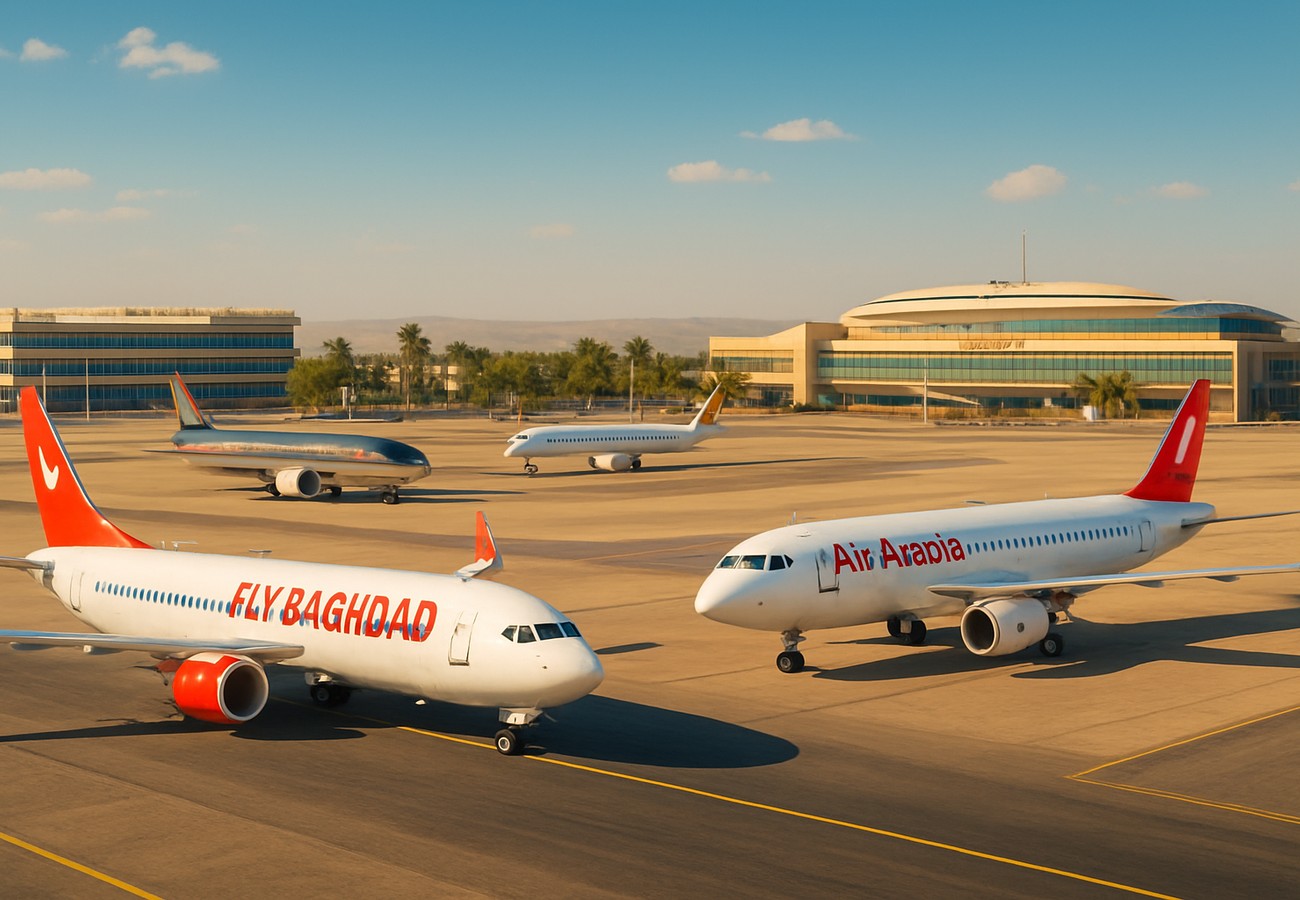
Image generated by AI
A significant operational crisis has unfolded across Iraq's primary aviation hubs, with six flight cancellations simultaneously affecting Baghdad International Airport and Erbil International Airport. The disruptions have grounded services operated by Fly Baghdad, Air Arabia, and Royal Jordanian, leaving hundreds of passengers stranded and forcing major route suspensions to key regional destinations including Dubai, Sharjah, and Amman.
The cascading cancellations represent a rare convergence of scheduling conflicts and operational constraints at both Iraqi airports, triggering immediate ripple effects across Middle Eastern aviation networks. Industry observers are closely monitoring whether the disruptions stem from infrastructure limitations, staffing shortages, or external geopolitical factors that have historically impacted Iraqi airspace stability. The timing of these simultaneous groundings raises questions about coordination between airport authorities and carrier operations teams across the region.
Fly Baghdad, Iraq's flag carrier, has suspended multiple domestic and regional connections, while Air Arabia—the Abu Dhabi-based low-cost operator—has cancelled services on its high-frequency Baghdad-Dubai and Baghdad-Sharjah routes. Royal Jordanian Airlines, which maintains critical connectivity between Amman and Iraqi cities, has also been forced to ground flights, disrupting passenger flows along one of the Middle East's busiest aviation corridors. According to industry tracking platforms like FlightAware, the cancellations have created substantial knock-on delays across connecting services throughout the Gulf region.
The disruptions underscore the vulnerability of Iraq's aviation infrastructure, which has undergone significant modernization in recent years but remains susceptible to operational bottlenecks. Baghdad International Airport, which handled over 10 million passengers annually before recent geopolitical pressures, continues to operate below pre-pandemic capacity levels. The simultaneous grounding of six services suggests either a shared operational constraint—such as runway maintenance, air traffic control staffing, or fuel supply disruptions—or coordinated schedule adjustments by carriers responding to demand fluctuations or fuel prices impact airlines across the region.
Regional carriers have increasingly faced pressure to optimize routes and manage costs amid volatile fuel markets and shifting passenger demand patterns. The International Air Transport Association (IATA) has documented how Middle Eastern carriers are navigating complex operational environments where infrastructure reliability directly influences scheduling decisions. These cancellations may reflect broader industry trends toward consolidating flights during peak disruption periods rather than maintaining marginal services that generate operational losses.
Passengers booked on affected flights have been offered rebooking options on alternative carriers or full refunds, though the limited frequency of services between Iraq and major Gulf hubs means many travelers face multi-day delays. Airlines operating from Baghdad (BGW) and Erbil (EBL) have activated customer service protocols, though communication delays have frustrated some passengers attempting to rearrange connections.
What This Means for Travelers
If you're planning travel through Iraqi airports or connecting via Dubai, Sharjah, or Amman, verify your flight status directly with your airline before heading to the airport. The disruptions highlight the importance of booking with carriers offering flexible rebooking policies and maintaining travel insurance that covers airline-caused cancellations. Passengers with tight connections should consider routing through alternative hubs like Doha (DOH) or Kuwait City (KWI) until normal operations resume at Baghdad and Erbil.
Expert insight: Middle Eastern aviation's resilience depends on infrastructure investment and operational redundancy—single-point failures at major hubs can cascade across entire regional networks within hours.
The situation at Baghdad and Erbil airports underscores the critical importance of infrastructure modernization and operational transparency in emerging aviation markets. As global travel demand continues recovering and fuel prices remain volatile, carriers operating in geopolitically sensitive regions must maintain robust contingency planning to prevent cascading disruptions. Industry stakeholders will be watching closely to determine whether these cancellations represent isolated operational challenges or signals of deeper capacity constraints that could impact summer travel season planning across the Middle East.
Related Travel Guides
Disclaimer
This article is for informational and educational purposes only. It does not constitute legal, financial, or professional advice. While we strive to provide accurate and up-to-date information, travel policies, regulations, and conditions change rapidly. Always verify information with official sources before making travel decisions. Nomad Lawyer makes no representations about the accuracy, reliability, completeness, or suitability of the information provided. Readers should consult qualified professionals for advice specific to their circumstances. The views expressed in this article are those of the author and do not necessarily reflect the views of Nomad Lawyer.
Kunal K Choudhary
Co-Founder & Contributor
A passionate traveller and tech enthusiast. Kunal contributes to the vision and growth of Nomad Lawyer, bringing fresh perspectives and driving the community forward.
Learn more about our team →