
Singapore Changi Airport Implements Passport-Free Biometric Clearance and Cross-Border QR Payments 2026
Singapore has transitioned to passport-free departures at Changi Airport using iris and facial biometrics, while expanding regional QR payment linkages to reduce reliance on traditional banking cards for international travelers.

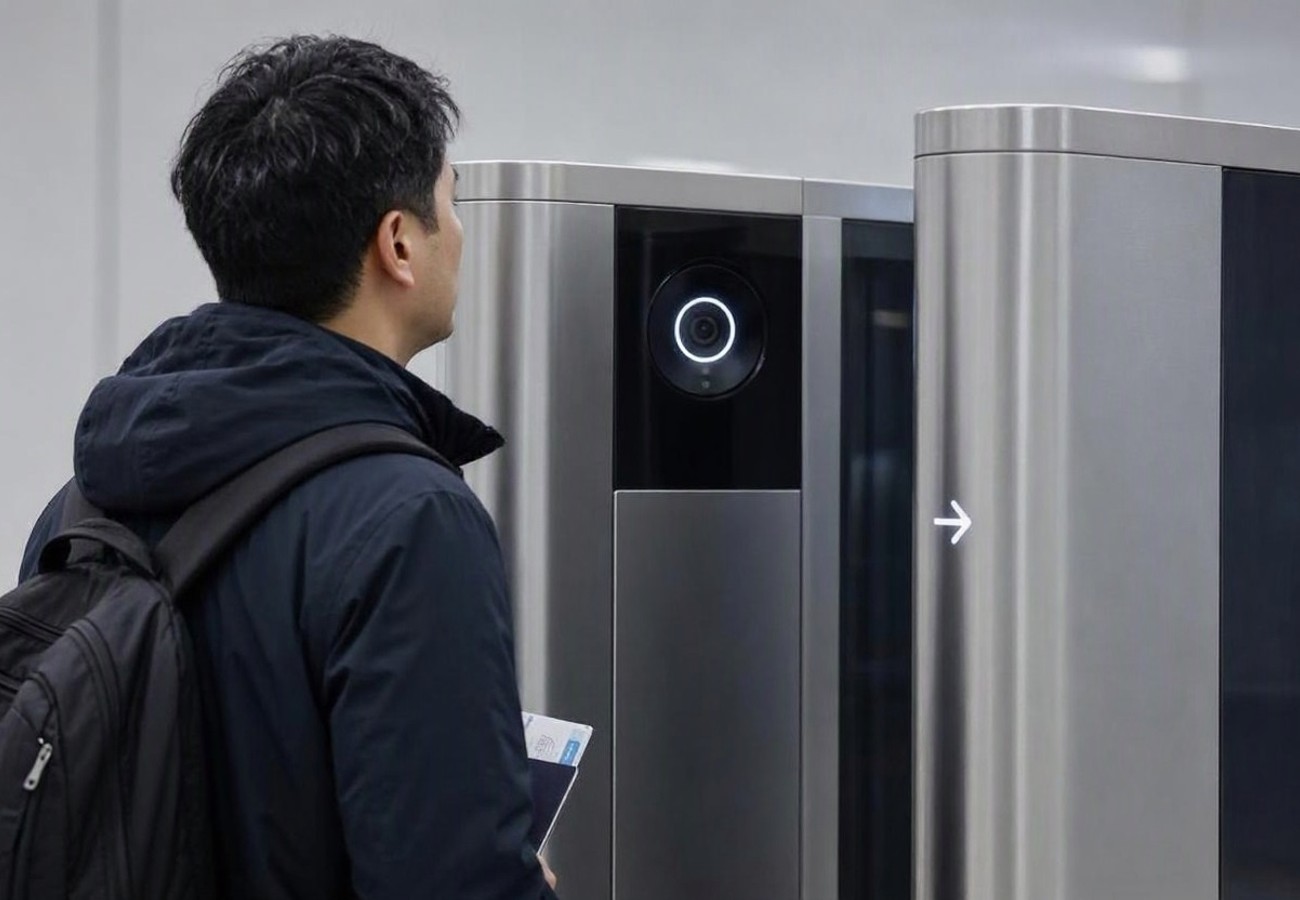
Image generated by AI
Average immigration clearance times at Changi Airport have plummeted from 25 seconds to just 10 seconds per passenger—a 60% increase in processing efficiency since the full rollout of biometric systems. This shift signals a broader movement toward "invisible" border controls, where the physical passport is replaced by biological identifiers to accelerate passenger flow in high-volume transit hubs.
The Biometric Shift in Numbers
The transition to a passport-free environment is the cornerstone of Singapore’s New Clearance Concept. Rather than relying on manual document verification, the Immigration and Checkpoints Authority (ICA) has deployed a system that utilizes facial and iris recognition to validate identities.
The operational data confirms a successful implementation across all four terminals of Changi Airport, with the full transition completed on 30 September 2024. For the departing international traveler, this means the elimination of the physical passport check at automated clearance gates. However, this efficiency is asymmetrical: while Singapore residents enjoy passport-less access for both arrivals and departures, foreign visitors are currently restricted to using biometrics for departure only. Upon arrival, the traditional passport presentation remains mandatory.
Regional Payment Integration and Market Shifts
Parallel to the hardware upgrades at the border, Singapore is aggressively expanding its digital financial infrastructure. The integration of the PayNow system with regional networks is designed to decouple the traveler from a total dependence on credit or debit cards.
The current landscape shows a strategic expansion of QR payment linkages across key ASEAN markets and beyond. By connecting real-time payment systems, Singapore has created a financial corridor that allows eligible users to execute transfers and payments via simple QR scans. This is part of a larger trend tracked by the World Travel & Tourism Council (WTTC) regarding the digitalization of the visitor economy.
Cross-Border Payment Connectivity Matrix 2026
| Partner Country | Payment Network Linkage | Primary Use Case | Status |
|---|---|---|---|
| Malaysia | PayNow $\rightarrow$ DuitNow | Retail/Merchant QR | Active |
| Thailand | PayNow $\rightarrow$ PromptPay | Retail/Merchant QR | Active |
| Indonesia | PayNow $\rightarrow$ QRIS | Retail/Merchant QR | Active |
| India | PayNow $\rightarrow$ UPI | Real-time Transfers | Active |
What This Means for Travelers
The shift toward biometrics and QR payments does not mean you can leave your wallet or documents at home. The data indicates a "digitized, but not paperless" environment.
For Leisure Travelers: If you are flying out of Changi, you can expect a significantly faster exit process. However, you must retain your physical passport throughout your stay. Destination authorities, airlines, and local law enforcement still require physical documentation for verification. Biometric clearance at the gate does not waive visa requirements or boarding document mandates.
For Business Travelers: The expansion of PayNow and UPI linkages reduces the need for high-volume cash withdrawals for incidental expenses (meals, transport, and small retail). However, corporate travelers should note a critical data distinction: these QR systems are designed for retail consumer purchases. They are generally not equipped for formal supplier settlements, large-scale corporate invoicing, or high-value business expenses.
Booking and Logistics Advice: When planning a trip to Singapore in 2026, verify with your banking institution whether your specific account supports international QR linkages. While the infrastructure exists, acceptance is based on individual commercial agreements between banks. To avoid payment failure at merchants who do not support specific apps, maintaining a secondary international credit card and a small reserve of local currency remains the only fail-safe strategy.
Projection: The Future of the "Invisible Border"
The 60% reduction in clearance time at Changi is likely a benchmark for other global hubs. As Singapore integrates its airport biometrics with its urban payment systems, the trajectory is moving toward a unified "Digital Visitor Identity."
We expect to see these biometric profiles eventually link to payment credentials, allowing a traveler to move from the aircraft to a hotel and into a retail store without ever presenting a physical ID or card. This trajectory aligns with IATA's (International Air Transport Association) vision for One ID, which seeks to standardize digital identity across the global aviation ecosystem. The current Singapore model serves as a live pilot for how biometric efficiency can be scaled across multiple terminals without compromising security.
FAQ: Singapore Digital Travel 2026
Do I still need my passport to visit Singapore? Yes. While departing passengers can use biometrics at Changi, passports are still required for entry into Singapore and for verification by airlines and destination authorities.
Will all my apps work for QR payments in Singapore? No. Acceptance depends on specific linkages (e.g., PayNow with UPI or DuitNow). You must check if your specific bank or payment provider has a formal agreement with the Singaporean network.
Is the biometric clearance mandatory for all passengers? It is available for departing foreigners and residents across all four Changi terminals, but it is designed to streamline the process rather than replace all forms of identity verification.
Can I use QR payments for large business invoices? Generally, no. The current cross-border QR linkages are optimized for retail and consumer transactions, not for corporate B2B settlements or large-scale professional expenses.
The era of the physical queue is ending, replaced by a biological handshake between the traveler and the terminal.
Related Travel Guides
Disclaimer
This article is for informational and educational purposes only. It does not constitute legal, financial, or professional advice. While we strive to provide accurate and up-to-date information, travel policies, regulations, and conditions change rapidly. Always verify information with official sources before making travel decisions. Nomad Lawyer makes no representations about the accuracy, reliability, completeness, or suitability of the information provided. Readers should consult qualified professionals for advice specific to their circumstances. The views expressed in this article are those of the author and do not necessarily reflect the views of Nomad Lawyer.
Raushan Kumar
Founder & Lead Developer
Full-stack developer with 11+ years of experience and a passionate traveller. Raushan built Nomad Lawyer from the ground up with a vision to create the best travel and law experience on the web.
Learn more about our team →