
Anantara Tented Camp Kafue River Redefines Zambian Luxury With 14.3m Elevated Eco-Structures in 2026
Anantara's new Kafue River camp introduces high-altitude luxury suites elevated up to 14.3 meters to protect wildlife corridors in Zambia's largest national park.

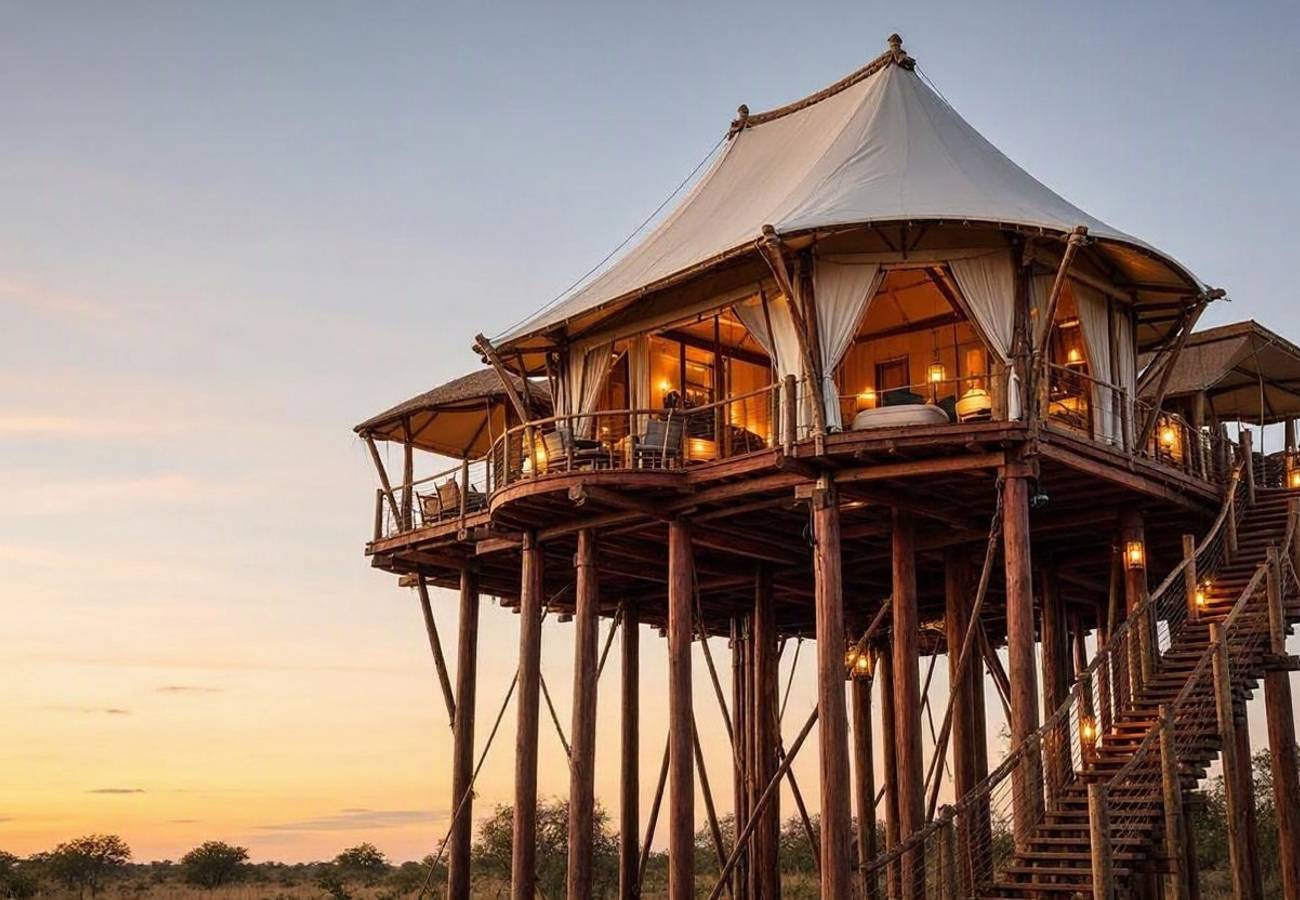
Image generated by AI
Luxury lodge footprints in Sub-Saharan Africa have traditionally relied on ground-level clearing, but Anantara’s new entry in Zambia shifts the metric by elevating guest structures up to 14.3 meters above the soil. This architectural pivot signals a broader industry movement toward "zero-fragmentation" hospitality, where the priority shifts from merely reducing carbon emissions to actively preserving the physical migration paths of megafauna.
The Architecture of Preservation in Numbers
The Anantara Tented Camp Kafue River is not a standard lodge expansion; it is a technical exercise in low-impact engineering. Designed by Meg Ralph Spaces, the property utilizes a system of rosewood and engineered timber platforms to decouple human habitation from the forest floor.
The data reveals a precise structural strategy: the camp consists of 13 exclusive luxury keys, with platforms ranging from 3.5 meters to 14.3 meters in height. This specific elevation is calculated to ensure that the migration corridors for elephants and various antelope species remain entirely unobstructed. By removing the physical barrier of ground-level walls, the development avoids the habitat fragmentation that typically plagues large-scale tourism projects in protected areas.
Beyond the physical height, the camp's energy profile reflects a total commitment to off-grid sustainability. The entire estate operates on 100% renewable solar power, aligning with the International Air Transport Association (IATA) and broader global tourism goals of decarbonizing the travel experience in remote regions.
Comparative Context: Kafue vs. Traditional Safari Hubs
Kafue National Park provides a scale of wilderness that is rarely matched in the commercial safari circuit. Established in the 1950s, it remains Zambia's oldest and largest protected area, spanning 22,400 square kilometers. To put this in perspective, the sheer volume of this terrain allows for a density of tourism that is significantly lower than the overcrowded corridors of the Serengeti or Kruger National Park.
The following table compares the operational scale and structural approach of the Anantara Kafue River project against traditional luxury lodge benchmarks in the region.
| Metric | Traditional Luxury Lodges | Anantara Tented Camp Kafue River |
|---|---|---|
| Ground Impact | Ground-level slabs/foundations | Elevated platforms (3.5m - 14.3m) |
| Energy Source | Hybrid (Diesel + Solar) | 100% Renewable Solar |
| Privacy Ratio | High density/Shared walkways | Ultra-low density/Isolated villas |
| Wildlife Access | Perimeter fencing/Controlled paths | Open-corridor "Under-Suite" migration |
| Average Suite Size | 40 - 80 sq meters | 65 - 400 sq meters |
This shift toward "high-altitude" luxury is a direct response to data from the World Tourism Organization (UNWTO), which indicates a rising demand among high-net-worth individuals (HNWIs) for "invisible" tourism—experiences that offer maximum opulence with minimum ecological interference.
What This Means for Travelers
For the individual traveler, the opening of this camp changes the logistics of visiting Zambia. The property targets a specific segment of the market: those seeking absolute seclusion and architectural novelty.
Booking and Planning Advice:
- Target the Ultra-Private: With only 13 keys, availability will be extremely limited. Travelers planning a visit for 2027 should secure bookings 6-9 months in advance.
- Suite Selection: If privacy is the primary driver, the 400-square-meter Presidential Villa—accessible only by boat—offers the highest level of isolation. For those seeking a balance of luxury and nature, the 115-square-meter Pool & Bush Villas provide private heated plunge pools.
- Experience Shift: Expect a departure from the "crowded jeep" experience. The focus here is on twice-daily game drives and river safaris designed for immersion rather than high-volume sightseeing.
Forward Projection: The Rise of the "Floating" Lodge
The trajectory of the Anantara project suggests that the future of African luxury travel is moving away from the "permanent structure" model. We are seeing a transition toward modular, elevated, and removable architecture. As conservation laws tighten across the African Union, carriers and developers will likely adopt the "elevated platform" model to gain permits in previously restricted zones of national parks.
We expect to see a 15-20% increase in "low-impact" luxury certifications across Zambia and Botswana over the next three years, as the success of the Kafue River model proves that high-end amenities (such as glass elevators and star beds) can coexist with strict wildlife corridor protections.
FAQ: Anantara Kafue River 2026
Will the elevated design affect the safety of the guests? No. The structures use engineered timber and rosewood platforms designed to professional architectural standards, ensuring stability while allowing wildlife to pass safely underneath.
Is this lodge accessible for all types of travelers? The property features glass elevators to access the Horizon Terrace Suites, making the high-altitude luxury more accessible than traditional climbing-stair tented camps.
How does the solar power affect the guest experience? Guests will not notice a difference in luxury; the solar integration supports high-end amenities, including heated plunge pools and climate control, without relying on noisy diesel generators.
The era of the footprint-heavy resort is ending; the era of the elevated sanctuary has arrived.
Related Travel Guides
Disclaimer
This article is for informational and educational purposes only. It does not constitute legal, financial, or professional advice. While we strive to provide accurate and up-to-date information, travel policies, regulations, and conditions change rapidly. Always verify information with official sources before making travel decisions. Nomad Lawyer makes no representations about the accuracy, reliability, completeness, or suitability of the information provided. Readers should consult qualified professionals for advice specific to their circumstances. The views expressed in this article are those of the author and do not necessarily reflect the views of Nomad Lawyer.
Preeti Gunjan
Contributor & Community Manager
A passionate traveller and community builder. Preeti helps grow the Nomad Lawyer community, fostering engagement and bringing the reader experience to life.
Learn more about our team →