
Sierra Leone Expands Global Tourism Appeal via World-Class Surfing and 2026 Year of Culture
Sierra Leone is transforming its international tourism profile by designating 2026 as the Year of Culture and Creativity, integrating heritage sites with surf and wildlife escapes.

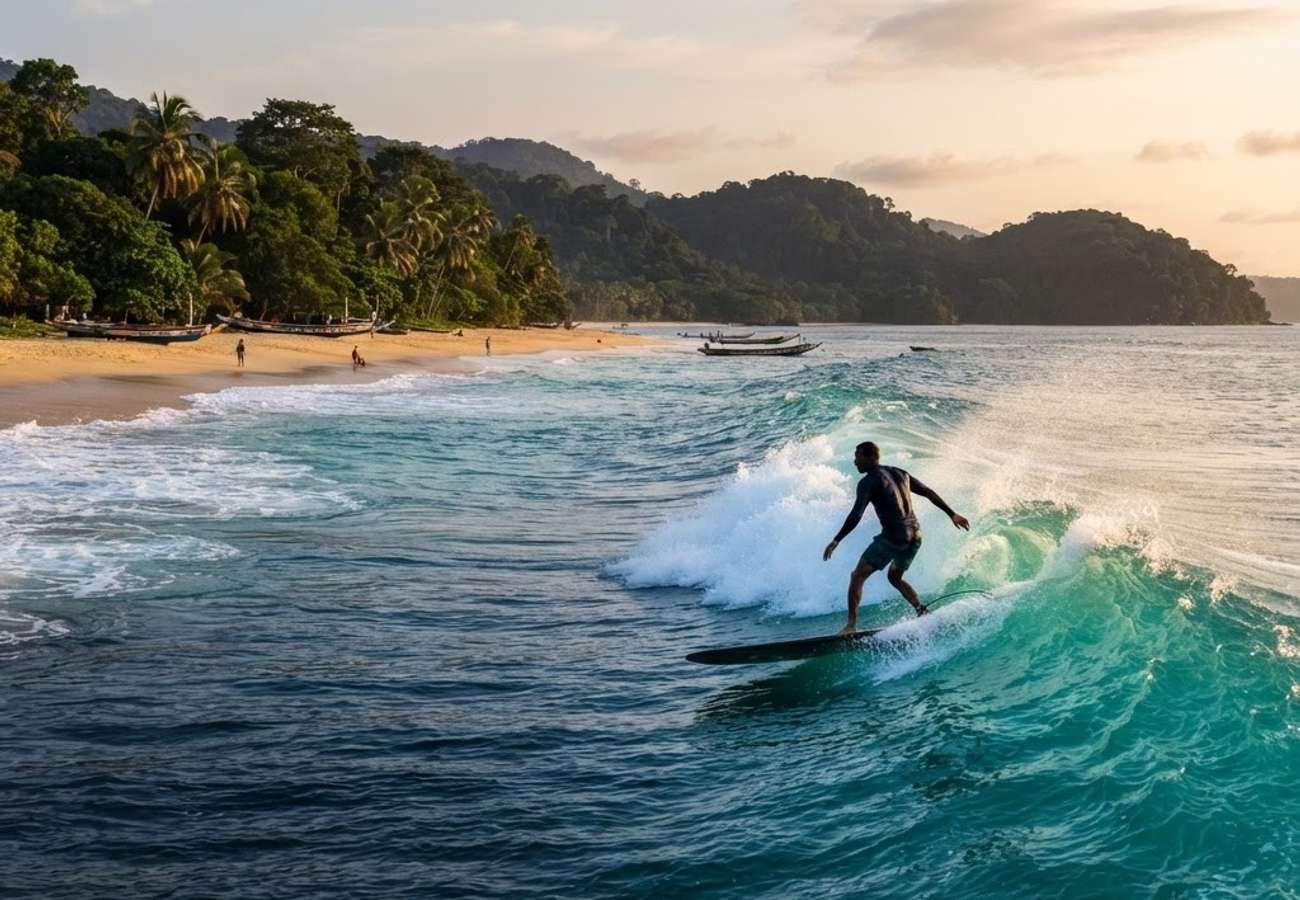
Image generated by AI
Sierra Leone is aggressively diversifying its international travel portfolio in 2026, blending high-adrenaline surfing and primate conservation with a national mandate to celebrate heritage. From the restoration of colonial landmarks to the arrival of 1,280 rally tourists, the nation is shifting from a niche destination to a multifaceted global hub.
The Ministry of Tourism and Cultural Affairs has officially designated 2026 as the Year of Culture and Creativity. This strategic pivot aims to move the country beyond its reputation for pristine beaches, instead positioning music, traditional culinary arts, and artisan crafts as primary drivers for international arrivals. By integrating these creative industries into the national tourism program, officials are encouraging visitors to spend more time in Freetown and venture deeper into the interior.
Freetown Peninsula Transforms into a Leisure Circuit
The Western Area Peninsula is no longer just a collection of isolated shores; it has evolved into a structured leisure circuit. River Number Two Beach remains a cornerstone for those seeking white sands and river estuaries, supported by community-led tourism initiatives. Similarly, Tokeh Beach provides a balance of forest landscapes and accessibility, making it a primary choice for short-term visitors from the capital.
However, the most significant shift in coastal tourism is occurring at Bureh Beach. The area is now the epicenter of the country's water sports movement, anchored by the Bureh Beach Surf Club. To support this growth, new infrastructure is being deployed, including a dedicated jetty, boardwalks, and expanded market facilities to stimulate local commerce alongside the surfing experience.
Revitalizing Colonial and Slave Trade Heritage
Sierra Leone is investing heavily in the physical preservation of its history to attract heritage travelers. Old Fourah Bay College is currently undergoing a comprehensive restoration process. This effort is backed by significant investment from international bodies, including the World Monuments Fund and the Commonwealth Heritage Forum, ensuring the college remains a testament to the region's educational and colonial past.
Further along the coast, Bunce Island continues to serve as a critical site for historical reflection. As a former British slave-trading post from the 18th century, it was the first site in the country to receive protected status in 1948. Recent upgrades have focused on the visitor experience, with the installation of new viewing decks, walkways, and reception areas to provide better context for those studying the transatlantic slave trade.
Expanding the Eco-Tourism Frontier
The push for "Information Gain" in the travel sector is evident in Sierra Leone's wildlife offerings, which now extend from managed sanctuaries to UNESCO-protected wilderness.
The Tacugama Chimpanzee Sanctuary, operating since 1995 within the Western Area National Park, remains the primary point of entry for primate conservation education. For those seeking a more immersive experience, Tiwai Island Wildlife Sanctuary offers a river-island environment that supports 11 different primate species, including wild chimpanzees.
The pinnacle of the nation's nature tourism is the Gola Rainforest National Park. Located near the border of Guinea, this vast protected area is a magnet for researchers and birdwatchers. The significance of this region was cemented on July 13, 2025, when the Gola-Tiwai Complex was officially inscribed as the first UNESCO World Heritage Site in Sierra Leone.
International Events Driving Immediate Arrivals
Beyond long-term infrastructure, high-profile events are providing immediate boosts to the local economy. The 2026 Budapest–Bamako Rally has selected Sierra Leone as its permanent finishing point. Industry reports indicate that this event alone is expected to bring approximately 1,280 tourists into the country in staggered phases. This influx provides a direct economic injection for transport providers, hotel operators, and local restaurants.
Sierra Leone Tourism Data Summary
| Feature/Site | Key Significance | Notable Date/Stat |
|---|---|---|
| Year of Culture | National theme focusing on creativity/arts | 2026 |
| Bunce Island | First protected historic site | 1948 |
| Tacugama | Chimpanzee conservation center | Est. 1995 |
| Gola-Tiwai | First UNESCO World Heritage Site | July 13, 2025 |
| Budapest-Bamako Rally | International event finish line | 1,280 expected tourists |
| Bureh Beach | Hub for surfing and water sports | New jetty & boardwalk |
Why This Matters: The Shift to High-Value Tourism
For the modern traveler, the evolution of Sierra Leone represents a shift toward "slow travel" and experiential tourism. By linking the surf culture of Bureh Beach with the somber history of Bunce Island and the biodiversity of the Gola Rainforest, the country is creating a high-value itinerary that appeals to multiple demographics—from Gen Z adventure seekers to academic historians.
From a logistical standpoint, the development of "circuits" (like the Freetown Peninsula loop) reduces the friction of travel, making it easier for tourists to navigate without needing complex private guides for every movement. The integration of UNESCO status for the Gola-Tiwai Complex is particularly vital; it provides a global seal of quality that encourages eco-conscious travelers to choose Sierra Leone over more established West African destinations.
Sierra Leone is no longer just a hidden gem, but a curated destination blending adrenaline and ancestry.
Related Travel Guides
Disclaimer
This article is for informational and educational purposes only. It does not constitute legal, financial, or professional advice. While we strive to provide accurate and up-to-date information, travel policies, regulations, and conditions change rapidly. Always verify information with official sources before making travel decisions. Nomad Lawyer makes no representations about the accuracy, reliability, completeness, or suitability of the information provided. Readers should consult qualified professionals for advice specific to their circumstances. The views expressed in this article are those of the author and do not necessarily reflect the views of Nomad Lawyer.
Raushan Kumar
Founder & Lead Developer
Full-stack developer with 11+ years of experience and a passionate traveller. Raushan built Nomad Lawyer from the ground up with a vision to create the best travel and law experience on the web.
Learn more about our team →