
Breaking Airline News: Severe Travel Chaos as Republic Airways Flight RPA9938 Suddenly Diverts to Louisville, Severing New York Connections
Breaking airline news: In a brutal demonstration of sudden operational volatility, American Airlines regional service RPA9938, bound for New York LaGuardia, is forced into a sudden mid-flight diversion to Louisville, triggering immediate travel chaos for stranded passengers.

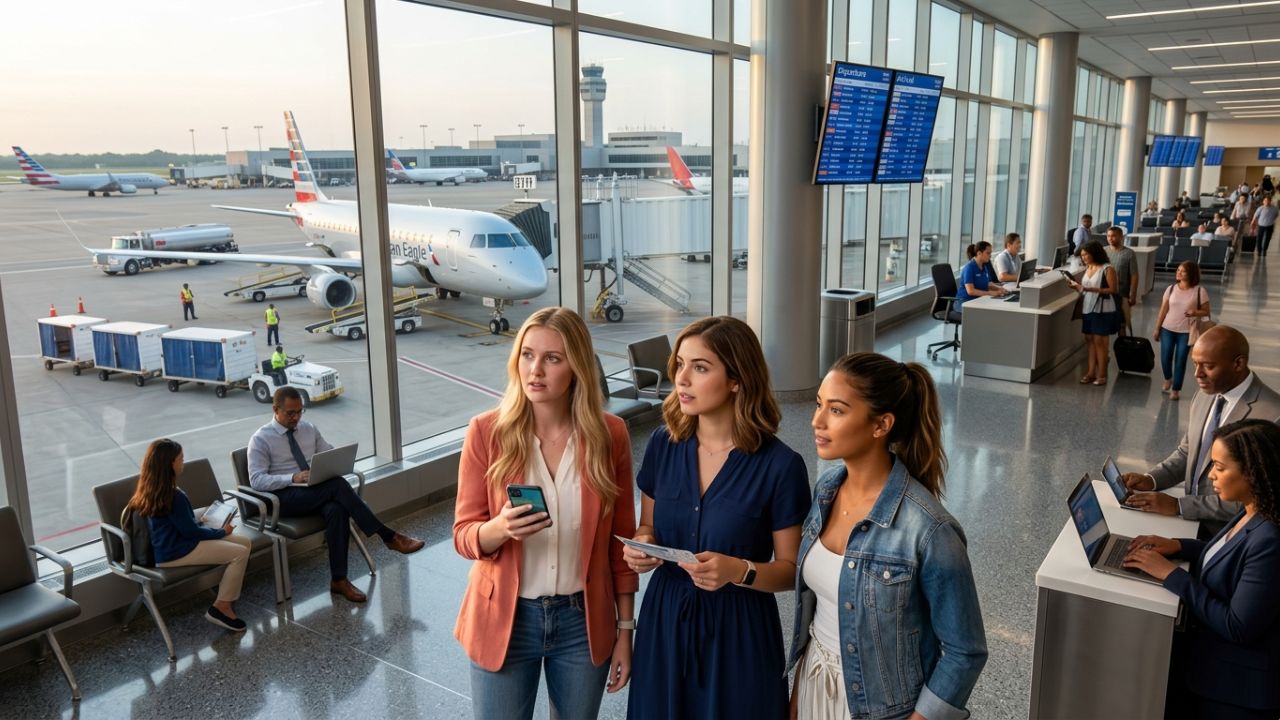
Image representing the intense operational disruption surrounding Republic Airways Flight RPA9938. Scheduled to land at New York LaGuardia, the Embraer E175LR was suddenly forced to divert to Louisville Muhammad Ali International Airport, instantly severing vital connections and triggering severe travel chaos for passengers.
Breaking Airline News: Severe Travel Chaos as Republic Airways Flight RPA9938 Suddenly Diverts to Louisville, Severing New York Connections
In a brutal demonstration of how quickly domestic transit can violently collapse into sudden uncertainty, a critical regional artery binding the American South to the East Coast has been abruptly severed. Republic Airways Flight RPA9938, operated on behalf of American Airlines, suffered a highly disruptive mid-flight route alteration, plunging its passengers into immediate travel chaos. The Embraer E175LR heavy hardware, originally scheduled to navigate from Memphis International Airport straight into the heavily congested airspace of New York LaGuardia Airport, was suddenly forced out of the sky on Saturday, June 13, 2026. Rather than reaching the critical New York fortress hub, the aircraft executed an unexpected diversion, landing in Louisville, Kentucky. While the aircraft safely touched down, the sudden grounding instantly destroyed schedule integrity, stranding passengers and entirely highlighting the massive volatility constantly threatening modern commercial aviation.
In an era where localized operational shocks frequently cascade into massive systemic gridlock, passengers attempting to navigate the highly constrained National Airspace System are constantly vulnerable to sudden flight disruptions. For travelers aboard Flight RPA9938, a seemingly routine morning departure violently transformed into a logistical nightmare. When a flight fails to reach a primary destination like LaGuardia—a massive chokepoint for global business and tourism—the resulting travel chaos aggressively ripples outward. Missed connections, destroyed itineraries, and the terrifying prospect of being stranded in an unplanned diversion city are the brutal realities of modern air travel. As details emerge regarding the sudden rerouting of this American Airlines service, the incident serves as a stark warning: surviving the current aviation landscape requires absolute vigilance and the constant expectation of severe airport disruptions.
Expanded Overview: The Anatomy of a Mid-Flight Route Severance
The terrifying reality of sudden flight diversions brutally exposes the extreme fragility of airline schedules. While diversions are standard precautionary tools utilized by flight crews to guarantee absolute safety, they instantly generate massive passenger stress and severe logistical friction. When Flight RPA9938 suddenly deviated from its New York trajectory, it forced both the airline's operations center and the passengers onboard to immediately pivot into intense crisis management mode, struggling to mitigate the catastrophic impact of a failed arrival.
Section-Wise Breakdown: Decoding the Flight RPA9938 Disruption
To fully comprehend the massive logistical failures generated by this sudden diversion, corporate planners and domestic travelers must rigorously review the exact timeline of this disrupted American Airlines regional service.
Memphis Departure: The Disrupted Timeline Begins The operational telemetry surrounding this specific flight reveals a journey that began with aggressive efficiency before suddenly deteriorating. The Embraer E175LR, bearing registration N120HQ, departed Memphis International Airport (MEM) at exactly 06:49 AM CDT. Notably, this departure was executed approximately 21 minutes ahead of schedule, suggesting a highly optimized early-morning push designed to beat anticipated congestion along the East Coast. However, this early operational advantage was rapidly erased once the aircraft became airborne.
The Mid-Flight Route Alteration: Dropping into Kentucky Flight tracking data indicates that the aircraft remained airborne for a highly compressed duration before the routing was violently altered. Rather than continuing its high-altitude trajectory toward the heavily restricted New York airspace, the crew executed a diversion protocol. The aircraft descended rapidly, totally abandoning the LaGuardia flight path. Without any publicly reported declaration of a critical emergency, the flight was steered toward an alternate facility, choosing Louisville as the immediate safe haven.
Louisville Grounding: The Unexplained Halt Flight RPA9938 safely touched down at Louisville Muhammad Ali International Airport (SDF) at 08:45 AM EDT. The aircraft was recorded as being airborne for just 56 minutes, arriving in Kentucky a staggering one hour and forty-three minutes earlier than its scheduled arrival time in New York. While the safe landing confirms that the flight crew successfully managed whatever unknown variables forced the diversion, the sheer speed of the route alteration violently stranded passengers far from their intended East Coast destination.
Strategic Flight Disruption Matrix
To guarantee that travelers can aggressively track the specific intelligence regarding this sudden operational meltdown, the following matrix details the exact, verified data confirming the travel chaos surrounding Republic Airways Flight RPA9938.
| Operational Metric | Verified Telemetry |
|---|---|
| Operating Carrier | Republic Airways (Operated by American Airlines) |
| Designated Flight Number | RPA9938 (AA9938) |
| Heavy Hardware Deployed | Embraer E175LR (Registration N120HQ) |
| Original Origin Fortress | Memphis International Airport (MEM) |
| Severed Destination Hub | New York LaGuardia Airport (LGA) |
| Emergency Diversion Point | Louisville Muhammad Ali International Airport (SDF) |
| Departure Telemetry | 06:49 AM CDT (21 minutes early) |
| Arrival Telemetry | 08:45 AM EDT (56-minute total flight time) |
| Incident Date | June 13, 2026 |
Data reflects the sudden operational failure and passenger disruption caused by the mid-flight diversion of the American Airlines regional service.
Passenger Impact: The Brutal Cost of Travel Chaos
For the passengers trapped aboard the diverted Embraer E175LR, the effect of this sudden grounding is overwhelmingly negative. A flight diversion aggressively eliminates any certainty in a travel itinerary. Individuals attempting to reach New York City for critical business meetings, onward international connections, or tightly scheduled tourism were instantly thrown into a massive logistical void in Louisville. The travel chaos immediately generates severe financial friction; passengers are forced to battle overloaded airline service desks for rebooking, while simultaneously facing the terrifying prospect of out-of-pocket expenses for rental cars, unplanned hotels, or completely lost revenue from missed obligations at their destination.
Industry Analysis: What Triggers a Sudden Diversion?
The global aviation industry operates on the fundamental principle that safety violently supersedes schedule integrity. While the exact cause of the RPA9938 diversion remains officially undisclosed, aviation industry analysts confirm that these sudden disruptions are typically triggered by highly specific operational threats. Airlines will instantly divert a flight due to sudden mechanical irregularities, unexpected severe weather cells blocking the arrival path, extreme air traffic control congestion at the destination hub, or critical crew timeout issues. In all scenarios, the decision to drop into an alternate airport like Louisville is a defensive maneuver designed to secure the aircraft and prevent a catastrophic failure, even at the cost of massive passenger inconvenience.
Conclusion: Surviving the Chaos
As the extremely critical U.S. transit network continues to battle intense volatility, the sudden diversion of Flight RPA9938 represents a highly dangerous warning for travelers. Passengers desperate to avoid the severe logistical nightmare of being stranded mid-journey must immediately execute aggressive defense strategies. Travelers must fiercely prioritize maintaining real-time digital contact with their airlines, never check essential items or medications into the cargo hold, and always possess a heavily fortified contingency plan. This intelligence proves that surviving the modern era of commercial aviation relies entirely on anticipating sudden operational failures, expecting severe travel chaos, and understanding that a confirmed ticket does not guarantee a seamless arrival.
Key Takeaways
- Sudden Route Severance: Republic Airways Flight RPA9938 (American Airlines) suffered a sudden mid-flight diversion, entirely failing to reach New York LaGuardia.
- Verified Aircraft Data: The route was operated by an Embraer E175LR (Registration N120HQ).
- Disrupted Timeline: The flight departed Memphis at 06:49 AM CDT but was forced to land in Louisville at 08:45 AM EDT after just 56 minutes airborne.
- Safe Grounding: The aircraft landed safely without any publicly reported emergency, highlighting the use of diversions as a standard precautionary safety tool.
- Passenger Survival: Stranded travelers must utilize heavily fortified backup itineraries and constantly monitor airline alerts to survive the massive financial and logistical toll of unexpected flight diversions.
Related Travel Guides
Disclaimer
This article is for informational and educational purposes only. It does not constitute legal, financial, or professional advice. While we strive to provide accurate and up-to-date information, travel policies, regulations, and conditions change rapidly. Always verify information with official sources before making travel decisions. Nomad Lawyer makes no representations about the accuracy, reliability, completeness, or suitability of the information provided. Readers should consult qualified professionals for advice specific to their circumstances. The views expressed in this article are those of the author and do not necessarily reflect the views of Nomad Lawyer.
Kunal K Choudhary
Co-Founder & Contributor
A passionate traveller and tech enthusiast. Kunal contributes to the vision and growth of Nomad Lawyer, bringing fresh perspectives and driving the community forward.
Learn more about our team →