
Breaking Airline News: Severe Thunderstorms Trigger Massive Travel Chaos at Atlanta Hartsfield-Jackson, Paralyzing Delta and Southwest
Breaking airline news: Amidst terrifying extreme weather, Atlanta Hartsfield-Jackson descends into absolute operational gridlock, stranding passengers across 26 flight cancellations and 214 severe delays.

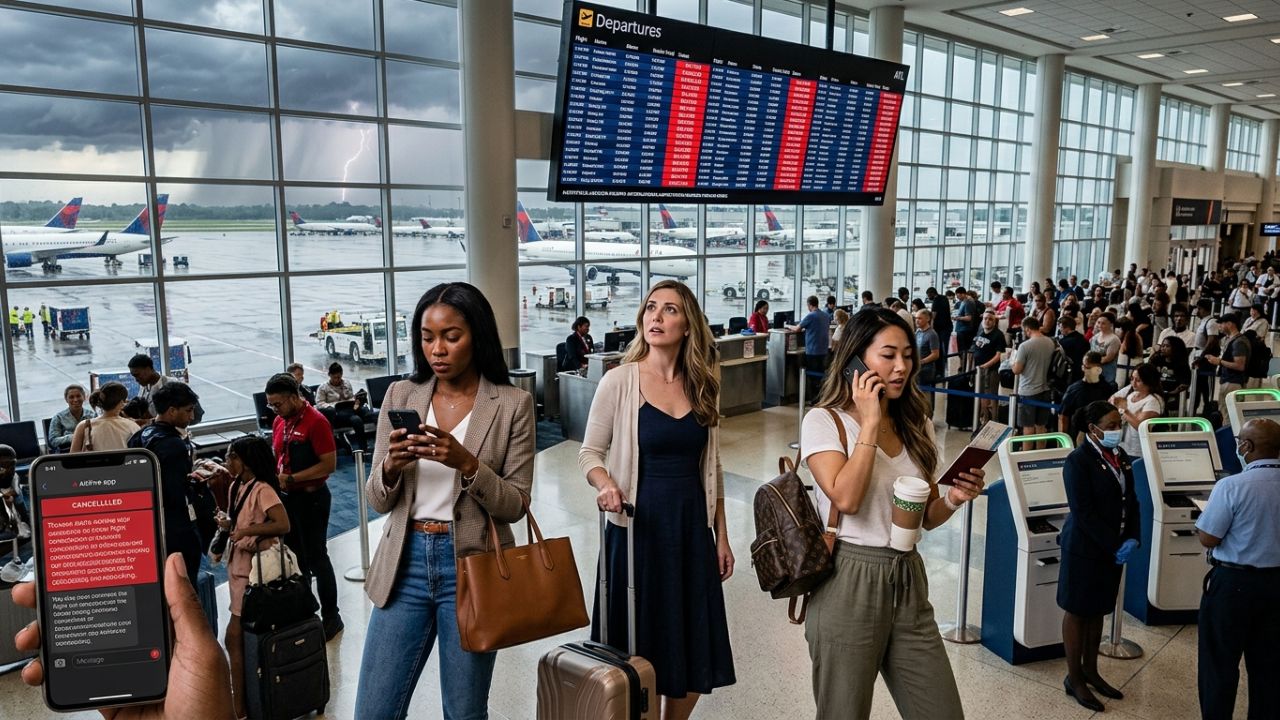
Image representing the intense global network collapse as catastrophic severe thunderstorms aggressively paralyze operations at Atlanta Hartsfield-Jackson, trapping domestic and international passengers in a terrifying surge of travel chaos.
Breaking Airline News: Severe Thunderstorms Trigger Massive Travel Chaos at Atlanta Hartsfield-Jackson, Paralyzing Delta and Southwest
As paralyzing terminal bottlenecks, severe airspace congestion, and catastrophic operational fragility violently transform global transit into a grueling endurance test, a massive weather-driven infrastructural shock has just decimated the world's busiest airport. In a harrowing demonstration of how rapidly extreme meteorological events can completely collapse aviation networks, apocalyptic severe thunderstorms and bad weather have triggered massive flight cancellations at Hartsfield-Jackson Atlanta International Airport (ATL). Operating under absolute duress, a multitude of elite carriers—including Delta Air Lines, Southwest, JetBlue, and Etihad—are currently fighting horrific operational challenges. A catastrophic wave of 26 flight cancellations and a staggering 214 severe delays has violently thrust hundreds of stranded passengers into extreme travel chaos today, June 13, 2026. These sudden airport disruptions have completely severed critical air links across the US and crippled international routes to Argentina, Italy, Switzerland, Germany, Japan, and the Caribbean, proving once again the terrifying vulnerability of modern commercial aviation.
In a brutal demonstration of how desperately international passengers require absolute operational resilience to survive systemic transit failures, this aggressive airport meltdown represents far more than a minor scheduling glitch. The massive scale of the disruption at ATL is directly tied to the severe thunderstorms tearing through the region, aggressively forcing airlines to adjust schedules, heavily delay departures, and completely abort some flights. When the primary connecting hub for the entire United States falters, the resulting ripple effect aggressively paralyzes surrounding markets. As flights were abruptly canceled and schedules drastically shifted, desperate travelers at Hartsfield-Jackson faced agonizing extended waiting times, terrifying rebooking difficulties, and totally ruined onward connections. Airlines are actively working to manage operations, but the massive volume of trapped passengers has pushed terminal infrastructure to its absolute breaking point.
Expanded Overview: Weaponizing the Weather Meltdown
The terrifying crisis of overwhelming passenger stress currently testing Atlanta brutally exposes the severe limitations of mega-hub networks when subjected to extreme atmospheric violence. Recognizing this absolute vulnerability, travel analysts are aggressively tracking how a concentrated failure at ATL instantly radiates outward, threatening to paralyze interconnected hubs across the United States, Europe, Asia, and South America.
Section-Wise Breakdown: Navigating the Hub Collapse
To fully comprehend the massive logistical and economic damage of this operational failure, corporate travel planners and international tourists must rigorously review exactly how these flight suspensions are driving travel chaos across specific carriers and global origins.
The Atlanta Meltdown: Ground Zero for Disruption To understand the absolute severity of this event, one must look at the exact operational telemetry at ATL. The airline-level impact reveals catastrophic strain. Delta Air Lines, operating its massive fortress hub, tops the list for raw volume, suffering a massive 113 delayed flights (representing 6% of its scheduled departures). However, Southwest Airlines is experiencing the highest delay percentage among large carriers, with 37 flights violently delayed, destroying an astonishing 38% of its schedule. Regional operator PSA Airlines (AAL) suffered the absolute highest cancellation rate, recording 5 cancelled flights (representing a terrifying 27% of their departures). Other domestic carriers are heavily impacted: Frontier (7 cancellations, 18 delays), United (4 cancellations, 7 delays), American Airlines (2 cancellations, 9 delays), and Republic (1 cancellation, 2 delays). Furthermore, international carriers including Qatar Airways, Etihad Airways, AeroLogic, and Envoy Air are also trapped in the congestion, suffering delays on smaller flight volumes.
The Domestic Shockwave: Complete East Coast Paralysis The aggressive ripple effect of the ATL suspensions quickly contaminated the broader domestic network. Origin airports feeding into Atlanta are severely compromised. Reagan National (DCA) leads the domestic collapse with 3 cancellations (15%) and 6 delays (31%). Newark Liberty Intl (EWR) closely follows with 2 cancellations (11%) and 5 delays (27%). The travel chaos has violently spread to other critical domestic airports recording notable delays, including Dallas-Fort Worth (DFW), Boston Logan (BOS), Chicago O’Hare (ORD), Charlotte/Douglas (CLT), Orlando Intl (MCO), John Glenn Columbus (CMH), and Las Vegas Harry Reid (LAS).
The International Collapse: Europe, Asia, and South America The devastation immediately spread to highly specialized international markets. The data reveals highly critical international disruptions for inbound flights. Origin airports including Ministro Pistarini (EZE), Malpensa (MXP), Zurich (ZRH), Abu Dhabi (AUH), Tokyo Haneda (HND), Munich (MUC), and Grantley Adams (BGI) reported a devastating 100% delay or cancellation rate, completely destroying itineraries for passengers utilizing these low-volume but highly critical international routes. Other massive international hubs, including Frankfurt (FRA), Tocumen (PTY), and Edinburgh (EDI), also reported significant delays, heavily amplifying the global travel chaos.
Global Operational Disruption Matrices
To guarantee that travelers can aggressively track the specific carriers and origins driving this massive operational collapse, the following matrices detail the exact, verified flight disruption data currently dominating the airline news.
Table 1: Critical Carrier Disruptions at ATL
| Airline | Verified Operational Impact at Atlanta |
|---|---|
| Delta Air Lines | 113 flights delayed (6% of scheduled departures) |
| Southwest Airlines | 37 flights delayed (38% of schedule) |
| PSA Airlines (AAL) | 5 flights cancelled (27% cancellation rate) |
| Frontier Airlines | 7 cancellations, 18 delays |
| United Airlines | 4 cancellations, 7 delays |
| American Airlines | 2 cancellations, 9 delays |
| Republic Airways | 1 cancellation, 2 delays |
| Intl Carriers (Qatar, Etihad, etc.) | Experiencing delays on smaller flight volumes |
Table 2: Critical Origin Airport Disruptions
| Origin Airport | Verified Disruption Rate |
|---|---|
| Reagan National (DCA) | 3 cancellations (15%) / 6 delays (31%) |
| Newark Liberty Intl (EWR) | 2 cancellations (11%) / 5 delays (27%) |
| EZE, MXP, ZRH, AUH, HND, MUC, BGI | 100% delays or cancellations (low volume) |
| Other Domestic Hubs (DFW, BOS, ORD, etc.) | Experiencing notable severe delays |
| Other Intl Hubs (FRA, PTY, EDI) | Experiencing significant delays |
Passenger Impact: Escaping the Terminal Nightmare
For the hundreds of international tourists and regional business executives attempting to confidently navigate the rapidly swelling, chaotic terminals at Hartsfield-Jackson Atlanta, these flight cancellations represent a highly critical threat. Travelers suffering from the horrifying prospect of navigating aggressive rebooking queues after their connection to Japan or Switzerland was suddenly ruined are immediately plunged into panic. The combined impact of these 214 delays and 26 cancellations created horrifying scheduling challenges, leading directly to missed connections and violently extended wait times across the massive airport footprint.
What to Do if Your Flight Gets Cancelled: A Passenger Survival Guide
Flight cancellations can be terrifying, but executing a highly structured defense can absolutely minimize stress and prevent financial devastation. Here is the ultimate tactical guide to surviving the ATL airport disruptions:
- Check Flight Status Obsessively: Visit your airline’s website or app constantly to aggressively monitor updates and sudden gate changes.
- Rebook Rapidly: Airlines often provide options to rebook or adjust travel plans for cancelled flights without additional fees. Execute this immediately through the app before physical queues form.
- Arrive Early for Connections: Massive delays heavily affect connecting flights; ensure extra time to aggressively navigate security checks and boarding procedures.
- Contact Customer Service Tactically: For urgent assistance, bypass physical lines by calling your airline directly or aggressively using social media channels to secure rebooking options.
- Stay Updated on Origin Airports: If your aircraft is inbound from heavily affected airports like DCA, EWR, BOS, or DFW, expect compounding delays and plan accordingly.
- Prepare for Agonizing Wait Times: Bring critical survival items (snacks, water, chargers) as extended delays at ATL could last several terrifying hours.
Conclusion: The Vulnerability of Mega-Hubs
As the extremely critical global transit network continues to face terrifying strain from unprecedented extreme weather, the aggressive operational collapse at Hartsfield-Jackson Atlanta International Airport represents a massive warning. It signals a critical reality: severe thunderstorms can violently cascade, creating 26 cancellations and 214 delays that paralyze travel across the US, Europe, Asia, and South America. With Delta, Southwest, and Frontier struggling to restore normal schedules, travelers facing these massive airport disruptions must maintain intense vigilance. This event proves that the future of resilient commercial aviation relies entirely on anticipating and aggressively bypassing sudden environmental travel chaos at the world's busiest airports.
Key Takeaways
- Massive Mega-Hub Meltdown: Severe thunderstorms triggered 26 flight cancellations and 214 severe delays at Hartsfield-Jackson Atlanta (ATL).
- Major Airlines Paralyzed: Delta Air Lines suffered 113 delays, Southwest saw 38% of its schedule destroyed by delays, and PSA Airlines recorded a 27% cancellation rate.
- Domestic Network Shockwave: Origin airports like Reagan National (DCA) and Newark (EWR) suffered severe cancellation and delay percentages feeding into ATL.
- International Network Collapse: Critical inbound flights from EZE, MXP, ZRH, AUH, HND, MUC, and BGI reported a devastating 100% delay or cancellation rate.
- Passenger Defense: Stranded travelers are aggressively urged to monitor airline apps, arrive extremely early for connections, and utilize digital customer service to bypass terminal gridlock.
Related Travel Guides
- How Airline Consolidations Are Sparking Major Travel Chaos Across the Globe
- Navigating Severe Flight Cancellations: A Passenger's Guide to Surviving Airport Disruptions
- The Ultimate Guide to Beating Airport Congestion During the 2026 Summer Surge
ZE, HND, ZRH at 100%), affected domestic origins (DCA 31% delayed, EWR), and overall disruption counts (26 cancellations, 214 delays) presented in these matrices are based on official aviation intelligence regarding Hartsfield-Jackson Atlanta (ATL) disruptions as of June 13, 2026. Authors Observation: All information is manually obtained from FlightAware’s official website, and all operations are subject to change based on real-time weather updates. In order to maintain safety, airlines actively modify schedules and itineraries. In order to get to their destinations safely, passengers are asked not to panic in such situations and to look for alternate travel choices. Relying on real-time updates, reviewing airline rebooking restrictions, and maintaining flexibility with travel plans are all highly recommended to survive airport disruptions.*
Disclaimer
This article is for informational and educational purposes only. It does not constitute legal, financial, or professional advice. While we strive to provide accurate and up-to-date information, travel policies, regulations, and conditions change rapidly. Always verify information with official sources before making travel decisions. Nomad Lawyer makes no representations about the accuracy, reliability, completeness, or suitability of the information provided. Readers should consult qualified professionals for advice specific to their circumstances. The views expressed in this article are those of the author and do not necessarily reflect the views of Nomad Lawyer.
Kunal K Choudhary
Co-Founder & Contributor
A passionate traveller and tech enthusiast. Kunal contributes to the vision and growth of Nomad Lawyer, bringing fresh perspectives and driving the community forward.
Learn more about our team →