
Severe Flight Disruptions Strike Major Chinese Hubs: 560 Delays
Severe flight disruptions across Shanghai Pudong, Xi'an, and Guiyang airports in March 2026 caused 560 delays and 24 cancellations. Air China, China Eastern, and China Southern passengers face extended wait times and rebooking challenges.

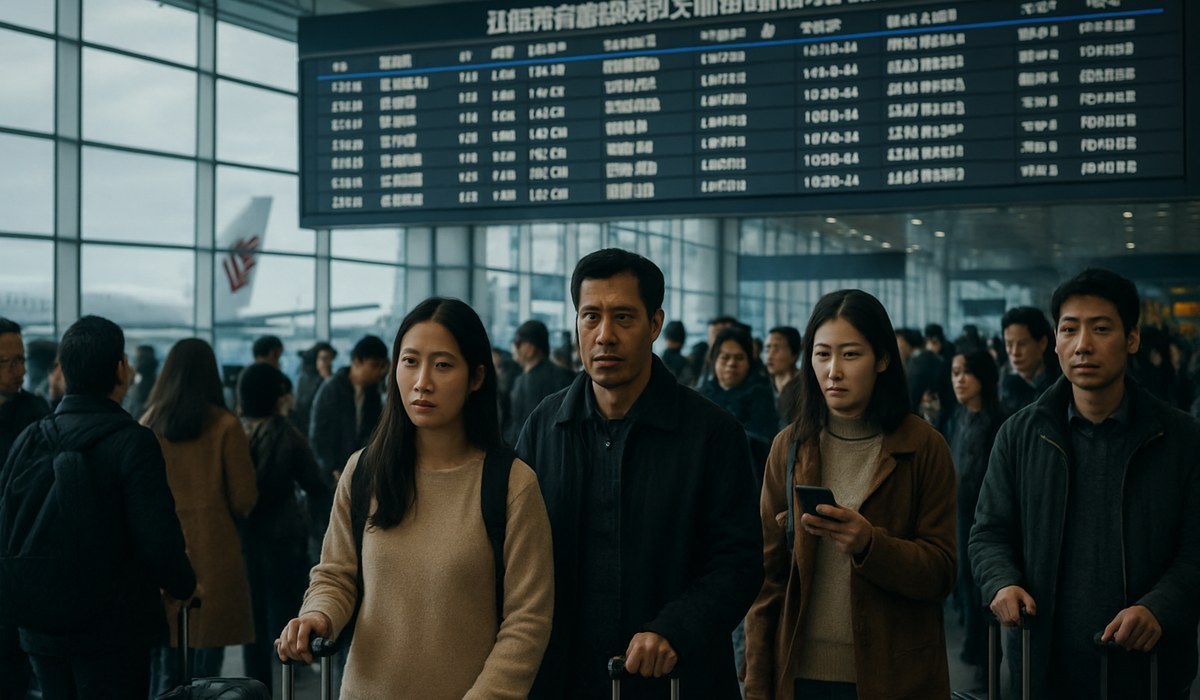
Image generated by AI
Hundreds of travelers faced severe flight disruptions across China's aviation network on March 19, 2026. Shanghai Pudong International Airport, Xi'an Xianyang, and Guiyang Longdongbao reported a combined 560 flight delays and 24 cancellations within hours. Air China, China Eastern, and China Southern absorbed the largest operational impact, affecting domestic trunk routes and regional connections throughout the country.
The cascade of delays rippled through China's interconnected aviation ecosystem. When major hubs miss departure slots, arriving aircraft lose return windows. Ground crews and air traffic control struggled to clear backlogs as afternoon and evening departure banks slipped further behind schedule. Most delays ranged from one to three hours, though some flights faced significantly longer holds.
Shanghai Pudong: Gateway Bottleneck Amplifies Delays
Shanghai Pudong International Airport (PVG) emerged as the epicenter of disruption on March 19. This major hub handles approximately 70 million annual passengers and functions as China's primary gateway for long-haul flights to Europe, North America, and Southeast Asia. Real-time departure boards displayed wave after wave of delayed departures, particularly among domestic routes and critical regional connections.
The airport's heavy traffic volume leaves minimal slack for irregular operations. Once morning departure banks slip behind schedule, runway slots, gate availability, and ramp capacity all tighten simultaneously. Passengers with connecting flights faced particular strain—those holding through-tickets automatically received protection onto later flights, while separate-ticket holders risked missing check-in cutoffs entirely. The interconnected nature of Pudong's schedule means afternoon departures faced inherited delays from disrupted morning waves. Flight crews and aircraft rotations extended well into evening hours. According to FlightAware, recovery operations continued past 11 p.m. local time.
Xi'an Xianyang: Central Hub Strands Western Route Travelers
Xi'an Xianyang International Airport (XIY) serves as a crucial connector for China's central and western regions. This major hub anchors domestic routes to Inner Mongolia, Xinjiang, and coastal cities including Beijing, Shanghai, and Guangzhou. When departures from Xi'an faced delays, passengers bound for onward flights through these cities encountered heightened missed-connection risks.
The airport's operational design concentrates traffic during specific departure waves. Even moderate delays during peak periods can eliminate entire travel options for the day. Passengers waiting to transfer through Xi'an faced same-day rebooking challenges as available seat inventory rapidly depleted. Ground staff managed rebooking requests manually when self-service systems reached capacity. Regional airlines operating feeder routes into Xi'an also experienced schedule degradation as aircraft rotations extended. Some passengers opted for high-speed rail connections as an alternative, contributing to overcrowding at Xi'an North Railway Station during afternoon hours.
Guiyang Longdongbao: Regional Bottleneck Affects Mountain Province Access
Guiyang Longdongbao International Airport (KWE) anchors air connectivity for Guizhou Province's mountainous terrain. This regional hub operates fewer daily services to major Chinese hubs compared to coastal airports. When even a small cluster of cancellations or delays occurred at Guiyang, entire travel options vanished for the day.
The airport's limited flight schedule means passengers cannot easily shift to alternative flights. Most travelers rebook on the next available operation, typically 24 hours later. Others seek overland alternatives including high-speed rail connections to Chongqing or bus services to Guangzhou. The geographic isolation of Guizhou makes airport disruptions particularly disruptive for business travelers and leisure passengers. Staff at Guiyang's service desks managed rebooking requests under significant time pressure. Mobile app adoption among regional travelers remains lower than coastal cities, forcing more passengers to seek in-person assistance at ticket counters.
Air China, China Eastern, China Southern Navigate Operational Crisis
Major Chinese carriers absorbed the operational impact of severe flight disruptions across all three affected hubs. Air China, China Eastern, and China Southern operate extensive route networks through Shanghai Pudong, Xi'an, and Guiyang. Flight-tracking data revealed delays affecting a mix of trunk routes (high-capacity domestic flights) and secondary regional services.
Smaller regional carriers operating feeder routes into these major hubs also encountered schedule challenges. As aircraft rotations slowed, aircraft assigned to later flights arrived late, triggering cascading delays. Chinese carriers have improved on-time performance metrics in recent years, yet they remain highly sensitive to major airport bottlenecks. When congestion builds, aircraft enter holding patterns while ground crews manage extended departure queues. Individual airlines often cannot recover schedules within the same operating day. For travelers, effects manifested immediately at check-in counters where staff managed seat reassignments and boarding pass reissues under time pressure. Mobile app functions enabled some passengers to manage changes independently, while many others sought in-person assistance when tight connections faced jeopardy.
Impact Metrics and Operational Timeline
| Affected Airport | IATA Code | Location | Delays Recorded | Cancellations | Primary Carriers |
|---|---|---|---|---|---|
| Shanghai Pudong International | PVG | Shanghai, Eastern China | ~340 | 14 | Air China, China Eastern, China Southern |
| Xi'an Xianyang International | XIY | Xi'an, Central China | ~160 | 7 | Air China, China Southern |
| Guiyang Longdongbao International | KWE | Guiyang, Southwest China | ~60 | 3 | China Eastern, regional carriers |
| Network Total | Multiple | China-wide | 560 | 24 | All major carriers |
| Typical delay duration | N/A | Peak periods | 1–3 hours | 24+ hours | Ground recovery |
| Recovery start time | N/A | All hubs | 6:00 p.m. | Ongoing | 24-hour rotation |
What This Means for Travelers
Immediate action steps protect your travel plans during severe flight disruptions:
-
Check real-time status immediately. Visit FlightAware or your airline's mobile app to confirm your flight status. Do not rely on scheduled times shown in booking confirmations—actual departure times may shift by several hours.
-
Contact your airline before attempting airport travel. Call the carrier's customer service line directly. Staff can confirm rebooking options and alternative routes before you arrive at the airport. Arriving early provides minimal advantage during major disruptions.
-
Photograph your boarding pass and ticket confirmation. Mobile screenshots serve as backup documentation if Wi-Fi or app access fails at crowded airports. Carry your passport and ID in readily accessible locations.
-
Verify connection feasibility before boarding. If connecting through Shanghai Pudong, Xi'an, or Guiyang, calculate minimum connection time (typically 2 hours for domestic connections). Request a ground transfer if your connection falls below minimums.
-
Know your compensation rights. Consult the [U.S. Department of Transportation Airline Passenger Rights guide](https://www.transportation.gov/airconsumer) even if flying from China—many international carriers follow similar compensation protocols.
-
Explore alternative transportation. High-speed rail networks connect all three airport cities to major destinations. Overnight buses cost less than hotel stays during 24+ hour delays.
FAQ: Severe Flight Disruptions in China
What caused the severe flight disruptions at Shanghai Pudong, Xi'an, and Guiyang airports on March 19, 2026? Official airport bulletins attribute the severe flight disruptions to cascading delays originating at Shanghai Pudong during morning departure waves. Once Shanghai's schedules slipped, arriving aircraft lost return windows. Knock-on effects propagated throughout China's interconnected network, affecting Xi'an and Guiyang within hours. Air traffic control and ground operations struggled to clear backlogs during peak travel periods.
How do severe flight disruptions at major Chinese hubs affect connecting passengers? Severe flight disruptions create missed-connection risks for through-ticket holders and strand separate-ticket passengers at intermediate hubs. Passengers on through-tickets automatically receive protection onto later flights, but seat availability depletes quickly. Those on separate tickets must reach rebooking desks immediately or risk being stranded at hubs like Shanghai Pudong or Xi'an for 24+ hours.
Which airlines operated flights during the severe flight disruptions on March 19, 2026? Air China, China Eastern, and China Southern managed the majority of delayed and cancelled flights. Smaller regional carriers operating feeder routes into affected hubs (Shanghai Pudong, Xi'an, Guiyang) also experienced schedule degradation. All carriers maintained normal operations by March 20 afternoon.
How can I monitor recovery from severe flight disruptions at Chinese airports? Track your flight status continuously via FlightAware, your airline's mobile app, or official airport websites for Shanghai Pudong (PVG), Xi'an (XIY), and Guiyang (KWE). Most disruptions resolve within 24 hours as aircraft rotations normalize and ground operations clear backlogs.
Related Travel Guides
How to Navigate Flight Delays at Major Asian Airports Understanding Passenger Rights During Flight Cancellations Booking Strategies to Minimize Connection Risk in China
Disclaimer
Disclaimer
This article is for informational and educational purposes only. It does not constitute legal, financial, or professional advice. While we strive to provide accurate and up-to-date information, travel policies, regulations, and conditions change rapidly. Always verify information with official sources before making travel decisions. Nomad Lawyer makes no representations about the accuracy, reliability, completeness, or suitability of the information provided. Readers should consult qualified professionals for advice specific to their circumstances. The views expressed in this article are those of the author and do not necessarily reflect the views of Nomad Lawyer.
Kunal K Choudhary
Co-Founder & Contributor
A passionate traveller and tech enthusiast. Kunal contributes to the vision and growth of Nomad Lawyer, bringing fresh perspectives and driving the community forward.
Learn more about our team →